
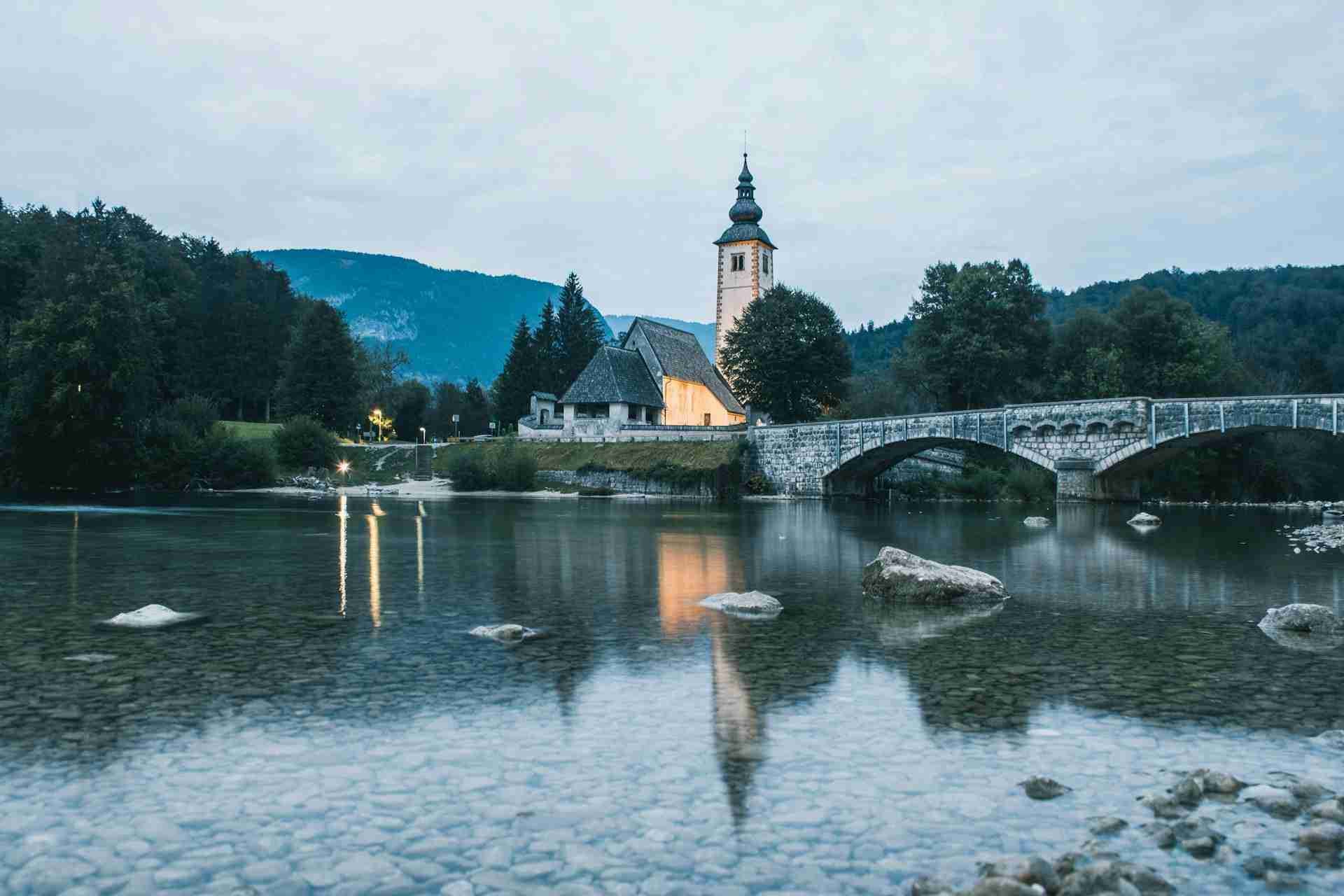
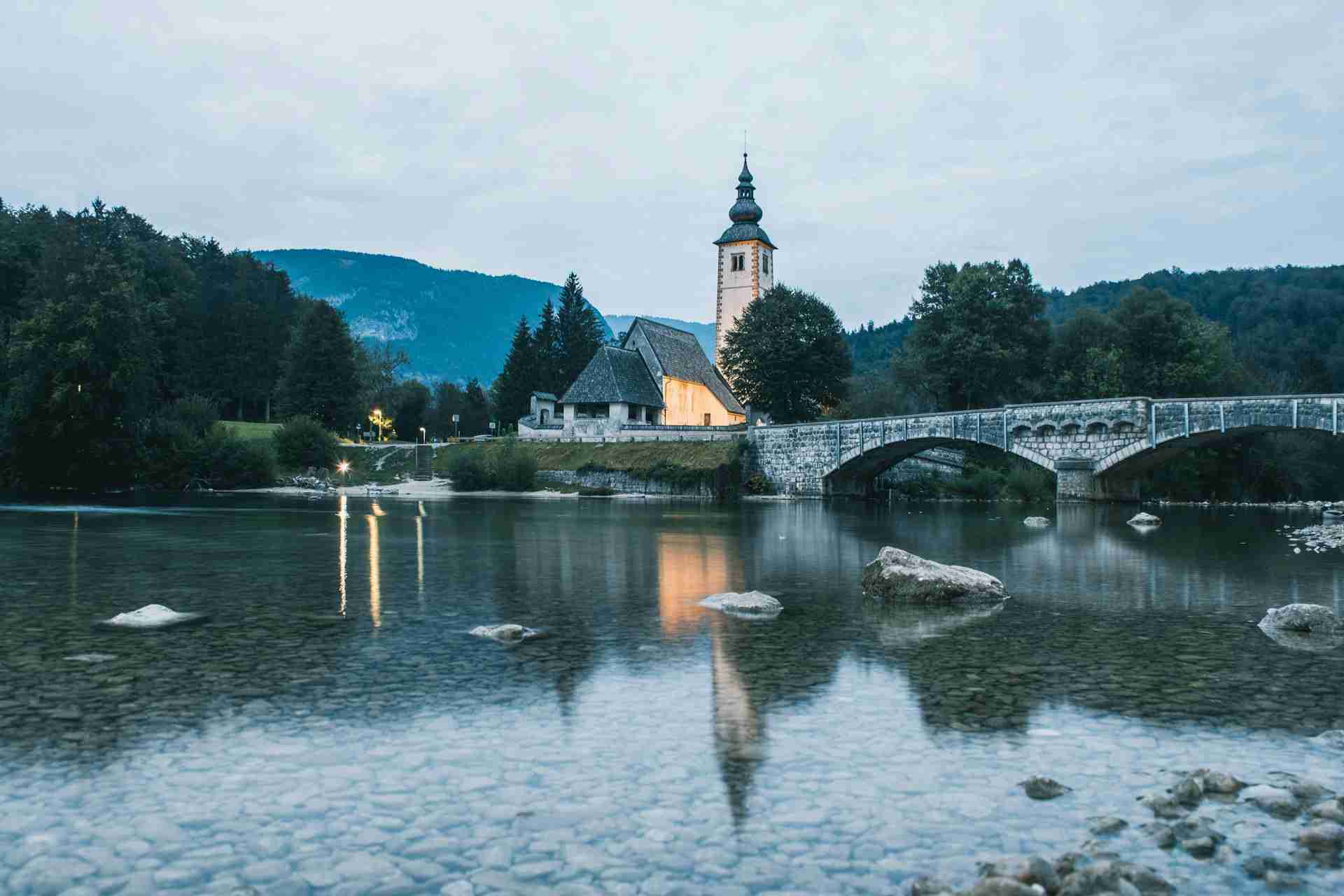
Tucked into the quiet village of Ribčev Laz in Slovenia's Triglav National Park, St. John the Baptist's Church stands as one of the most recognizable landmarks in the Bohinj region. Built in the late medieval period and carefully preserved, the church's modest scale and stone bell tower make it a perfect architectural match for the dramatic alpine landscape that surrounds it. At its base, a low stone arch bridge crosses the outlet of Lake Bohinj, offering a natural leading line for compositions that frame the church, bridge, and lake all in one. With mountains rising beyond the lake and reflections visible on still mornings, this location offers a unique mix of history, nature, structure, and light all coming together in a small, easily walkable area. For photographers, it is a place where simple compositions often carry the most power.
Best Photography Opportunities
Full Composition of Church and Bridge from the Shoreline
One of the most popular and rewarding views of St. John the Baptist's Church is from the eastern shoreline of Lake Bohinj, just a few steps away from the road that leads into Ribčev Laz. From this angle, you can place the curved stone bridge in the foreground, the church rising just behind it, and the lake stretching out to the side. A wide-angle lens helps include all three elements while still keeping the scene natural and balanced. The best light for this view comes in the morning, when the sun rises behind you and lights the church facade with warm, even light. On calm days, the lake surface can reflect the entire scene, making early morning visits especially worthwhile.
Side View of the Church from the Bridge
Walking across the stone bridge provides a clean side profile of the church framed by trees and mountain ridges. This is one of the best angles to show the church's proportions, roofline, and painted exterior details. A medium zoom lens allows you to frame the church tightly while still including some background texture. Late afternoon is the best time to shoot from here, when side light casts soft shadows along the church walls and adds contrast without overwhelming the details. Including part of the bridge railing or a passerby in the frame adds scale and context.
Backlit Shots of the Church and Bridge at Sunset
From the western side of the church, especially along the lakeside trail that runs toward Ukanc, you can shoot back toward the church and bridge as the sun sets behind the mountains. This angle works best with a longer focal length, compressing the scene and capturing the warm light flaring around the bell tower. During late summer and early autumn, the sunset falls directly in line with the valley, casting golden tones across the water and buildings. A tripod helps stabilize this shot as the light drops, especially if you are aiming for silhouettes or soft reflections.
Reflections and Mountain Layers across Lake Bohinj
Turning your camera west across Lake Bohinj reveals another strong composition—layers of mountains descending toward the water and sky reflecting off the surface. This shot works well both on its own and as a complement to the church scene, showing the natural context that surrounds Ribčev Laz. Early mornings or overcast days help maintain detail in both the mountain faces and water surface. A polarizer can reduce glare, or be adjusted to let reflections dominate the foreground. Including a small boat or swimmer in the frame helps add scale and local character to the landscape.
Details and Textures on the Church Grounds
Beyond the wider compositions, the church grounds offer a few smaller subjects worth exploring. The carved stonework of the bridge, the weathered wooden doors of the church, and the moss-covered gravestones all add texture to a photo set. These details work best under soft light, especially on cloudy days or just before sunset. A fast prime lens, such as a 50mm or 85mm, allows for shallow depth of field and natural color rendering in close-up scenes. Shooting these elements adds variety to your collection and tells a more complete story of the site.
Best Time to Visit
The best times to photograph St. John the Baptist's Church and Lake Bohinj are early morning and late afternoon, when the light is soft and low and the area is quieter. Morning visits offer the most consistent calm on the lake, which improves reflections and adds peace to the scene. From May through October, sunrise brings a warm, even light that falls across the bridge and church, highlighting their structure and natural tones without creating harsh shadows. Visiting in the early hours also means fewer people on the bridge and shorelines, giving you clean frames with fewer distractions.
Late afternoon into sunset is equally rewarding, especially if you want to shoot silhouettes or warm golden light from the western trail. The angle of the sun changes through the seasons, but from July through September it often drops directly into the Bohinj valley, backlighting the church and painting the lake with soft color. Autumn is a particularly strong season to visit, as the surrounding trees turn yellow and orange, providing additional contrast against the stone and water. Winter visits can be striking as well—snow on the bridge and rooftops simplifies the composition and adds quiet beauty to the scene. Just keep in mind that daylight is short and some paths may be icy. Spring brings blooming trees and green shorelines that add softness and life to foregrounds and backgrounds.
How to Get There
St. John the Baptist's Church is located in the center of Ribčev Laz, a small village on the eastern shore of Lake Bohinj in Slovenia's Triglav National Park. The area is well connected by road and public transport. If you are arriving by car, there are paid parking lots just outside the village center, within a five-minute walk of the church and lake. Public buses run regularly from Bled and Ljubljana, stopping directly in Ribčev Laz and making it easy to visit without a car.
The church is open during the day to visitors, though interior photography may be restricted depending on events or services. The bridge and lakefront paths are always accessible, and all main viewpoints are reachable within a short walk on paved or gravel trails. No permits are needed for photography, and tripods are allowed in outdoor areas. The location is compact and easily walkable, making it suitable for early starts, long waits for light, or repeat visits throughout the day. Shops and cafés nearby offer places to rest or shelter in changing weather.
Recommended Photography Gear
Photographing the church and lake requires a lightweight but capable setup that balances wide views, structural framing, and detail work. A wide-angle zoom such as a 16–35mm is ideal for capturing the church and bridge in the same frame, especially when shooting from the shoreline or nearby paths. A standard zoom like a 24–70mm is useful for general compositions, side views, and tighter framing that includes background elements like the mountains or trees. For distant mountain layers or compression across the lake, a telephoto lens in the 70–200mm range works well, especially during golden hour when the light softens and the valley deepens in contrast.
A sturdy but compact tripod is recommended if you plan to shoot during low light or aim for long exposure reflections across the lake. A circular polarizer can help manage glare on the water and improve contrast in clouds or mountain detail, though care should be taken not to over-polarize in wide shots. A remote shutter release or camera timer can prevent camera shake during long exposures or slow shutter speeds at dusk. A lens cloth is useful in damp morning conditions, especially when working near the lake. Comfortable walking shoes and a light weatherproof bag are recommended for exploring the surrounding trails, as conditions can change quickly and many of the best angles involve walking along uneven or damp ground.
Nearby Photography Locations
Just a short drive west of Ribčev Laz, the Vogel cable car takes you high above the valley for panoramic views over Lake Bohinj and the Julian Alps. At the top, wooden trails and open slopes offer clear lines of sight and dramatic light, especially in the early morning or late afternoon. On clear days, the lake glows below with the church and bridge clearly visible from a distance.
Located at the far end of Lake Bohinj, this waterfall is reached by a steep but short climb through the forest. The flow is strong year-round, and the surrounding cliffs create a natural frame. It photographs well in soft light or on cloudy days, especially with a tripod and long exposure setup to smooth the water.
A winding river gorge just above the village of Stara Fužina, Mostnica offers rock formations, blue-green pools, and forested paths that change dramatically with the seasons. It is perfect for detail-rich compositions of water, stone, and forest layers. Late spring and autumn are ideal times to visit for color and water movement.
Although better known and more visited, Lake Bled is only a short drive from Bohinj and offers a very different photographic feel. The famous church on the island and Bled Castle above the lake are strong subjects, especially in morning mist or golden evening light. Combining the quiet of Bohinj with a trip to Bled makes for a well-rounded photography day.
Ukanc Lakeshore
At the far western end of Lake Bohinj, the shore near Ukanc offers wide-open views of the water with the surrounding peaks rising directly behind. This area tends to be less crowded and more reflective in the early evening, making it a great location for peaceful lake scenes or long exposures as the sun sets behind the mountains.
Photographing St. John the Baptist's Church and its surroundings is about simplicity and timing. The scene is naturally beautiful and well-composed even without perfect conditions, but with soft light and still water, it becomes something truly memorable. Whether you focus on the structure, the setting, or both, this corner of the Bohinj valley offers clean, honest images that speak to the connection between nature and place.
Comments
Loading comments…