
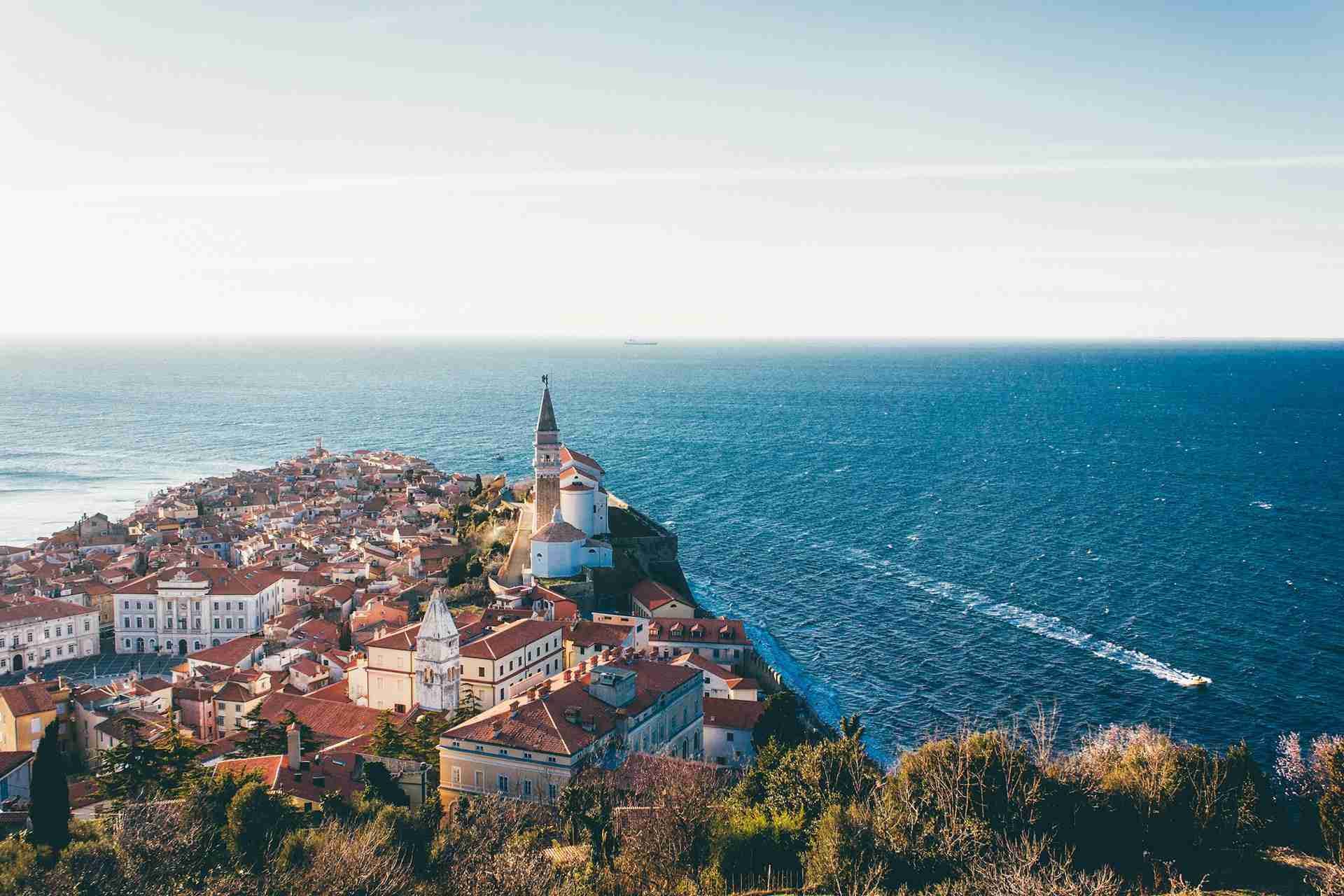
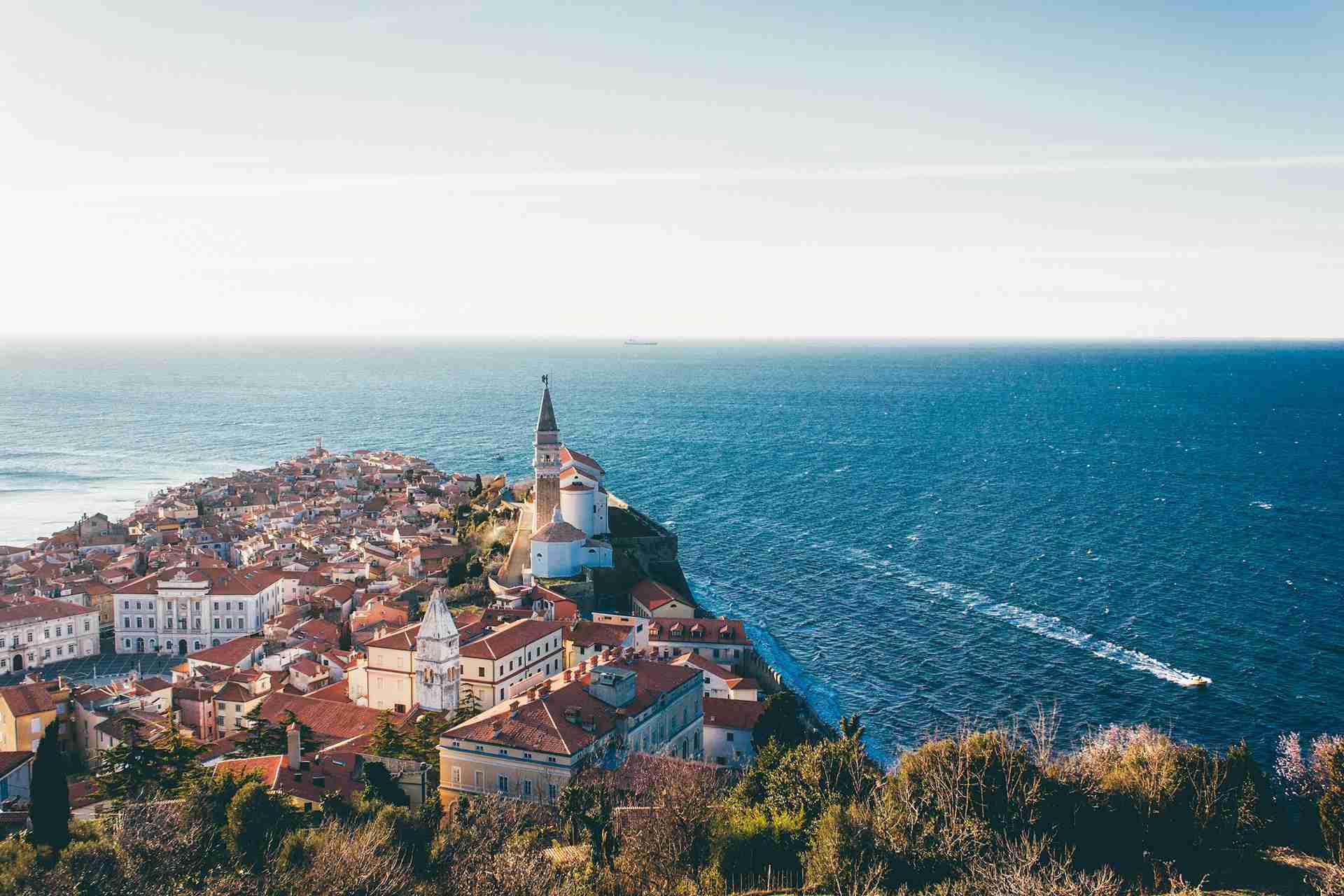
Perched above the Venetian‑style sea town of Piran on Slovenia's Adriatic coast, the Walls of Piran offer photographers a privileged vantage point to capture a sweeping cityscape of terracotta roofs, narrow lanes, church towers and shimmering sea beyond. Rising from the peninsula, the ancient fortifications trace the hillside and provide open sky, multiple walls and towers and changing light that invites exploration. With the wide view over the red‑roofed town and the bay, photographers gain both landscape breadth and urban texture in a single frame. The location is especially compelling for experienced image‑makers who appreciate historic architecture, coastal light and layered composition. Whether the sun is low or the clouds roll in, the walls give structure and elevation that elevate a cityscape into something memorable.
Best Photography Opportunities
• Panoramic View From the Outer Ramparts
Walking along the upper sections of the walls leads to wide sweeping views of Piran beneath and the open Adriatic beyond. A wide-angle lens is ideal here because it lets you include the dense roofscape of the town and the broad seascape in a single frame while maintaining clarity of detail both near and far. Time your visit for golden hour when the low sun casts warm light across the tile roofs and bathes the limestone walls in soft color. The height of the ramparts means fewer distractions from people, watercraft or busy streets. A tripod and graduated filter help manage the dynamic range when bright sky meets shadowed town.
• Roofline Geometry and Coastal Light
A step back from the highest vantage and you'll find mid-level terraces where you can isolate rooftops, chimneys and roof ridges that draw the eye toward the water. Use a mid-range zoom to explore these architectural forms and layer them against the sea and sky. Late afternoon light works best for this type of shot because side illumination reveals texture on roof tiles and brings out patterns in the built environment. On overcast days these forms become subjects in their own right, offering shape and repetition instead of color drama. These frames work particularly well for a balanced sequence of wide, mid and detail shots.
• Silhouettes and Sky at Sunset
As the sun approaches the horizon, the town's towers and rooftops become silhouettes against a sky lit with pink, orange and violet tones. Shooting from the west-facing wall positions gives you a view back over the town with the sea stretching to the horizon. A small aperture produces sunstars if shooting into the light while bracketing exposures ensures you retain sky color without losing shadow detail. These compositions favor simplicity with shape, light, contrast and horizon rather than busy detail. They work especially well when clouds linger or drift through the sky adding texture to what would otherwise be an open void.
• Tower Details and Sea Patterns
Focus your attention on one of the preserved towers or gates along the wall for a tighter composition. A telephoto lens lets you isolate a tower, include a peek of sea beyond and compress the view so the town appears layered rather than flattened. Look for moments when a boat passes in the bay or when light streaks across water adding subtle dynamism to an otherwise static architectural form. Use softer light in morning or overcast conditions in order to preserve detail in the stone without harsh shadows. These kinds of shots act as visual punctuation in a larger set that includes wide vistas and context views.
• Evening Blue Hour Over Town and Sea
After sunset the ambient light softens into blue hour tones and the town's interior lights begin to appear. From a terrace overlooking the town you can compose the grid of streets, the roofscape and the sea beyond with the long blue twilight as backdrop. A slow shutter speed, sturdy tripod and perhaps a touch of exposure blending will ensure sharpness while capturing subtle trail lights or moving clouds. The contrast between warm lights of the buildings and cool natural light enhances mood and atmosphere. This time demands patience but rewards with quiet, polished frames that feel intentional and refined.
Best Time to Visit
The Walls of Piran are accessible throughout the year but for photography the most favorable conditions fall in late spring and early autumn when light angles are kind, the air is clear and the visitor levels are manageable. Morning visits provide soft light from the east, calmer seas and often better reflections. Late afternoon through sunset delivers long shadows, warmer light and more intense color gradients. Midday tends to flatten forms and increase contrast in the townscape so either overcast days or shaded vantage points are better during that time. Cloudy and transitional weather adds drama to sky and sea and the walls, elevated above the rooftops, give you a vantage where weather-driven light can be used to full advantage.
During peak summer months the town fills with day visitors and the sea can glint harshly under high sun. Plan early arrival or work later in the day when light softens. Winter offers clear air and minimal crowds but shorter daylight hours mean less time to explore. Regardless of season arriving before golden hour ensures you have time to walk the walls, test compositions and work through environmental changes.
How to Get There
Piran is located on Slovenia's southwestern Adriatic coast. From the regional road or via the A1 motorway through Koper, enter Piran and park in the designated town car park located outside the historic old town. From the parking area a stairway and walking path lead up to the walls' entrance at one of the preserved gates. Entry to the ramparts includes a small fee and the path is narrow with stone steps and occasional steep sections so wear stable footwear. Tripods are permitted though some terraces are narrow and may require careful placement to avoid blocking foot traffic. Drone use is prohibited without permission in the historic town and along the walls so any aerial work should be planned outside protected zones. The ramparts are open most of the day but opening hours vary slightly by season so check posted times locally before arriving.
Recommended Photography Gear
A robust landscape-capable kit will give you the flexibility to work wide, mid and detail as you move along the walls. A wide-angle lens lets you capture broad views of rooftops, sea and sky in a single frame. A standard zoom is ideal for mid compositions and moving between wide and detail. A short telephoto helps isolate towers, compress distance and pull in the sea beyond the town. A sturdy tripod is essential for low light, blue hour or any long exposures especially in areas exposed to wind. Filters such as a circular polarizer help manage reflections on tile and glass and a graduated neutral density filter is useful when sky brightness exceeds the shadowed town below. Comfortable footwear, weather protection, extra batteries and a lens cloth are recommended because coastal wind and salt spray are common.
Nearby Photography Locations
Just below the walls, the main square and waterfront offer classic views of Piran's architecture and sea edge. Visit early morning for calm reflections on the water and minimal crowds.
A short drive or hike above Piran brings you to Cape Madona with sweeping views of the peninsula, the walls below and the open Adriatic. Sunset light works exceptionally well here with open horizons.
Within minutes of Piran these shallow ponds provide mirror-like surfaces, strong reflections and minimalist landscape compositions. They contrast nicely with the urban texture above the town.
• Castle Hill and Vineyard Terraces
Behind the town the hillside offers trails and viewpoints overlooking Piran, vineyards and stony terrain. These locations allow for layered compositions that combine nature, architecture and sea.
Follow the path south of Piran to a quieter coastal zone with trees, rocks and calm sea views. Early morning or late afternoon visits find gentle light, subtle tones and fewer visitors.
The Walls of Piran bring structure, elevation and coastal perspective together in a way that few urban viewpoints can match. For photographers who appreciate the marriage of architecture and sea, light and geography, this location delivers again and again across seasons. With patience, careful composition and an eye for detail, you'll walk away with images that tell the story of a town shaped by water, stone and time.
Comments
Loading comments…