
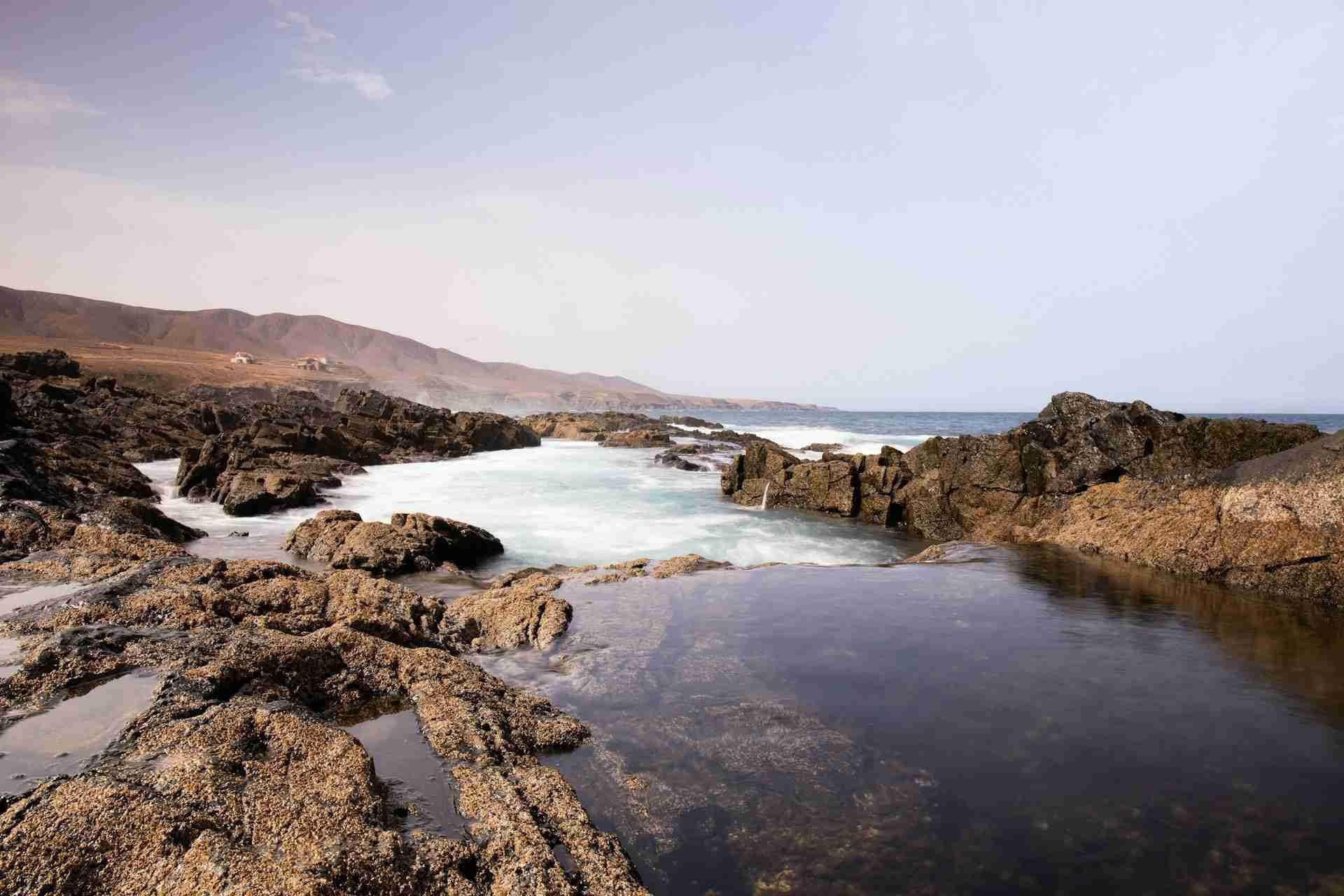
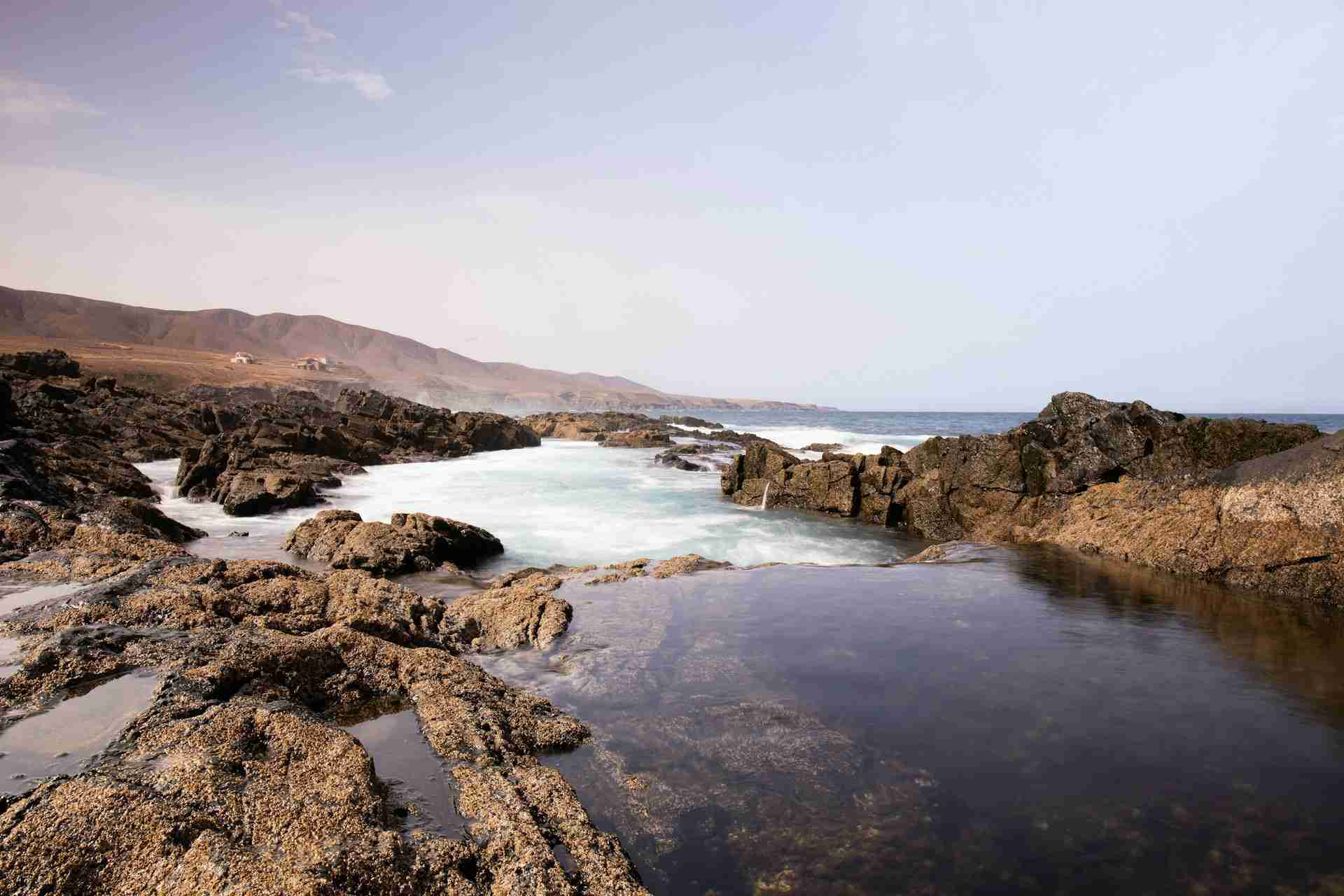
Aguas Verdes is a stretch of volcanic coastline located on the rugged west side of Fuerteventura, known for its tide-carved rock pools, crashing Atlantic surf, and raw, sculptural terrain. Set far from the island's tourist-heavy beaches, this location offers a sense of seclusion and untamed beauty that appeals to landscape photographers seeking striking natural formations and coastal drama. The interplay of water and basalt, especially during the changing tide, creates a constantly evolving subject. With every shift in light or ocean swell, the pools reflect sky tones, textures shift, and compositions change.
Best Photography Opportunities
• Tide Pools with Reflected Sky Color
The shallow rock pools along the shore fill with seawater during high tide and slowly recede as the water pulls back, leaving still, reflective surfaces. These pools mirror the sky during golden hour or blue hour and can be framed with the rugged rock edges to create a natural border. A wide-angle lens placed low to the ground works well to exaggerate foreground texture while capturing sky reflections in the water. Early morning or late afternoon light helps avoid glare and brings out subtle blues, greens, and golds in the water and stone. A circular polarizer can be rotated to either enhance the reflection or reveal submerged textures.
• Long Exposures of Crashing Waves
During mid to high tide, waves rush over the uneven rocks and into narrow channels, creating excellent conditions for long exposure work. A tripod and neutral density filter allow for extended shutter speeds that blur the movement of the sea into soft motion trails, while the solid volcanic forms stay sharp. These compositions benefit from contrast in texture and energy and are particularly strong in overcast conditions when clouds echo the tones of the sea. Framing slightly elevated helps avoid mist on the lens and keeps the horizon balanced. Watch the swell closely and time your exposures with the rhythm of the water.
• Abstract Rock Formations and Erosion Lines
The volcanic terrain at Aguas Verdes is full of irregular shapes, sharp edges, and pockmarked surfaces that lend themselves to abstract studies. These rock details are best photographed with a mid-range zoom or standard prime lens, especially when sidelight adds shadow and depth. Look for parallel erosion patterns or contrasting tones where salt and mineral deposits have altered the stone. Overcast light provides soft, even illumination, ideal for emphasizing shape and detail without the distraction of glare. These studies work well in black and white as well as subdued color grades.
• Ocean Horizon with Storm or Sunset Sky
The location's uninterrupted western exposure makes it ideal for capturing sunsets or incoming storms over the Atlantic. Use a wide or standard lens to place the horizon low in the frame, leaving space for the sky to dominate the composition. In stormy conditions, fast shutter speeds can capture the dynamic shape of incoming waves, while dramatic skies add tension. For calmer conditions, try using longer exposures to smooth the sea and emphasize the moodiness of the sky. Framing with the coastline or a foreground pool helps ground the composition and add visual depth.
• Low-Tide Coastal Textures and Micro Landscapes
At very low tide, a variety of tidal textures become visible, from wet sand patterns to exposed algae and small marine life. These micro-landscapes are perfect for close-up photography using a macro or short focal length lens. The morning light is softest and most revealing of detail, particularly when the sun is low enough to cast side shadows across ridges and indentations. Pay attention to color shifts in wet versus dry areas, and consider using a vertical composition to include both textured foreground and open sky. These frames are quiet but highly rewarding when studied closely.
Best Time to Visit
The best time to photograph Aguas Verdes is during the shoulder seasons, particularly from March to May and again from September to early November, when the weather is stable and the light angle is favorable. Early morning and late afternoon provide the most compelling light for coastal work, with golden tones on the rocks and softer reflections in the tide pools. Sunset can be dramatic here, with the Atlantic horizon wide open and free from visual obstructions.
Tide timing is critical. Low tide exposes more of the pools and rock detail, while incoming tide brings dynamic motion and wave activity. Check tide charts in advance and aim to arrive an hour before your preferred tide level to scout compositions safely. Wind is common throughout the year, but mornings are generally calmer and better for reflections and stable tripod work.
Cloudy days are excellent for texture and contrast-focused photography, while clear days create sharp shadows and vibrant color reflections. Avoid mid-day visits in summer, as harsh overhead light and heat shimmer can limit image quality and comfort.
How to Get There
Aguas Verdes is located along the western coast of Fuerteventura, within the municipality of Betancuria. From the town of Betancuria, follow the FV-30 south and then west via FV-621 toward the village of Llanos de la Concepción. From there, turn onto the road leading to Playa del Valle and continue until the pavement ends at a dirt parking area near the coast.
There are no official facilities at the site, and access involves a short walk down an uneven path over rocks and sandy slopes. Sturdy footwear is necessary, as the terrain is rocky, sharp, and can be slippery, especially when wet. There are no entrance fees or restrictions on photography, but caution is advised near the water's edge due to strong swells and unpredictable wave activity.
There is no public transport directly to the site, so a rental car is the most reliable option. The final section of the drive includes some gravel roads, which are navigable with a standard vehicle, though clearance may be helpful during or after rain. Mobile service is limited, so download maps and tide data in advance.
Recommended Photography Gear
A wide-angle lens is essential for capturing the tide pools, rock formations, and expansive sky. A standard zoom such as a 24 to 70 millimeter adds flexibility when working with tighter compositions or detail shots along the rock surface. For long exposures, a tripod and 6 to 10-stop neutral density filter are highly recommended. A circular polarizer allows you to control glare and reflections in the tide pools depending on your composition.
A remote shutter or camera timer helps minimize vibration during long exposures. A microfiber cloth is necessary to wipe sea spray from lenses and filters, especially when working close to the surf. Waterproof or weather-resistant footwear is advisable if you plan to wade near the tide pools.
Protective cases or dry bags are helpful for keeping gear safe from sudden splashes or salt air exposure. Spare batteries and memory cards should be brought along, as there are no nearby amenities. A lens hood helps reduce flare during sunrise or sunset when shooting into angled light near the horizon.
Nearby Photography Locations
This nearby wild beach features wide sandbanks backed by low cliffs and a powerful surf that lends itself well to long-exposure wave photography. It remains relatively undeveloped and quiet throughout the year.
This inland viewpoint above Betancuria provides expansive views across the interior mountains and valleys of Fuerteventura. It is ideal for sunrise or late afternoon landscape compositions that emphasize form and elevation.
A natural rock arch located in a dry canyon inland from the coast, this site offers geological interest and unique framing options. The approach requires a short hike but rewards photographers with striking formations and desert textures.
Further south along the coast, this dramatic location includes sea caves, black sand beaches, and jagged cliffs. It is best photographed during low tide when access is easier and light enters the caves at an angle.
The whitewashed buildings and cobbled streets of this historic village offer a different kind of photographic subject, ideal for architectural details, quiet alley compositions, and local color under soft morning light.
Aguas Verdes rewards slow, thoughtful photography and a willingness to adapt to tide, light, and weather. Its changing surfaces and elemental energy make it a place worth returning to, especially for those seeking natural abstraction and coastal drama on one of Spain's most visually distinct islands.
Comments
Loading comments…