
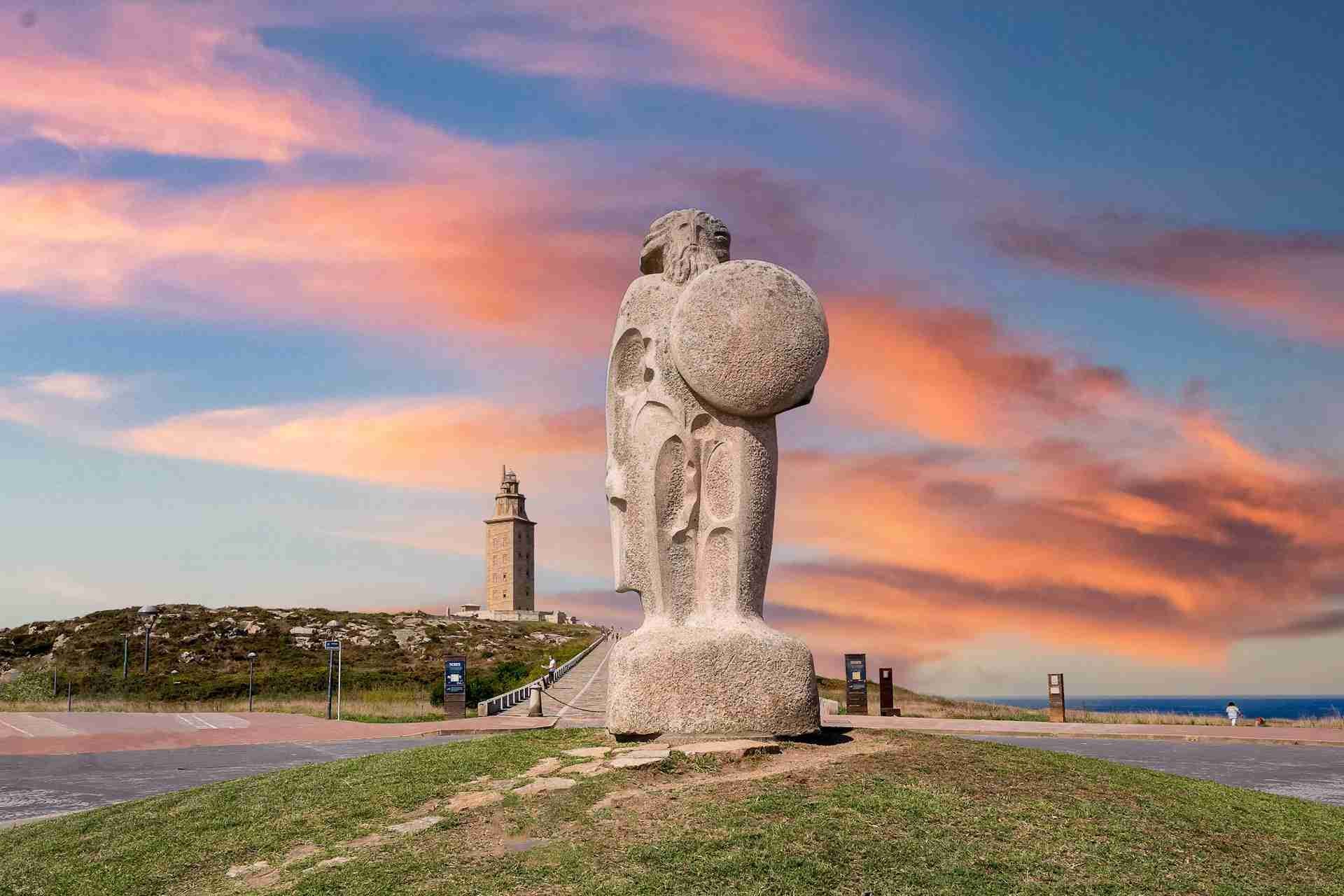
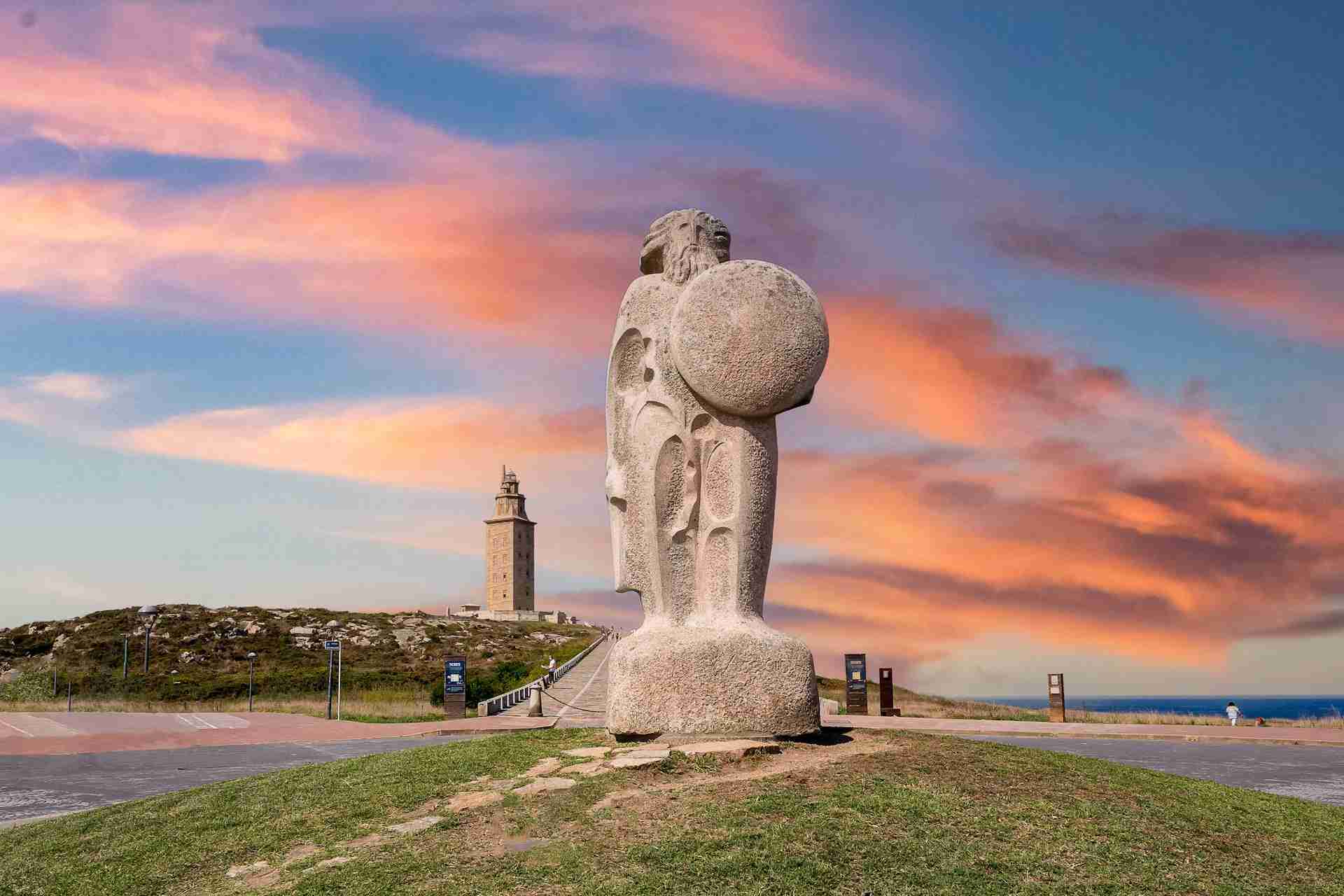
At the edge of the Galician coastline, where the Atlantic crashes into the cliffs below the ancient Tower of Hercules, stands a weathered monument carved from granite—the Breogán sculpture. This powerful figure, rooted in Celtic mythology, represents the mythical founder of Galicia and stands as a sentinel facing the sea. Surrounded by rugged terrain, shifting clouds, and salt-laden winds, it's a compelling subject for photographers drawn to raw textures, historic references, and wide coastal compositions. Whether you shoot landscapes, editorial work, or fine art, the Breogán sculpture invites a visual narrative that combines myth, monumentality, and movement. Its location also offers some of the most rewarding light and natural drama you'll find in northern Spain.
Best Photography Opportunities
• Golden Hour Texture and Directional Light
: The surface of the Breogán sculpture comes alive when the sun is low, either shortly after sunrise or just before sunset. The angle of the light creates deep shadows in the carved grooves, especially across the figure's arms, tunic, and facial expression. During this time, the color temperature also enhances the granite's natural warm tones, contrasting beautifully against the cooler hues of the sea and sky. Position yourself to shoot sidelight or backlight for more defined shape separation, especially if you want to play with the silhouette of the figure against the horizon. This is an ideal moment for both color and black-and-white treatments, depending on how you want to highlight contrast and surface detail.
• Wide-Angle Coastal Storytelling
: Using a wide lens, photographers can frame the sculpture within its natural and cultural context by including the ocean to the north and the Tower of Hercules to the southeast. From the northern paths, you can shoot a layered composition that places Breogán in the foreground, cliffs and rocks in the middle ground, and an expansive sky above. This works best with some cloud movement to add sky interest without overwhelming the sculpture. A polarizing filter helps manage the sea's reflection, especially on bright days, while neutral density filters allow for motion blur in the waves for added visual rhythm. This approach is perfect for storytelling compositions that tie the figure to the landscape.
• Fog and Minimalist Isolation
: On mornings when fog drifts in from the Atlantic, the Breogán sculpture can be reduced to strong outlines against a muted, pale background. This minimal approach strips the setting of distractions and brings attention to shape and gesture. Shooting at these times requires careful exposure control, especially if you are working with high dynamic range scenes. Manual focus is often more reliable in low-contrast conditions, and shooting in RAW gives you flexibility in post to bring back subtle gradients in the sky or stone. The mood shifts dramatically under these conditions, making it ideal for portfolio pieces or more conceptual work.
• Night Shooting and Long Exposures
: The sculpture and surrounding area remain accessible after dark, and on clear nights you can shoot long exposures that include star movement or subtle city glow on the horizon. Bring a sturdy tripod and remote shutter release, especially since wind gusts are common near the cliffs. Focusing can be challenging, so pre-focusing at dusk is a useful strategy. Including passing headlights from distant roads or lighthouse beams from the Tower of Hercules adds additional layers of light movement. While the area is not heavily lit, there is just enough ambient light for careful balancing of shadows and detail.
• Drone Angles and Elevated Perspectives
: Flying a drone gives you access to angles that reveal how Breogán fits into the broader terrain. Low altitude orbits can create dynamic parallax as the statue shifts against the ocean or sky. Higher vantage points can capture the radial layout of nearby paths, the sculpture's alignment with the Tower of Hercules, or the geometric layout of the sculpture park. This location is open air and generally drone-friendly, though wind conditions can be unpredictable. Early morning is the best window for flight due to calmer air and more directional light.
Best Time to Visit
The sculpture is photographable year-round, but certain seasons provide more reliable conditions and a broader range of creative opportunities. Spring, from March to May, is one of the best times to visit due to mild temperatures, clear skies, and fresh greenery along the coastal trails. The light in spring is especially soft in the early mornings, and occasional cloud cover adds mood without fully obscuring the sculpture or the sea.
Summer brings longer daylight hours and more stable weather, which is helpful for drone pilots and those shooting golden hour into late evening. However, crowds increase significantly during these months, particularly around the Tower of Hercules, so early arrival is key to avoiding foot traffic in your compositions. Light can be harsh in the middle of the day, but fog occasionally rolls in off the Atlantic even in summer, offering rare and rewarding conditions for minimalist frames.
Autumn often provides the most dynamic skies of the year, especially from September through November. Low-angle sunlight, dramatic clouds, and shifting sea tones make this season ideal for landscape photographers seeking high contrast and texture. There are fewer tourists, and the sculpture often appears more isolated in frame, which enhances its visual weight.
Winter is more unpredictable but can be a treasure for those seeking mood and drama. Winds are stronger, and rain is more frequent, but between storms the clarity of light and deep blues of the sea create striking compositions. Photographers should watch tide charts and wind forecasts carefully in winter, as both can change rapidly and impact your ability to shoot comfortably near the cliffs.
How to Get There
The Breogán sculpture is located within the Parque Escultórico da Torre de Hércules, on the northern coastal edge of A Coruña. Reaching the site is straightforward from the city center. By car, it is roughly a ten-minute drive from Plaza de María Pita to the parking area near the Tower of Hercules. The lot provides access to a network of paved and gravel walking paths that lead down to the sculpture, which is clearly marked with directional signage.
Public transport is also a reliable option. Several city buses stop within walking distance of the lighthouse complex, especially lines that run along Avenida de Navarra. From the bus stop, it is about a ten-minute walk on level terrain to reach the sculpture. Photographers coming on foot from the city can follow the coastal promenade, which begins near Orzán Beach and continues all the way to the sculpture park. This walk takes approximately thirty minutes and offers excellent scouting opportunities along the way.
There are no fees to enter the sculpture park or to access the Breogán monument itself. The area is open access and does not require tickets or guided entry. Paths are open year-round and suitable for both handheld and tripod setups. Accessibility is good, but photographers should take care after rain, as coastal humidity and salt spray can make paved areas slick. Arriving before sunrise or staying through sunset is easy, as the park remains open to pedestrians at all hours.
Recommended Photography Gear
Given the range of conditions and subjects at the Breogán sculpture, a well-curated kit will help you get the most out of each visit. A wide-angle lens in the 14 to 24 millimeter or 16 to 35 millimeter range is essential for capturing the sculpture in its full environment. These focal lengths allow for foreground emphasis, which is especially effective when shooting the statue from a low angle with the cliffs or sea behind it. A mid-range zoom like a 24 to 70 millimeter offers versatility for tighter frames and environmental portraits of the sculpture with visitors or nearby details.
For long exposures of waves or moving clouds, a sturdy tripod is non-negotiable. Because the site is often windy, consider bringing a tripod with spiked feet or a hook for hanging weight to stabilize your setup. A set of neutral density filters, particularly a six-stop and a ten-stop, will allow you to extend shutter speeds even during daylight hours. A circular polarizer is helpful for managing glare from the water and deepening sky contrast when the sun is higher.
Photographers interested in drone work should bring a foldable UAV with strong wind resistance and obstacle sensing. Flight times are best in early morning when winds are lighter and the sun casts long shadows across the stone surfaces. Keep batteries warm and fully charged if flying in colder months, as battery life can drop quickly.
Weather protection is also critical. The area is exposed to ocean spray, and even in dry conditions, the air carries salt that settles on gear. Lens cloths, sensor-safe wipes, and a microfiber towel should be in every kit. A waterproof camera cover and a rain jacket for yourself are smart additions, especially in shoulder seasons. Footwear with solid grip is important, as the walking surfaces near the sculpture alternate between smooth concrete and uneven stone paths.
Nearby Photography Locations
: From this elevated hill across the bay, photographers can capture sweeping views of A Coruña's coastline, including the Tower of Hercules and the Breogán sculpture in a wider context. The park also includes abandoned military structures, a domed observation station, and wide grassy platforms, offering compositional variety at golden hour or during blue hour transitions.
: These central beaches are popular with locals and offer accessible seascapes with changing light conditions. Long curves of wet sand reflect the sky, and the surrounding promenade architecture adds urban contrast. Surfers often dot the waves, which can add motion and scale to beach shots during late afternoon sessions.
: Just outside the modern city, this archaeological site offers a different historical layer, with stone ruins and raised earth structures ideal for wide compositions or top-down drone photography. The hilltop setting gives open views of the surrounding countryside, making it a strong location for landscape layering and ancient-meets-modern photo essays.
: The historic quarter of the city contains narrow streets, Romanesque churches, and worn staircases that create natural vignettes. Ideal for handheld shooting with a fast prime lens, the area photographs well in low light or after rain, when reflections bring life to the stone paving and pastel walls.
• Menhires pola Paz
: Situated within the same sculpture park as Breogán, this modern installation of standing stones is arranged with intentional sight lines that frame the sea and horizon. Each stone has an opening carved through it, creating opportunities for layered compositions or silhouette shots during sunset.
Tucked into the rugged coastline of Galicia, the Breogán sculpture offers more than just a photo opportunity. It is a place where changing light, shifting sea air, and cultural mythology meet in a setting that challenges and rewards photographers in equal measure. With careful preparation and patience, it is possible to create images here that feel as enduring as the stone figure watching over the cliffs.
Comments
Loading comments…