
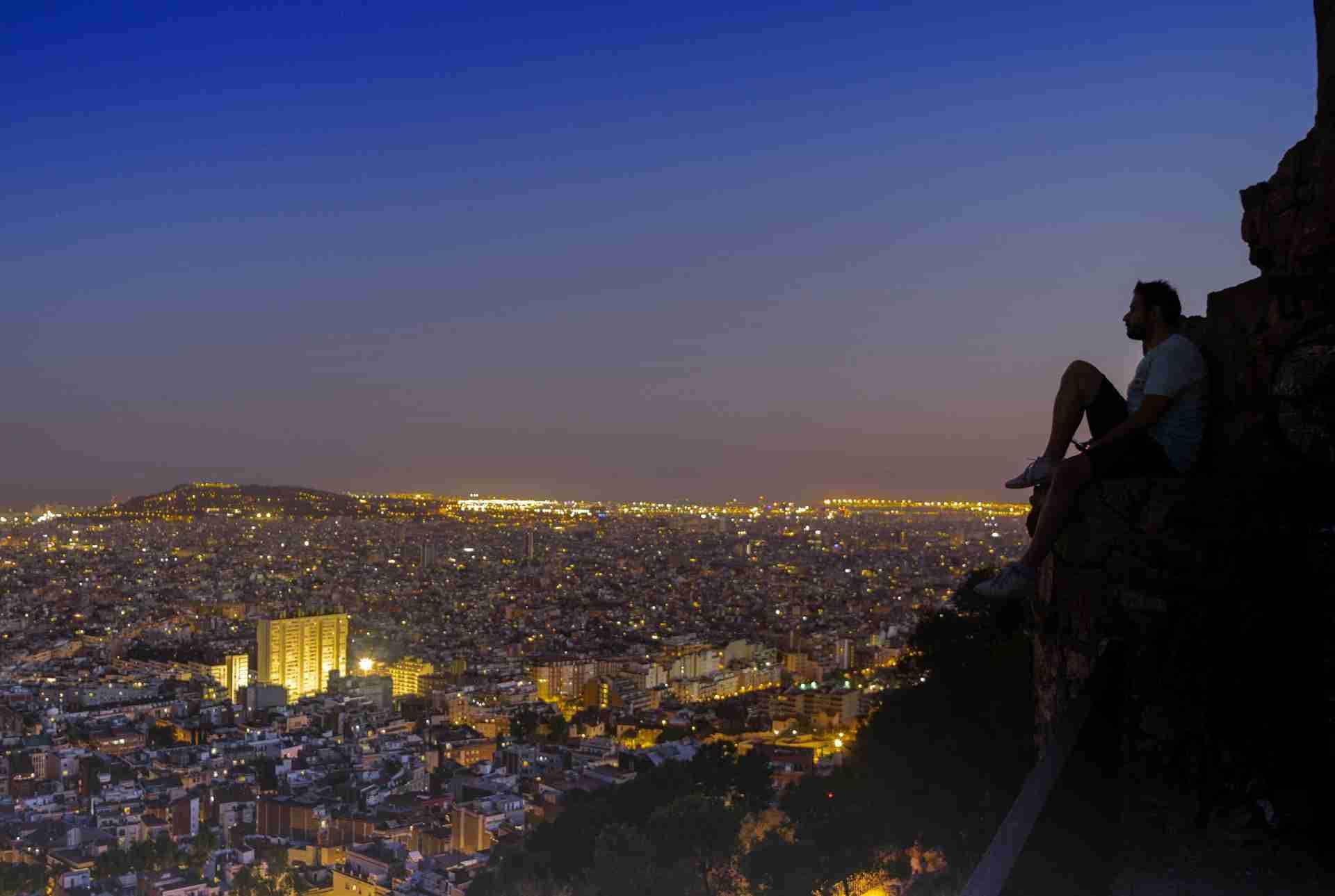
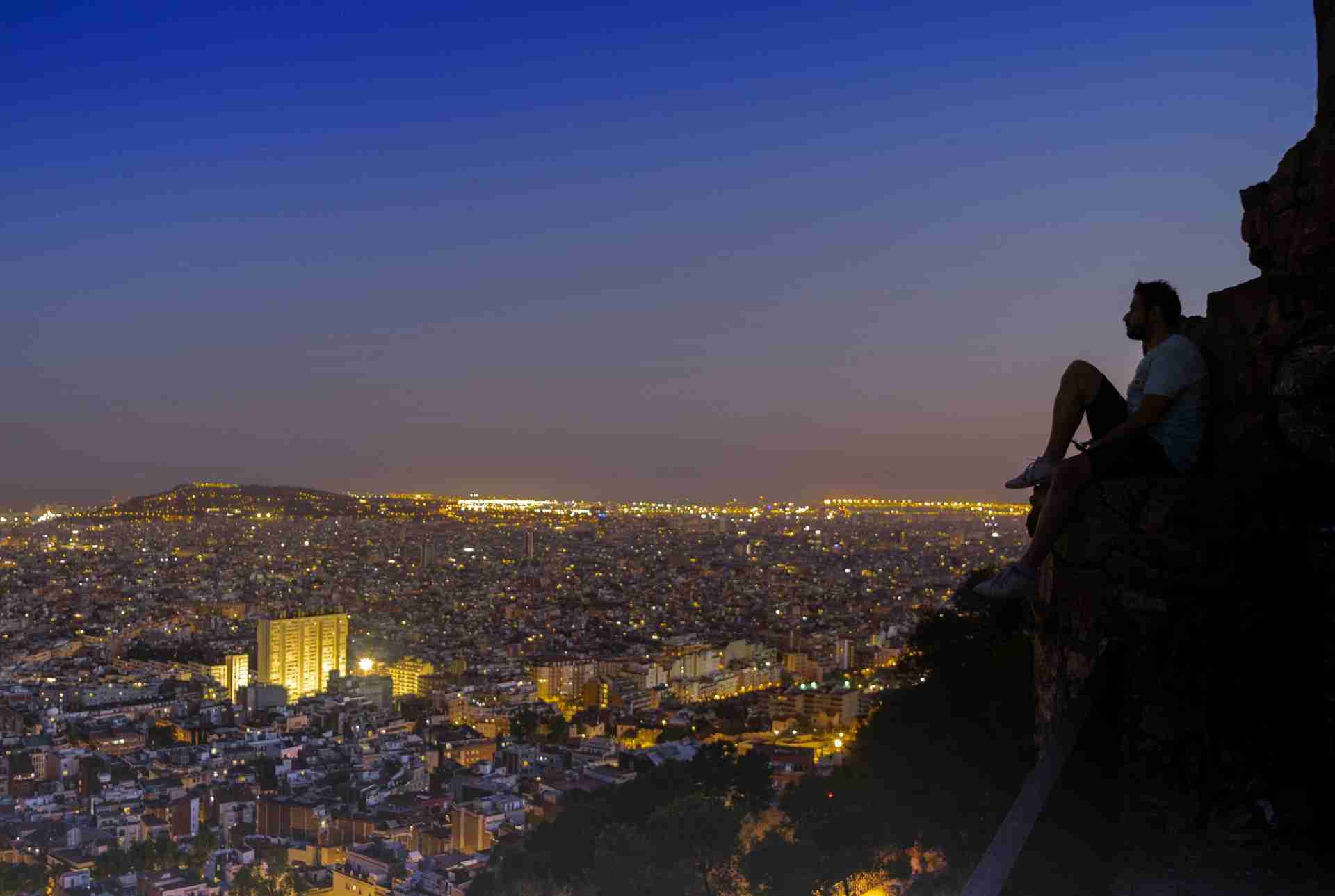
Bunkers del Carmel offers one of the most expansive and rewarding panoramic views in all of Barcelona. Perched atop the Turó de la Rovira hill, this former anti-aircraft battery has become a favorite location for photographers seeking a wide, elevated perspective over the city. From here, you can see nearly the entire urban grid unfold below, with landmarks like La Sagrada Família, Torre Glòries, and the Mediterranean coastline all visible in a single frame. The site's elevation and open sky make it an exceptional place to capture changing light and shifting weather, especially during sunrise, sunset, and blue hour. Though it's grown in popularity in recent years, the bunkers still offer enough space and vantage points to support both intimate framing and sweeping cityscapes.
Best Photography Opportunities
• Sunrise Over the City Grid
The most iconic view from the bunkers faces southeast toward the Mediterranean. At sunrise, soft light fills the sky above the sea and creeps gradually across the Eixample district below. This is the best time for capturing Barcelona's unique grid layout with a clean, low-contrast sky. A wide-angle lens allows you to frame the full breadth of the city from the base of the bunkers to the horizon, while longer focal lengths help compress the urban density for stronger lines and geometry. The cooler tones of morning often contrast beautifully with the warming buildings as the sun climbs.
• Golden Hour and La Sagrada Família
In the late afternoon and into golden hour, the light shifts westward and begins to spotlight individual landmarks. La Sagrada Família, with its central placement and height, becomes the visual anchor of the composition. From the bunkers, you can frame the basilica between rooftops and surrounding structures to give it both context and contrast. Using a 70–200mm lens, you can isolate it against a compressed background of city life, while a midrange zoom captures the warm light hitting the towers. The golden tones at this hour are ideal for highlighting the texture of the buildings and the subtle hills beyond the city.
• Twilight and Blue Hour Panoramas
Blue hour is one of the most visually striking times at the bunkers. As the ambient light drops and the city lights begin to flicker on, the contrast between the warm urban grid and the cool twilight sky creates a balanced composition. Long exposures at this time smooth out traffic movement and give the scene a polished, cohesive look. A tripod is essential here for maintaining sharpness, especially when shooting multi-minute exposures or panoramic stitches. Multiple exposures can also be blended later to manage dynamic range and bring out both detail in the city and the fading sky.
• Cloudscapes and Atmospheric Shifts
One of the most underrated aspects of this location is how it responds to changing weather. On days with dramatic skies or fast-moving clouds, the bunkers give photographers the opportunity to incorporate scale and movement into their compositions. This is especially true after summer thunderstorms or in autumn when clouds hover low over the hills. Shooting with a neutral density filter allows for long exposures that streak cloud movement across the sky while the city remains sharp and detailed beneath.
• Foreground and Local Life
While the panoramic views tend to dominate, the bunkers themselves are part of the story. The remnants of the anti-aircraft installations, graffiti-covered walls, and the daily rhythm of locals and visitors all add layers to your frame. Including people in your composition, especially silhouetted against the skyline, brings scale and immediacy to wide shots. These elements are especially effective during backlit conditions near sunset when the low sun casts long shadows across the concrete platforms.
Best Time to Visit
The best time to photograph Bunkers del Carmel is early in the morning, particularly just before and after sunrise. At this hour, the site is quiet, the light is soft, and the chances of atmospheric haze are lower, offering clear detail in the city below. From late March through early June and again from late September through November, the sun rises at a favorable angle for frontal light across the city without being overly harsh or high in the sky. These shoulder seasons also provide mild temperatures and dynamic skies.
Sunset is popular and visually rewarding, especially in summer when the sun dips behind the mountains, casting long shadows across the city and warming the skyline in golden tones. However, crowds can become dense during this time, so arriving early to claim a good spot is essential. Blue hour offers one of the most balanced light situations for long exposures, but you'll need to work quickly as the contrast increases with each passing minute. Winter sun stays low throughout the day, which can be used to your advantage when photographing the texture of rooftops or chasing soft side light over the city grid.
Avoid midday unless you are scouting or using infrared or specialty techniques, as the light tends to be flat and harsh from overhead. Cloudy or post-storm conditions can be ideal for capturing mood and motion, especially if you plan to shoot longer exposures or time-lapse sequences.
How to Get There
Bunkers del Carmel is located atop Turó de la Rovira in the El Carmel neighborhood, northeast of the city center. While the climb is not long, it is steep, so some preparation is required. The most direct access is from Carrer de Marià Lavèrnia or Carrer del Mühlberg, both of which lead to a network of stairs and paved paths. The nearest Metro stations are Alfons X and El Carmel, each about a 20-minute uphill walk from the site. Several bus lines also stop near Parc del Guinardó, which connects to walking trails that lead up to the bunkers.
There is no entrance fee or gate, and the area is accessible 24 hours a day. However, there are no facilities on-site, so bring water, especially during warmer months. There is little to no artificial lighting, so if you plan to shoot during twilight or night, bring a headlamp or flashlight for safety. The open space at the top provides ample room for setting up tripods and moving between vantage points, but be mindful of your gear during busier hours, as pickpocketing can occur. Early arrival is recommended not only for light but also to avoid jostling for position with other photographers or tourists.
Recommended Photography Gear
Capturing the full potential of Bunkers del Carmel requires gear that performs well across wide compositions, varying light conditions, and changing atmospheres. A wide-angle lens between 16–35mm is essential for sweeping cityscapes and sunrise shots where you want to include both the skyline and the open sky above. For tighter compositions, especially when isolating landmarks like La Sagrada Família or Torre Glòries, a mid-to-telephoto zoom such as 70–200mm will give you strong compression and framing options.
A sturdy tripod is a must, especially if you plan to shoot at blue hour or work with long exposures for smoothing clouds or capturing light trails. Use a remote shutter release or timer to ensure maximum sharpness. A graduated neutral density filter is helpful during sunrise and sunset to balance the exposure between bright skies and darker foregrounds. A standard ND filter (6 or 10 stop) is also useful for creative long exposures of the sky during daytime or twilight.
If you're planning to shoot panoramic stitches, bring an L-bracket or a leveling base to ensure seamless alignment across frames. Extra batteries and high-capacity memory cards are essential, particularly for time-lapse or bracketing sequences. Use a weather-sealed bag with padded compartments, as the hike can be bumpy and exposed. A microfiber cloth is also useful, especially during humid or windy days when your lens may pick up dust or condensation.
Because the site is fully exposed to the elements, dress in layers and wear shoes with good grip for climbing uneven paths or concrete slabs. With the right gear and a bit of preparation, Bunkers del Carmel becomes not just a vantage point, but a dynamic outdoor studio where every shift in light opens a new opportunity to photograph the city.
Nearby Photography Locations
Directly below the bunkers, this park offers leafy walking paths, terraced viewpoints, and shaded corners that contrast with the stark, open summit. It's a great place to photograph locals in motion and to find quieter compositions of Barcelona's hills framed by trees and low stone walls.
Located about 20 minutes downhill by foot, this architectural complex is a masterpiece of Catalan modernism. The ornate facades, tiled domes, and symmetrical gardens make for structured architectural photography. It's especially photogenic in afternoon light when the sun brings out the warmth in the tiles and decorative elements.
• Carmel Market and Local Streets
The surrounding neighborhood of El Carmel is less touristed than central Barcelona and offers strong opportunities for street photography. Narrow residential alleys, balconies draped with laundry, and local storefronts give you real-life texture and color just a few blocks from the bunkers.
Another elevated green space nearby, this park provides views of northern Barcelona from a slightly different angle. It's less crowded and offers high vantage points among pine trees, especially suitable for early morning or overcast days when you want something quieter than the bunkers.
• Torre Glòries Viewpoint
For an opposite perspective looking back toward the hills, the viewing platform at Torre Glòries offers a 360-degree panorama of Barcelona's coastline and inner districts. It's ideal for sunset or night photography and provides a clean, high vantage point with modern infrastructure and reflections.
Bunkers del Carmel offers more than just a postcard view. It's an amazing space where skyline, history, and atmosphere come together in a single vantage point. Whether you're capturing first light over the sea or the rhythmic glow of the city grid at night, this location delivers a compelling and ever-changing canvas for urban landscape photography.
Comments
Loading comments…