
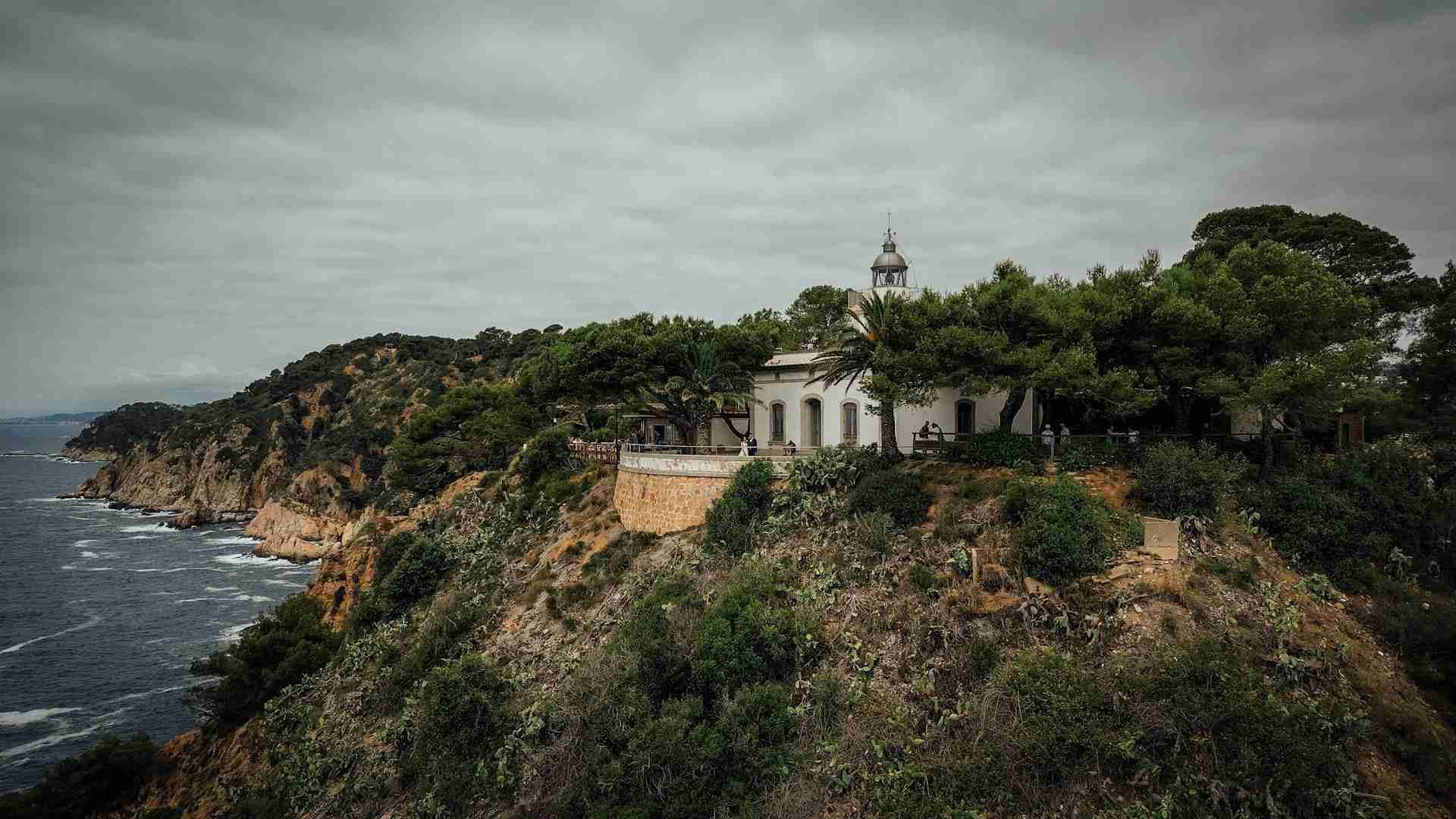
Set high above the rugged Costa Brava coastline, the Cap de Tossa Lighthouse offers photographers a rare mix of Mediterranean seascape, historic architecture, and dramatic elevation. Located at the tip of a rocky headland in the medieval town of Tossa de Mar, this still-operational lighthouse is perched beside the remains of the Vila Vella castle walls, overlooking cliffs that drop steeply to the sea below. It is one of the most accessible coastal viewpoints in Catalonia, offering clean sunrise lines, textured stonework, and an ever-changing relationship between light and water. Whether you're capturing the gentle light of dawn or the deep contrast of twilight, the lighthouse stands as both a subject and a framing element in a region defined by natural drama and historical depth.
Best Photography Opportunities
• Sunrise Over the Mediterranean
Facing directly east, the Cap de Tossa headland is ideally positioned for photographing sunrise over the sea. From the walking path that curves around the lighthouse or from slightly below the structure, you can frame the sun breaking the horizon with the lighthouse silhouetted or side lit in the foreground. The steep cliffs provide a natural drop-off that reveals layers of rock and crashing waves below. A wide-angle lens allows you to pull in the curve of the coastline, while a telephoto lens can isolate the sun, sea, and upper tower for tighter atmospheric compositions. Cloud cover adds even more interest, softening the color transition in the sky and giving the water a reflective glow.
• Golden Hour and Vila Vella Walls
The lighthouse sits within walking distance of the medieval Vila Vella enclosure, a walled citadel with narrow alleys, towers, and cobblestone paths. As the late afternoon sun lowers behind the hills to the west, warm light spills across the stonework and illuminates the lighthouse with a side glow. This is the best time for combining old and new structures in the same composition. Shooting from just behind the castle towers allows you to frame the lighthouse with fragments of ancient wall in the foreground. The golden tones enhance the warmth of the stone and deepen the color of the surrounding pine vegetation.
• Twilight and Lighthouse Illumination
At twilight, the lighthouse's beacon comes alive. Though the tower is relatively short, its light stands out clearly in the descending blue of the evening sky. This is an excellent time for long exposures that balance the cool ambient tones with the warmer artificial light cast by the beacon and nearby path lighting. Use a tripod to shoot multi-second exposures from various elevations around the headland. Compositions that include the lighthouse and the darker coastline beyond provide a sense of both isolation and orientation. The surrounding vegetation and old stone structures can be used as silhouetted framing elements to draw attention to the lit tower.
• Cliffside Views and Coastal Texture
The paths surrounding the lighthouse offer dramatic views of the jagged coastline below. These rock formations, often topped with sparse vegetation and weathered pines, catch side light beautifully and create strong leading lines into the frame. From lower vantage points along the path, you can angle upward to emphasize the height of the cliffs with the lighthouse perched at the edge. Mid-morning and mid-afternoon are particularly good for capturing detail in the rock faces without flattening them with direct overhead light. Adding human figures into the scene for scale can help show the true size of the terrain.
• Stormy Skies and Moody Weather
On less predictable days, Cap de Tossa becomes an ideal location for weather-driven photography. When storms roll in from the sea, heavy clouds and turbulent surf create moody, dramatic frames. The white lighthouse stands in high contrast to the darker sky and provides a single bright element in an otherwise muted palette. A neutral density filter can be used to capture long exposures of moving water and clouds, and a polarizer will help manage glare on wet rock and sea. These conditions work well in monochrome, emphasizing texture and atmosphere over color.
Best Time to Visit
The best times of year to photograph Cap de Tossa Lighthouse are spring and autumn, when skies are clear or lightly clouded and the crowds are fewer. From March to early June, the vegetation surrounding the cliffs is green and fresh, and the coastal haze is minimal. Sunrises during this season are especially productive, as the light tends to rise cleanly over the sea and gives a cool clarity to the atmosphere. Late afternoons provide warm, directional light that plays across the textures of the town, cliffs, and lighthouse structure.
Autumn months from late September through November bring deeper shadows and more interesting cloud formations. The sea takes on a richer blue, and the light softens significantly earlier in the evening, which makes golden hour easier to manage. The lower sun angle also enhances the shape of the landscape and increases contrast on the rocky surfaces. Early mornings remain clear and still, ideal for long exposures and reflection-heavy compositions.
Summer brings longer daylight hours, but the light can become harsh during midday, and crowds increase considerably. If shooting during this season, early morning is the best time to avoid both strong light and foot traffic. Winter offers clear air and crisp horizons, though wind and weather can be unpredictable. The lighthouse is still photogenic during colder months, particularly when framed against a dramatic winter sky or when waves crash into the cliffs below.
How to Get There
Cap de Tossa Lighthouse is located in the coastal town of Tossa de Mar, about 90 minutes northeast of Barcelona by car. It is also accessible by public bus from Girona or Barcelona to the Tossa de Mar bus station, which is a 15-minute walk from the town's main beach. From there, follow signs through the old town and ascend through the Vila Vella citadel on foot. The lighthouse is located at the highest point of the headland, and the path is paved and well-maintained, though steep in parts.
There is no entrance fee or access restriction to the lighthouse exterior, but the surrounding area closes to vehicles. Photography is permitted at all times from the public paths and viewpoints. The site is especially quiet in the early morning and late evening, though small crowds often gather at sunset. Restrooms and cafes are available in the old town below, and a few benches are located along the lighthouse path. A flashlight or headlamp is helpful if you're staying past sunset to shoot into blue hour or beyond.
Recommended Photography Gear
Because the location combines seascape, architecture, and changing light, a balanced photography kit will help you take advantage of every angle. A wide-angle lens in the 16–35mm range is essential for full scene compositions that include the lighthouse, cliffs, and sky. This focal length is especially useful for sunrise and golden hour when the horizon and light sources need to be placed strategically within the frame. A standard zoom, such as a 24–70mm, gives you flexibility to move between medium views and tighter details, including stone textures, light reflections, or human scale against the structure.
For isolating the lighthouse against the sea or compressing the coastal shapes, a telephoto lens in the 70–200mm range is valuable. This is also the best tool for creating layered compositions with the town below or photographing the lighthouse beacon during twilight. A tripod is essential for low-light conditions, long exposures, and blue hour sequences. Use a remote shutter or a built-in timer to eliminate vibration.
Bring a circular polarizer to reduce reflections off the water and enhance cloud detail, especially during daytime sessions. A 6-stop or 10-stop neutral density filter will allow for long exposures of moving clouds or smoothing out the surface of the sea. A lens hood is recommended to minimize flare when shooting toward the rising or setting sun.
The short hike up to the lighthouse is steep but manageable. Use a lightweight backpack with weather protection for carrying gear safely. Wind along the cliffs can be strong, so make sure your tripod is stable and your camera strap is secured. Extra batteries and memory cards are recommended for long sessions, especially if you are bracketing exposures or shooting time-lapses. Comfortable walking shoes and layered clothing will help you stay mobile and ready for shifts in weather or light.
Nearby Photography Locations
This medieval walled section of Tossa de Mar offers narrow streets, fortified towers, and stone staircases that glow beautifully in late afternoon light. The combination of architectural texture and hillside elevation makes it ideal for wide-angle storytelling shots or intimate details of stone and light interplay.
From the town's main beach, you can capture the entire headland with the lighthouse perched above the castle walls. This is an excellent location for twilight shots, especially with reflections in the wet sand or low tide pools. Use a longer lens to compress the vertical elements of the cliffs and structures.
Just below the headland, this small cove offers a dramatic foreground of rocks and crashing waves, perfect for long exposures at sunrise or golden hour. Shooting upward from the beach gives you a clean vertical line toward the lighthouse with strong contrast between sea and stone.
This historic coastal path winds north and south from Tossa de Mar and provides countless elevated views, including hidden coves and pine-framed overlooks. Early morning walks along this route reward photographers with soft sidelight and uninterrupted views of the cliffs and sea.
• Sant Grau d'Ardenya Lookout
A short drive inland takes you to this elevated viewpoint, which looks down on the coastal range and out toward the Mediterranean. It is especially good for golden hour and sunset shots that emphasize the layered landscape of hills, forest, and open water in the distance.
Cap de Tossa Lighthouse offers more than just a beautiful view. It connects coastal drama with historical architecture and dynamic light, making it a rich subject for both single exposures and deep photographic exploration. Whether you're chasing morning calm or evening contrast, the headland above Tossa de Mar is a place where every element of the frame can shift with the wind, the sea, and the changing light.
Comments
Loading comments…