
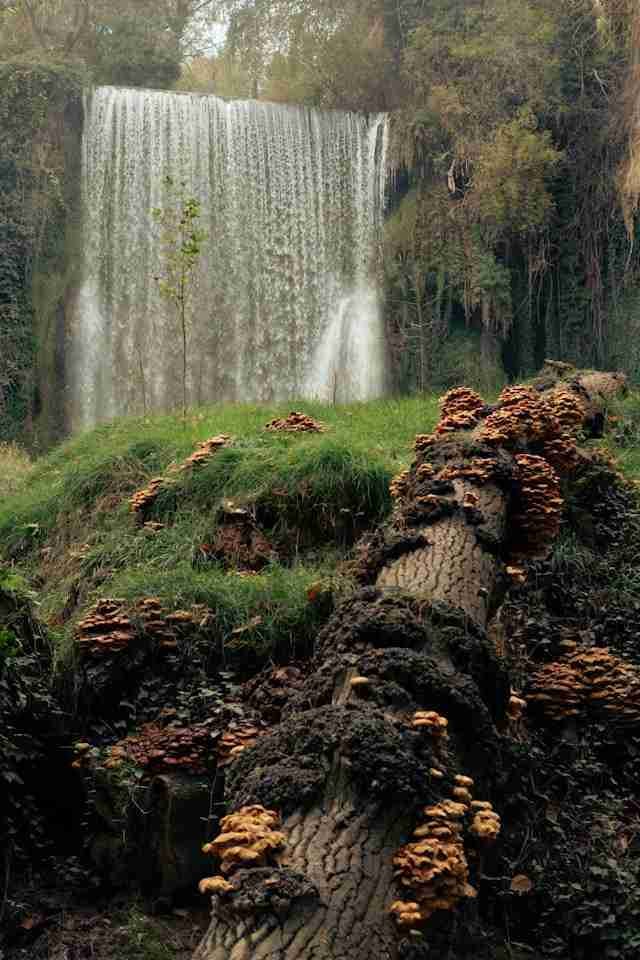
Hidden within the lush natural park of Monasterio de Piedra, Cascada La Caprichosa is one of Spain's most visually dynamic waterfalls. Located near the historic 12th-century Cistercian monastery in Nuévalos, Aragón, the cascade plunges over a rocky outcrop into a pool framed by mossy stone and ferns, producing mist, motion, and changing light throughout the day. Unlike taller, singular-drop falls, La Caprichosa features several staggered drops and ledges that give it a sculptural character ideal for long exposure work and textural studies. Tucked among limestone cliffs, shaded groves, and romantic footpaths, this waterfall is as atmospheric as it is photogenic—offering both wide-angle drama and intimate compositions shaped by water and time.
Best Photography Opportunities
• Frontal View from the Main Platform
: The most comprehensive and balanced composition of La Caprichosa is found directly across from the waterfall on the wooden viewing platform. This location reveals the full architecture of the cascade, which splits and tumbles in multiple layers over mossy ledges. The uppermost tier fans outward while lower drops form converging streams that churn into a shallow pool, offering strong visual flow from top to bottom. A wide-angle lens captures the waterfall's full span and includes natural framing from surrounding foliage. Early to mid-morning provides soft side light that enhances depth in the stone textures and avoids overexposing the water. Compose with a low tripod angle to emphasize the height of the fall and draw the eye up through the water's path.
• Diagonal Perspective from the Left Trail
: Moving to the trail just left of the main viewpoint, you'll find a more angular vantage that emphasizes the structure and rhythm of the staggered falls. From this diagonal perspective, the cascade appears to flow across the frame from upper right to lower left, allowing the eye to travel dynamically through the image. This composition benefits from late morning light, which glances across the moss and brightens the shadowed crevices in the rock. Use a 24–70mm lens to frame the entire waterfall or isolate one tier for a more abstract composition. Framing with overhanging leaves or branches helps add depth and natural framing, especially in spring or autumn when color contrast enriches the scene.
• Close-Up Studies of Flow and Surface Texture
: The waterfall's multi-tiered nature and accessible lower edge provide ample opportunities for close-up work. Water splashes and veils across lichen-stained rock and moss, creating patterns that vary with light, flow rate, and season. Use a mid-range zoom or macro lens to capture the intricate lacework of falling water or focus on the interface between dripping vegetation and slick stone. Overcast conditions or the deep shade of mid-afternoon make these shots easier to expose properly without harsh highlights. Position yourself safely near the base of the fall to photograph ripples, bubble trails, or the play of light on swirling foam—perfect for creating moody, abstract frames with rich textural detail.
• Above the Cascade Through Foliage and Mist
: A lesser-seen but rewarding perspective is available by climbing the narrow path that ascends to the top of the waterfall. From this upper zone, you can photograph the cascade looking downward or frame it partially obscured through overhanging leaves. This angle gives a more narrative, secret-garden quality to the image and works especially well when mist rises from below after rainfall. Use a longer focal length to compress layers of vegetation, water, and air into a dreamy, cinematic image. Early morning is best here—when fog is most likely and sunlight has not yet broken fully through the canopy, creating delicate glows and soft edges throughout the frame.
• Long Exposure Atmosphere in Low Light
: On cloudy days or near dusk, La Caprichosa transforms into a theater of texture and tone. With less ambient light, long exposures become smoother and more painterly, and mist around the base of the falls takes on a ghostly quality. Position your tripod close to the pool and use a 10-stop ND filter to achieve exposures of 5–15 seconds. This softens the turbulence of the water and makes it glide like silk across the rocks. Incorporate the moss-covered ledges and stone retaining walls to contrast still texture with moving form. This is also an ideal time to shoot in monochrome, where the interplay of tone and shape becomes even more expressive without the distraction of color.
Best Time to Visit
The best seasons for photographing La Caprichosa are spring and early summer, when recent rainfall ensures strong water flow and the surrounding foliage is at its most vibrant. From April through June, the light filtering through new leaves casts gentle shadows and cool tones across the cascade. Mornings are ideal for diffused light and fewer visitors, especially on weekdays.
Autumn also offers excellent shooting conditions, with golden leaves adding seasonal contrast to the greenery still clinging to the rocks. Afternoon light in October and November rakes across the waterfall from the west, illuminating the mist and creating glowing highlights on the water's surface.
Winter can be quieter and more contemplative, though the waterfall's flow may be reduced. Bare branches offer clearer views of the rock formations and create minimalist compositions with starker contrasts. During this season, the midday sun sits low enough to provide directional light without being harsh.
Avoid midsummer weekends if possible, as the narrow walkways and platforms can become crowded. The waterfall is most atmospheric in low, diffuse light—cloudy mornings or immediately after rainfall provide the best conditions for capturing mood, texture, and movement without blown highlights.
How to Get There
Cascada La Caprichosa is located within the Monasterio de Piedra Natural Park, in the town of Nuévalos, province of Zaragoza, Aragón. From Zaragoza, it's approximately a 90-minute drive via the A-2 and local roads. Follow signs for Monasterio de Piedra once you reach the Nuévalos area.
The park has a paid entrance fee, which grants access to a network of trails, waterfalls, and natural features. Once inside, the path to La Caprichosa is clearly marked and part of the main circuit. The trail includes stairways and narrow walkways through rocky terrain, but it is well maintained and manageable for most visitors.
The main viewing platform for the waterfall is stable and offers a wide field of view. Sturdy walking shoes are recommended, especially if you plan to explore side paths or visit other cascades within the park. Tripods are allowed, but be mindful of space on the walkways during peak hours.
Recommended Photography Gear
A wide-angle lens (16–35mm) is essential for capturing the full breadth of the waterfall, especially from the frontal viewing platform. Use it to incorporate foreground textures like railings, moss, or overhanging branches for immersive depth.
A mid-range zoom (24–70mm) offers flexibility for both wider environmental shots and tighter studies of cascading tiers, dripping moss, or the structure of the surrounding rock. It's the most versatile lens for working around trail constraints.
A telephoto lens (70–200mm) is useful for isolating distant angles, shooting through foliage, or compressing layers of mist and vegetation into a dense, cinematic composition. It's especially effective for "through the trees" perspectives or studying the vertical alignment of water flow and mossy ledges.
A sturdy tripod is essential for long exposures in low light or slow shutter work with ND filters. A circular polarizer will enhance contrast, reduce glare on wet stone, and deepen the natural greens. Bring a microfiber cloth for lens cleaning—mist and spray are constant, especially close to the cascade.
Nearby Photography Locations
: Just a short walk from the waterfall, the 12th-century Cistercian monastery features beautifully decayed cloisters, vine-covered archways, and dramatic light through broken vaults—perfect for architectural photography and atmospheric detail work.
: Another stunning cascade within the park, this taller fall plunges into a narrow canyon, offering strong vertical compositions. Shoot from beneath the cliff for dramatic upward angles with backlit mist.
• Lago del Espejo
: A calm reflective lake surrounded by dense foliage and stone bridges. This quiet spot offers opportunities for mirror compositions and water detail studies during the golden hour.
A cavernous grotto beneath the waterfall circuit where light shafts cut through openings in the rock. Use a tripod and long exposure to capture glowing stone walls and ethereal textures.
• Barranco de la Hoz Seca
: Just outside the park, this dry gorge features towering cliffs, winding paths, and desert vegetation. Excellent for wide-angle landscape work in late afternoon when side light emphasizes form and texture.
Cascada La Caprichosa is more than a waterfall—it's a living sculpture shaped by time, geology, and weather. Whether veiled in mist, dappled with filtered sunlight, or roaring after rain, it remains a location of endless photographic possibilities, where mood and movement are your most powerful tools.
Comments
Loading comments…