
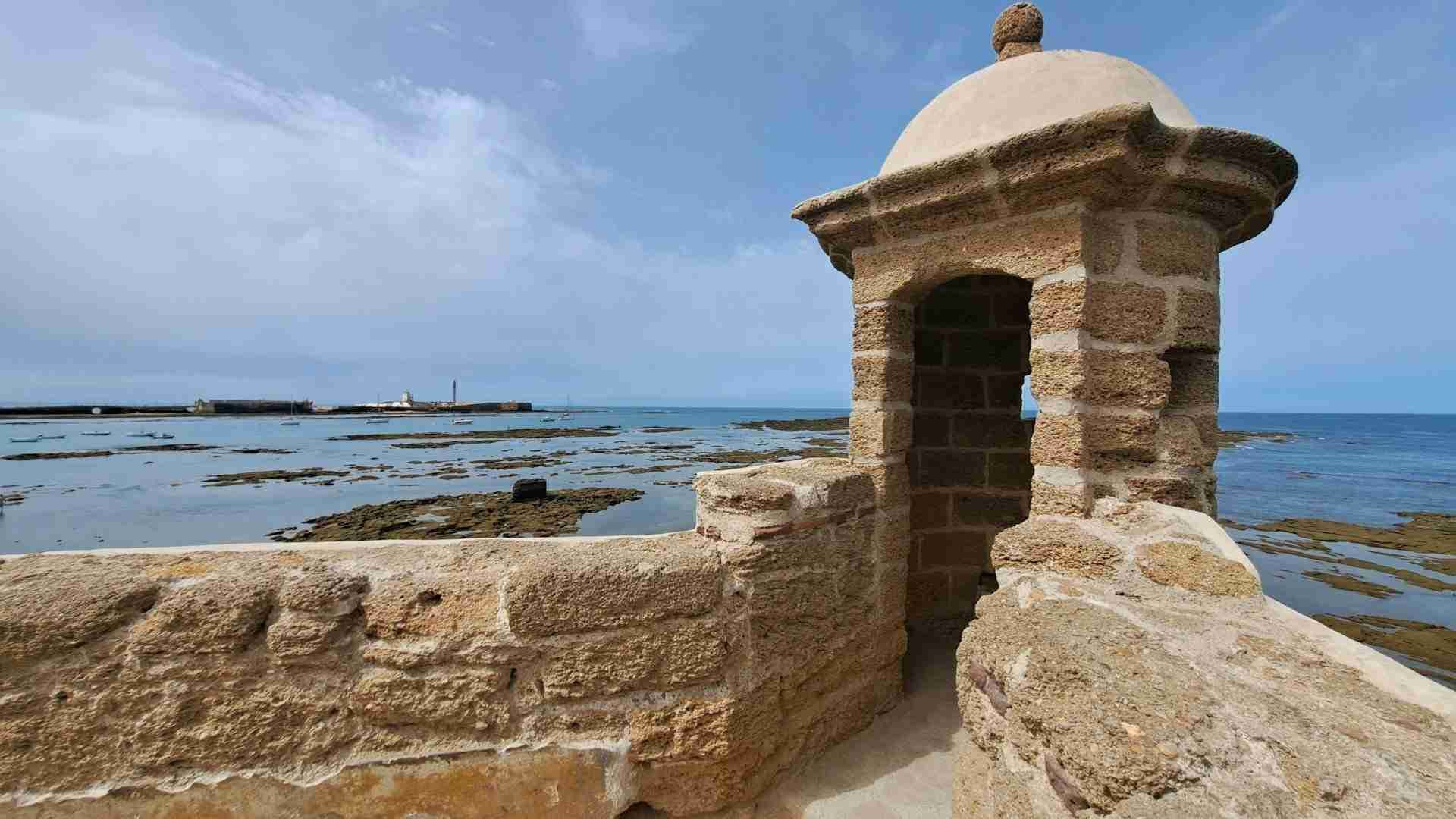
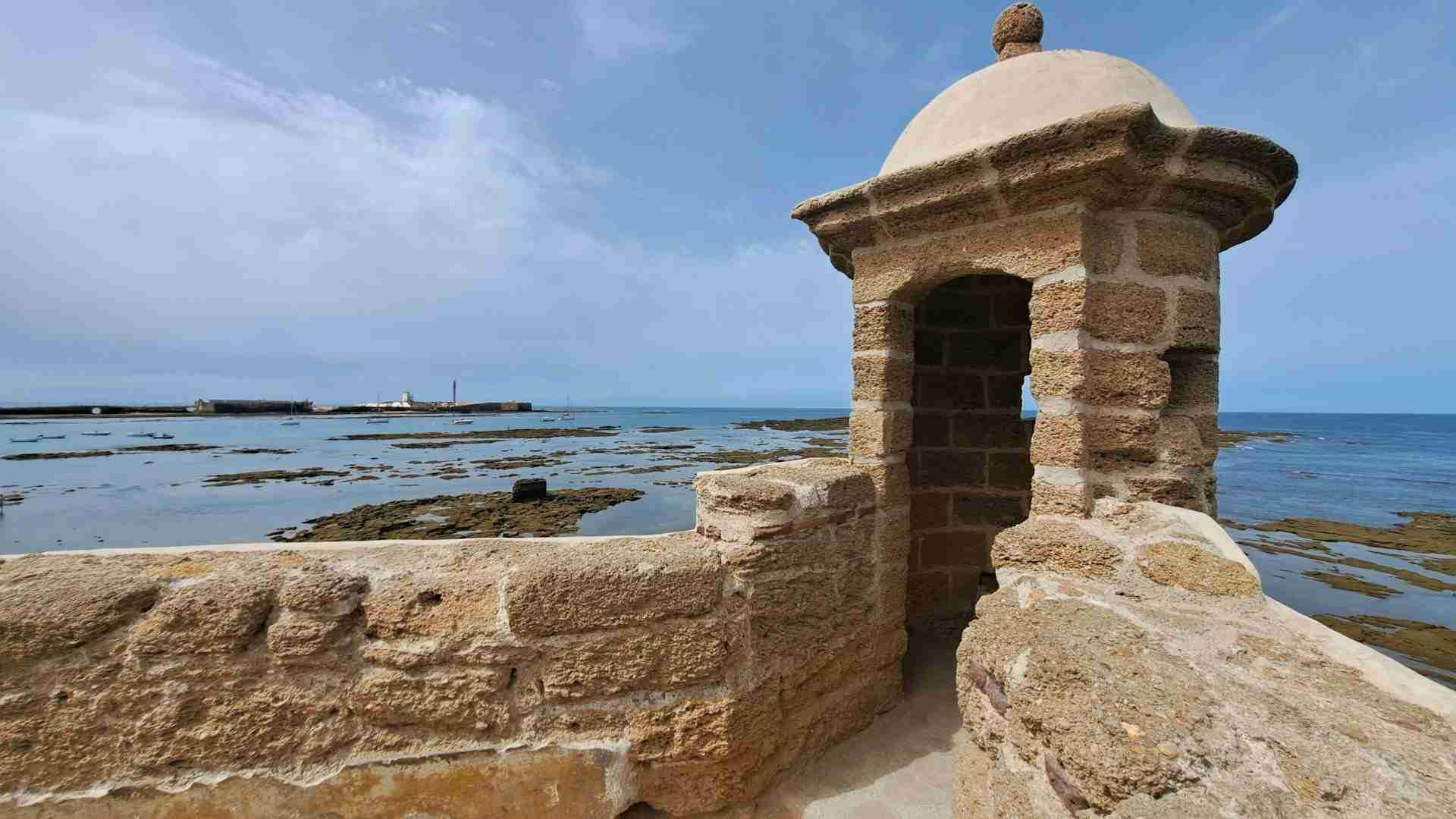
Perched at the northern edge of Playa de la Caleta, the Castillo de Santa Catalina offers a commanding vantage point over the Atlantic and the historic city of Cádiz. This 17th-century star-shaped fortress, built in the wake of English and Dutch pirate raids, remains one of the city's most visually engaging landmarks. With its angular bastions, thick sandstone walls, and minimal ornamentation, the fortress is a masterclass in military geometry—and a dream for photographers drawn to clean lines, strong contrasts, and textured stonework. From sunrise to blue hour, this site rewards architectural studies, atmospheric seascapes, and abstract compositions alike.
Best Photography Opportunities
• Aerial Geometry and Fortress Layout
: The Castillo's star-shaped plan is best appreciated from elevated angles or via drone. With permission from authorities and adherence to local regulations, drone photography reveals the symmetrical layout of the bastions and the crisp transitions between fortress walls, walkways, and sea. Early morning or late afternoon flights provide the best shadows for emphasizing shape and depth, while mid-day overcast can reduce glare on the pale stone.
• Stone Archways and Courtyard Symmetry
: Within the fortress itself, several courtyards and covered corridors offer ideal conditions for framing shots that feature repeated arches, symmetry, and clean geometry. A 35mm or 50mm prime lens excels here, allowing you to maintain a natural perspective while composing around the linear repetition of architectural elements. This is also an excellent space for working with high-contrast light, where shafts of sun fall dramatically through arched openings.
• Textural Details and Patina
: The weathered sandstone surfaces of Santa Catalina are rich with pockmarks, mineral streaks, and subtle color variations. Macro lenses or longer focal lengths allow you to isolate aged textures—peeling doors, rusted hinges, carved lintels—without needing ideal light. On overcast days, these surfaces come alive with soft, even contrast.
• Atlantic Views and Defensive Perspective
: The outer ramparts offer sweeping views across La Caleta and the broader Atlantic, with moored boats, fishermen, and crashing waves providing a kinetic counterpoint to the fortress's static strength. A wide-angle lens allows you to include the textured foreground of the wall with ocean backdrops beyond. Look for moments when clouds drift low and light slices through—this setting excels under dynamic skies.
• Sunset Silhouettes and Western Bastions
: From the westernmost bastions, you can look out toward Castillo de San Sebastián and the horizon beyond. Sunset is a particularly magical time here, with light reflecting off the stone and creating sharp silhouettes of sentry posts, parapets, and palms. Long exposures with ND filters allow you to smooth the sea below or blur the movement of waves for minimalist compositions.
Best Time to Visit
The Castillo de Santa Catalina can be visited year-round and is open to the public most days, often hosting art exhibitions, performances, or cultural events within its walls. Golden hour provides the most flattering light, especially for external compositions and sea-facing ramparts. The low sun enhances the fortress's dimensionality, emphasizing its angular form with bold shadowplay. Early mornings offer solitude and soft light, ideal for interior courtyards or exploring line and texture in silence.
Winter months bring dramatic skies and shifting weather, which work beautifully against the pale yellow stone. Clouds and sea spray add atmosphere, and the absence of summer crowds allows for unhurried shooting. Midday light in summer can be harsh and contrast-heavy, but it's ideal for architectural abstraction—shooting up along walls or isolating windows and sentry posts against deep blue skies.
Low tide opens up foreground interest below the fortress walls, particularly around the beach side. Wet rocks, tidal pools, and marine debris can provide extra texture and narrative in wider compositions. Evening hours in spring and autumn offer the longest shadows and the richest tonal gradients.
How to Get There
Castillo de Santa Catalina is located at the northern end of Playa de la Caleta in Cádiz's old town, easily accessible on foot from any central point in the historic district. The closest access road is Calle Campo de la Aviación, which leads directly to the fortress's main entrance along the waterfront promenade. Entry is typically free, and the fortress is open during daylight hours—check local listings for seasonal schedules or closures during private events.
If you're arriving by car, public parking is available near the Paseo Marítimo or Parque Genovés, though spots can be limited during high season. The site is well-connected by local bus routes and easily walkable from anywhere in central Cádiz, including nearby landmarks like Playa de la Caleta, Parque Genovés, and the Gran Teatro Falla.
Once inside, you're free to explore the ramparts, inner courtyards, art spaces, and the beach-facing walls. Sturdy footwear is recommended, as the stone walkways can be uneven or slippery after rain or heavy surf.
Recommended Gear and Shooting Tips
Pack for versatility and comfort. A wide-angle lens is essential for capturing the scale of the outer walls and interior courtyards. A mid-range zoom will cover most framing needs inside and out, while a telephoto lens is excellent for compressing perspectives or capturing detail from a distance—especially if you're shooting across La Caleta toward the opposite fortress.
A lightweight tripod is useful for low-light interiors or golden hour long exposures. Bring ND filters for controlling sky brightness or smoothing the sea, especially during sunset compositions. A circular polarizer helps deepen skies and reduce glare on sunlit stone, particularly around mid-morning and late afternoon.
Due to its exposed position near the sea, salt spray and wind are frequent companions. Use lens hoods and microfiber cloths to manage condensation and airborne moisture. A camera strap or wrist lanyard is also wise when navigating narrow battlements or elevated walkways.
Respect the cultural use of the space—if an event or exhibition is underway, be discreet and avoid interfering with attendees or performers. Early morning or weekday visits are best for uninterrupted shooting and exploring light across the space as it shifts hour by hour.
Nearby Photography Locations
: Just below the fortress, this small beach offers tidal textures, fishing boats, and unparalleled sunset views. It's an excellent complement to the fortress and best photographed during low tide and late evening.
: Connected by a narrow stone causeway, this fortress sits directly across the bay from Santa Catalina. It's ideal for dramatic silhouettes, long exposures, and panoramic views over Cádiz.
: A tranquil garden just a short walk away, this park features sculptural trees, floral displays, and shaded paths perfect for macro photography and quiet, low-light compositions.
: From the southern ramparts of Santa Catalina, you can spot the golden dome of the cathedral rising above the old town—ideal for layered skyline shots using a telephoto lens at sunset or twilight.
• La Viña Neighborhood
: One of Cádiz's most character-rich barrios, La Viña surrounds the beach with colorful façades, narrow alleys, and vibrant street life. A great spot for environmental portraits or urban texture studies.
With its sturdy lines, strategic placement, and enduring elegance, Castillo de Santa Catalina offers a blend of historic weight and photogenic simplicity. It's a place where stone meets sea, light dances on walls, and every corner tells a layered story—perfect for photographers who appreciate quiet geometry, changing skies, and timeless perspective.
Comments
Loading comments…