
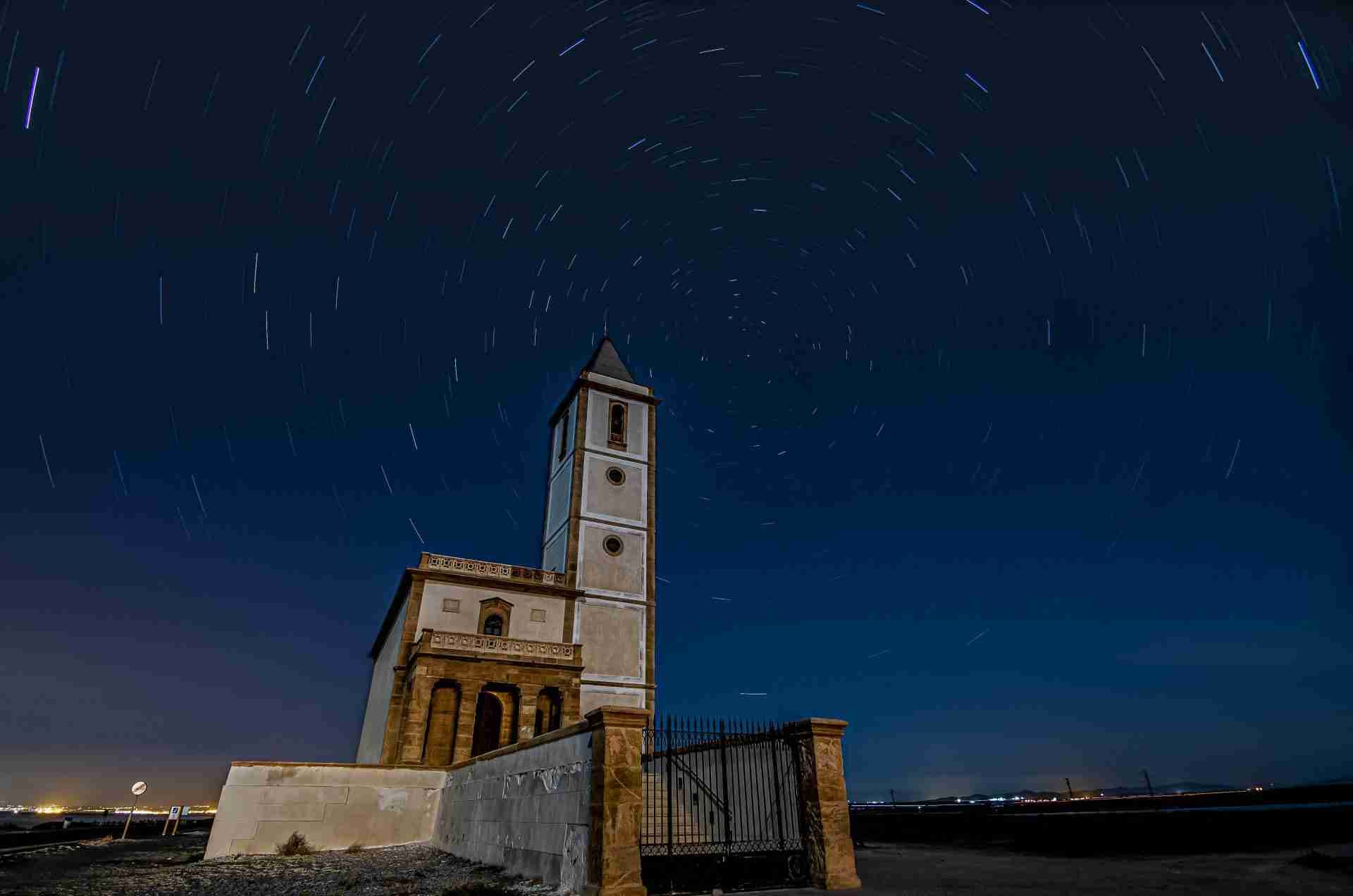
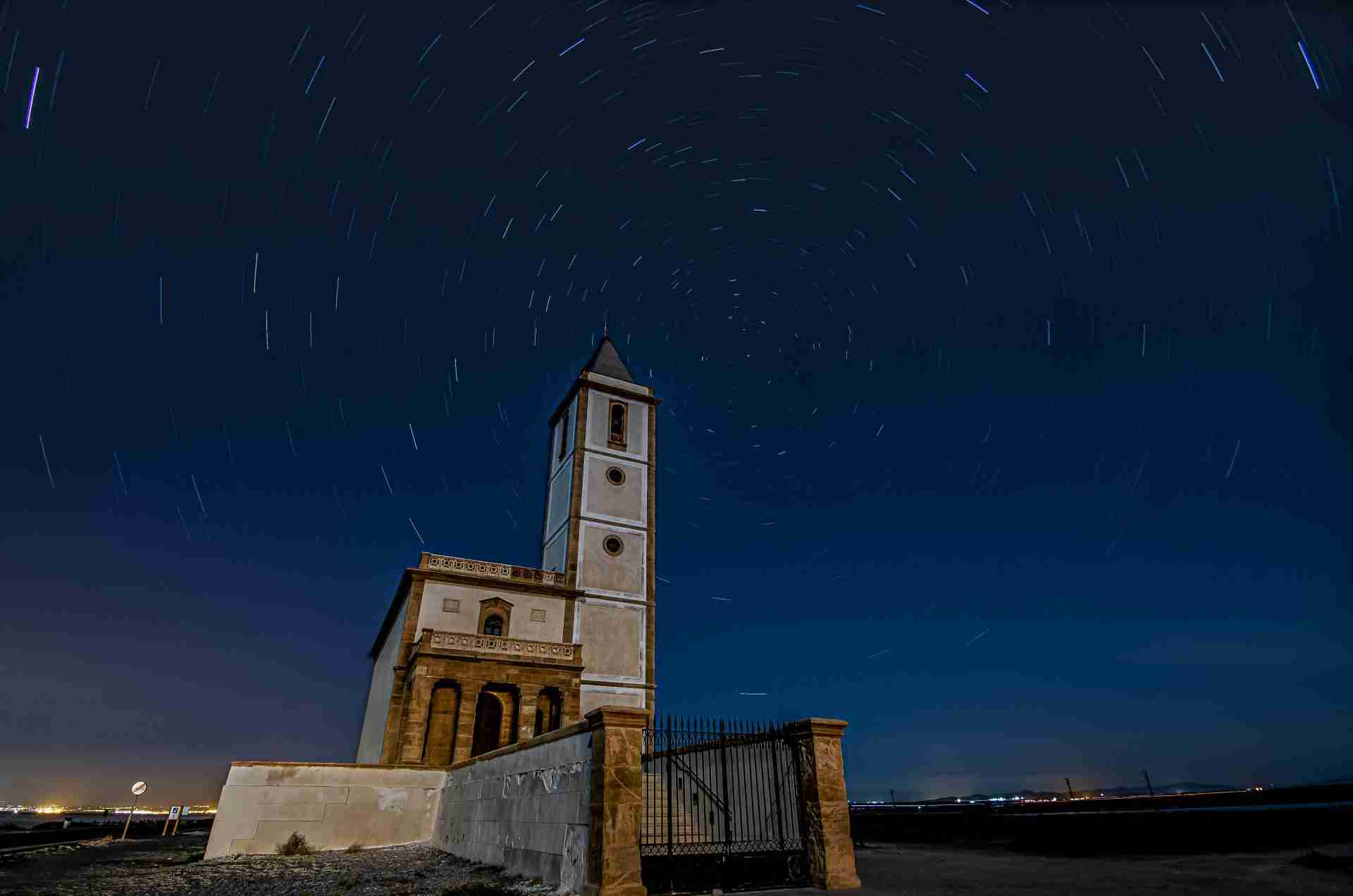
Set alone between desert cliffs and salt flats along the coast of Andalusia, the Church of the Almadraba (also known as Iglesia de Las Salinas) is one of the most striking and isolated subjects a photographer can find in the Cabo de Gata region. Built in the early 20th century to serve a once thriving fishing village, the church now stands as a lone landmark along the Cabo de Gata waterfront. With nothing but dry scrubland, wide skies, and the nearby Mediterranean as its surroundings, this small church feels both forgotten and immovable. Its minimal architecture, sun beaten surfaces, and stark location make it a powerful subject for photographers looking to work with contrast, emptiness, and atmosphere. Whether you're shooting in the heat of midday or waiting for evening light, the scene here is all about simplicity and mood.
Best Photography Opportunities
• Full Church View
The most well known composition is the straightforward, full view of the church from across the road. Here, you can capture the full structure with the bell tower rising above the low main building and the dusty road stretching beside it. This scene works best in the early morning or late afternoon, when shadows soften the harsh edges and the warm light brings some depth to the white walls and muted landscape. A wide lens will help you include the foreground textures (gravel, low brush, or tire tracks) that add context to the church's lonely position in the landscape. It's also a strong spot to shoot during blue hour, when the surrounding emptiness becomes even more dramatic.
• Salt Flats in the Background
Walking around the church gives you several angles where you can place it against the shimmering salt flats that stretch toward the mountains in the distance. These shots are strongest in the afternoon when the sun begins to move west, casting long shadows along the sides of the building and drawing out surface detail. You can either go wide to capture the full expanse or move in tighter and let the flats act as a soft background. On windy days, salt dust and haze in the air can create a slight diffusion that makes the structure pop even more clearly.
• Minimalist and Detail Oriented Shots
The building's weathered surfaces, chipped paint, and simple geometric shapes offer a lot to work with for minimal compositions. Look for shadow play under the arches, cracks in the plaster, and the texture of the bell tower against the sky. You don't need to include the whole church to tell a story here; a close-up of the arched doorway or the base of the tower with cracked pavement underfoot can be just as strong. These images are especially effective in black and white or when processed with muted tones that match the arid surroundings.
• Storm Light and Harsh Weather
When weather shifts, this spot becomes even more dramatic. Windstorms, heavy clouds, or incoming rain from the sea change the entire feel of the location. If you're lucky enough to be here when a front moves through, you can capture the contrast between the glowing white walls and the dark sky, or catch a beam of light breaking through clouds and hitting the church. These are the kinds of shots you wait for, and they can completely change the story you're telling about this space. Use a longer lens to compress the sky and bring weight to the background.
• Human Presence in an Empty Landscape
Because of the church's solitary position, including a figure in your composition (either a person walking nearby, standing in front of the door, or biking down the road) can add a sense of scale and contrast that highlights the openness of the area. Keep the figure small in the frame to maintain the emptiness of the scene, and try working with backlight or silhouette if the sun is low. These kinds of shots work especially well at sunrise or sunset when the tones are softer and the light feels directional without being too harsh.
Best Time to Visit
Lighting is key at the Church of the Almadraba, and the best times to visit are either early in the morning or late in the day. In the morning, the sun rises behind the salt flats, casting even light across the face of the church and revealing its full shape without deep shadows. This is the time for clean, clear images with pastel skies and soft contrasts. In the evening, the sun sets over the sea, pulling long shadows across the landscape and catching the edges of the tower and surrounding sand. It's the best time for more dramatic compositions, especially if the sky picks up color or weather rolls in.
Avoid shooting in the middle of the day unless you're after stark, high contrast scenes. Midday sun here is intense and can wash out the building entirely. That said, it's also the best time for minimalist detail shots or hard shadow studies if you're intentionally working with harsh light. The dry climate means clear skies are the norm, but windy afternoons are also common, especially from spring through late summer.
The church can be visited year round, though summer temperatures often climb well above 30°C. Winter light is lower and softer throughout the day, which can extend your shooting window and reduce heat distortion. Late autumn and early spring are ideal for most photographers, with milder weather and fewer people driving past.
How to Get There
The Church of the Almadraba is located along the AL-3115 road in Cabo de Gata Natural Park, about a 30 minute drive east of Almería. It sits between the salt flats (Las Salinas) and the Mediterranean coast, close to the small beach community of Almadraba de Monteleva. If you're driving from Almería, follow signs to San Miguel de Cabo de Gata, then continue east along the coast.
There's no formal parking lot, but cars typically pull off to the side of the road near the church. Be careful when crossing or stopping, as this is a narrow stretch without much shoulder space. There is no fee to visit, and the area is accessible at all hours. The interior of the church is usually closed, but everything you'd want to photograph is on the outside anyway. Keep in mind there is little shade or shelter in the area, so bring water, sun protection, and anything else you might need if you're staying a while.
Recommended Photography Gear
A flexible lens setup is ideal here. A wide angle lens (16 to 35mm) is essential for full building shots and environmental compositions that include the church and surrounding salt flats. A 24 to 70mm lens gives you coverage for mid-range scenes and tighter details without constantly swapping lenses. For distant backgrounds, compressed skies, or picking out weather elements, a longer lens in the 70 to 200mm range will come in handy.
Bring a tripod for golden hour or blue hour shots, especially if you're staying past sunset. A polarizing filter can help deepen the sky and manage reflections off the road or salt flats, especially in the middle of the day. A neutral density filter might be useful for slow shutter work if clouds are moving fast or if you're capturing the blur of passing cars or people.
The site is exposed to wind and salt, so a weather resistant bag or camera cover is a smart addition. Cleaning cloths are essential. the dust builds up fast on lenses and viewfinders. Since there are no facilities nearby, come prepared with spare batteries, memory cards, and anything else you might need for a few hours of uninterrupted shooting.
Nearby Photography Locations
Just behind the church, the salt flats stretch out toward the mountains and often reflect morning or evening light in beautiful ways. Birdlife, especially flamingos, is common here during certain seasons, and the flat terrain makes it easy to capture their reflections in shallow water. These flats work well for both minimalist landscapes and environmental wildlife shots.
• Playa de las Salinas
Across the road from the church, this long stretch of quiet beach offers wide coastal views and textured sand patterns. It's a good spot for sunset if you want to shift your focus from the church to the sea. The open horizon and rocky shoreline to the east provide simple, strong compositions with lots of negative space.
A few minutes west toward San Miguel de Cabo de Gata, this old military tower sits right on the coast and makes a great sunset or twilight subject. From the right angle, you can photograph the tower with the sea behind it, especially when the sky turns warm in the evening. It also adds variety to your shoot, offering different textures and historical contrast to the nearby church.
• Mirador de Las Amoladeras
Located along the road into Cabo de Gata Natural Park, this viewpoint offers wide-angle vistas over the volcanic hills and open desert terrain. It's an excellent stop for a sunrise or early morning landscape before heading to the church, especially if you want to include more of the region's natural features in your shoot.
Comments
Loading comments…