
![Brick and Shadow Along the Cliffs of Nerja at El Acueducto del Águila Tucked into a narrow ravine outside the […]](https://storage.googleapis.com/pixeo-blog.firebasestorage.app/article-images/wp-import/featured-134680.jpg)
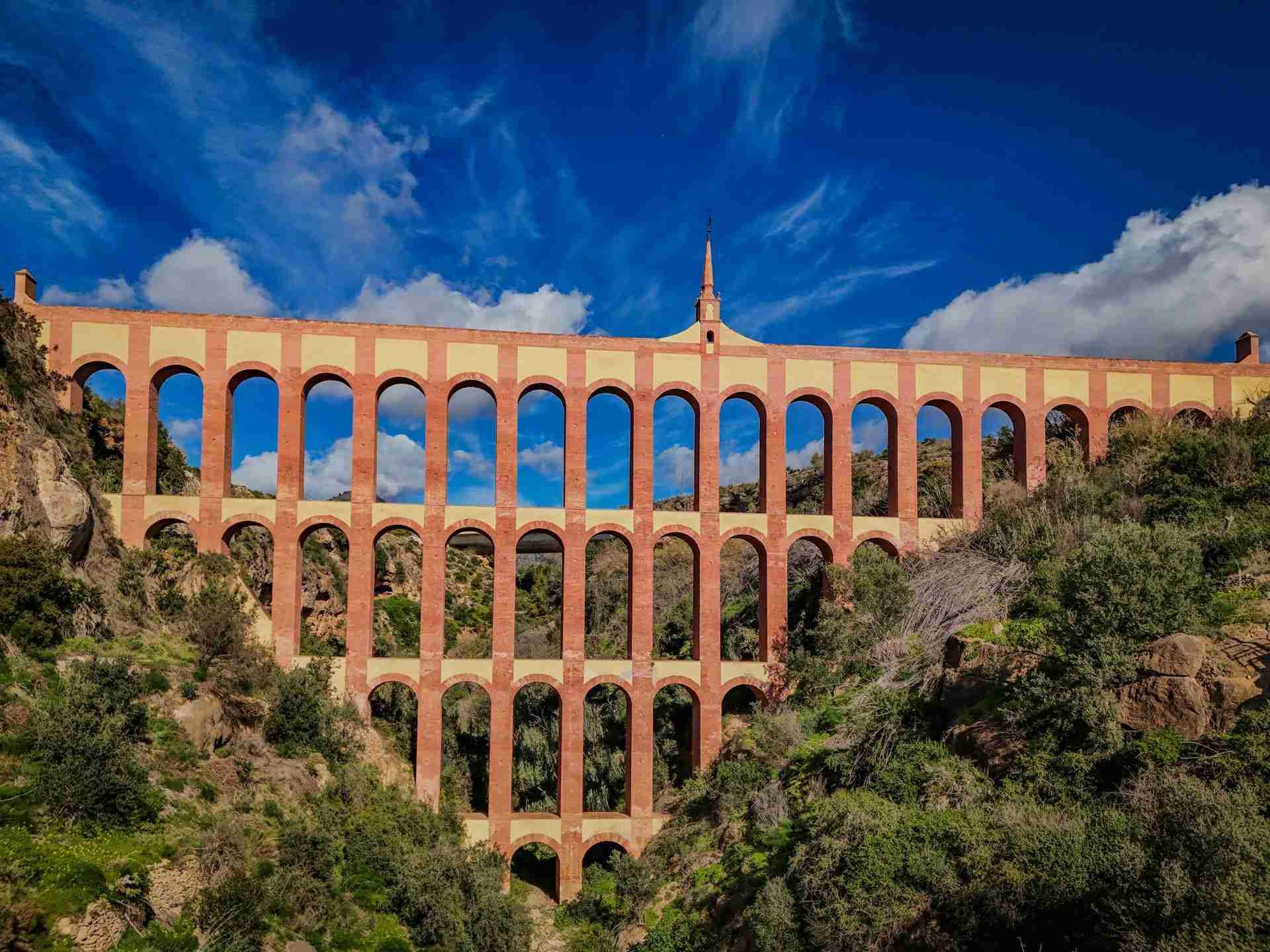
Tucked into a narrow ravine outside the coastal town of Nerja in southern Spain, El Acueducto del Águila is a striking 19th-century aqueduct that spans a deep gorge with a rhythmic parade of horseshoe arches. Built during the height of the sugarcane industry to carry water to the San Joaquín sugar factory, it has since become a landmark of Andalusian engineering. The structure is made entirely of brick and rises in four tiers, each stacked with arches that narrow as they ascend. It feels at once elegant and muscular, perfectly integrated into the dry, rugged terrain of the Axarquía region. For photographers, the aqueduct offers a tightly composed palette of ochre, rust, and shadow against the bright sky and scrubby cliffs. The challenge lies in working with scale, geometry, and the narrowness of the landscape while waiting for the sun to trace its long fingers across brick and bush.
Best Photography Opportunities
• Frontal View from the Upper Trailhead Overlook
Just above the aqueduct, a dirt trail leads to a high overlook that allows you to photograph the full span from slightly above. This view captures all four tiers and the contrast between the red brick and pale limestone cliffs. Shoot in the early morning when the sun strikes the façade from the east, revealing texture without flattening detail. A 24–70mm lens works well to frame the structure within the gorge while keeping vertical lines balanced. On overcast days, the warm tones of the brick still hold strong, making this a reliable composition year-round.
• Side Angle from the Lower Access Path near the Ravine
A footpath that runs below the aqueduct leads to a strong diagonal angle that emphasizes the tiered arches and their vanishing perspective. Use a wide-angle lens from low ground to capture the full height and steepness of the gorge. This is especially effective when shooting at midday in winter, when the sun sits lower and casts long shadows across the cliff walls. Look for moments when birds fly across the arches or when foliage from the cliff edge frames the structure in soft green.
• Detail Studies of the Brick Arches and Keystone Designs
The aqueduct's horseshoe arches and decorative medallions near the top tier provide strong material for graphic compositions and texture studies. Use a telephoto lens to isolate repeating forms or patterns where erosion and time have softened the brickwork. These shots work well during golden hour or in open shade, when shadows are deep but soft. Experiment with vertical crops that emphasize rhythm, or horizontal frames that contrast the linear arches with jagged cliff faces.
• Backlit Silhouettes from the Southern Cliff Edge at Sunset
In the final hour of daylight, the aqueduct becomes a silhouette against the setting sun. From the south-facing cliff edge, you can frame the arches with the sky glowing behind them. A longer lens lets you compress the scene, turning the arches into graphic forms with the faint curve of the coastline visible in the distance. This angle is ideal for minimalist images where form, light, and negative space do the work. Use a tripod to shoot bracketed exposures if you're aiming for a subtle HDR result.
• Aerial Perspective from the Adjacent Hillside Trail
For those hiking the hillside trails nearby, a higher elevation offers an aerial-style angle without needing a drone. From here, the aqueduct appears almost like a diagram of ancient infrastructure, stretching across a dry seam in the landscape. Use a 35mm or 50mm lens to keep natural proportions, and frame wide enough to show how the arches follow the contours of the gorge. These photos work best in early morning or late afternoon when the light sculpts the surrounding terrain and separates the aqueduct from the background.
Best Time to Visit
El Acueducto del Águila is best photographed during the cooler months between October and April, when the sun sits lower in the sky and light changes more dramatically throughout the day. Mornings offer warm, directional light from the east that illuminates the brick in full. Late afternoons are ideal for working in backlight or for more abstract compositions focused on contrast and silhouette. Summer light tends to be harsh and direct at midday, washing out detail and reducing tonal depth.
Spring brings slight green to the surrounding landscape, which contrasts well with the warm tones of the structure. Winter often brings clearer skies, which makes it easier to capture distant views or to include sky detail without haze. The aqueduct rarely sees crowds, making early and late visits easy to work in without interruption. Overcast days can be productive for detail work and more subdued, textural studies when color and surface take center stage.
How to Get There
El Acueducto del Águila is located just outside the town of Nerja in the Málaga province of Andalusia. From the center of Nerja, it's a short ten-minute drive along the N-340 toward Maro. The aqueduct is visible from the road, and there are informal pull-offs nearby where you can park safely off the main route. A short dirt trail leads to the main overlook and several lower paths that trace along the edges of the gorge.
There is no entry fee or restricted access, as the structure is part of the public landscape. However, the trails are unpaved and can be loose underfoot, especially after rain. Wear solid shoes and carry only what you need, as there are no facilities or shade on site. Drones are allowed in the area but should be flown with care due to the terrain and any occasional pedestrian traffic along the paths. Early arrival is recommended for sunrise shoots or before the light becomes too direct in mid-morning.
Recommended Photography Gear
A wide-angle lens in the 16–35mm range is essential for capturing the full span of the aqueduct from close range or from within the gorge. A standard 24–70mm zoom covers both wide framing and tighter contextual work. For detail shots or compressed angles from the trails above and across, a 70–200mm lens will help isolate arches, weathering, and repeating forms.
A lightweight tripod is useful for golden hour and sunset compositions, especially when waiting for shadows to move or working with bracketing. A circular polarizer can help reduce glare on the brick and deepen the blue of the sky on clear days. A lens cloth and dust protection are recommended, as the trails can be windy and dry. If you're flying a drone, carry filters for handling the strong Andalusian light and be ready to adjust settings quickly as conditions shift across the ravine.
Nearby Photography Locations
• Nerja Cueva Viewpoint and Maro Cliffs
Just beyond the aqueduct, the Cueva de Nerja area offers high cliffs and expansive views of the coastline. Sunset is especially photogenic here, with sea haze and golden light casting long shadows across the olive groves and karst hills.
This scenic overlook offers panoramic views of the Mediterranean with rocky headlands and whitewashed buildings lining the shore. The changing colors of the sea and sky make it a rewarding location for early morning or late evening shooting.
A short drive inland, this steep white village offers textured alleyways, bold shadow play, and rustic details that contrast beautifully with the clean lines of the aqueduct. It's best explored in soft afternoon light when the sun slips behind the hills.
A wild stretch of coast near the aqueduct, this area is known for its dramatic cliffs, hidden coves, and agricultural terraces. Use a telephoto lens to compress ridgelines and highlight the interplay between sea, land, and sky.
• Sierra Almijara Trailhead Vista Points
For those who want to pair their architectural work with natural landscape photography, the nearby hills of the Sierra Almijara provide long views back over Nerja and the coast. Early morning and late evening light bring definition to the folds and shadows in the landscape.
El Acueducto del Águila offers a rare photographic study in repetition, balance, and texture within a confined natural stage. It does not shout with scale but rather reveals its complexity in layers of design, age, and landscape harmony. For photographers willing to move with the light and explore from above and below, this structure offers endless possibilities.
Comments
Loading comments…