
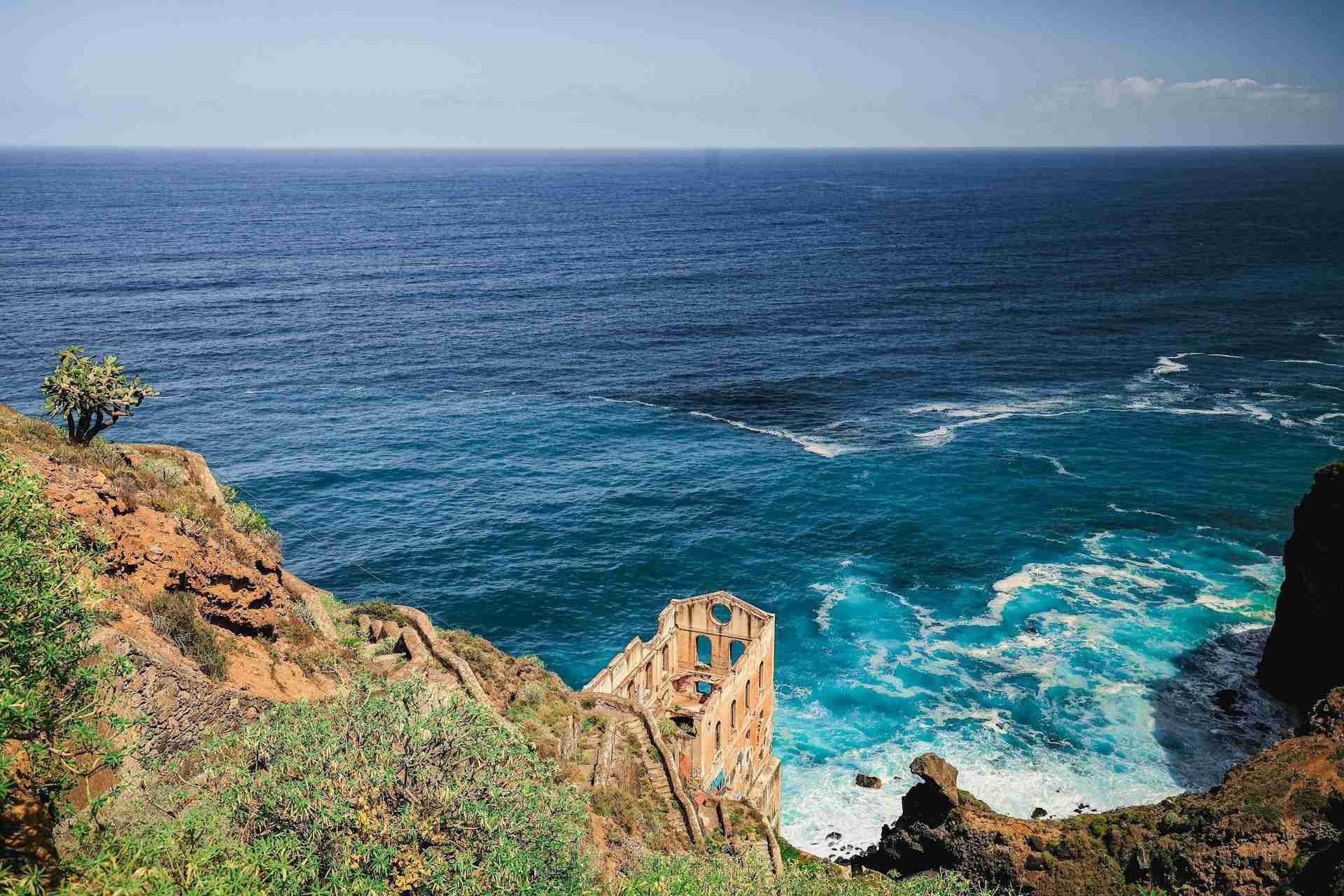
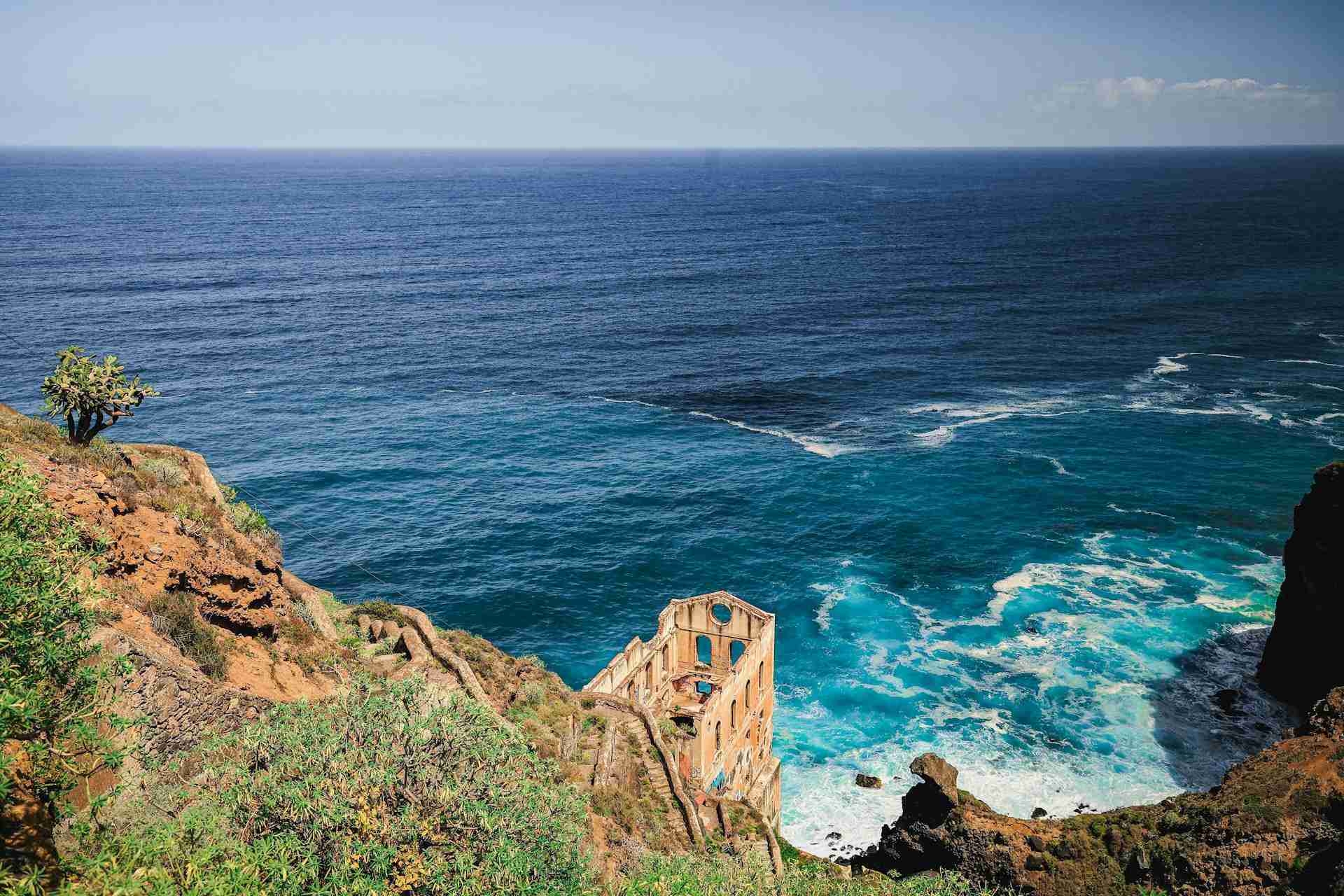
Clinging to the rugged cliffs of Tenerife's northern coast near Los Realejos, the Elevador de Agua de Gordejuela is a striking relic of industrial history and one of the island's most unusual photographic subjects. Built in 1903 to pump water from coastal springs up to farmland in the Orotava Valley, the structure was the first building in the Canary Islands to house a steam engine. Today it stands in ruins, its multi-story stone and concrete shell weathered by over a century of sea spray and wind. The building's open windows and skeletal form create a dramatic silhouette against the Atlantic, while waves crash at its base hundreds of feet below. Photographers are drawn here for its atmosphere of decay, its bold geometry, and the wild landscape that surrounds it, where cliffs, ocean, and history all converge.
Best Photography Opportunities
• Wide Coastal Views of the Ruins
From the upper trails above Los Realejos, the best vantage points open up toward the cliffs where the Elevador sits precariously above the Atlantic. These wide compositions capture the full ruin in context with the rugged coastline, steep slopes, and expansive sea beyond. Early morning or late afternoon light enhances the scene with side illumination that reveals the textures of the stone walls. A wide-angle lens helps emphasize the scale of the cliff and the building's dramatic placement. Patience is rewarded when clouds drift across the horizon, softening light and creating layered skies behind the structure.
• Telephoto Studies of the Architectural Shell
The ruin's open windows and multi-level framework make for excellent subjects when isolated with a telephoto lens. From safe viewing points along the trail, you can zoom in on repeating windows, collapsed rooflines, and weathered masonry. These images highlight the geometry of the building while abstracting it from its wider setting. Telephoto compression also works well to bring the ruin and sea closer together in the frame, emphasizing the constant battle between human construction and the Atlantic's natural forces. Overcast conditions suit this style of photography, reducing glare and keeping contrast manageable.
• Cliffside Context and Leading Lines
The walking path that leads toward the viewpoints above Gordejuela winds through terraces and vegetation, providing natural foregrounds and leading lines. Shooting along these trails, you can incorporate stone walls, plants, or descending paths to guide the viewer's eye toward the ruin and the sea. Low angles bring out the texture of the path and frame the building more dramatically against the horizon. This perspective works well in golden hour light, when the warm tones of the cliff face contrast against the cool blue of the water. It also provides an effective way to balance human-made and natural elements in a single frame.
• Atmospheric Shots in Mist and Sea Spray
The location's exposure to the open Atlantic means that conditions can shift quickly, with mist rising from waves and moisture clinging to the cliffs. These conditions are excellent for moody compositions where the ruin emerges partly obscured, giving the scene a ghostly atmosphere. Long exposures blur both mist and waves into soft forms, creating contrast against the rigid lines of the architecture. A tripod and neutral density filter are essential here, and protective covers for gear are recommended as sea spray is frequent and persistent. Shooting in these conditions creates some of the most dramatic and memorable interpretations of the site.
• Sunset and Twilight Silhouettes
As the sun sets over the Atlantic, the building becomes a strong silhouette against the glowing horizon. Positioning yourself to frame the ruin in profile allows the open windows to catch the last light, producing bold shapes against the sky. Blue hour is equally rewarding, as the sea darkens to deep tones and the building's form remains sharply outlined against fading color. Long exposures at this time create soft motion in the water and clouds, adding mood and stillness to the frame. This is one of the most atmospheric ways to photograph the ruin, emphasizing its timeless and isolated presence.
Best Time to Visit
The Elevador de Agua de Gordejuela can be photographed year-round, but the interplay of light, weather, and sea conditions creates very different experiences depending on when you visit. Spring and summer often bring clearer skies and calmer seas, with long evenings of light that allow extended golden hour shooting. Autumn and winter introduce more dramatic weather, with heavy waves, clouds, and mist that emphasize mood and atmosphere. Early morning provides softer light and fewer visitors on the trails, while late afternoon and sunset deliver the richest colors and best side lighting on the building's façade. Overcast days are excellent for detail and texture studies, while clear days lend themselves to broad landscapes that show the ruin in its wider coastal setting. Always be mindful of slippery paths and strong coastal winds, particularly in the winter months when conditions can shift rapidly.
How to Get There
The ruin sits just outside the town of Los Realejos, about a 15-minute drive from Puerto de la Cruz in northern Tenerife. From Los Realejos, follow signs toward the coastal path at Rambla de Castro, a protected landscape area. The trail to the viewpoints over Gordejuela begins from this area and involves a short walk of 15 to 20 minutes along well-trodden paths. The building itself is not safely accessible, as the structure is unstable and perched on a dangerous cliffside. Photography is therefore best done from the marked viewing platforms and safe points along the trail, which provide a variety of angles without risk. Parking is available near Rambla de Castro, and access to the trail is free of charge. Tripods are welcome, though the paths can be narrow, so be mindful of other walkers. There are no services at the ruin, so plan accordingly for water and supplies if staying for extended shooting sessions.
Recommended Photography Gear
A versatile kit is essential for capturing both the wide setting and the architectural details of the Elevador de Agua de Gordejuela. A wide-angle lens between 14 and 24 millimeters is ideal for sweeping coastal views that include cliffs, vegetation, and sea. A mid-range zoom such as a 24 to 70 millimeter lens provides flexibility for compositions that balance the building and the coastline. A telephoto lens up to 200 millimeters is recommended for isolating architectural details, window patterns, and textures of weathered stone. A sturdy tripod is necessary for long exposures, especially at twilight or when working with sea spray and mist. Neutral density filters help smooth water movement and add atmosphere, while a polarizer can enhance sky contrast and reduce glare on the sea. Protective covers for both gear and backpack are strongly advised, as moisture and salt are constant near the coast. Comfortable shoes are essential for navigating rocky and uneven paths, and a lens cloth will be indispensable for keeping optics clear in damp, windy conditions.
Nearby Photography Locations
This coastal reserve surrounding the ruin is filled with palm groves, terraces, and old haciendas. The trails provide stunning sea views, cliffside perspectives, and additional historic buildings that make excellent photographic subjects in golden hour light.
Just a short drive away, this lively coastal town offers contrasting subjects such as volcanic beaches, fishing harbors, and modern street life. The black sand beaches in particular provide excellent opportunities for long exposures with waves breaking across the shoreline.
Inland from Los Realejos, this fertile valley is known for terraced fields, historic farmhouses, and long views back toward the coast. From higher ground, you can photograph the Atlantic framed by layered ridges and cultivated land.
• Mirador de San Pedro
Located along the coastal road near Los Realejos, this viewpoint offers sweeping panoramas of Tenerife's northern coastline. It is especially rewarding at sunset, when the cliffs catch the last light and the sea reflects color across the horizon.
About an hour's drive inland, the volcanic landscapes of Mount Teide provide a completely different photographic experience. Lava fields, crater rims, and dramatic ridges offer endless opportunities for wide-angle and astrophotography, making it a natural extension to a coastal shoot.
The Elevador de Agua de Gordejuela is a rare subject that combines industrial ruin, natural drama, and historical intrigue in a single location. Though it can only be observed from a distance, its placement on the cliffs and its skeletal form against the Atlantic make it a profoundly photogenic destination. For photographers willing to explore the trails, wait for the right light, and adapt to the changing weather, this ruin offers both atmosphere and story in every frame.
Comments
Loading comments…