
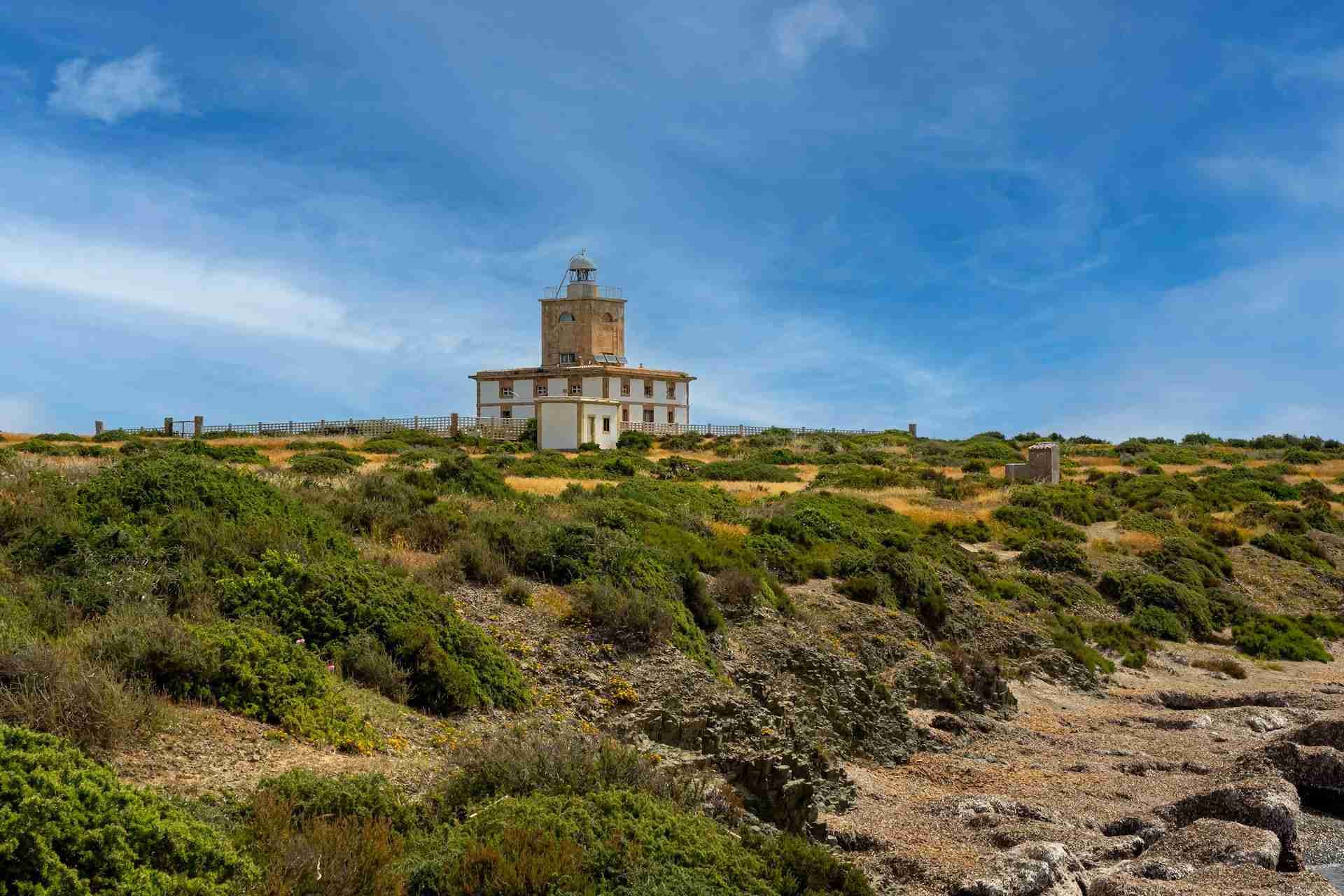
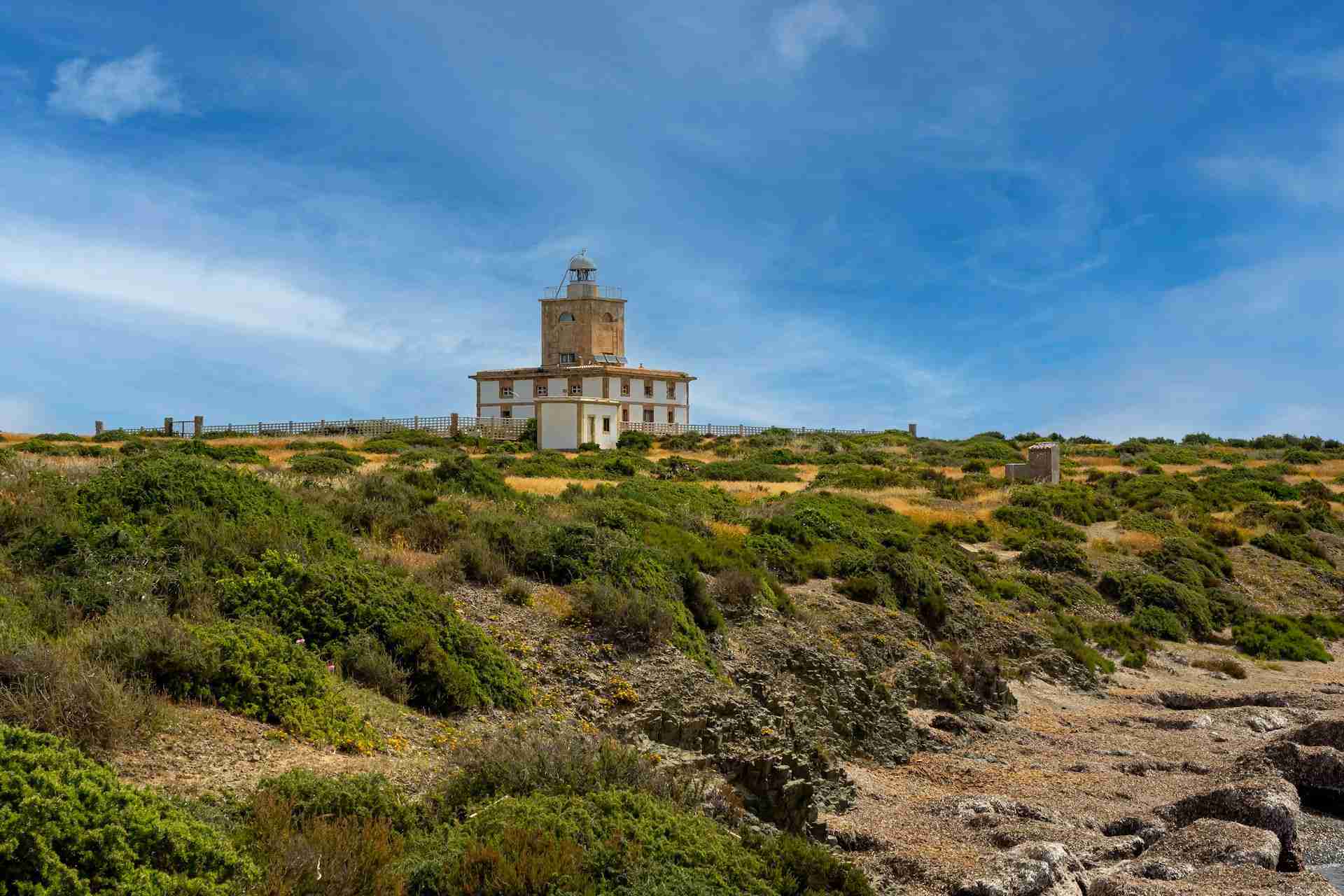
Far de Tabarca stands quietly on a wind swept rise at the eastern end of Isla de Tabarca, facing the open waters of the Mediterranean. Built in the 19th century, this lighthouse combines a square stone tower with a rectangular neoclassical building, giving it a balanced, grounded presence in the island's dry and open terrain. Unlike the dramatic cliffside lighthouses of mainland Spain, Far de Tabarca feels understated and solitary, framed by a wide sky, low scrub, and the distant horizon. The building's clean lines and sun faded textures are shaped by the soft coastal light, making it an ideal location for photographers looking to explore light, structure, and landscape in simple, stripped-down compositions. The lack of crowds, cars, and clutter on the island makes it easy to focus purely on your subject and the changing quality of natural light.
Best Photography Opportunities
• Framing the lighthouse with open sky and terrain
One of the most effective ways to photograph Far de Tabarca is from a distance using the surrounding terrain to anchor the lower part of the frame. The dry ground is scattered with hardy vegetation and exposed rock, which adds texture without overwhelming the main subject. Framing the lighthouse low in the image and leaving space for the sky allows the clean geometry of the tower to stand out. Early morning or late afternoon gives you angled light that adds depth to the stonework and separates the building from the background. This approach works well with both wide angle and standard focal lengths.
• Side lighting for shadow and surface detail
Shooting the lighthouse from the northeast or southwest reveals strong textures in the masonry when the light comes in from the side. The building's surfaces are slightly worn and irregular, and they catch directional light in a way that emphasizes structure and material. Long shadows from nearby vegetation or stone piles can add contrast and rhythm to the lower part of your frame. A polarizing filter can help control brightness in the sky and pull more tone from the surrounding landscape. Compositions here are especially strong during the golden hour when warm tones highlight the building's natural color.
• Close studies of architectural elements
While the lighthouse is modest in scale, it contains small details that lend themselves to tight compositions. Windows, corners, the base of the tower, and weathered surfaces are all useful for building a series of minimalist frames. These details are best photographed in soft light, either in the morning or under a thin layer of cloud. A short telephoto or mid range prime lens works well here, helping to isolate elements and flatten perspective slightly. These types of images are a good way to build visual rhythm and explore abstract qualities in the building's design.
• Rear views with sea and sky beyond
Approaching the lighthouse from the inland trail behind it provides an elevated angle with the Mediterranean beyond. The sea forms a soft blue backdrop, and the lighthouse breaks cleanly against it with little obstruction. Framing from this direction is most productive in the late afternoon when the sun is behind or to the side of your position, allowing the building to be lit evenly without direct glare. You can use low vegetation or stone paths as leading lines, or keep the composition minimal with the building centered and the horizon high.
• Silhouettes and color during sunset
The location of Far de Tabarca makes it a strong subject for silhouettes against the setting sun. From certain positions along the coastal trail, you can frame the lighthouse with the sun dropping into the sea off to the side or just behind the building. On clear days, this creates strong contrast and clean lines, while on overcast evenings, the sky softens and allows for longer exposures. A tripod is useful at this time of day, and longer focal lengths help compress the distance between the lighthouse and horizon. This is one of the best times for capturing mood and simplicity in your frame.
Best Time to Visit
Far de Tabarca photographs well throughout the year, but lighting and weather conditions make early spring and late autumn especially rewarding. These seasons bring clear skies, warm but not harsh sunlight, and more comfortable temperatures for walking the island. Golden hour is the best time to shoot. Morning light tends to be cooler and more even, casting long shadows from the west side of the building. Afternoon light is warmer and richer, especially in the final hour before sunset.
During summer, the light is harsher and more direct, particularly between late morning and mid afternoon. However, the strong sun can work for high contrast black and white images or abstract compositions that emphasize shadow and shape. Midday visits are best reserved for scouting or detail work in shaded areas.
The island is most peaceful during the early part of the day or just before the final ferry leaves, when most day visitors have left. These quiet windows give you more freedom to explore the lighthouse area without interruption. The weather is typically dry and predictable, with occasional wind adding movement to the grasses and plants around the lighthouse.
How to Get There
Far de Tabarca is located on Isla de Tabarca, a small island off the coast of Alicante in southeastern Spain. To reach the island, ferries run regularly from the ports of Santa Pola and Alicante, with Santa Pola offering the shortest crossing time. Ferry schedules vary by season, with more frequent departures during the summer months. Most ferries operate during daylight hours, so plan your trip to allow for early morning or late afternoon light.
Once you arrive at Tabarca's main harbor, the island is entirely pedestrian, and the lighthouse is about a ten minute walk east along a flat dirt path. The route is easy to follow and passes through dry, open terrain with views toward the sea. There are no vehicles on the island, and the terrain is gentle enough to carry a full camera kit without difficulty.
There are no entrance fees or access restrictions for the lighthouse grounds, though the building itself is closed to the public. You can freely walk around it and shoot from any angle. In summer, the area around the lighthouse can be hot and dry, so bring water, sun protection, and footwear suitable for uneven ground.
Recommended Photography Gear
A lightweight camera kit works well for Far de Tabarca since the island is small and the lighthouse can be approached from many directions. A standard zoom lens such as a 24 to 70 millimeter will cover nearly all your needs, from wide environmental frames to moderate close-ups of architectural detail. A wide angle lens can help exaggerate the building's form or include more of the terrain and sky in your shot, especially when working with foreground elements.
A polarizing filter is useful for reducing glare from the stone surfaces and deepening the blue of the sky and sea. For shooting during the golden hour or in low light at sunset, a travel tripod helps with long exposures and makes it easier to frame your shots precisely. A lens cloth is useful for wiping off salt spray if the wind is up, and a remote shutter or two-second timer will help maintain sharpness during slower shutter speeds.
Because of the open terrain, you won't need a long telephoto lens unless you're planning to shoot abstract compositions from far down the trail. The strength of this location lies in its simplicity, so having a few versatile lenses and a solid tripod is more useful than packing a full kit.
Nearby Photography Locations
The old village area near the harbor is full of stone buildings, narrow alleys, and sea-facing walls that are perfect for architectural photography. Early morning light works well here, especially for side-lit doorways and textured surfaces. The lack of cars helps preserve clean lines and quiet frames.
• Island Perimeter Trail
A footpath circles much of the island and offers uninterrupted views of the sea, rocky coastline, and occasional fishing boats. The southern and eastern sides are especially strong for sunrise and sunset shots, with open views and minimal obstruction.
The old defensive structures and lookout points offer high vantage points over the coastline and sea. These areas are especially productive at sunset, when warm light grazes the stone and the sky picks up color behind the towers.
• Rocky Beaches and Tide Pools
The northern edge of the island has small coves and rock formations that work well for close-up compositions and low-angle seascapes. Tide pools and reflective water surfaces add interest during early morning light or after sunset.
• Santa Pola Lighthouse (on the mainland)
If you're returning by ferry to Santa Pola, the cliffside lighthouse above the port offers sweeping views of the coast and sea. It's a great location for golden hour or twilight photography and provides a contrast to the low-lying design of Far de Tabarca.
Far de Tabarca isn't a place of dramatic cliffs or towering waves, but that's part of what makes it so photogenic. The soft Mediterranean light, the openness of the terrain, and the simple structure of the lighthouse give you everything you need to create thoughtful, well-composed images. It's a location that suits slow exploration and rewards close attention to light, space, and time of day. Whether you're building a series on coastal architecture or just looking for a quiet spot to work in good light, this is a place worth visiting with your camera.
Comments
Loading comments…