
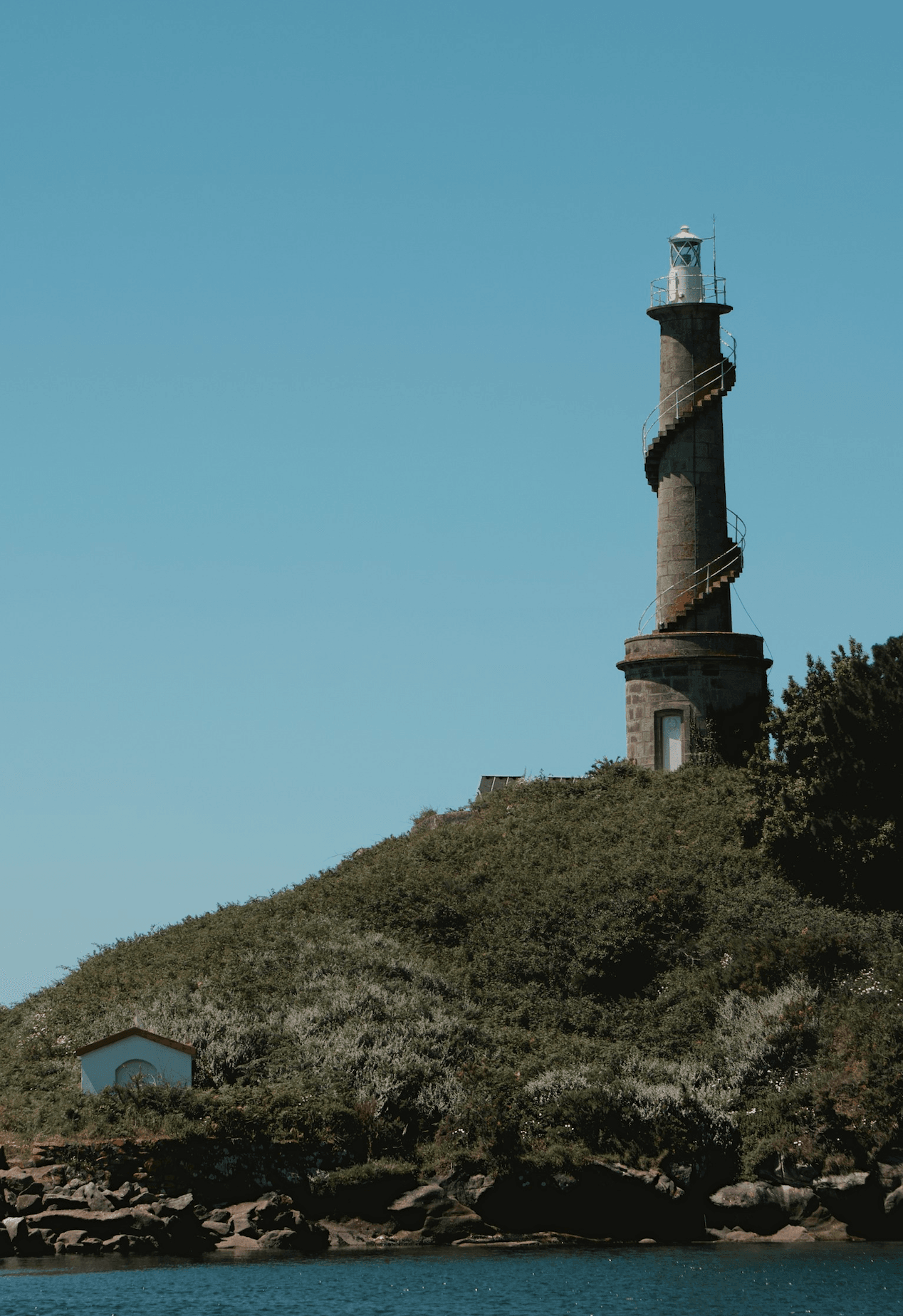
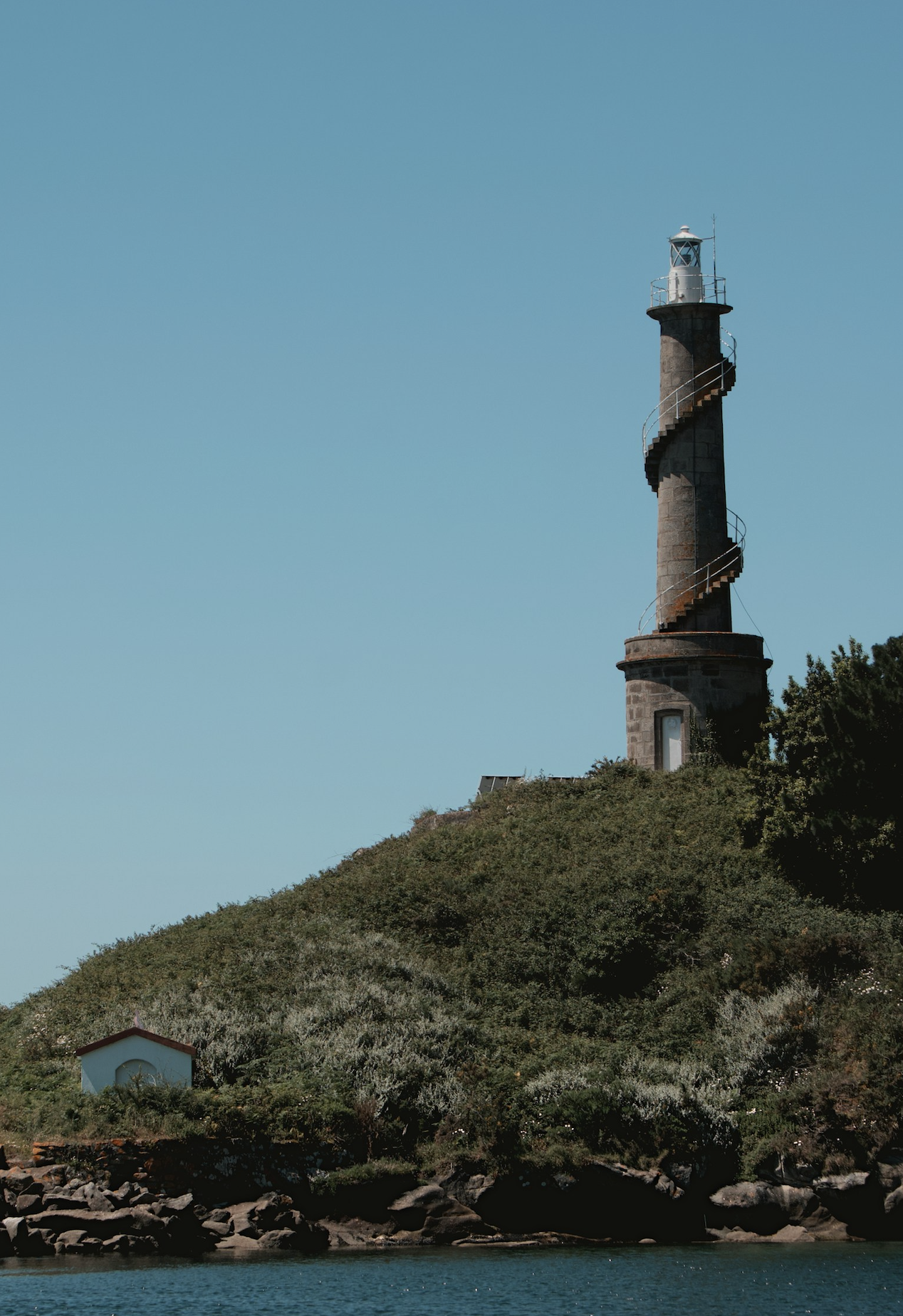
Faro da Illa de Tambo stands quietly on the southern edge of the forested island in the middle of Ría de Pontevedra. Its stone tower rises from a sloping grassy clearing, surrounded by pine trees and open views toward the Galician coastline. What makes this lighthouse distinctive is its external spiral staircase, which wraps tightly around the tower and leads the eye upward toward the lantern room. The surrounding terrain is natural and undeveloped, offering wide frames filled with rock, grass, and sea. Photographers visiting this site can expect a peaceful atmosphere, varied compositions, and the kind of soft, Atlantic light that shifts from moment to moment across the water and stone.
Best Photography Opportunities
External spiral staircase detail
The most visually unique aspect of the lighthouse is its spiral staircase. From a moderate distance or slightly below the structure, the staircase creates a strong leading line that wraps around the tower and adds motion to still compositions. During late afternoon, light rakes across the stone surface and casts long shadows from the handrails. Shooting with a midrange lens helps emphasize the architectural geometry without compressing the structure too much. Photographers can also move around the tower to find symmetrical or profile views that balance the built and natural elements in the frame.
Wide landscape compositions from coastal trails
The trails that loop around the island offer several open spots to photograph the lighthouse from a distance. These locations frame the tower against the sea or clouds, often with pines or low brush in the foreground for added depth. A wide angle lens helps include the slope, vegetation, and sky without losing the sense of scale. Depending on the season, the light can be cool and diffuse or warm and golden, giving flexibility for multiple styles of interpretation. Early morning is typically quiet, making it easier to set up slow shutter shots if desired.
View from the water during approach
Guided boats to the island offer a chance to photograph the lighthouse from the water during arrival and departure. These low angle views show the tower rising above the shoreline with its full shape visible from base to lantern. Using a longer focal length from the deck helps isolate the structure against the background hills or sky. The sea surface can reflect subtle light, adding extra elements to play with in framing. Weather conditions often change quickly, which adds drama but may require quick adjustments to exposure and settings.
Detail studies of weathered textures
Up close, the lighthouse's stone walls, steps, and metal elements show signs of exposure to salt air and time. Photographers who enjoy textural studies will find plenty of material to work with. Rust, lichen, and small growths appear along the stairs and base, providing natural color contrasts against the pale stone. A macro or short telephoto lens can isolate these surfaces while maintaining context with selective framing. These shots work well in soft light, especially after rainfall, when color and detail become more saturated.
Framing the lighthouse with pine trees
Several viewpoints along the interior of the island allow photographers to shoot the lighthouse with pine trunks and branches forming a natural frame. These compositions help guide attention to the tower while grounding it in the island's landscape. Shooting with a shallow depth of field creates pleasing separation between the foreground and the lighthouse. This approach also works well in early morning fog or filtered light, common on the island in spring and autumn, adding softness to the scene.
Best Time to Visit
The best season to visit Illa de Tambo is during late spring through early autumn, when guided access is available and the weather is more predictable. During these months, light conditions range from clear golden hours to overcast afternoons, both of which work well with the tones and surfaces of the lighthouse. Early morning visits offer soft, even light with minimal foot traffic, while afternoon and evening sessions bring warmer color and longer shadows across the slope. Summer tends to be busier, but the open landscape of the island allows for quiet shooting spots even with others around. Fog is not uncommon in the early part of the day, especially in spring, and can add mood to wide shots if timed well.
How to Get There
Access to Faro da Illa de Tambo is only available by water, and currently limited to official guided tours. These typically depart from the port of Marín, a short drive from Pontevedra city. Tour companies offer trips during spring, summer, and early autumn, usually on weekends or public holidays. Boats dock on the island's northern side, and from there, a network of unpaved trails leads to the lighthouse. The walk is short and not physically demanding, though the terrain can be uneven in parts. There is no entrance fee to the island itself, but the cost of the tour covers transport and access. Visitors should bring water and sun protection, as there are no facilities or services on the island.
Recommended Photography Gear
A wide angle lens is essential for capturing the lighthouse within its landscape context, especially from the trails and lower slopes. A mid range zoom or standard prime lens is ideal for closer compositions of the tower and spiral staircase, while a short telephoto lens works well for isolating textures and compressing the tower from a distance. A polarizing filter can help reduce glare from the sea and enhance sky detail, especially during midday when the sun is high. A lightweight tripod is recommended for photographers interested in long exposures or bracketing, particularly in lower light or windy conditions. Because you'll be walking over uneven trails and stepping on rocks, a small and sturdy camera bag is more practical than a large pack, and waterproof covers are useful in case of changing weather.
Nearby Photography Locations
Before or after your visit to the island, the working port area in Marín offers maritime and industrial photography opportunities. Fishing boats, harbor cranes, and quiet piers provide material for both wide compositions and detail studies. Early morning is best for soft light and calm water reflections.
A short distance from the harbor, this beach is backed by gentle hills and dotted with small boats and rock outcrops. It's a good spot for seascapes, minimalist water shots, and casual coastal scenes. Evening light adds warmth to the sand and water surface, especially after sunset.
Ría de Pontevedra shoreline
The coastlines around the ría offer dozens of small coves, inlets, and viewpoints. Many areas are accessible by foot or car and allow photographers to frame boats, fishing nets, and tidal textures in a quiet setting. Each stop along the shoreline has its own character, shaped by weather and tide.
For a change of pace, the historic center of Pontevedra offers narrow streets, small plazas, and traditional Galician stonework. It's ideal for architectural photography and street scenes, especially early in the morning when the streets are quiet. The compact layout makes it easy to explore on foot with a camera in hand.
Located between Marín and Pontevedra, this historic estate features a mix of formal gardens, grand architecture, and wooded paths. The soft light filtered through tall trees and ivy-covered structures makes it especially appealing for photographers interested in overgrown textures and classical composition.
The island's mix of isolation, natural framing, and architectural subject matter makes Faro da Illa de Tambo a strong destination for photographers looking to work at a slower pace and build thoughtful compositions in a quiet, coastal setting.
Comments
Loading comments…