
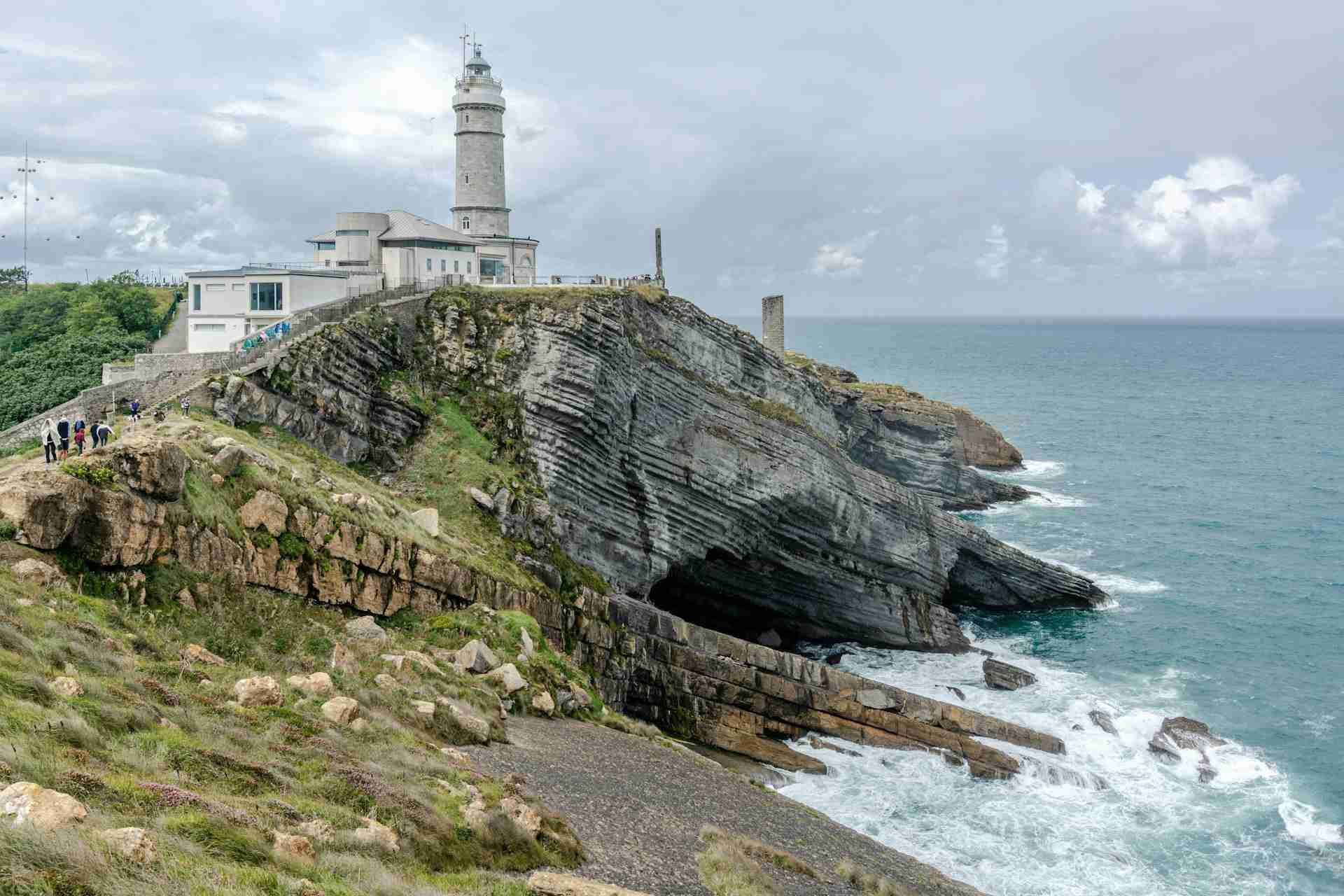
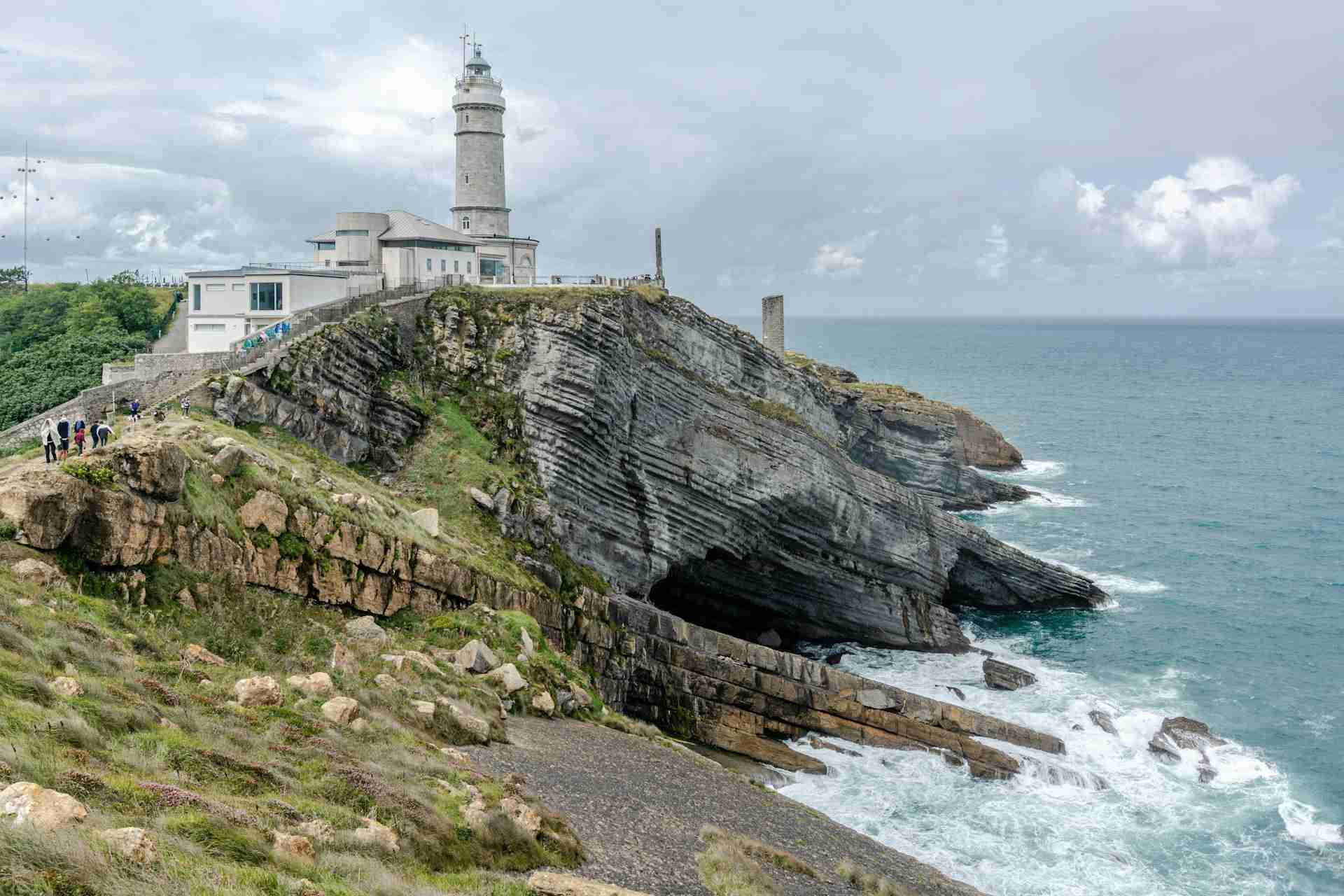
Sitting on a rocky perch above the Cantabrian Sea, Faro de Cabo Mayor offers photographers a mix of dramatic seascapes, bold architectural lines, and fast changing Atlantic weather. The lighthouse itself stands tall at the edge of a cliff just outside Santander, where the land meets the ocean in steep drops and fractured rock. It is a place where light, sea spray, and clouds come together to create scenes filled with texture and contrast. The surrounding headlands provide sweeping views in every direction, and the lighthouse often serves as a strong visual anchor against the movement of waves and sky. Whether you are shooting long exposures, dramatic skies, or clean silhouettes, this coastal location provides both power and quiet if you time it right.
Best Photography Opportunities
• Clifftop compositions from the southern approach
allow you to frame the lighthouse cleanly against the sea, with wide open sky above and broken rock in the foreground. This angle is especially good in the late afternoon when the sun begins to fall over the water, casting golden light across the cliffs. Use a wide angle lens to exaggerate the sense of depth between the rocky ground and the structure above. If the tide is high or the surf is active, long exposures here can smooth the water while preserving the jagged rock forms. Be careful near the edge, but don't miss the chance to shoot with both a strong foreground and clear separation from the background.
• Long lens work from the northern trails
gives you a more compressed view of the lighthouse perched on the cliffs. From this perspective, you can line up the structure with distant waves or wait for clouds to roll through and wrap the headland in soft light. This area works well during overcast days, as the mood becomes more introspective and the tones more even. Telephoto compositions also help reduce the visual noise of the surrounding landscape, allowing the lighthouse to become the central shape in the frame. Early morning is often best here, as the wind is calmer and the light more diffused.
• Dramatic skies from the eastern edge near the cliff drop
provide the best chance for capturing motion and mood. Facing west, this angle lets you frame the lighthouse under a wide horizon that can shift quickly from bright to stormy. Use a tripod and neutral density filter to work longer exposures, which will soften both the sea and the sky into subtle patterns. This is an excellent place to work in black and white, especially when the sky breaks into bands of light and shadow. It is also worth waiting through brief rain showers, as the light afterward is often some of the best for texture and contrast.
• Night photography around the lighthouse grounds
is possible when skies are clear and moonlight is present. The beam of the lighthouse cycles across the ocean and cliffs, creating timed intervals of light that can be used creatively in long exposures. Look for leading lines in the path or low stone walls to guide the eye toward the tower, and be prepared to balance artificial and natural light carefully. This location works well with a fast wide lens and a low ISO to preserve detail in the surrounding darkness. Shooting on a quiet night with light wind can result in atmospheric frames filled with contrast and space.
• Detail studies of the lighthouse structure and surrounding textures
give you a chance to work more closely with shape and pattern. The tower's surface, doors, railings, and base materials all show signs of weather and age, offering subjects for tighter compositions. Use a mid range zoom to isolate these elements in soft side light during early morning or just before sunset. This is also a good opportunity to work with abstract forms, especially when the building's shadows fall across its own surfaces. These kinds of shots can complement broader landscapes and tell a more complete visual story.
Best Time to Visit
Faro de Cabo Mayor can be photographed year round, but the experience shifts dramatically with the seasons. Spring and autumn offer the most balanced light, cooler temperatures, and frequent cloud cover, which adds depth to the sky without washing out the cliffs. These seasons also bring changing sea conditions, which can add movement and energy to coastal compositions. Sunrise and sunset both work well here, though sunset is particularly strong from the western cliffs where you can capture the last light falling over the headland.
In summer, the skies are often clearer, and the sea is calmer, making the location better suited for clean, minimal compositions. Early morning light during this season is warm and comes in at an angle that defines the textures of the rock and the structure. However, midday can be harsh, and haze from heat and sea moisture may reduce clarity. Winter brings storms and heavy waves, which are ideal for dramatic images but require caution and a weather sealed setup. The wind can be strong, especially in exposed areas, so planning for low light and overcast conditions can often result in more compelling scenes.
Fog is also common, particularly in the cooler months, and often rolls in off the sea before sunrise or in the late afternoon. This can be a benefit if you are aiming to simplify your scene and isolate the lighthouse against a minimal backdrop. In fog or light rain, the mood becomes more subdued and quiet, with softened edges and diffused shadows that are well suited to muted color palettes or monochrome work.
How to Get There
Faro de Cabo Mayor is located just a few kilometers north of central Santander and is easily reachable by car, bicycle, or public transport. From the city center, take the S-20 road toward El Sardinero, then follow signs for Cabo Mayor. There is a small parking area near the lighthouse and additional roadside spots along the approach road. There are no entrance fees, and the grounds are open to the public throughout the day. While the lighthouse itself is not open for interior access most of the time, the surrounding land provides full visual access to every angle.
From the parking area, it is a short and mostly flat walk to the lighthouse and the surrounding cliff paths. These trails vary from paved walkways to natural dirt paths along the edge of the cliffs. The best shooting spots require a short walk beyond the main viewing area, but all remain within comfortable range even with a full gear load. The area is open at all hours, making sunrise and sunset access straightforward, though winds can pick up in the afternoon and evening.
Recommended Photography Gear
Photographing Faro de Cabo Mayor calls for a versatile setup that can handle both expansive coastal views and tighter studies of detail and texture. A wide angle lens in the 14 to 30 millimeter range is ideal for capturing the full headland and lighthouse from the cliffs, especially when working with foreground rock formations or crashing waves. Use this lens at sunrise or sunset to exaggerate leading lines and bring the viewer into the frame.
A 24 to 70 millimeter lens will give you flexibility when moving between wide scenes and more structured compositions, such as the lighthouse framed between cliffs or aligned with the ocean horizon. This range is also helpful for working on the main walking paths, where space may be limited and rapid repositioning is key. For detail work or distant compositions with compressed background elements, a 70 to 200 millimeter lens is essential. This longer focal length allows you to isolate light patterns on the rock, waves crashing near the base of the cliffs, or subtle tones in the sky as weather changes.
Bring a solid tripod that can handle wind and uneven terrain, especially if you are planning long exposures or low light work. A set of neutral density filters will expand your ability to shoot in daylight and smooth out water or sky movement. A circular polarizer can be helpful for cutting glare from the ocean surface, though use it carefully to avoid uneven sky effects. A lens cloth and weather protection are necessary, particularly if there is sea spray or incoming rain. Pack light enough to move easily along the cliffs, but bring enough variety in focal lengths to adapt to the changing conditions and scenes.
Nearby Photography Locations
, just south of the lighthouse, is a dramatic beach framed by steep cliffs and accessible via a stairway from the nearby golf course. From above, you can shoot down into the bay with clear turquoise water and patterns of surf that change constantly with the tide. In low light or under cloud cover, the surrounding cliffs add strong framing elements for both vertical and horizontal compositions.
, located east across Santander's bay, offers panoramic views of the sea and nearby headlands. The palace, the trees, and the open shoreline provide strong subject matter for both wide and telephoto shooting, especially during sunrise when the light moves across the landscape from the southeast. It is a quieter location early in the day and can be a good complement to a sunset shoot at Cabo Mayor.
, along the Santander waterfront, gives you a modern architectural subject set against the water and the curve of the bay. This contrast between clean design and natural seascape is ideal for urban and abstract compositions. The building's reflective surfaces and floating walkways offer opportunities for symmetry and motion blur photography as boats or people pass through the frame.
• Santander Bay from Paseo Marítimo
, near the ferry terminals, is a rewarding spot for cityscape photography during twilight and blue hour. The lights from the city reflect in the water, and the shape of the coastline provides a natural frame. Use a tripod here to work with longer exposures and isolate the geometric forms of the harbor and buildings.
, farther inland but still near Santander, gives a raised vantage point over the entire coastline. From here, you can shoot long views back toward Cabo Mayor with distant mountains layered behind. It is a good location for working with telephoto lenses and atmospheric haze, especially at sunrise when low light spills over the hills toward the ocean.
Faro de Cabo Mayor is a coastal location that combines natural drama with structured form. Its openness to the sea and constant changes in weather mean that no two sessions feel alike. With the right timing, gear, and awareness of the light, this headland becomes more than just a lighthouse. It becomes a place where movement, silence, and structure come together in a frame that keeps offering something new every time you return.
Comments
Loading comments…