
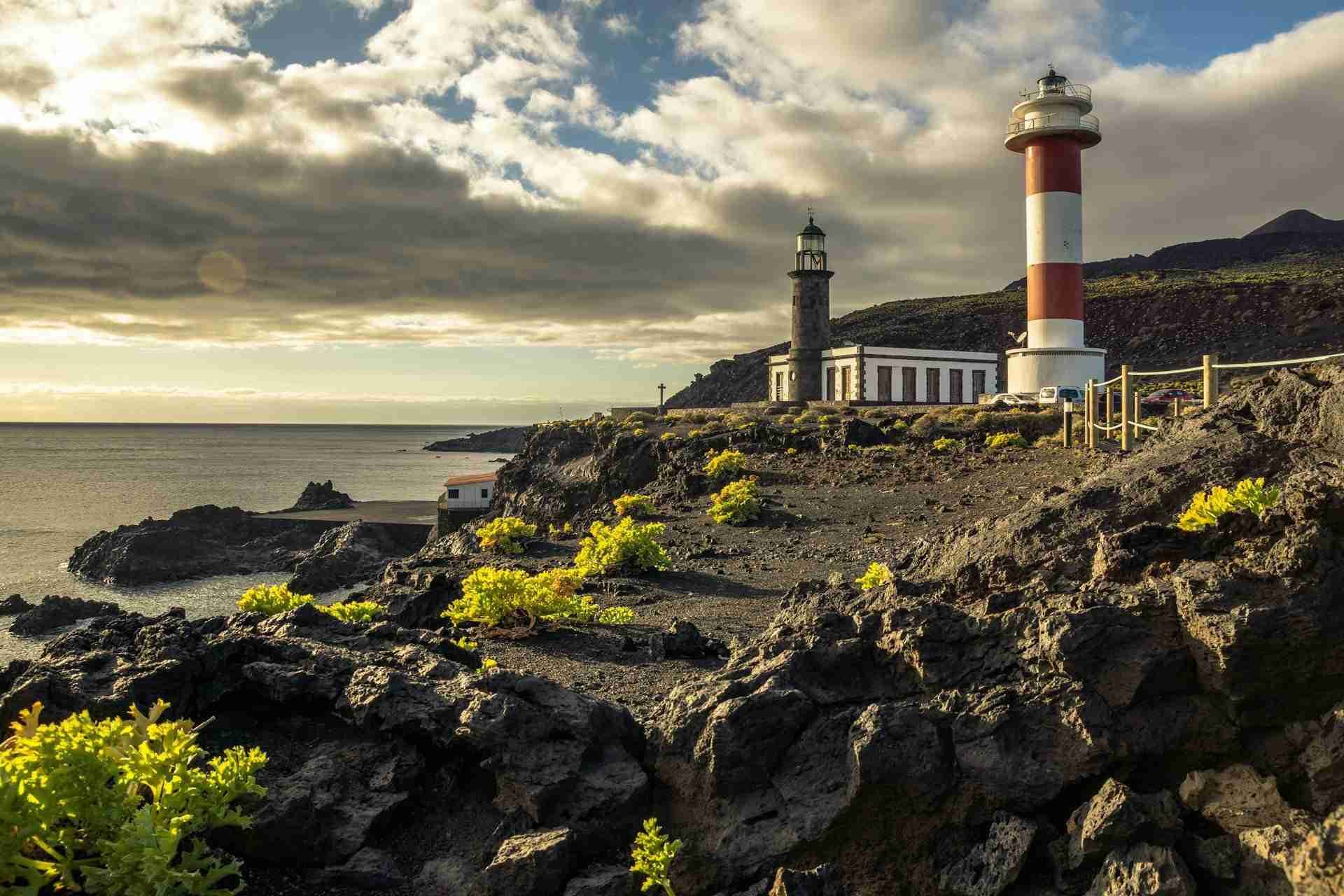
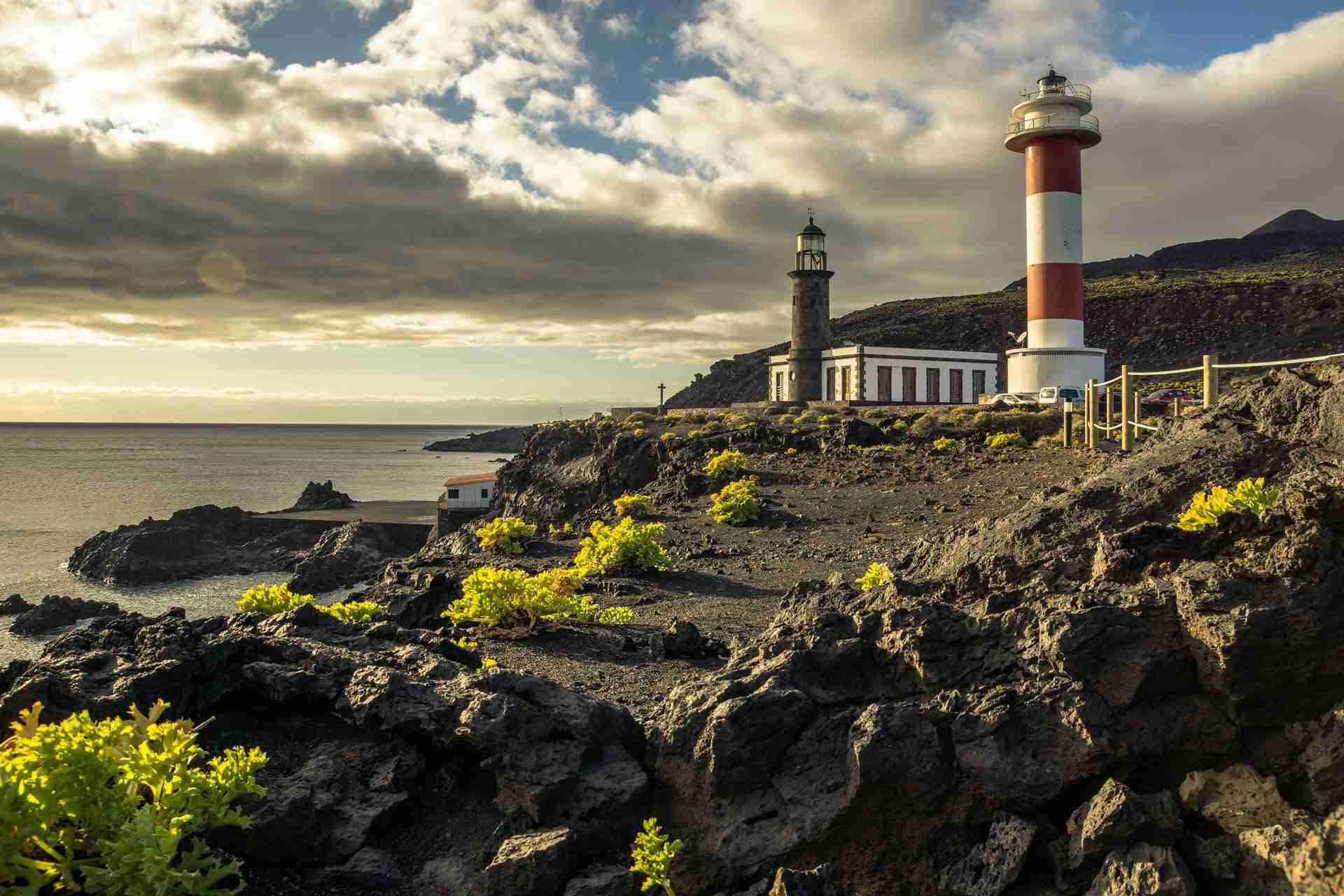
Perched dramatically on the volcanic southern tip of La Palma in the Canary Islands, Faro de Fuencaliente (Fuencaliente Lighthouse) offers a stunning fusion of rugged seascape, basalt cliffs, and historic architecture. With two lighthouses on-site—an older stone tower from the 19th century and a strikingly modern red-and-white striped beacon—this location presents compelling visual contrasts against the backdrop of the Atlantic Ocean. Whether photographing the interplay of light and shadow on lava rocks, capturing long exposures of waves crashing against the shore, or framing the lighthouse against the fiery hues of sunset, Faro de Fuencaliente is one of the island's premier coastal photography locations.
Best Photography Opportunities
• Sunset for Dramatic Coastal Color
– The lighthouse faces west, making it a prime location for photographing Atlantic sunsets. As the sun dips below the horizon, the sky often erupts in a spectrum of orange, pink, and deep violet, casting warm light on the cliffs and highlighting the texture of the volcanic rock. Including both the old and new lighthouses in your composition creates a layered visual narrative of time and contrast.
• Long Exposure for Ocean Movement
– The rocky coastline surrounding the lighthouse is perfect for long exposure photography. Using a neutral density filter, you can blur the crashing waves into a silky mist while keeping the sharp, jagged volcanic rock in crisp focus. This technique enhances the surreal and timeless feel of the landscape, especially under moody skies or at twilight.
• Framing the Lighthouse with Lava Formations
– The surrounding landscape is a dramatic field of frozen lava flows, full of cracks, crevices, and deep textures. These natural foreground elements are ideal for framing the lighthouse from ground level. Shooting low with a wide-angle lens emphasizes the scale of the landscape and leads the eye naturally toward the tower.
• Blue Hour and Night Photography
– After sunset, the lighthouses begin to glow, standing out against the deepening blue of the sky. Blue hour provides a perfect balance of ambient and artificial light, while later into the night, the dark skies of La Palma—recognized as a UNESCO Starlight Reserve—are ideal for astrophotography. Capturing the Milky Way arching above the lighthouse can produce breathtaking results.
• Details and Contrasts Between the Two Towers
– The old lighthouse, with its weathered stone and classic design, contrasts beautifully with the clean lines and bold color of the modern tower. Close-up shots can focus on architectural textures, rusting metalwork, and the surrounding flora that thrives in this volcanic landscape. Combining these elements allows for a deeper visual story that reflects the evolution of coastal navigation.
Best Time to Visit
The best time to photograph Faro de Fuencaliente is during the golden hours of sunrise and sunset, although sunset is particularly striking given the lighthouse's western exposure. The low-angle light enhances the textures of the volcanic terrain and adds warmth to the red and grey tones of the structures.
La Palma's clear skies make night photography especially rewarding, and summer (June–August) offers some of the most consistent conditions for astrophotography. Spring (March–May) brings moderate temperatures and wildflowers blooming amidst the lava rock, offering additional interest in foreground compositions. Autumn (September–November) delivers slightly moodier weather and more atmospheric skies, perfect for dramatic seascapes.
Winter (December–February) tends to be cooler and windier, with more volatile weather—ideal for capturing stormy skies and powerful waves, though extra care is needed near the cliffs. Regardless of the season, checking the local marine forecast and sky conditions ahead of time can help you plan for the most photogenic moments.
How to Get There
Faro de Fuencaliente is located at the southern tip of La Palma, about 7 kilometers south of the town of Fuencaliente and roughly 35 kilometers from the island's capital, Santa Cruz de La Palma. The site is accessible by car via the LP-207 road, which winds through the island's volcanic landscapes and past several vineyards and lava fields.
A parking area is available near the lighthouse complex, just a short walk from the primary viewpoints. The terrain is relatively flat but uneven in places due to the hardened lava rock, so sturdy shoes are recommended for exploring off the paved paths.
There is no entrance fee to access the lighthouse grounds, and the area is open year-round. Visitors can walk around the lighthouses and explore the coastal surroundings freely. Although the towers themselves are not open to the public, the external views are the primary photographic draw.
Exploring the Surrounding Area
The area surrounding Faro de Fuencaliente is a striking volcanic landscape that provides a natural extension to your photography session. Just beyond the lighthouse, the coastline breaks into jagged cliffs and narrow inlets, perfect for capturing dramatic seascapes and layered coastal compositions. The black lava fields stretch inland, creating abstract patterns and textures that shift in tone with the changing light.
Nearby salt pans (Salinas de Fuencaliente) offer another unique visual subject. Their geometric shapes, pastel-colored pools, and glistening salt crystals provide an interesting contrast to the surrounding natural forms. The interplay between the industrial grid of the salt pans and the wild terrain around them creates compelling opportunities for both wide-angle and detail-oriented photography.
The region is also home to several endemic plant species that grow in the volcanic soil, offering excellent opportunities for macro photography. During certain times of year, seabirds and other coastal wildlife frequent the cliffs, providing additional variety for wildlife photographers. The starkness of the setting, combined with its textures, colors, and contrasts, makes every direction from the lighthouse a rewarding photographic exploration.
Nearby Photography Locations
– Located just beside the lighthouse, these traditional salt pans offer bold lines, subtle color shifts, and unique abstract patterns. Sunrise and sunset light reflects off the shallow pools, adding a painterly effect to compositions.
– A dramatic volcanic crater just a short drive north of the lighthouse. The hiking trail along its rim offers expansive views of the lava fields, ocean, and surrounding mountains, making it perfect for sweeping panoramic shots.
– This nearby cone-shaped volcano is the youngest on the island, with trails leading through fresh black lava terrain. The sparse, lunar-like landscape offers minimalist compositions and strong leading lines.
– A secluded black sand beach tucked between lava outcrops. This location is excellent for long exposure photography, particularly during golden hour when the light reflects off the wet volcanic sand.
– A high vantage point just inland from the lighthouse offering panoramic views of La Palma's southern coast. Ideal for capturing expansive landscape scenes, especially during sunrise when the inland valleys begin to glow.
Faro de Fuencaliente is one of La Palma's most visually arresting locations, offering a striking blend of architecture, geology, and seascape. Whether photographing the lighthouse at sunset, exploring the surrounding lava fields, or capturing the stars above, this location rewards careful observation and creative composition. With its accessibility, variety of textures, and spectacular light, it remains a top destination for landscape photographers exploring the Canary Islands.
Comments
Loading comments…