
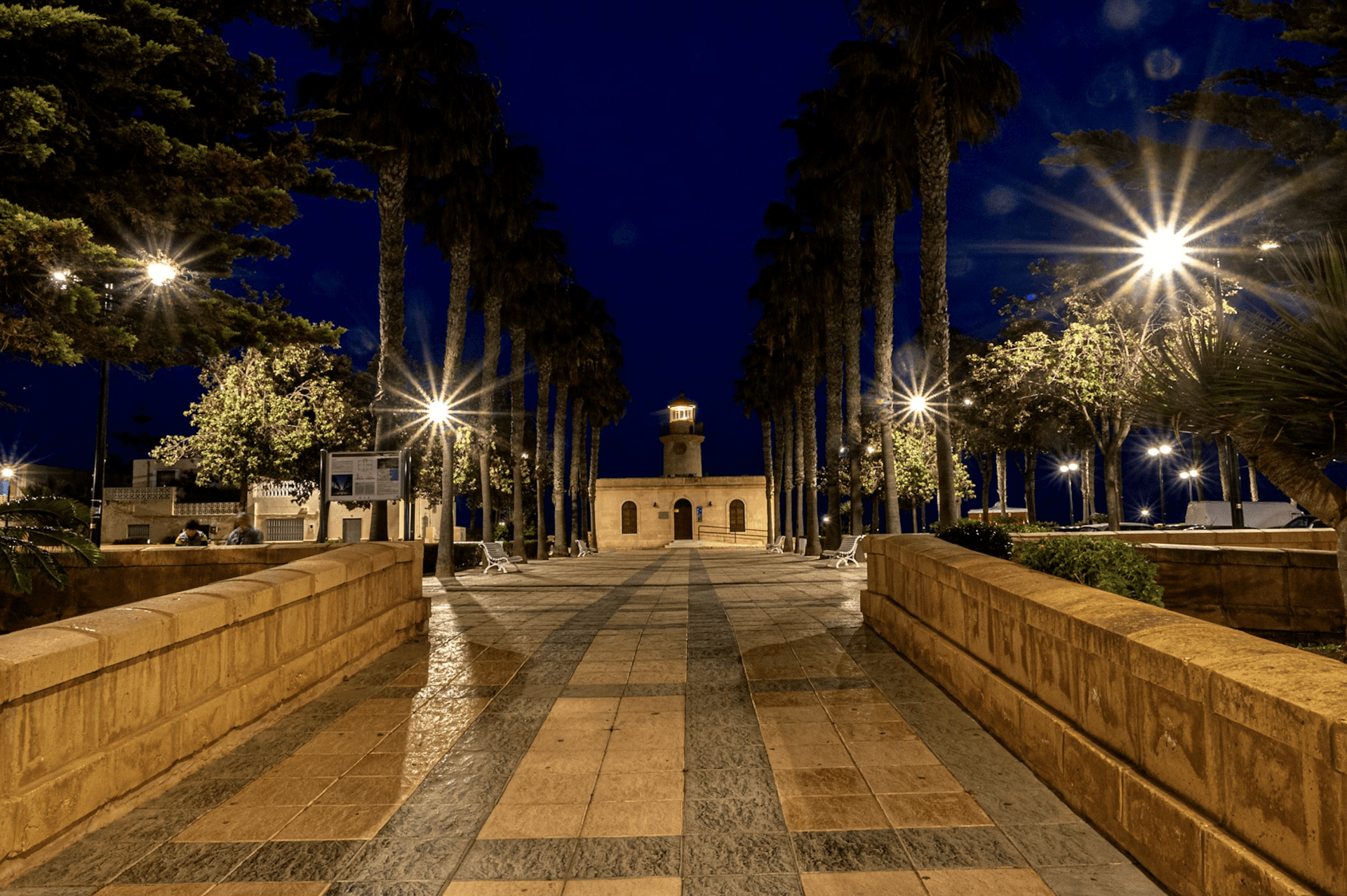
Faro de Roquetas de Mar is a modest but visually striking lighthouse located along the Almerían coast in Andalusia, Spain. Set just meters from the Mediterranean Sea in the resort town of Roquetas de Mar, this small stone structure is surrounded by modern beachfront development, palm-lined promenades, and open ocean views. The lighthouse itself is no longer active as a navigational beacon, but its location and architectural simplicity provide excellent opportunities for photographers looking to balance man-made form with coastal elements. With changing light over the water, clean Mediterranean color, and pedestrian access that allows close-up detail work as well as wider framing, Faro de Roquetas de Mar offers surprising versatility within a compact location.
Best Photography Opportunities
• Sunrise and Golden Hour Backlighting
Although the lighthouse faces southeast, its position on the shoreline means that early morning light floods in from the sea. Arriving before sunrise allows you to capture soft gradients of color over the water while the lighthouse remains in silhouette or partial side light. Using a tripod and a mid-range zoom lens, you can position the lighthouse against the glowing sky or incorporate palm trees and promenade details for depth. During golden hour, warm light skims across the stone walls and tiled roof, highlighting textures and softening the overall contrast of the scene.
• Twilight Long Exposure with City and Sea
Just after sunset, the area surrounding the lighthouse takes on a different character. Streetlights along the paseo marítimo and the soft glow from surrounding buildings create a balanced urban backdrop. This is the best time for long exposure work. Use a tripod and neutral density filter to smooth the sea and isolate the lighthouse against the shifting colors of the sky. The combination of architectural lighting and subtle motion from pedestrians or waves adds energy to the frame. The lighthouse itself is often gently illuminated from below, giving it definition even in low light.
• Architectural Detail and Texture Studies
The lighthouse's stone facade, tiled roof, and wrought iron window details offer strong subjects for architectural close-ups. These are best captured in diffuse light, such as on cloudy mornings or just after sunrise when shadows are minimal. Use a standard or short telephoto lens to isolate patterns in the stonework, contrast between materials, or the curve of the tower against the sky. Black-and-white treatments work well here, especially when focusing on surface texture or geometric composition. A circular polarizer can enhance detail by cutting glare on bright stone.
• Contextual Shots with the Promenade and Palm Trees
Faro de Roquetas de Mar is surrounded by a wide pedestrian promenade, landscaped gardens, and a row of palm trees that can be used to frame wider compositions. Step back and use a wide-angle lens to incorporate the lighthouse in context with the urban beach environment. Early morning or late afternoon gives the best directional light on the promenade, creating long shadows and warm tones across the tiled walkways. Shooting from the beach with the lighthouse in the background allows you to include wave action, sand texture, or even the silhouettes of passing joggers for more dynamic storytelling.
• Night Photography with Reflections and Ambient Light
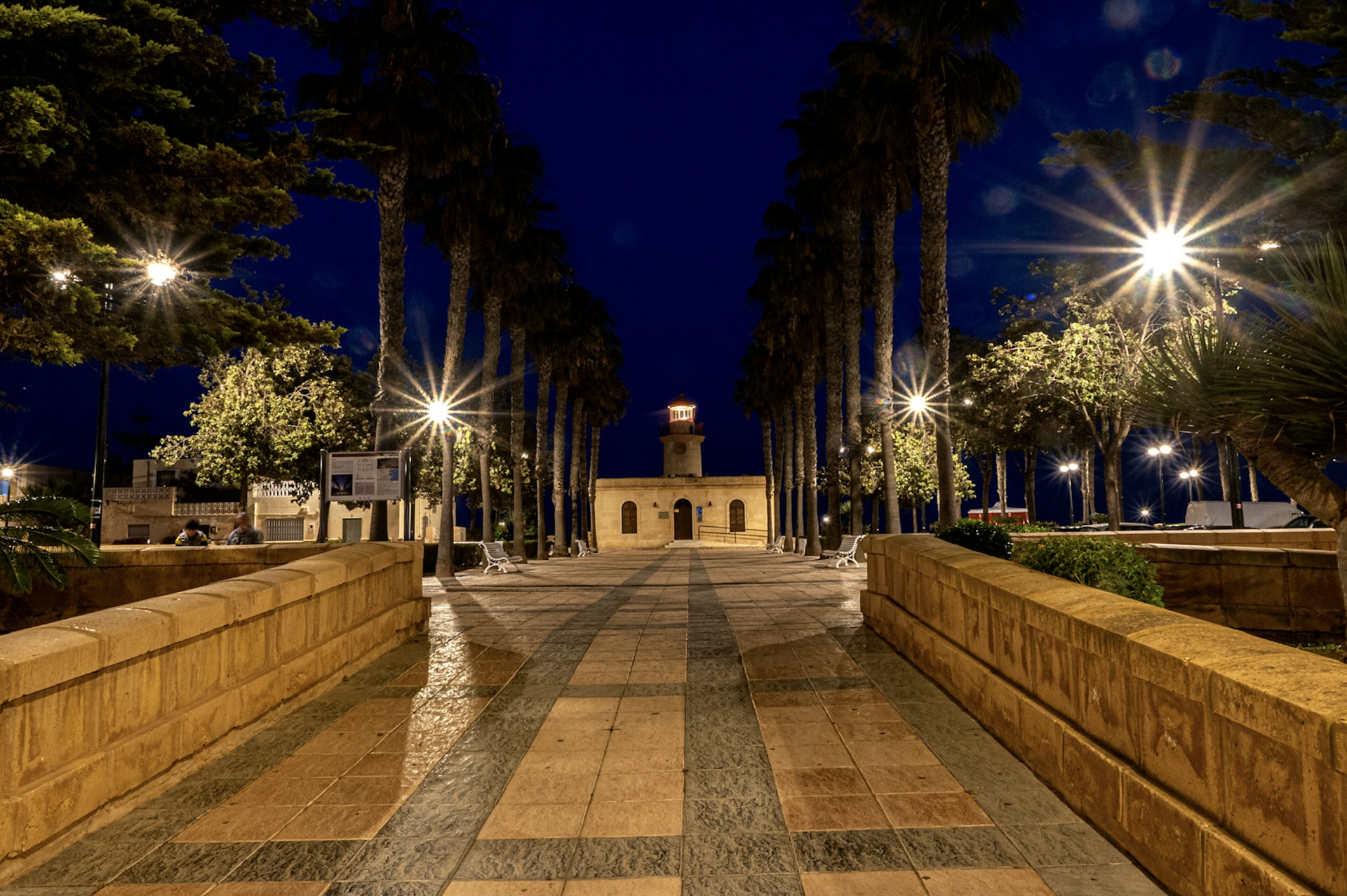
On calm evenings, the water and pavement can reflect ambient light from surrounding buildings and streetlamps. Set up a low ISO, long exposure shot to capture these reflections with sharp architectural details. The lighthouse is not brightly lit, so subtle exposure adjustments are necessary to maintain balance between foreground and background. Look for wet surfaces after light rain or mist from the sea, which create additional reflective textures and deepen color saturation. Night shooting here is generally uninterrupted and safe, especially during the quieter shoulder seasons.
Best Time to Visit
The best time to photograph Faro de Roquetas de Mar is during the cooler months from October through May, when the air is clearer, the light is less harsh, and tourist crowds are minimal. Early mornings throughout the year offer soft Mediterranean light and calm water, ideal for both wide shots and close architectural work. During winter, the sun rises further south along the horizon, creating longer golden hour sessions and more atmospheric conditions along the water. Wind is usually minimal at dawn, which allows for clean reflections on still water or wet pavement.
Autumn and spring bring more dynamic skies, with occasional clouds that enhance sunrise or sunset colors. These transitional seasons also add texture to your backgrounds without the intense contrast of summer sun. In summer, light becomes much harsher by mid-morning, and heat shimmer may reduce clarity in longer shots. However, early sunrise sessions in June and July can still be productive, particularly if you aim for silhouettes or subtle side lighting before the sun climbs too high.
Evening and night sessions are best from October through April when daylight fades earlier and the lighthouse becomes easier to isolate against a darkening sky. Shooting during or just after rain can enhance color contrast in stone and tiles, while also creating reflective surfaces that elevate night photography. Regardless of season, weekdays and mornings offer the quietest conditions for uninterrupted shooting.
How to Get There
Faro de Roquetas de Mar is located at the southern end of the beachfront promenade in the town of Roquetas de Mar, just west of the larger city of Almería. The lighthouse sits at the edge of the Paseo Marítimo, directly across from the Plaza de Toros and close to a number of hotels, restaurants, and beachfront cafés. It is a flat, walkable area with easy access from most parts of the town.
The most convenient way to reach the lighthouse is by car. Parking is available nearby on Calle Faro or in the surrounding streets, although it can become crowded during high season. Local buses from Almería also connect to Roquetas de Mar, with stops within walking distance of the promenade. From central Almería, the drive takes around thirty minutes. If you are staying within Roquetas itself, the lighthouse can be reached on foot or by bicycle using the coastal path.
There is no admission fee, and the area around the lighthouse is open at all hours. The structure is not open to the public, but its proximity to the sea and surrounding plaza makes it easy to photograph from multiple angles. Tripods are permitted, and foot traffic is light in the early hours, making it an accessible location for both quick sessions and extended visits.
Recommended Photography Gear
Faro de Roquetas de Mar benefits from a kit that allows both wide context and medium-range detail work. A wide-angle lens, preferably in the 16 to 35 millimeter range, is essential for capturing the lighthouse with its surrounding environment, especially when including the promenade, palm trees, or beach elements. For tighter architectural framing or isolating textures in stone and tile, a standard zoom lens such as a 24 to 70 millimeter works well. These focal lengths cover nearly every practical composition available at the site.
A compact tripod is useful for long exposure work at sunrise, sunset, or night. Bring a remote shutter release or use your camera's timer to eliminate vibration. A circular polarizer helps reduce glare and brings out the warmth in the lighthouse's stonework, especially in mid-morning light. For reflections and smoother water, a three-stop or six-stop neutral density filter allows for longer exposures even during brighter conditions.
Because the area is fully paved and flat, you can carry your gear comfortably in a shoulder bag or lightweight backpack. Weather protection is minimal, but a lens cloth is essential for dealing with sea mist or humidity. A small LED light or headlamp is helpful for early morning or night setups. There is no need for heavy telephoto lenses at this location unless you plan to include distant coastal elements. A lightweight, efficient kit will allow you to move quickly and take advantage of changing light and passing cloud cover.
Nearby Photography Locations
Just a short walk from the lighthouse, this restored fortress overlooks the sea and offers stone ramparts, tiled courtyards, and rooftop views of the town and coast. Its textures and angles provide excellent contrast to the simplicity of the lighthouse, especially in golden hour light.
Located immediately next to the lighthouse, this beach provides wide open views, clean sand patterns, and dynamic wave action. Early mornings here are quiet and excellent for minimalist seascapes, while evenings often deliver soft color transitions across the water.
• Salinas de San Rafael
A short drive inland, these salt flats attract migratory birds and provide strong leading lines, layered reflections, and abstract textures. They are best photographed in winter and early spring when bird activity is high and the water levels create strong mirrored surfaces.
• Puerto Deportivo de Roquetas
Just north of the lighthouse, the marina area features small fishing boats, mooring lines, and harbor reflections that change throughout the day. It is a productive location for shooting nautical textures, quiet industrial scenes, or abstract compositions in calm water.
Located a half-hour away in the city of Almería, this Moorish fortress complex offers elevated city views, patterned courtyards, and arched architectural elements. It provides strong contrast to the clean lines of the lighthouse and adds historical depth to a regional photography itinerary.
Faro de Roquetas de Mar may not be large, but its setting along the Almerían coast makes it a rewarding subject for photographers who appreciate clean light, subtle detail, and the interaction of architecture with natural elements. With sea on one side and the rhythms of the promenade on the other, it is a lighthouse that invites you to return at different times of day to explore how shadow, texture, and color change across stone, sky, and water.
Comments
Loading comments…