
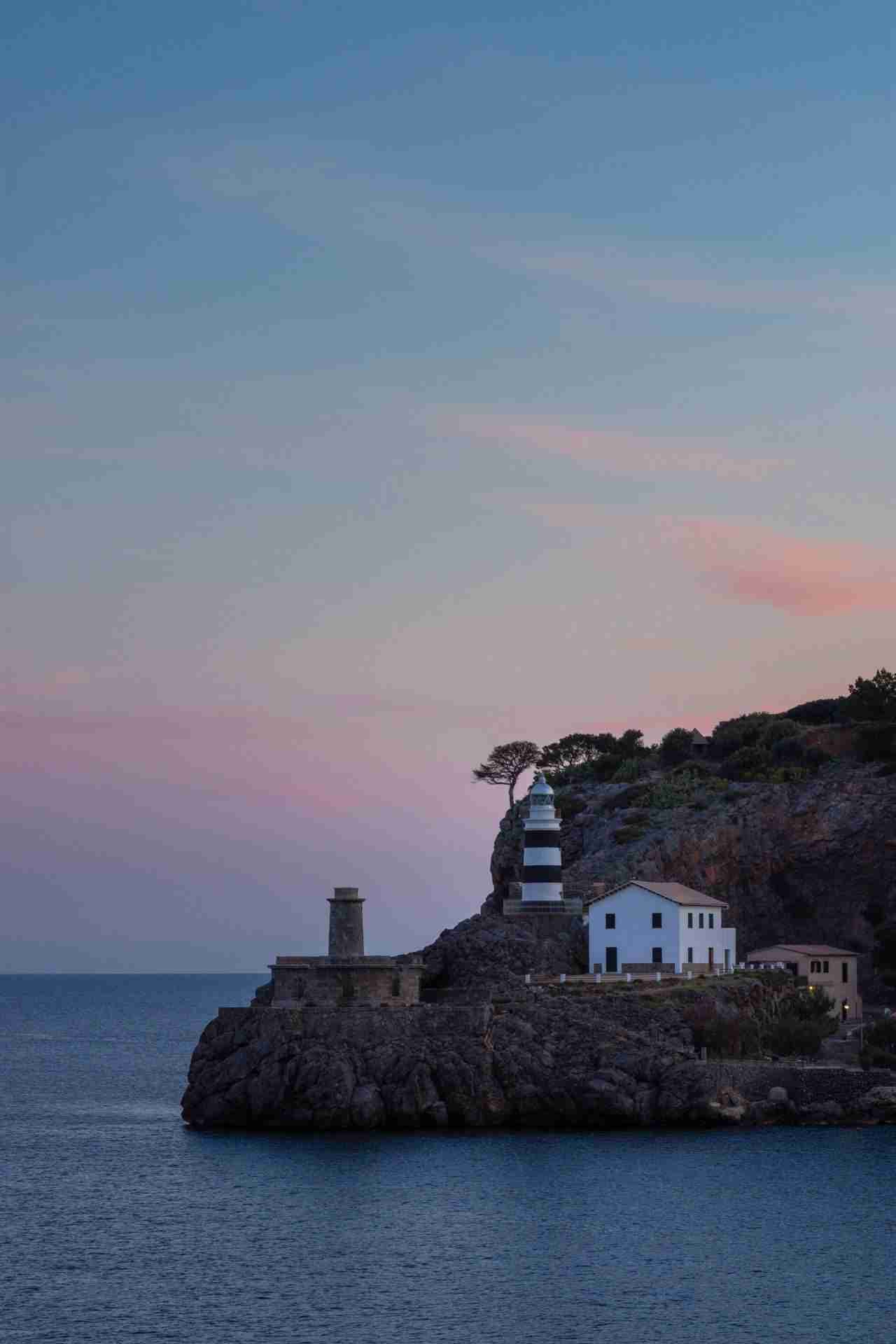
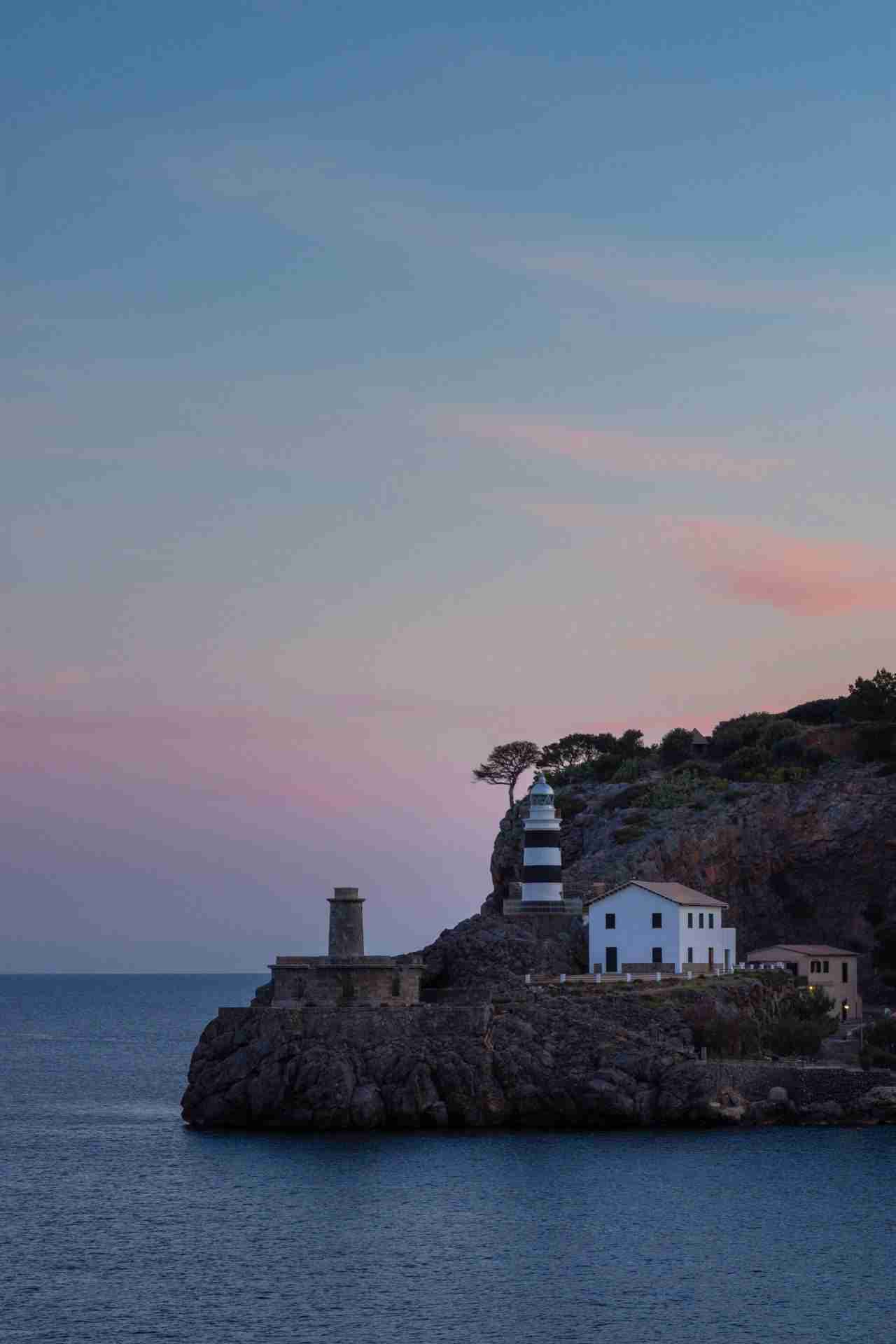
At the entrance to the crescent-shaped bay of Port de Sóller, the Faro de Port de Sóller rises from the cliffs as a guiding light for sailors navigating Mallorca's rugged northwest coast. Surrounded by the peaks of the Tramuntana Mountains and the deep blue expanse of the Balearic Sea, the lighthouse is a subject that blends history, architecture, and dramatic landscape. Built in the 19th century, it continues to serve its maritime purpose while offering photographers a location where every shift in light and weather creates new opportunities. From the golden calm of sunrise over the harbor to the fiery glow of sunset beyond the cliffs, Faro de Port de Sóller rewards careful observation and creative framing. Its combination of architectural clarity and wild natural setting makes it one of the most photogenic lighthouses in the Mediterranean.
Best Photography Opportunities
• Wide Coastal Perspectives Across the Bay
Some of the best vantage points for photographing the lighthouse come from the opposite side of the harbor. From here, you can capture the Faro perched dramatically on its cliff above the entrance to the port, framed by sea and sky. A wide-angle lens emphasizes the sweep of the coastline and the protective embrace of the bay. This perspective works well in both calm and stormy conditions: in calm weather, the sea reflects light like glass, while in storms, waves crash against the rocks and highlight the lighthouse's endurance. Early morning and late afternoon provide the most balanced light across both the cliffs and the water.
• Architectural Close-Ups of the Tower
Walking closer to the lighthouse reveals opportunities for architectural studies. The white cylindrical tower, capped with its lantern room, stands in clean contrast against the darker stone of the cliffs. Shooting from low angles emphasizes its height and geometric form, while detail shots highlight the textures of the masonry and ironwork weathered by salt and wind. This perspective is especially rewarding in golden afternoon light, which warms the white surface of the tower and casts subtle shadows that bring out the fluting of the stone. A medium zoom lens is ideal for this type of work, allowing you to isolate details while maintaining natural proportions.
• Cliffside and Seascape Compositions
The cliffs surrounding Faro de Port de Sóller offer dramatic points of view that combine rocky foregrounds with the lighthouse in the distance. These compositions benefit from careful use of leading lines, such as the edges of the cliffs or natural fissures in the rock, which guide the eye toward the tower. Long exposures with neutral density filters smooth the surface of the sea into soft gradients, contrasting against the rigid solidity of the cliffs and lighthouse. Stormy weather creates an entirely different mood, as waves crash violently below, producing dynamic seascapes with the Faro as the central anchor.
• Golden Hour and Blue Hour Drama
Light is the defining element of Faro photography, and golden hour offers some of the most rewarding conditions. At sunset, the cliffs glow orange and red, while the white tower catches the last warm tones of the sun. As twilight falls, the lantern of the lighthouse begins to glow, adding a man-made counterpoint to the natural light of the sky. Blue hour is particularly effective for long exposures, where the cool tones of water and atmosphere contrast against the warm light of the beacon. These are times when a tripod becomes indispensable, as longer shutter speeds reveal subtle light trails from passing boats and streaks of color across the sky.
• Harbor and Cultural Context
Incorporating the Faro into wider scenes of Port de Sóller itself provides context and variety in your images. The harbor, lined with fishing boats and overlooked by cafés and the historic tramline, offers numerous foreground elements to balance against the distant lighthouse. Shooting from the promenade allows you to frame the Faro within everyday maritime life, creating layered compositions that combine culture and landscape. Evening is particularly effective here, as the lights of the harbor reflect across the calm water, while the lighthouse glows faintly in the distance.
• Night Photography with Stars and Lantern Beam
For those who stay into the night, Faro de Port de Sóller offers strong potential for astrophotography. On clear evenings, the absence of major light pollution allows stars to appear crisply above the headland. Long exposures capture the beam of the lighthouse sweeping across the horizon, creating a striking symbol of guidance in darkness. Wide lenses allow you to incorporate both sky and structure, while telephoto framing can isolate the glowing lantern against the dark sea. The combination of ancient constellations and modern navigation makes for compelling imagery that bridges time and purpose.
Best Time to Visit
The lighthouse can be photographed throughout the year, though conditions vary significantly with season. Spring brings fresh greens to the Tramuntana slopes and often clearer skies, with comfortable temperatures for long shooting sessions. Summer provides long evenings and reliable sunsets, though the port area is busier with visitors and midday light can be harsh. Autumn brings quieter conditions, warm seas, and atmospheric skies as weather systems move across the Mediterranean. Winter offers some of the most dramatic conditions, with storms producing high waves and moody light that transform the Faro into a beacon of endurance. For daily timing, sunrise is calm and serene, with soft light across the bay, while sunset provides fiery skies and glowing cliffs. Twilight and night are particularly rewarding for long exposures and lantern photography. Overcast conditions, often dismissed, can be excellent for architectural detail and seascapes where evenly diffused light reveals subtle tones in rock and water.
How to Get There
Faro de Port de Sóller is located at the northern entrance of the bay of Port de Sóller, on Mallorca's northwest coast. From the town center, it is a short drive or a 20 to 30 minute walk along winding roads and footpaths that climb the cliffs. The road up is steep but manageable, with viewpoints along the way offering additional photographic angles back over the port. Parking near the lighthouse is limited, so walking is often the most reliable option. The lighthouse remains operational, and access to the immediate grounds is restricted, but there are multiple viewpoints nearby that provide excellent angles for photography. There is no fee to visit or to photograph the surrounding area. The best approach is to plan enough time for both harbor perspectives and cliffside viewpoints, as each reveals a different character of the Faro.
Recommended Photography Gear
A wide-angle lens in the 14 to 24 millimeter range is essential for capturing the lighthouse in its dramatic coastal context, especially from across the bay. A mid-range zoom between 24 and 70 millimeters provides flexibility for architectural studies and balanced compositions of the harbor and cliffs. A telephoto lens up to 200 millimeters is recommended for isolating the lighthouse against sea and sky or compressing it into layered landscapes with the surrounding mountains. A sturdy tripod is critical for twilight and night photography, as well as for long exposures of water and clouds. A circular polarizer is invaluable for reducing glare on the sea and deepening sky tones, while neutral density filters allow for creative motion blur in water and skies. Weather protection is important, as sea spray and sudden gusts of wind are common. Comfortable footwear and layered clothing make the walk and cliffside shooting safer and more comfortable, especially if staying until evening.
Nearby Photography Locations
The harborfront offers reflections, boats, and the famous Sóller tram as strong photographic elements. Sunrise and sunset from the promenade often produce colorful skies mirrored in the calm water.
• Mirador de Santa Catalina
This elevated viewpoint above the opposite side of the bay provides sweeping panoramas of both the lighthouse and the port. It is one of the best spots for sunset photography, with wide, unobstructed views.
A short inland journey brings you to Sóller itself, with its narrow stone streets, lively square, and the Church of Sant Bartomeu. It is a rewarding subject for cultural photography that pairs well with coastal landscapes.
South of Port de Sóller, this dramatic gorge and beach setting offers unique geological formations and turquoise water. Long exposures of waves rolling into the gorge mouth are particularly photogenic.
A nearby mountain village often regarded as one of the most beautiful in Spain, Fornalutx offers traditional stone houses, cobbled lanes, and terraces with sweeping views of the Tramuntana.
Faro de Port de Sóller is a subject that rewards both patience and variety, offering compositions that range from dramatic seascapes to intimate architectural studies. Its position on the cliffs, overlooking both calm harbor and open sea, ensures that no two visits ever feel the same. For photographers seeking to combine light, landscape, and history in one setting, this lighthouse is among Mallorca's most rewarding destinations.
Comments
Loading comments…