
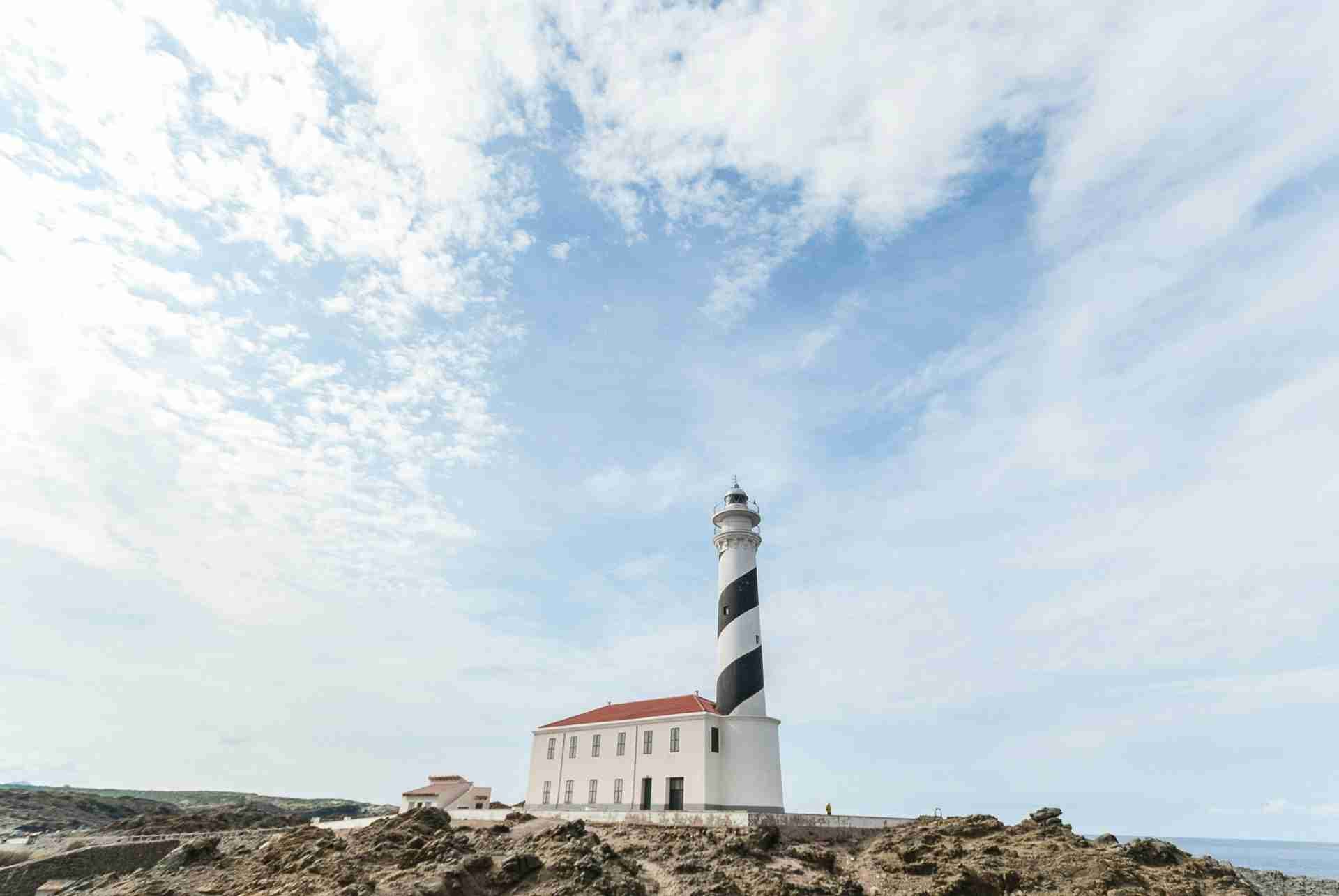
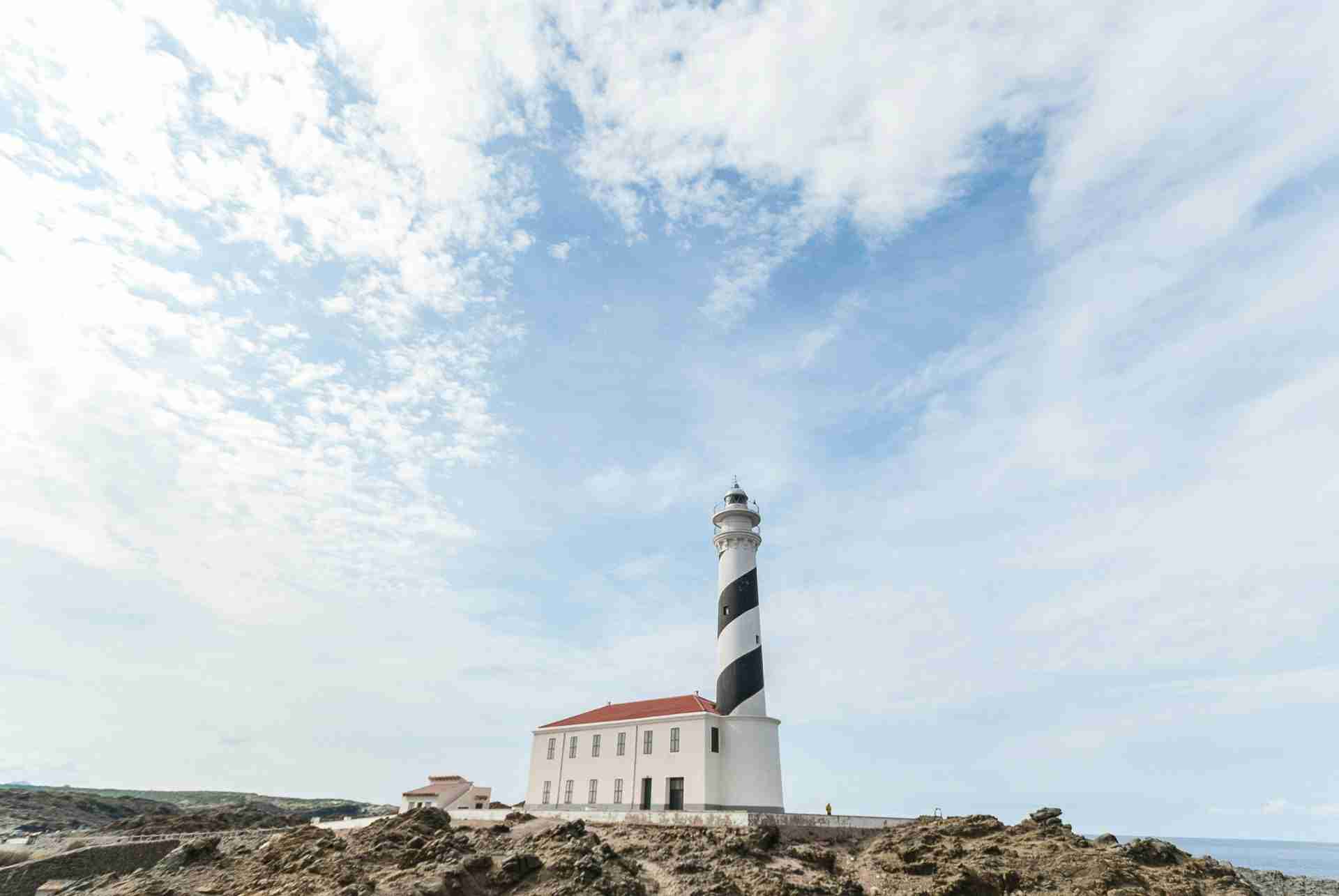
Far de Favàritx stands on a rugged headland along Menorca's northeastern coast, where sharp rock meets open sea under wide skies. This black and white swirled lighthouse is one of the island's most recognizable landmarks, not just for its design but for its stark setting. The surrounding landscape is barren and jagged, shaped by dark slate and hard wind, with almost no vegetation and very little shelter. For photographers, the lighthouse offers a clean vertical subject in the middle of a coastal scene that is all texture and movement. It's a place that holds up in harsh light, stormy conditions, and long exposures alike. Whether you're working wide across the terrain or close with compressed frames, Favàritx gives you space to build strong compositions without distraction.
Best Photography Opportunities
• Wide Compositions
The lighthouse sits at the edge of a small rise, and from the surrounding rock flats you can frame it cleanly against sky and sea. These wide shots are strongest when you include the cracked slate and shallow pools in the foreground, building contrast between rough terrain and the clean lines of the tower. A wide angle lens lets you exaggerate distance between the foreground and lighthouse while still fitting the full scene in. Morning and evening give softer light, but even under mid day sun, the stripes and rock hold sharp detail.
• Details and Textures
The rocky terrain around Favàritx is full of layered slate, deep cracks, and fractured surfaces that work well in close up frames. These textures are especially effective when shot low and tight, either as standalone subjects or as leading lines toward the lighthouse. The lighthouse itself has a clean, smooth surface with narrow windows and its signature striped pattern, all of which photograph well in soft or side light. These shots hold up even in overcast conditions when you're relying more on contrast and structure than on color. It's a solid location for detail-focused work, especially when paired with wide shots of the surrounding coast.
• Long Exposures
The site's exposed position makes it a good candidate for long exposure work. Using an ND filter allows you to smooth out water movement while keeping the lighthouse and rocky coastline sharp. When clouds are moving inland or across the horizon, extended shutter speeds pull soft streaks across the frame that contrast well with the strong vertical of the tower. These scenes work best when light is even and wind is steady, avoiding shake while maximizing motion in the sky and sea.
• Twilight and Lighthouse Illumination
During blue hour or just after sunset, the lighthouse beam becomes visible as it rotates. Shooting during this window allows you to blend ambient light with the artificial glow of the beacon, often with subtle color in the sky and stronger mood across the rocks. A tripod is essential for longer shutter speeds at this time of day, and balancing the exposure between the light and the background requires careful metering or bracketed frames. Including reflections from pools or wet rock adds structure to the darker parts of the image.
• Compressed Views
Stepping back and using a telephoto lens helps isolate the lighthouse against the sea or pull in distant weather. These compressed views give a better sense of the lighthouse's position on the edge of the coastline and let you frame it tightly against waves, clouds, or clear sky. These shots are often strongest in side light or under shifting cloud cover, when shape and contrast are more defined than color.
Best Time to Visit
Far de Favàritx is photogenic all year, but conditions vary with season and time of day. Sunrise is ideal for east facing light across the water and warm tones on the rocks. Morning also tends to be quieter, especially in summer months when visitors arrive later. Winter and early spring bring cooler temperatures, fewer people, and more dramatic skies, which are ideal for longer exposures or moody frames. Summer light is harsher but still workable when timed carefully around golden hour. The site holds up well in cloudy weather due to the graphic shape of the lighthouse and the consistent detail in the terrain. Rain can add sheen to the rock and enhance reflections in surface pools. Wind is almost always a factor here, so stable tripod setups and weather-sealed gear are recommended.
How to Get There
Far de Favàritx is located at Cap de Favàritx in the northeast corner of Menorca, within the S'Albufera des Grau Natural Park. During the high season (typically May to October), access to the lighthouse by private car is restricted. A shuttle bus runs from the parking area near Es Grau or Maó, and schedules are available through local tourism sites. In the off season, private vehicles can drive directly to the small parking area near the lighthouse. From the car park, it's a short walk across rock flats to reach the base of the lighthouse. There are no entrance fees or permits required to visit or photograph the site. There are no facilities on location, so bring water and sun protection, especially during warm months.
Recommended Photography Gear
A wide angle lens is useful for capturing the lighthouse and foreground rock in one frame, while a mid telephoto helps compress distance and isolate the structure against water or sky. A sturdy tripod is necessary for long exposures, low light, and windy conditions. ND filters are useful for smoothing water or cloud motion, and a circular polarizer can help reduce glare from wet rock surfaces. Extra lens cloths or a blower are useful when working in sea spray or light rain. Footwear with solid grip is important, as the slate can be slippery or unstable in places. Weather resistant gear or covers are worth bringing if clouds are building, as sudden showers are common, especially in spring and autumn.
Nearby Photography Locations
• Cala Tortuga and Cala Presili
Two quiet coves with turquoise water and curved shorelines located just south of the lighthouse. These beaches offer cleaner, softer scenes and are a good contrast to the harsh texture of Cap de Favàritx. Early morning or late afternoon light gives soft shadows and strong water color.
• Es Grau Village and Coastal Trail
A small village on the edge of the natural park with a beach and walking path that follows the coast. The trail includes small coves, rolling dunes, and low cliffs, which offer a range of subjects in soft light and work well for drone photography where allowed.
This protected area includes inland trails, shallow wetlands, and wide open sky. It's a good location for bird photography or minimalist landscape work, particularly in winter and spring when water levels are higher.
A more urban setting, the port area offers layered waterfront scenes, boats, and long reflections at sunrise or sunset. The lighthouse at the harbor entrance can also be photographed from a distance or across the water from the promenade.
Located on the northwestern tip of Menorca, this second headland offers another lighthouse, red cliffs, and a more rugged, undeveloped setting. The location works well in evening light and offers strong leading lines along the coast.
Comments
Loading comments…