
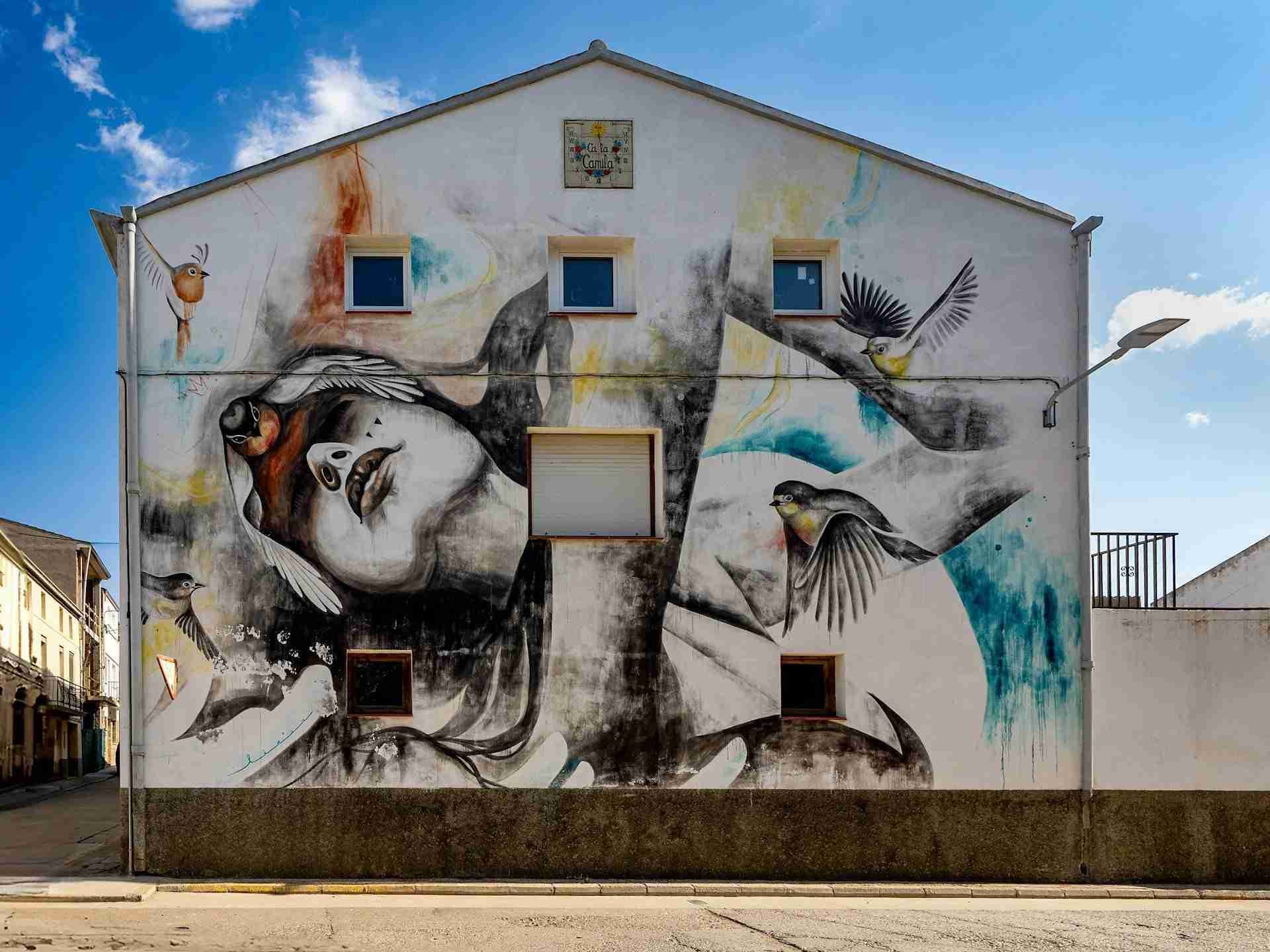
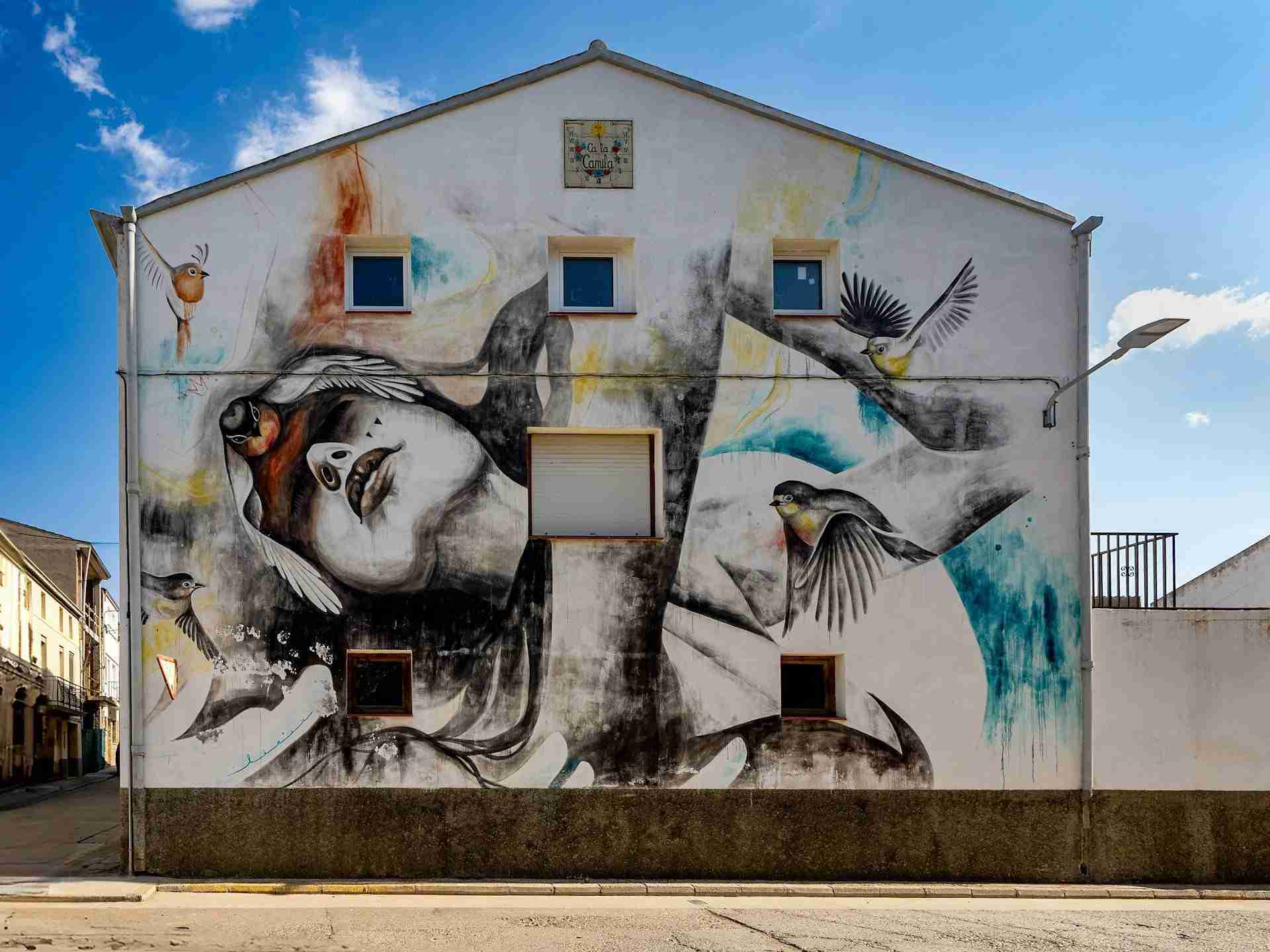
In the quiet agricultural village of Penelles, nestled within the flat plains of Catalonia's Lleida province, an unlikely transformation has taken place. What was once a sleepy rural town of fewer than 500 residents is now a vibrant outdoor gallery, with over 100 walls adorned by some of Europe's most talented muralists. Among these works, Graffiti Núm. 133 stands out—not just as another wall among many, but as a striking example of how urban art can find unexpected harmony with rustic architecture and open skies. Painted directly onto the side of a traditional farmhouse, this piece exemplifies the bold visual language that now defines Penelles: color, creativity, and cultural relevance, framed by wheat fields and quiet streets. For photographers, this is a rare opportunity to capture large-scale contemporary art set against rural Catalonia's timeless backdrop.
Best Photography Opportunities
• Wide Contextual Shots with Agricultural Framing
: Position yourself across the narrow road or field from Graffiti Núm. 133 to frame the mural in its full context. Use a wide-angle lens (16–35mm) to include elements of the surrounding environment—plowed earth, irrigation channels, or rows of sunflowers in summer—which place the artwork within its landscape. Early morning or late afternoon light casts directional shadows across the building, adding depth and enhancing the mural's contours. These compositions emphasize the collision of tradition and modern expression.
• Detail and Texture Studies of the Wall Surface
: Like many murals in Penelles, Graffiti Núm. 133 is painted directly on aged stucco and stone, with the natural imperfections of the surface playing into the final image. Use a standard prime (50mm or 85mm) or a short telephoto to isolate sections of the piece—cracks, paint drips, faded colors—creating abstract frames that celebrate texture and technique. Overcast days are ideal for reducing glare and capturing the mural's tonal subtleties without harsh contrast.
• Human Interaction and Street Portraits
: This mural, like many in Penelles, invites interaction—locals often pass by on bikes or with farm equipment, offering dynamic opportunities for candid environmental portraits. Frame your subject walking past the mural to scale the artwork, or pose them in a way that complements the gesture or theme of the piece. These frames blend documentary photography with conceptual portraiture and add a strong narrative element.
• Evening Light and Soft Color Rendering
: During golden hour, the faded pastel palette of the wall and the warm tones of the mural become even more visually cohesive. Shoot with a color-balanced profile or film simulation to bring out earth tones, and use the setting sun's soft side light to create long shadows along the wall's surface. This is the best time for subtle contrast and natural saturation without post-processing.
• Drone Views and Village Layout
: Though Graffiti Núm. 133 itself is best photographed from ground level, a drone can be used to showcase the mural's location within the larger context of Penelles. From above, you can trace the grid of mural-covered walls that give the village its open-air gallery identity, especially effective in the early morning when rooftops cast long shadows. Be respectful of airspace regulations and avoid overflying private homes at low altitude.
Best Time to Visit
The murals of Penelles, including Graffiti Núm. 133, are available to photograph year-round, but seasonal light and activity vary. Spring and early summer (April to June) offer the richest visual contrast, with green fields and flower blooms complementing the colors of the walls. Summer also brings longer shooting hours and evening festivals, though mid-day light can be intense under clear skies.
Autumn is excellent for atmosphere. The harvest season introduces hay bales, changing field color, and golden light that works especially well with the warm tones of the village buildings. Mornings in September and October may bring soft mist over the plains, adding mood and diffusion to early shoots.
Winter is less colorful but quieter, allowing clean compositions with minimal foot traffic. Overcast skies bring out wall textures and provide flat light ideal for detail work. Avoid shooting during midday in summer when contrast becomes too harsh and the painted surfaces reflect too strongly.
How to Get There
Penelles is located in the province of Lleida, Catalonia, approximately 90 minutes by car from both Barcelona and Zaragoza. The most straightforward access is by vehicle—take the A-2 motorway and exit at Tàrrega, then follow signs for Bellpuig and Penelles via the L-310 and LV-3321. The village is small and walkable, with most murals—including Graffiti Núm. 133—clustered along or near the main streets.
Free street parking is available throughout town. There are no entrance fees or barriers; the murals are all publicly accessible, and a printed or digital map is often available through the town's tourist office or the GarGar Festival website, which documents mural locations and artists.
There are no restrictions on personal photography, but commercial work may require permission from the town or property owners. Tripods are welcome, but the streets are narrow—shoot efficiently and be courteous to residents. Drone pilots should adhere to Spain's standard UAS guidelines and fly only during permitted hours and in visual line of sight.
Recommended Gear and Shooting Tips
For mural photography, a combination of wide and mid-range lenses is ideal. A wide-angle zoom (16–35mm) lets you frame large-scale works from tight street corners or across narrow roads, while a 24–70mm covers contextual shots and street scenes. A prime lens (35mm or 50mm) is excellent for detail and color studies, offering edge-to-edge sharpness and low-light flexibility.
A circular polarizer helps manage reflections on glossy surfaces or painted windows, but use cautiously on murals with uneven textures, as polarization can deepen shadow contrast unpredictably. A tripod is useful for golden hour and low-light scenes, especially if you're working with slower shutter speeds or bracketed exposures.
Because Penelles is an open-air gallery, weather protection for your gear is essential—unexpected wind or dust is common on dry days, and sudden showers can catch you off guard in shoulder seasons. Bring a lens cloth, a weather-resistant bag, and extra batteries if you plan to shoot into the evening.
Scout the mural location at different times of day to catch shifts in light angle and shadow. Some works face east or west and change character dramatically with light direction. Framing mural photography is about balance—look not just at the wall but at what surrounds it: shutters, doorways, utility lines, even laundry on balconies. These can enhance or distract depending on how you compose.
Nearby Photography Locations
: The entire town is dotted with large-scale murals painted during the annual GarGar Festival of Murals and Rural Art. Each piece offers a different palette, theme, and compositional opportunity—ranging from photorealistic portraits to surrealist landscapes. A self-guided walk through town takes about 90 minutes and allows for dozens of unique frames under changing light.
: A 15-minute drive south, this 18th-century winery estate offers classical architecture, vineyards, and quiet water features surrounded by poplar trees. The golden evening light over the vineyards and reflection opportunities along the canals make it a peaceful contrast to the vibrant energy of Penelles.
: This restored inland wetland reserve offers expansive reed beds, migratory birdlife, and wooden observation points ideal for landscape and wildlife photography. At sunrise, fog often drapes the water, making for atmospheric wide-angle scenes. Use a telephoto lens for bird studies from the blinds.
: A small town known for its black ceramic pottery, Verdú features winding medieval streets, Romanesque architecture, and hilltop views over the surrounding agricultural plain. The textured stone walls and narrow lanes are perfect for black-and-white or low-light architectural work.
• Tàrrega Old Quarter
: As the regional capital, Tàrrega offers a more urban backdrop with modernist facades, historic plazas, and cultural murals of its own. Visit the Plaça del Carme and the Convent of El Carme ruins for golden hour urban compositions that contrast well with the rural aesthetic of Penelles.
In Penelles, walls aren't just blank surfaces—they're canvases that breathe with color, meaning, and rural memory. Graffiti Núm. 133 stands among them as a testament to how art can redefine a place, not by replacing it, but by revealing what was already there. For the photographer, this is a rare blend of texture, culture, and community waiting to be framed.
Comments
Loading comments…