
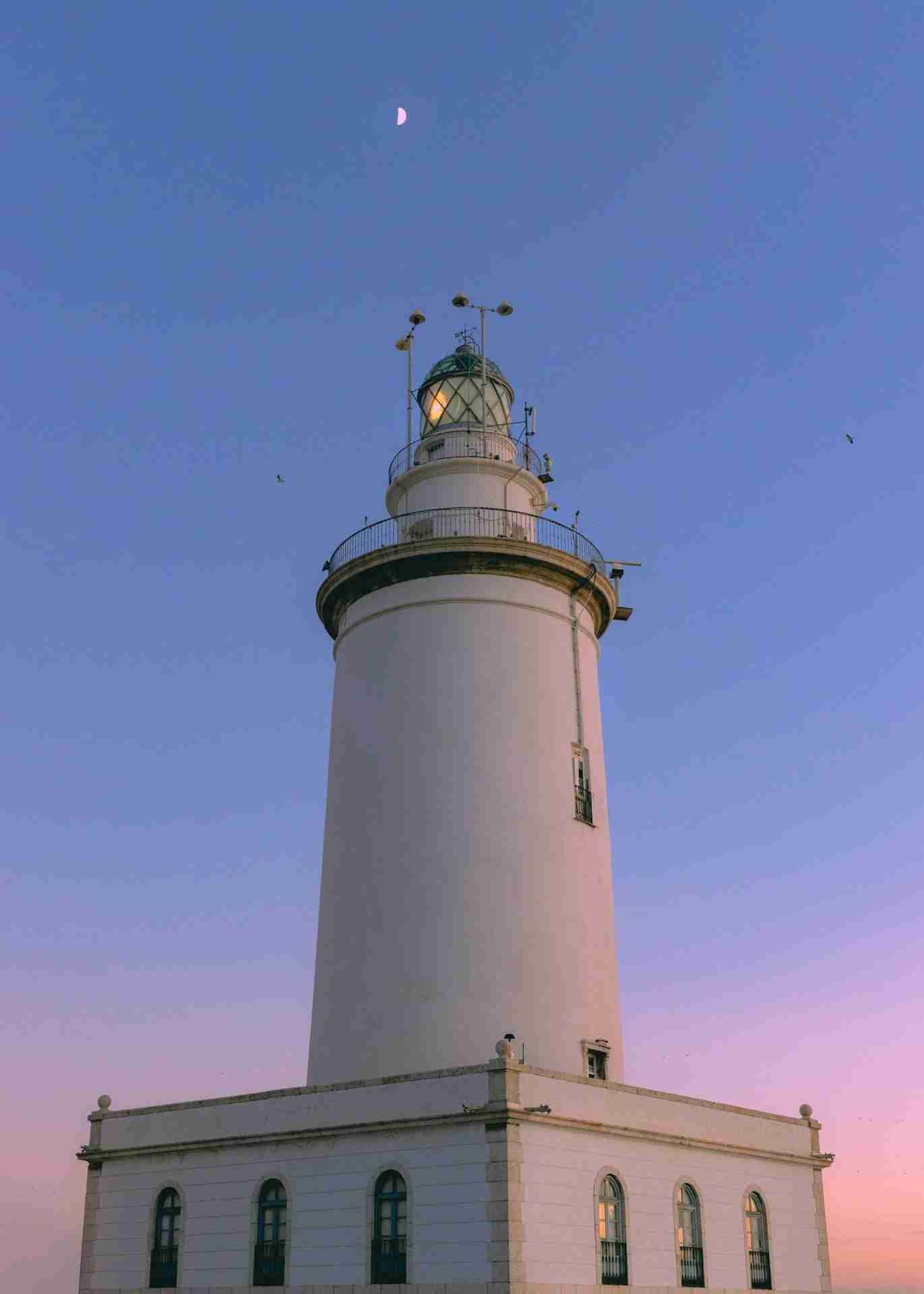
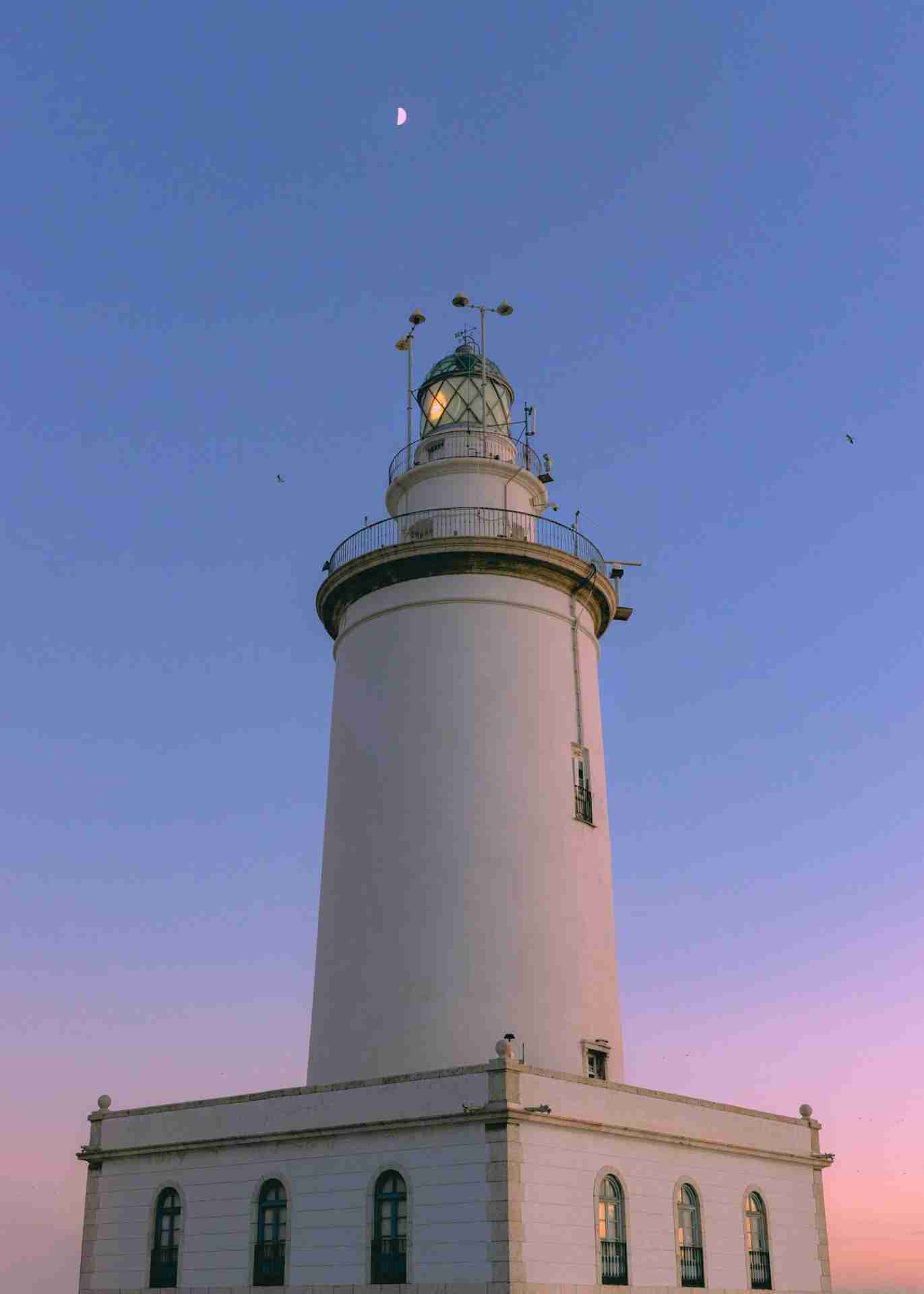
La Farola de Málaga is more than just a lighthouse. It's a historic maritime landmark standing at the mouth of the Port of Málaga, where the city meets the Mediterranean Sea. Built in 1817 and still in operation today, it is one of only a few lighthouses in Spain with a feminine name. For photographers, La Farola offers a clean, symmetrical subject surrounded by shifting sea light, reflections on calm water, and the ever-changing backdrop of the city's skyline and nearby mountains. Its white cylindrical tower stands in quiet contrast to the blue sea and often dramatic coastal skies, while nearby elements such as palm trees, piers, and modern marina architecture create dynamic compositions. Whether shooting soft morning light or long exposures at dusk, La Farola is a reliable and versatile subject for seascape, architectural, and minimalist photography.
Best Photography Opportunities
• Symmetrical Shots from the Promenade
Approaching La Farola along the Paseo de la Farola allows for clean, centered compositions with strong leading lines. The lighthouse is positioned at the end of the walkway, framed by palm trees and marina elements, which helps anchor the scene and guide the viewer's eye. A wide-angle lens works well here to include both the structure and its surroundings. Shooting during early morning light adds warmth to the lighthouse's surface while keeping foot traffic minimal. These compositions benefit from simple framing, straight horizons, and a steady tripod for long exposures in low light.
• Golden Hour from Muelle Uno
From the Muelle Uno waterfront promenade, La Farola is visible across the marina, with reflections shimmering in the water and sailboats moored in the foreground. Late afternoon light wraps around the lighthouse and creates warm highlights on its white surface. A telephoto or standard zoom lens is useful here to compress distance and include the lighthouse along with details such as boat masts, water ripples, and dock elements. Composing at a slight angle helps layer the image and avoid distractions from background buildings. This angle works especially well during golden hour, just before the sun dips behind the hills to the west.
• Blue Hour and Long Exposures from the Breakwater
The breakwater near the lighthouse offers one of the best vantage points for long-exposure photography. As daylight fades and artificial lights switch on, La Farola casts a warm glow against the cool tones of evening. A tripod is essential for capturing long exposures that smooth the water and reveal light trails from passing ships or vehicles along the distant port. Framing the lighthouse against the open sea emphasizes its role as a beacon and gives the image a strong vertical presence. Including foreground elements such as rocks or tide pools adds depth and context.
• Detail Shots of the Lantern and Upper Structure
For those interested in architectural detail, the top of La Farola includes a classic glass lantern room with metal framing and a small dome. Shooting from the base of the lighthouse with a telephoto lens allows for tight framing of these features against the sky. This is best done under soft light, such as overcast skies or during the golden hour, when the contrast is lower and details are easier to capture. Including a bit of the tower curvature in the frame helps maintain visual context. This kind of shot works well in a series alongside wider compositions of the full structure.
• Minimalist Sea and Sky Compositions
When viewed from further along the eastern beach promenade or across the port entrance, La Farola can be isolated against the horizon. These angles are ideal for minimalist compositions that emphasize negative space and subtle shifts in sea color or sky gradient. Using a longer lens compresses space and reduces visual clutter. These shots work best under flat light, such as during overcast conditions or fog, when the lighthouse becomes a solitary element in a softer visual field. Neutral density filters help lengthen exposures and enhance the minimalist effect by smoothing out water or passing clouds.
Best Time to Visit
The best time to photograph La Farola depends on the type of light you want, but early morning and late afternoon offer the most visually rewarding conditions. Morning light comes from the east and gradually warms the white tower as the sun rises over the Mediterranean. This is also the quietest time along the promenade, with fewer people and still water, ideal for clean compositions. Late afternoon and golden hour bring directional light from the west, illuminating the port and adding warm tones to the structure's surfaces.
Blue hour is particularly effective for long exposures and contrast between natural and artificial light. As the port lights come on, the surrounding water reflects the warm tones while the sky retains a soft blue glow. In summer, the light lingers longer, giving more time to adjust compositions and exposures. Winter offers sharper air and clearer skies, though days are shorter and conditions can be windier. La Farola is photographable in all seasons, but calm, clear days tend to offer the best reflections and sky conditions.
How to Get There
La Farola de Málaga is located at the southeastern end of the Port of Málaga, where the harbor meets the sea. The lighthouse is accessible via the Paseo de la Farola, a pedestrian-friendly promenade that connects to the main waterfront areas. Visitors coming from the city center can reach it easily by walking through Muelle Uno, the modern marina district that extends from the base of the Alcazaba hill.
Public transportation options include city buses that stop near the Plaza de la Marina or along Paseo del Parque, both within walking distance of the port. There is limited parking near the promenade, so arriving on foot or by bike is often more convenient. No entry fee or special permit is required to photograph the lighthouse from public areas. Drones may be restricted due to the lighthouse's proximity to port and marina activity, so check local regulations before planning aerial shots.
Recommended Photography Gear
A wide-angle lens is essential for capturing the full lighthouse along with surrounding promenade lines, palm trees, and the marina setting. A standard zoom lens, such as 24 to 70 millimeters, is useful for tighter compositions from Muelle Uno or for framing the lighthouse against water reflections. A telephoto lens from 70 to 200 millimeters works well for detail shots or for compressing layers from more distant points along the port.
A sturdy tripod is crucial for blue hour and long exposures, particularly when shooting from the breakwater or attempting to capture smooth water and movement. A circular polarizer helps manage glare on the water and enhances the color separation between sky and sea. Neutral density filters allow for creative long exposures, especially during daylight when you want to blur waves or moving boats. A microfiber cloth is useful for wiping sea spray off lenses, particularly if shooting on windy days near the water's edge. A lightweight camera bag is recommended for walking the length of the promenade and moving between viewpoints with ease.
Nearby Photography Locations
This modern waterfront area is filled with contemporary architecture, restaurants, and docked sailboats. It offers excellent reflections, clean lines, and urban contrast that works well at both golden hour and blue hour.
Located above the city center, this Moorish fortress provides elevated views of the port, lighthouse, and Mediterranean Sea. The light at sunrise and late afternoon creates strong contrasts across the ancient walls and port below.
Just east of the lighthouse, this beach provides relaxed coastal compositions with views back toward La Farola, especially at sunset. It's a good spot for handheld street-style beach photography as well as longer focal length seascapes.
Higher than the Alcazaba, this castle offers sweeping views of Málaga, the harbor, and the surrounding coastline. Late afternoon light and a telephoto lens can yield layered cityscapes with the lighthouse in the distance.
This colorful glass cube at the entrance to Muelle Uno makes for interesting architectural compositions, particularly when paired with reflections or set against dramatic skies. It works well for contrast shots between historical and modern design.
La Farola de Málaga rewards photographers who take time to explore its changing light, reflective surroundings, and quiet maritime presence. Whether you are framing it between palm trees or shooting long exposures across the marina, this lighthouse brings together simplicity and character in a coastal setting that continues to inspire.
Comments
Loading comments…