
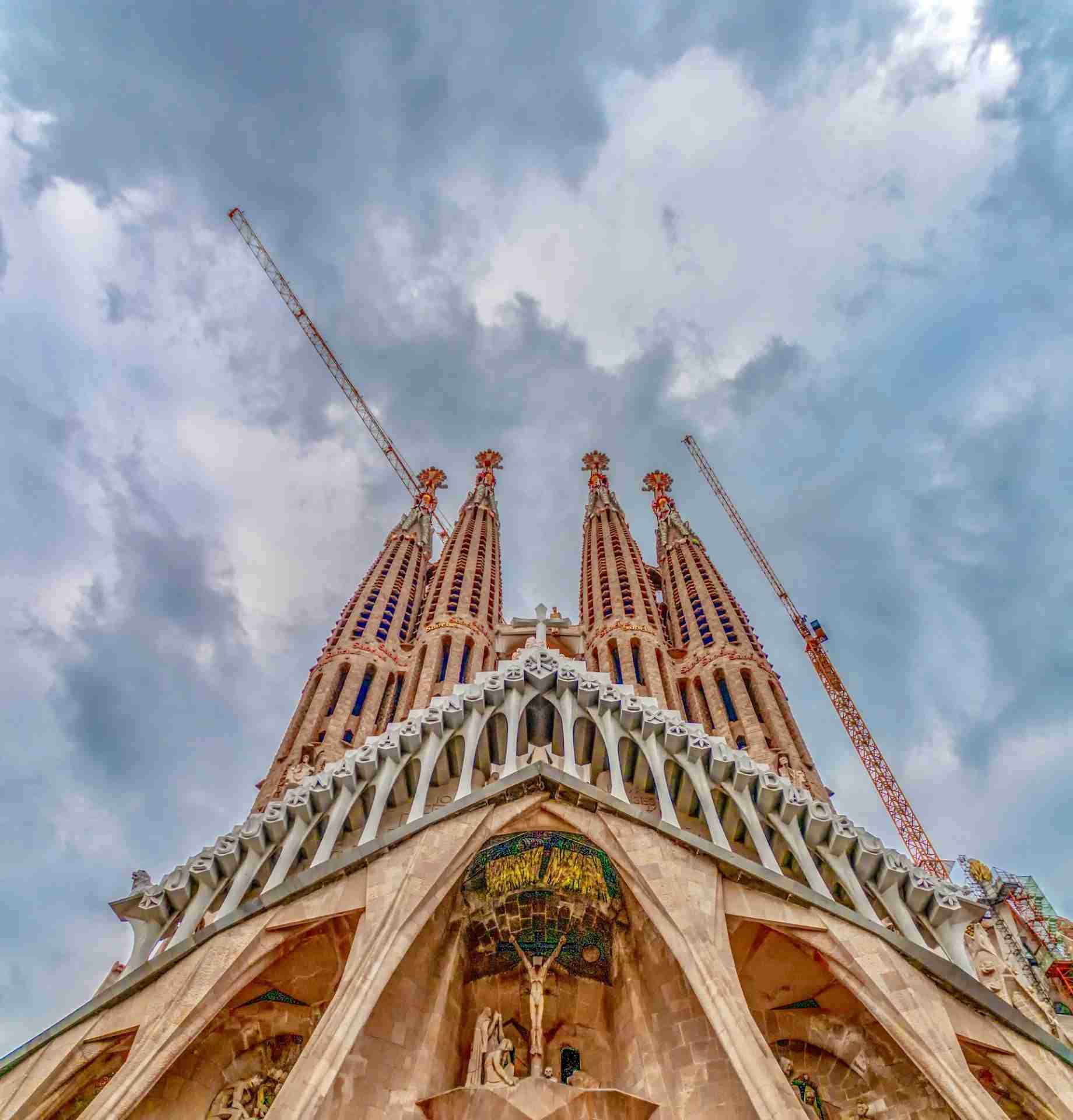
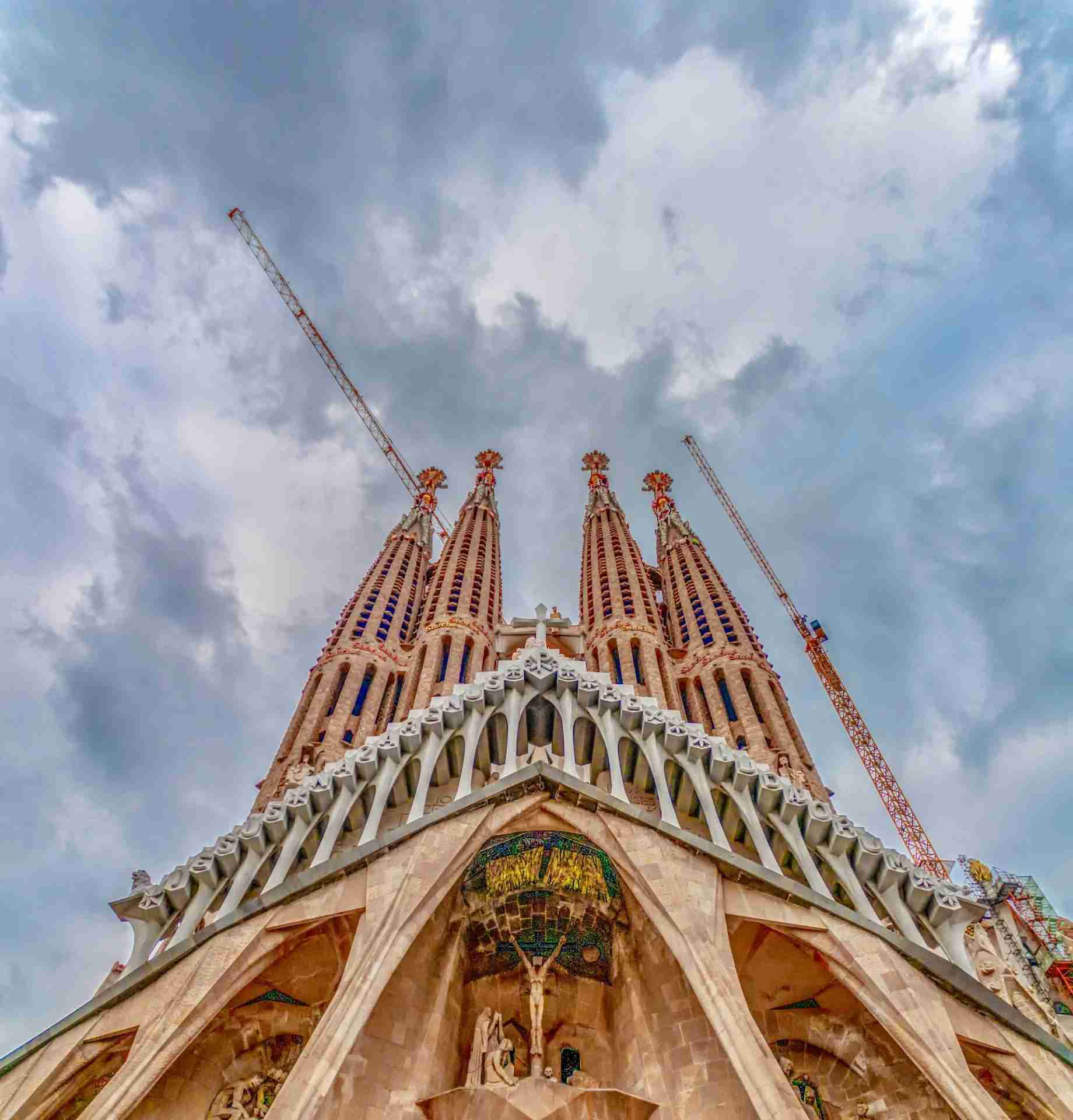
La Sagrada Família, Antoni Gaudí's unfinished masterpiece, is one of the most complex and rewarding architectural subjects in the world. Towering above the Eixample district of Barcelona, this basilica is a dynamic fusion of organic form, Gothic tradition, and modernist innovation. Every facade, spire, and sculpted surface is saturated with symbolic detail and shifting geometry, presenting endless photographic opportunities that evolve with light, weather, and perspective. While often photographed from afar, the real depth lies in exploring its abstract contours, colored glass interiors, and narrative stonework. For photographers, La Sagrada Família offers not just a monument, but a living canvas of evolving design and natural light that changes from hour to hour.
Best Photography Opportunities
• Nativity Facade at Sunrise
This eastern-facing facade is Gaudí's original contribution and is best captured in the first light of day. The sculptural work here is deeply intricate, representing the birth of Christ with a profusion of carved animals, angels, and plants. In the early morning, raking light enhances these textures and adds shadow definition, making this side ideal for close-up detail work or wide vertical compositions. Use a moderate telephoto lens to isolate individual sculptures or create layered depth between architectural features. From the park across Carrer de la Marina, you can frame the entire facade with surrounding trees or water reflections from the pond.
• Passion Facade in Late Afternoon
Facing west, the Passion Facade is a stark contrast to the Nativity side—more angular, sparse, and emotionally intense. The dramatic late-afternoon sun cuts across its bold carvings, casting long, directional shadows that change rapidly as the light drops. This is the best time for monochrome or high-contrast compositions that emphasize form and negative space. Shooting slightly upward from ground level enhances the sense of scale and tension in the vertical figures. The clean lines and modernist mood also lend themselves to abstract architectural studies and tight, graphic compositions.
• Interior Columns and Stained Glass Light
The basilica's interior is unlike any other. Tree-like columns stretch to the ceiling, diffusing light and creating a forest-like structure. In the mid-to-late morning, light entering through the eastern stained glass windows floods the interior in warm oranges and reds. By afternoon, the western windows create cooler blues and greens. This progression makes the space ideal for multiple visits at different times of day. A wide-angle lens is essential to capture the scale and flow of the space, while a fast prime helps with lower light when tripods are not permitted. Look for opportunities to combine structural elements with projected light for compositions that feel almost surreal.
• Ceiling Patterns and Organic Geometry
Gaudí's ceiling work, often missed by casual visitors, is an architectural marvel of fractal geometry and symbolic detail. Shooting straight up with a symmetrical frame, you can capture the layered star patterns, floral shapes, and column intersections. These work well with either centered wide compositions or off-angle frames that introduce a sense of movement. Use a lens with minimal distortion to maintain the integrity of the architectural lines. The best time to capture this light is mid-day when sunlight filters evenly from multiple directions.
• Distant Views and Skyline Integration
While close-up and interior work dominates most Sagrada Família photography, the basilica also benefits from distant cityscape views. Several rooftops and public parks around the Eixample grid, including the terrace at Hospital de Sant Pau and the bunkers of El Carmel, provide clean lines and wide angles for skyline shots. At sunset or twilight, the silhouette of the basilica against Barcelona's orange glow is a standout composition. A longer lens helps compress the foreground rooftops and emphasize the basilica's rising towers amid the urban sprawl. These views are especially striking when low clouds catch warm light behind the structure.
Best Time to Visit
Photographic conditions at La Sagrada Família shift dramatically with the time of day, lighting angle, and seasonal light quality. Spring and autumn offer the most reliable shooting conditions, with softer light, fewer harsh shadows, and smaller crowds. From March to May and September to November, both the interior and exterior benefit from clean air and lower sun angles, which create textured light across the facades and enhance stained glass effects inside.
Early morning, especially around 8:30 to 10:00 a.m., is the best time to photograph the Nativity Facade and eastern windows from both outside and within. The golden hour here is brief but highly effective for catching angular light across Gaudí's intricate carvings. The interior is most photogenic in late morning through mid-afternoon, as the evolving stained glass color creates shifting ambient tones. For the Passion Facade and western details, plan to arrive around 4:00 to 6:00 p.m., when the sun drops lower and casts strong relief shadows over the figures.
Summer can offer strong architectural light and clear skies, but the overhead sun flattens detail between 11:00 a.m. and 3:00 p.m. During this season, stick to early morning and late-day visits to avoid excessive glare or washed-out images. Winter brings low-angle light all day, which can be excellent for facade details, though some areas of the interior may be dimmer depending on cloud cover. Overcast days are particularly good for shooting textures, carvings, and ceiling patterns without the complication of direct sunlight or stained glass color casting.
To manage crowds and allow for clear compositions, aim to enter the basilica early or book the final time slot of the day. Interior photography is best done patiently—waiting for openings in the flow of visitors and focusing on static details that don't require long setups.
How to Get There
La Sagrada Família is located in the Eixample district of central Barcelona and is well-connected by public transportation. The easiest way to reach it is by taking the Metro to the Sagrada Família stop, served by Lines 2 and 5, which exit directly at the northeast corner of the basilica. Multiple buses also run nearby, and taxi access is easy from anywhere in the city center. Walking from Plaça de Catalunya takes about 25 minutes and offers the chance to photograph the basilica gradually rising into view from the surrounding grid.
Tickets are required to enter both the basilica and its towers, and they should be purchased online in advance to guarantee access and avoid long lines. Timed entries help manage crowd flow, and last-minute walk-up availability is rare. There is an entry fee, with optional upgrades for tower access, audio guides, and guided tours. Tripods and large bags are not allowed inside. Security checks are enforced at all entrances, and photography is permitted throughout most of the basilica as long as it doesn't interfere with visitor traffic or worship activities. Multiple viewpoints outside the structure—including both adjacent parks and nearby streets—are open to the public and can be accessed freely throughout the day.
Recommended Photography Gear
Photographing La Sagrada Família requires a streamlined yet capable kit that performs well in both high-contrast exteriors and low-light interior conditions. A wide-angle lens, ideally in the 14–24mm or 16–35mm range, is essential for capturing the full scale of the facades and interior vaults. These lenses are also key for dramatic verticals, full-ceiling compositions, and layered symmetrical shots. For tighter details and midrange compositions of architectural elements, a 24–70mm standard zoom gives you versatility without distortion.
Interior light levels can vary significantly, so a fast prime lens such as a 35mm or 50mm with an f/1.8 or faster aperture is highly recommended for handheld shooting. This is especially useful for low-light corners, ceiling work, or isolating specific stained glass reflections. Since tripods and monopods are not permitted, optical stabilization and fast glass are your best tools for sharp, low-noise images inside.
A polarizing filter can be helpful when photographing exterior stone in midday sun, reducing glare and deepening sky contrast. However, filters are unnecessary for interior work and may block light needed in dim settings. If you plan to photograph the basilica from rooftop or hilltop locations, consider adding a 70–200mm lens to compress cityscape compositions and isolate the spires among Barcelona's skyline.
Pack your gear in a slim, secure backpack, as bulky camera bags may be flagged by security. Bring extra batteries and memory cards; continuous shooting in changing light and bracketing exposures will use up both more quickly than you expect. A microfiber cloth is also essential for cleaning your front element, especially when moving between bright outdoor conditions and cooler interior air that can create condensation.
With the right gear and preparation, you'll be able to photograph both the grand architectural gestures and the quiet, symbolic details that make La Sagrada Família one of the most complex and rewarding visual subjects in Europe.
Nearby Photography Locations
Just a ten-minute walk north of the basilica, this former hospital complex is a gem of Catalan modernism. Its courtyards, domes, and tilework provide colorful contrast to Sagrada Família's stonework, and elevated views from its upper walkways give a unique vantage back toward the basilica spires. Afternoon light works especially well here for architectural symmetry.
Perched high above the city, these former anti-aircraft bunkers offer sweeping panoramic views across Barcelona. From here, you can shoot the basilica rising out of the Eixample grid, especially during sunrise or twilight. A long lens helps compress the urban landscape and bring Gaudí's towers forward in the frame.
This broad, tree-lined avenue offers quieter street photography opportunities with leading lines that can guide compositions toward the distant basilica. Shooting from street corners or elevated crosswalks can yield unexpected angles and layered perspectives with local context.
This diagonal pedestrian street runs directly between the basilica and Hospital de Sant Pau. Its slight incline allows for dynamic wide shots that incorporate local life, shops, and architectural elements converging on Sagrada Família. Early morning is best for clean frames and warm side light.
Located just across from the Nativity Facade, this park offers one of the most popular angles for full-scale shots of the eastern side of the basilica. The reflecting pond here provides a clean foreground when conditions are calm. It's best visited just after sunrise for strong light and fewer crowds.
La Sagrada Família is more than a landmark—it's a layered, shifting structure that rewards patience, planning, and repeat visits. Whether you're drawn to light pouring through stained glass or the contrast between carved facades and Barcelona's grid, this basilica is a subject that never quite repeats itself. For photographers willing to explore it from multiple angles and timeframes, it offers one of the most dynamic architectural experiences in the world.
Comments
Loading comments…