
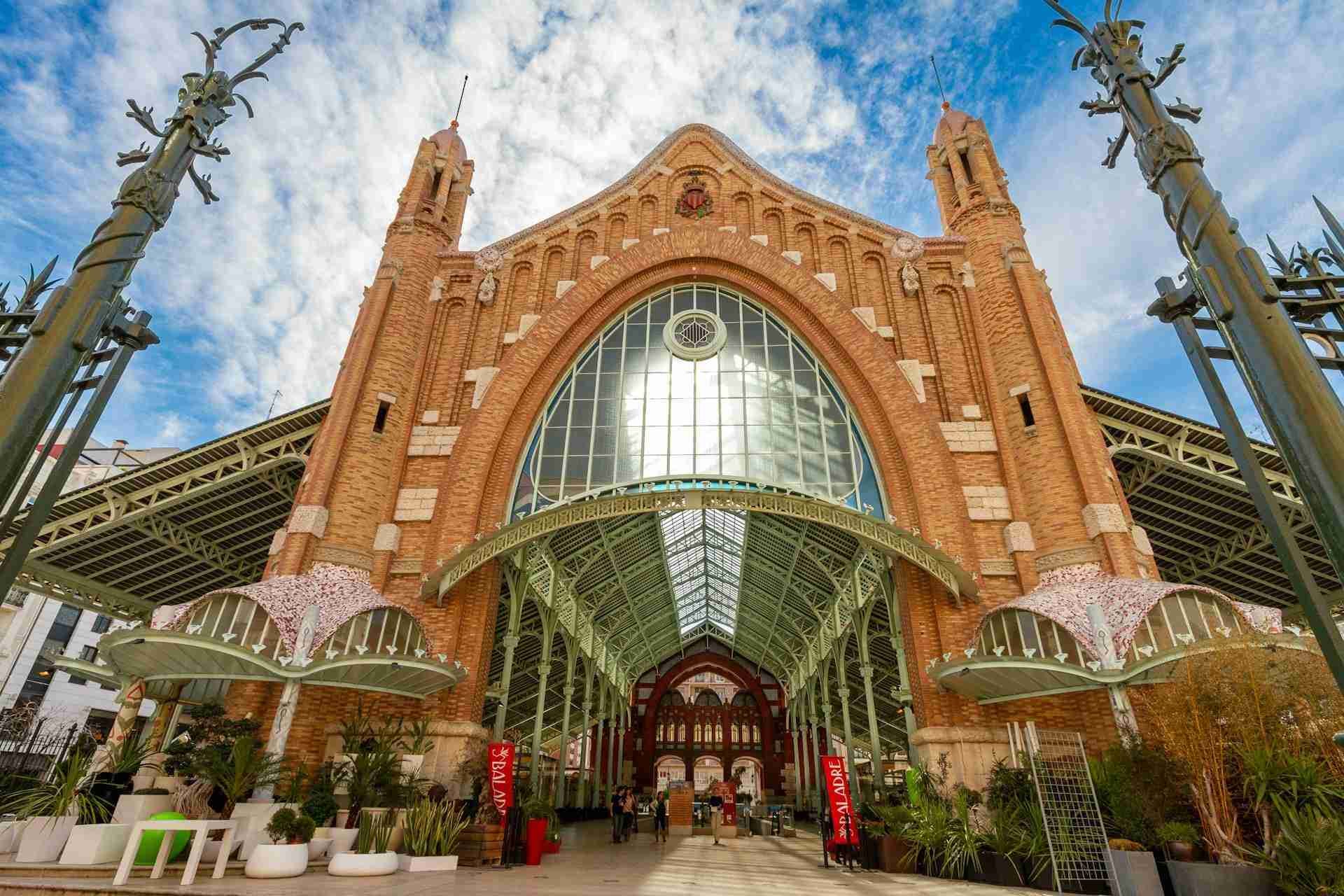
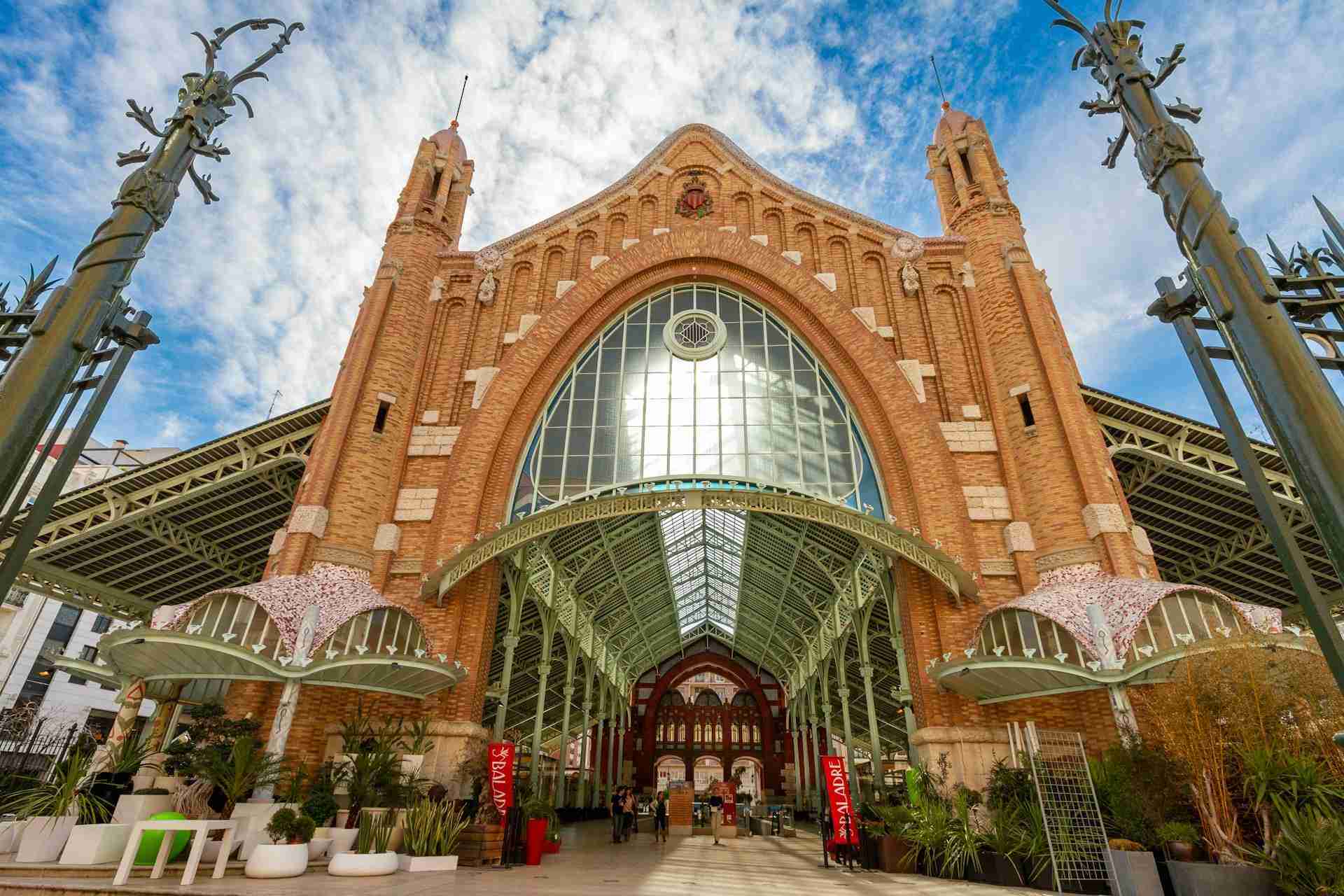
The Mercat de Colón in Valencia, Spain, is a striking blend of early 20th-century architecture and contemporary public space, offering a rich subject for photographers interested in urban form, texture, and light. Once a traditional neighborhood market, this building is now a revitalized cultural and commercial space, filled with cafés, boutiques, and event installations, all housed within a soaring iron and glass structure. Designed by Francisco Mora Berenguer and completed in 1916, the market's Art Nouveau influences, ornate ceramic detailing, and towering archways make it a playground for architectural photography. Whether you're working with natural light streaming through the glass ceiling or focusing on the contrasting materials that shape its structure, Mercat de Colón rewards photographers who take their time to move through space, observe, and explore geometry at every scale.
Best Photography Opportunities
• Interior Symmetry and Iron Framework from Ground Level
Standing beneath the high vaulted roof, you'll find some of the most compelling compositions by looking upward and along the central aisle. The iron trusses create strong rhythmic lines that repeat down the length of the space, offering opportunities for symmetrical framing. Using a wide-angle lens, you can capture the sense of scale and openness while leading the eye toward the market's distant glass façade. This is especially effective in the morning, when soft light filters through the glass panels overhead, casting subtle shadows across the tiled floor. Compositions here work well in both color and monochrome, depending on how much you want to emphasize the tonal contrasts in metal and glass.
• Façade Details and Decorative Tile Work
The exterior façades on either end of the market are some of the most intricate examples of Valencia's Art Nouveau movement. They feature elaborate ceramic tiles, sculptural motifs, and a mix of natural and geometric forms. Use a medium telephoto lens to isolate these elements such as floral tiles, sculpted stonework, and iron balconies without distortion. The façades face east and west, so plan to shoot one in the morning and the other in the afternoon to take advantage of low-angle light. Overcast days can also be ideal here, softening the shadows and allowing the details to stand out without harsh contrast.
• Reflections and Transparencies Through the Glass Ceiling
The translucent roof of the market offers interesting opportunities to photograph reflections and overlapping forms. From the upper level, especially in the late afternoon, sunlight filters through the ceiling in fragmented patches, highlighting different parts of the interior at once. Look for reflections of people, structure, and sky in the polished floor tiles or glass storefronts. This layering effect is particularly strong when shooting with a fast prime lens wide open, allowing you to control depth of field while isolating specific textures and highlights. These shots are subtle but add visual richness to a full series of the space.
• Night Photography with Warm Interior Light
After sunset, Mercat de Colón transforms. The interior remains warmly lit, and from the exterior, the glow emanating through the glass creates a strong contrast with the deepening blue of the evening sky. Set up across the street with a tripod and medium-wide lens to frame the building in context with the surrounding city. The combination of old-world architecture and modern nightlife gives these images a quiet urban energy. A slow shutter speed can also capture the movement of passing pedestrians or cyclists, adding a human element that reflects the space's current use.
• Abstract Architectural Elements and Repeating Patterns
Within the structure are countless opportunities to capture small-scale architectural details such as wrought iron spirals, rivets, glazed tile edges, and repeating lattice patterns. These lend themselves well to abstract or texture-focused photography. Use a macro lens or short telephoto to work with compression and shallow depth of field. Shadows and sunlight shifting throughout the day give these static elements a sense of motion and rhythm. These images make strong supporting visuals in a broader portfolio and help tell a story about craftsmanship, material, and time.
Best Time to Visit
The market is open to the public daily, but the time of day significantly influences both lighting conditions and the type of photographs you'll be able to make. Early morning, particularly just after opening, is ideal for clean architectural shots with minimal foot traffic. The eastern façade receives strong directional light around this time, and inside, the cool morning sun filters through the glass ceiling, creating soft, angular shadows along the floor and beams. This is the best time to focus on symmetry, clean lines, and structural compositions.
By midday, the market fills with café patrons, shoppers, and locals using the space as a casual meeting point. The interior becomes livelier, making it a good time to work on environmental portraits or street-style compositions within the architectural framework. If your goal is to highlight human interaction with the space, visiting during lunch hours will give you access to subtle gestures, varied expressions, and natural framing between columns, plants, and seating.
Late afternoon brings warm light into the western façade, which is especially photogenic when captured from street level with long shadows falling across the tile work and entrance arches. Inside, the soft gold tones of the sun reflect off metal beams and polished floors, enriching the color palette for both wide and detail shots. As the sun drops lower, the contrast between artificial and natural light becomes more pronounced, adding visual depth to both interior and exterior scenes.
Evenings are excellent for tripod work, especially outside the market where you can take advantage of long exposures. Interior lighting is consistent and warm, while the fading sky adds mood without overexposing highlights. Weeknights are quieter than weekends, giving you more flexibility to set up shots without interruption. For rain photography, the reflective cobblestone sidewalks and glowing windows offer excellent opportunities for night scenes with atmosphere and visual interest.
How to Get There
Mercat de Colón is located in the upscale Eixample district of Valencia, specifically on Carrer de Jorge Juan. It is within easy walking distance of Valencia's city center and is well-connected by public transportation. The nearest Metro stations are Colón and Xàtiva, both on Line 3, which are about a five to ten-minute walk from the market. Numerous bus lines also serve the area, with stops along Gran Via del Marqués del Túria.
If you're arriving by car, there are underground parking garages nearby, including one directly beneath the market itself. However, driving in central Valencia can be slow due to traffic and one-way streets, so public transit or walking is usually more efficient. The building is free to enter and open throughout the day, although specific vendors and cafés have varying hours. There are no restrictions on photography, and tripods are permitted as long as they do not obstruct pathways or disrupt businesses. Early morning and late evening hours are best for shooting with minimal distractions, though you'll want to confirm whether special events or installations are scheduled during your visit, as these can affect access to certain areas.
Recommended Photography Gear
Mercat de Colón is best approached with a flexible kit that covers a variety of focal lengths and lighting conditions. A wide-angle lens, preferably in the 16 to 35 millimeter range, will allow you to capture the full span of the roof structure and the repeating arches from inside. This lens is essential for symmetry shots, architectural framing, and capturing the interplay between metal beams and glass ceilings. Be mindful of distortion near the edges, particularly when shooting upward. Keeping your sensor level will help avoid converging lines in wide compositions.
A standard zoom lens, such as a 24 to 70 millimeter, is useful for mid-range compositions and detail shots of the façades and tiled ornamentation. This is also the range you'll use most for people-in-environment work if you're shooting during busier hours. A fast prime lens in the 35 to 85 millimeter range will give you creative control over depth of field when isolating decorative elements, signage, or light patterns across the market floor. These lenses are also well-suited for low-light scenes during the evening when artificial lighting takes over.
For long exposure and night photography, bring a tripod that is lightweight but sturdy enough for urban use. A shutter release or in-camera timer will reduce camera shake during slower exposures. Neutral density filters are less critical indoors, but a polarizer may help reduce reflections on the glass façades and upper windows. If you're shooting during or after rain, this can also deepen saturation in the tiled surfaces outside the market.
Given the market's variable lighting, from strong sunbeams cutting through the glass to the dim glow of interior lighting in the evening, having a camera with good dynamic range will help recover highlights and shadows during editing. A compact blower and microfiber cloth are always helpful for dealing with dust or smudges on lenses, especially after shooting from street level. Lastly, consider a small step stool or tilt-screen camera if you plan to shoot upward from tight spaces, as many of the most striking roof compositions require very specific angles that are easier to manage with adjustable positioning.
Nearby Photography Locations
This sprawling complex of futuristic architecture by Santiago Calatrava is a short bus or taxi ride from Mercat de Colón. It offers high-contrast forms, smooth water reflections, and strong geometry that pairs well with the softer lines of the market. Sunrise and sunset provide long shadows and cool-to-warm color transitions across the curved structures.
A major civic space in central Valencia, this plaza is surrounded by historic buildings with neoclassical and baroque façades. Fountain displays, street vendors, and floral arrangements add life and motion to your compositions. Visit during golden hour or blue hour for the best light on the city hall and surrounding structures.
A short walk south of the market, Ruzafa is Valencia's trendiest neighborhood and full of colorful street art, eclectic storefronts, and narrow streets that frame spontaneous street scenes. It is especially productive for urban documentary work or shooting street portraits in soft morning light.
Once a riverbed, now a sunken park, this green corridor winds through the city and features walking paths, bridges, playgrounds, and varied plant life. It is a good location for environmental portraits, minimalist compositions with repeating structures, and drone work, thanks to its open layout and varied lines.
Located in the heart of the old town, the cathedral and its bell tower offer sweeping city views and access to narrow medieval alleys below. Climbing El Miguelete rewards you with an elevated vantage point perfect for shooting rooflines and the transition from historic core to modern cityscape.
Mercat de Colón may no longer be a traditional market, but for photographers, it remains a place full of light, movement, and structured beauty. The interplay of metal and glass, old and new, quiet corners and busy cafés creates a dynamic setting where every visit offers something slightly different. Whether you're shooting early morning geometry or lingering into the evening for reflections and color, this architectural landmark invites you to slow down, study the space, and build a story frame by frame.
Comments
Loading comments…