
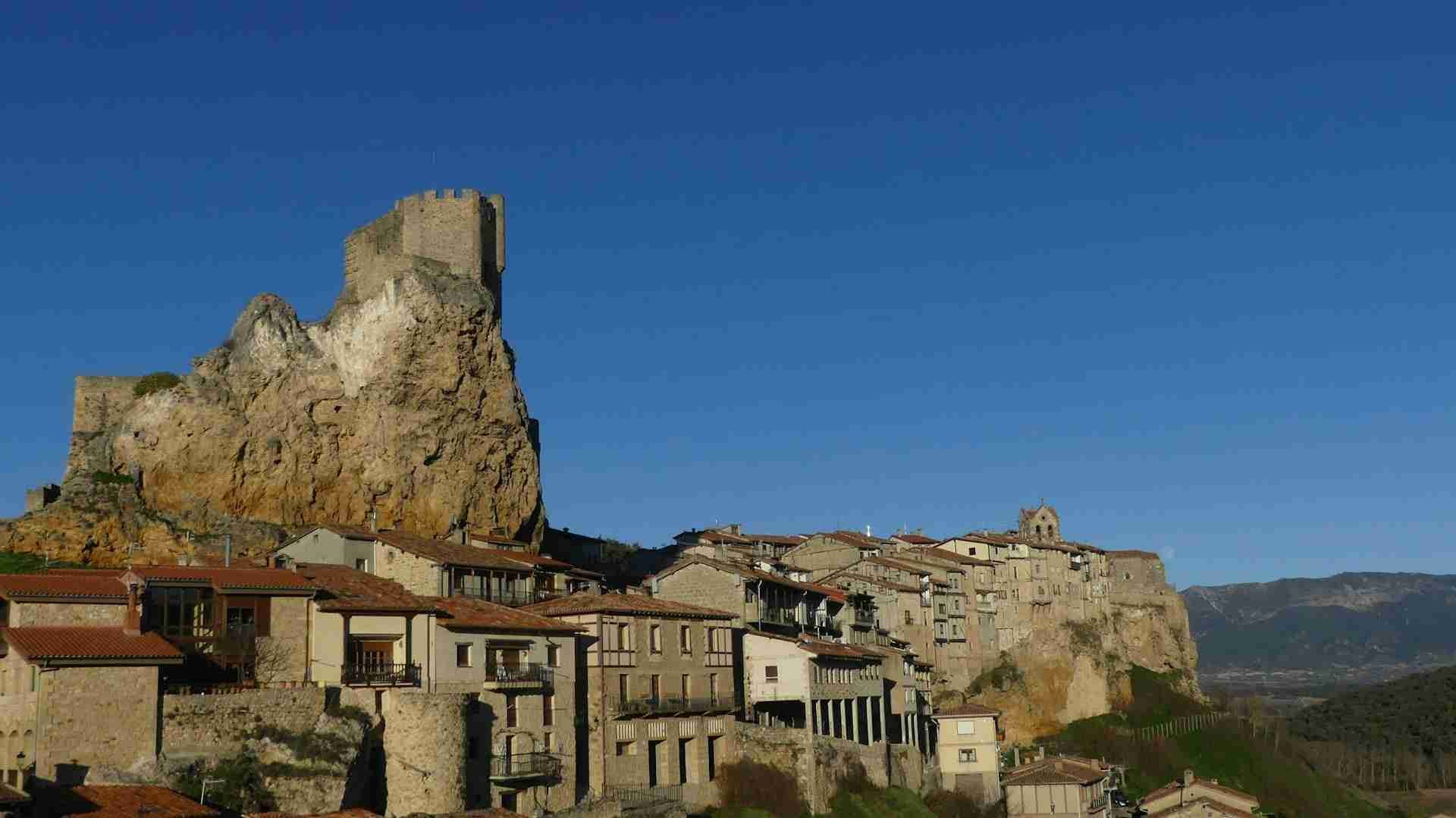
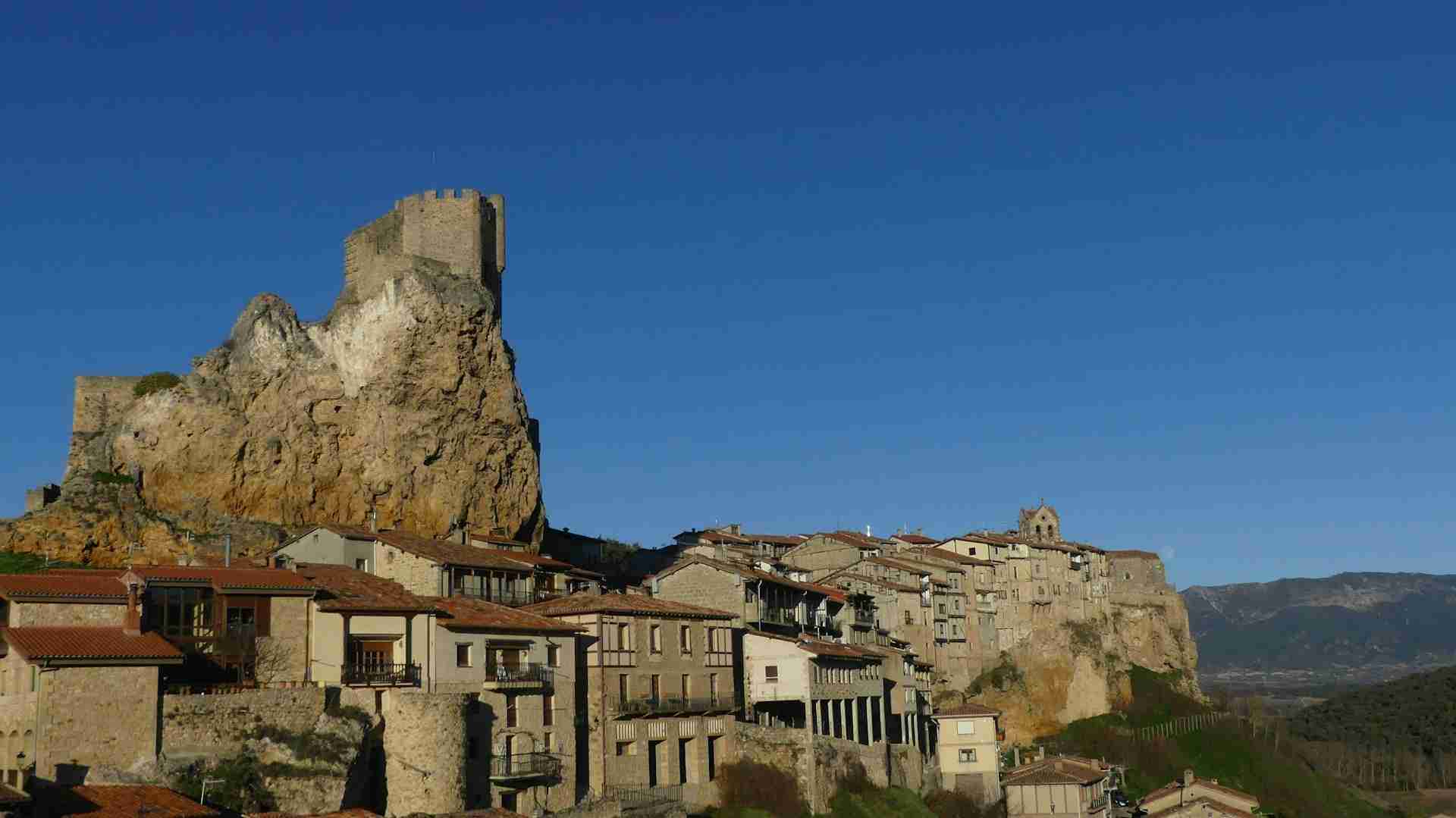
High above the Ebro Valley, the Mirador de Frías offers one of the most rewarding vantage points in northern Spain for photographers seeking a clear and commanding view of Castillo de Frías. From this hillside lookout on the eastern approach to town, the medieval fortress rises boldly from a rocky outcrop, its tower and battlements dominating the skyline while the red-tiled rooftops of the village spill down the slope below. The location is remarkably photogenic in all light, providing a near-perfect alignment of town, castle, and natural ridgeline. Framed by rolling hills and ever-changing clouds, the view from the mirador captures both the defensive logic and the visual drama of one of Spain's most layered hilltop settlements.
Best Photography Opportunities
• Sunrise light on the castle and town
delivers warm tones and long shadows that bring out the detail in both stone and tile. Shooting from the mirador just after dawn allows you to work with soft light that grazes the east-facing walls of the castle and lights the upper village before filtering down into the lower rooftops. Using a telephoto lens in the 70 to 200 millimeter range helps compress the layers of rooftops against the cliff face, emphasizing the verticality of the scene. A wide-angle lens also works well for capturing the full sweep of the valley and adding sky interest above the castle.
• Castle silhouettes during sunset
are best captured when shooting westward from the mirador. As the sun drops behind the hills, the castle becomes a clean silhouette outlined against a glowing sky. The steep drop beneath the castle wall enhances the effect, making the fortress appear suspended above the landscape. A mid-range lens is ideal here, especially when including the valley and distant ridges for scale. Sunset clouds often develop texture and movement that adds drama behind the structure, and long exposures can turn the sky into soft streaks for a more minimalist frame.
• Framing the town's rooftops against the ridgeline
works particularly well in late afternoon when the directional light brings out color contrast between the red clay tiles and the pale limestone of the castle. From the mirador's ledge, you can use the roofs as a foreground texture that leads into the main focal point. Look for vertical elements like chimneys, satellite dishes, or narrow lanes between buildings to create visual pathways into the scene. Shooting slightly elevated helps maintain clean lines without cutting into the layered rooftops.
• Early morning mist in the valley
can lift behind the castle and create a natural separation between foreground and background. This effect often appears in spring and autumn, especially after cool nights. The light refracts through the haze, giving a luminous quality to the stone while keeping the valley below softly veiled. Shooting at this time requires a tripod and careful exposure to retain detail in both mist and shadow. This is a strong opportunity for moodier frames or monochrome treatments that emphasize tonal transitions.
• Panoramic compositions from the mirador platform
capture the town, castle, valley, and distant terrain in a single expansive frame. This is a good chance to use a stitched panorama or an ultra-wide lens to preserve detail across the entire horizon. The mirador itself is elevated but stable, with a clear line of sight that avoids foreground obstructions. A level tripod setup helps with alignment, and early evening light brings depth to the hills and buildings across the frame.
Best Time to Visit
The best time to photograph from the Mirador de Frías is during the spring and autumn months, when the light is soft and directional, and the surrounding countryside provides a rich color palette of green, gold, and rust tones. Mornings in these seasons often feature mist or broken clouds that add depth and texture to compositions.
Summer offers extended daylight hours and consistent golden hour conditions but also more foot traffic, especially during weekends or festival periods in the town. Early morning remains the best time to shoot during summer, as heat haze and hard midday light can flatten architectural details and reduce contrast across the valley.
Winter brings crisp air and unobstructed visibility across the hills, making it ideal for long-lens compositions and minimalist sky-heavy frames. Snowfall is rare but possible, adding another visual layer if you are fortunate enough to catch it. Overcast winter days can also work well for black-and-white photography that emphasizes the geometry of the town and fortress.
How to Get There
The Mirador de Frías is located just east of the town on the main road leading toward the BU-504. If arriving by car, there is a small pull-off area on the roadside where you can park safely before walking up to the viewpoint. The path is short and moderately steep but well maintained, and the lookout platform is clearly marked with local signage.
Frías is easily reached by car from Miranda de Ebro or Trespaderne, with the drive taking around thirty to forty minutes depending on conditions. Public transportation options exist but are limited in frequency, so driving is the best option for photographers hoping to arrive early or stay late for light conditions.
The mirador platform is open access at all hours, with no entrance fee and no barriers to tripods or camera setups. It is large enough to accommodate multiple photographers and has a stone wall for safety. The surrounding terrain is uneven in places, so proper footwear is recommended, particularly in wet or cold conditions.
Recommended Photography Gear
A sturdy tripod is essential for sunrise, sunset, and long exposure work, particularly if you plan to shoot brackets or panoramic frames. The viewpoint can be breezy at times, so stabilizing with weighted bags or leg spikes is helpful.
For lenses, a 24 to 70 millimeter zoom offers the most flexibility for balancing the castle and town within the frame, while a 70 to 200 millimeter is useful for compressing architectural elements and isolating the cliff-top fortress. A wide-angle lens in the 16 to 35 millimeter range is ideal for panoramic shots that include the full valley and sky.
Graduated neutral density filters are useful for balancing sky exposure during high contrast times of day, and a polarizer can enhance clarity in the valley or deepen blue skies in midday. In cooler months, lens wipes and a microfiber cloth help manage condensation, especially during sunrise sessions.
Because the view faces different directions depending on time of day, scouting in advance can help with lens choice and placement. A weather-resistant camera bag is helpful for climbing the slope and keeping gear protected during light rain or mist.
Nearby Photography Locations
is directly visible from the mirador and also accessible on foot from the town below. Once inside, photographers can capture interior stonework, battlements, and partial views over the rooftops of the town. Afternoon light works best for interior shots, while early morning is better for outside silhouette framing.
lies below the town and is best approached from the riverside path on the north bank of the Ebro. The bridge's rounded arches and fortified tower can be photographed with long exposures across the river, especially during calm early light. This location pairs well with a visit to the mirador and provides contrast between natural water movement and stone architecture.
• Tobera and its narrow gorge
offer a more intimate setting just a short drive away. The village bridge, waterfall, and small church built into the cliff provide strong vertical compositions. The location is best visited in early morning when the light filters in softly from the east.
, found just upstream from the village, give photographers a chance to work with layered water movement, mossy stone, and shaded woodland. Long exposure work is ideal here, and compositions can be made both wide and tight depending on flow conditions.
• Valle de Tobalina
, which stretches beyond Frías, offers pastoral views, winding roads, and seasonal variations in color and texture. Drone photography works particularly well here, revealing patchworks of fields and the layered elevation of the surrounding terrain.
The Mirador de Frías is not just a scenic pull-off. It is one of the few locations where you can fully appreciate the scale and placement of the castle in relation to its medieval village and the surrounding valley. Whether you are composing a crisp sunrise over rooftops or waiting for soft color to develop in the evening sky, this viewpoint remains one of the most photogenic places to experience the architectural drama of Frías.
Comments
Loading comments…