
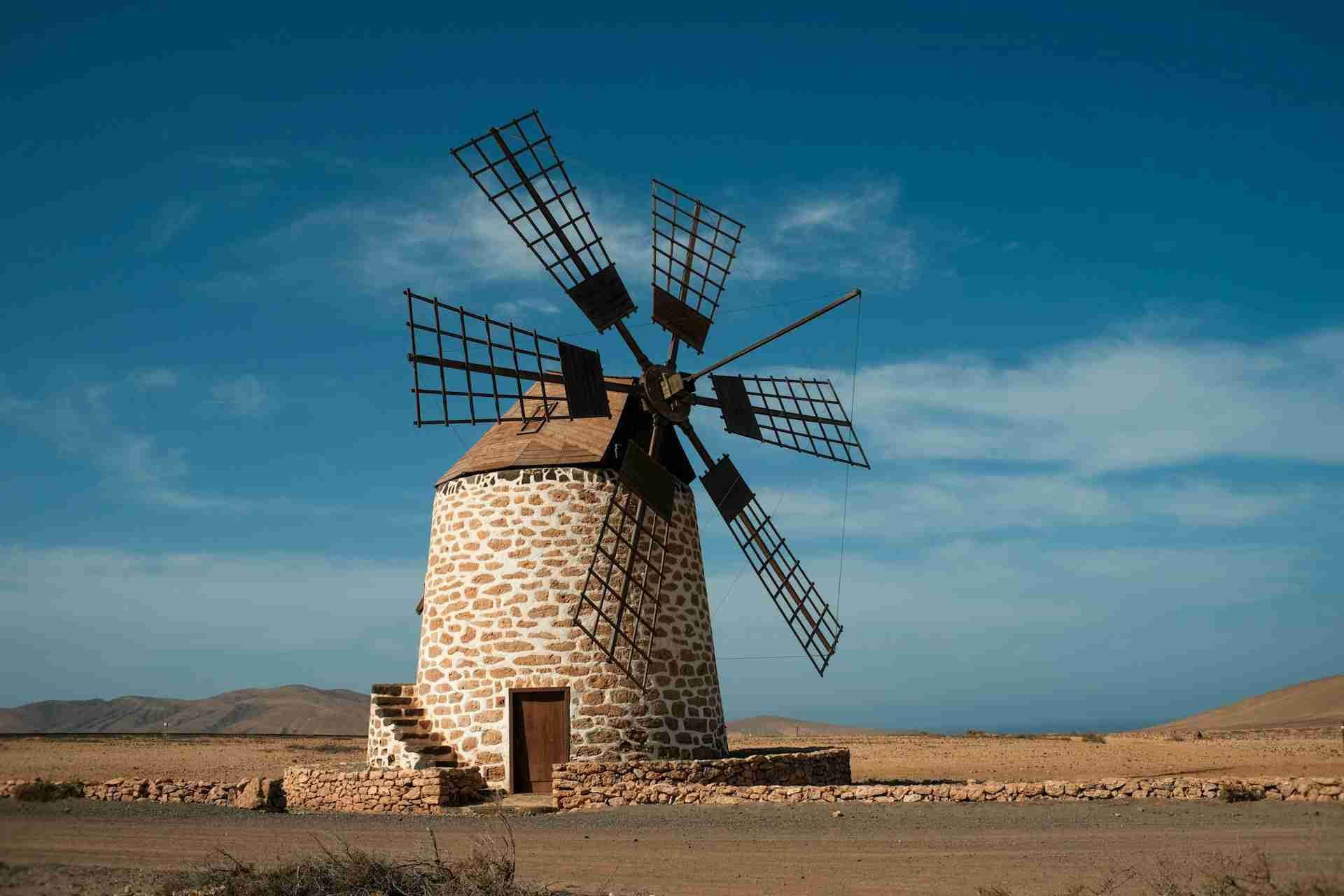
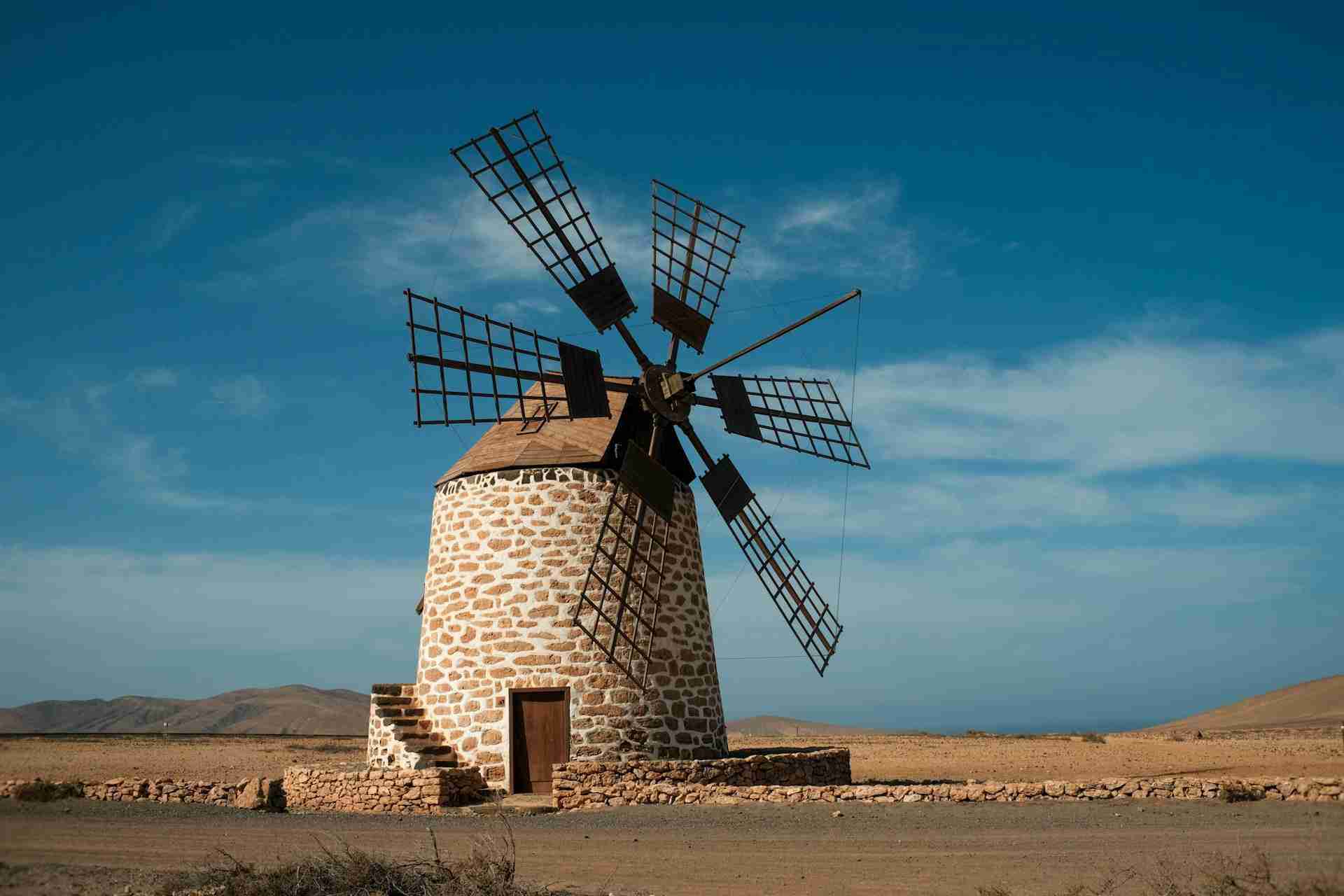
In the heart of Fuerteventura's arid interior, the Molino de Tefía stands as a quietly powerful reminder of traditional island life. This restored windmill, with its cylindrical stone base and broad wooden sails, rises from the dusty terrain of Tefía like a sentinel to time and weather. The surrounding landscape is stark and elemental, with rolling ochre hills, volcanic rock, and vast skies stretching in every direction. For photographers, the Molino offers a perfect subject for capturing strong shapes, dramatic light, and minimalist compositions. The windmill's form and placement lend themselves to studies of geometry and isolation, making this a compelling stop for those exploring the quieter side of the Canary Islands.
Best Photography Opportunities
• Golden Hour with Long Shadows Across the Plain
Early morning and late afternoon transform the dry plains around Molino de Tefía into a painterly landscape. The low sun creates long shadows that stretch across the terrain, exaggerating the texture of the volcanic soil and the windmill's curved form. A wide-angle lens lets you include foreground patterns such as gravel trails or sparse tufts of vegetation, leading the eye toward the windmill. From the east side, early light brushes across the sails and whitewashed base, creating crisp separation from the background hills. Sunset, on the other hand, paints the sails with warm light and silhouetted contrast, especially when framed from a lower angle.
• Minimalist Compositions with Sky Dominance
Fuerteventura's open skies offer a dramatic canvas for minimalist compositions. Shooting from a distance with the windmill placed low in the frame emphasizes the relationship between land and sky. On days with strong cloud formations or a deep blue sky, you can create clean, modern images that highlight space and form. Use a 35mm or longer lens to compress the scene and eliminate distractions. If the sky is empty, lean into the simplicity by placing the windmill off-center with negative space, allowing the tower and sails to carry the visual weight.
• Details of Craftsmanship and Structure
The Molino has been carefully restored, and its wooden mechanisms, stone textures, and weathered surfaces offer excellent opportunities for close-up work. A short telephoto lens helps isolate components like the sail joints, support arms, and roof cap. Early morning or overcast conditions work best for reducing glare and revealing detail in the white and tan surfaces. Study how the sails catch the light or cast shadows across the base. These kinds of images work well as a contrast to wider landscape shots and show the human touch behind this agricultural structure.
• Night Photography Under Clear Skies
With minimal light pollution in the area, Molino de Tefía is a strong location for night photography. The shape of the windmill becomes even more striking when silhouetted against a star-filled sky. Use a wide, fast lens to frame the full structure and Milky Way arc during summer months, or shoot tighter compositions with constellations rising above the sails. A tripod and remote shutter release are essential for exposure times of fifteen seconds or more. Plan your session around the moon cycle for the best visibility of stars, or use moonlight creatively to illuminate the tower while retaining sky texture.
• Wind and Weather Variations
Because Fuerteventura is often breezy, cloud movement and dust in the air can lend atmosphere to images at almost any time of day. On especially windy days, bring a stable tripod and consider long exposure shots with a neutral density filter to blur passing clouds behind the fixed windmill. This creates a sense of motion in an otherwise static frame. Use diagonal compositions to accentuate the direction of wind-blown clouds, aligning them with the rotation of the sails for harmony. The dry, warm tones of the terrain remain consistent year-round, so shifting skies provide the biggest visual variety.
Best Time to Visit
Molino de Tefía can be photographed throughout the year, but lighting and atmospheric conditions vary with the seasons. Spring and autumn provide the best balance of soft light, manageable temperatures, and active skies. Golden hour lasts longer during these times, giving you more flexibility for setup and exploration. Morning shoots tend to be clearer and calmer, while late afternoons may offer more dramatic light and texture in the landscape.
Summer brings intense sunlight and harder shadows during the day, but also longer blue hour windows and extremely clear skies at night. This is an excellent time for astrophotography, especially during new moon periods. Be aware that midday sun in summer is harsh and produces strong contrast, which can work for certain graphic compositions but may require careful exposure control.
Winter can bring passing cloud layers, wind shifts, and slightly cooler air, all of which make for more varied photographic conditions. The quality of the light is often softer, and the island receives fewer visitors in inland areas, giving you quiet space to work.
Wind is a constant companion in Tefía, so dress accordingly and plan to use weighted support for your gear. Dust and fine sand can accumulate on lenses and sensors quickly, so bring protective gear and clean often. Checking local wind forecasts before a visit can help determine the best shooting window for long exposures or low wind reflections.
How to Get There
Molino de Tefía is located just outside the small village of Tefía in central Fuerteventura, part of the Canary Islands, Spain. From the capital Puerto del Rosario, it is a roughly 25-minute drive west via FV-207. The road is paved and well-maintained, with signage guiding you toward the historic windmill. Ample roadside parking is available near the site, and the windmill itself is visible from a distance.
Access is free and unrestricted year-round. There are footpaths around the site that allow for different angles and distances, including elevated spots on small ridges for compositional variation. There are no on-site facilities, so come prepared with water and gear, particularly during midday sessions. Tripods are permitted, and the open layout provides plenty of space for long setups without interruption.
Recommended Photography Gear
Bring a sturdy tripod to stabilize your camera during early morning, golden hour, and long exposure sessions. A full-frame camera with good dynamic range will help you retain highlight and shadow detail in the high-contrast lighting typical of Fuerteventura. A wide-angle lens in the 14 to 24 millimeter range is best for contextual landscapes that include sky, foreground, and the full windmill structure.
A 24 to 70 millimeter standard zoom gives you flexibility to frame tighter scenes, especially useful for capturing architectural shapes or adjusting compositions in response to moving clouds and shifting light. A 70 to 200 millimeter telephoto is helpful for isolating structural elements or compressing background hills against the Molino.
Neutral density filters are useful if you plan to experiment with long exposures during daylight, particularly for smoothing moving clouds. A circular polarizer will reduce haze and add contrast to the sky, which is especially helpful on clear days. Lens hoods and microfiber cloths are essential for managing glare and dust, and weather-resistant gear is recommended due to persistent wind.
Footwear should be suitable for uneven terrain, and a hat or sun protection is important during midday. Bring extra batteries and memory cards, as the wind and environment may encourage longer sessions and experimentation with settings.
Nearby Photography Locations
Located just a few minutes away, this open-air museum preserves traditional Canarian architecture, rural tools, and farming structures. It offers excellent environmental portrait and detail photography opportunities with historical context.
An isolated volcanic mountain to the northwest, Montaña de Tindaya provides wide open views and minimalist desert compositions. It is also a good sunset location due to its bold shape and cultural significance.
• El Cotillo Coastline
About thirty minutes to the northwest, El Cotillo offers rugged coastal scenery, natural tide pools, and basalt cliffs. This area is ideal for long exposures and seascapes, especially at sunrise or sunset.
To the northeast, this dune system features rolling sand formations that catch low light beautifully. Combine abstract patterns, footprints, and dune crests in your compositions for variety.
An elevated viewpoint designed by César Manrique, this location provides expansive vistas over Fuerteventura's interior, including the Tefía plains and nearby volcanoes. It is a strong complement to ground-level windmill compositions.
Molino de Tefía invites you to slow down and study light, line, and landscape without distraction. With nothing but horizon and wind as companions, the simplicity of this inland location creates the ideal stage for thoughtful compositions and architectural clarity. For those seeking quiet subjects in bold surroundings, this windmill stands as one of Fuerteventura's most photogenic inland landmarks.
Comments
Loading comments…