
Perched above the Mediterranean on a hill just southwest of Barcelona's city center, Montjuïc Castle is a 17th-century military fortress with commanding views over the harbor, coastline, and skyline. Its stone walls, geometric bastions, and open terraces give photographers a strong mix of architectural symmetry and elevated landscapes. Though once a symbol of political control, today the castle is a quiet space filled with light, perspective, and unexpected calm. For photographers, Montjuïc Castle is as much about the view as the structure itself, offering layered scenes that stretch from the historic architecture to the vibrant city and sea below.
Best Photography Opportunities
• The Rooftop Terrace and 360-Degree Views
: The rooftop terrace of Montjuïc Castle is the most dramatic and versatile shooting location on the entire site. From this elevated platform, you can capture sweeping views in every direction, including Barcelona's dense skyline to the north, the sea and harbor to the east, mountain ranges in the west, and the open coastline to the south. Sunrise provides soft, angled light that defines the city's architecture without harsh contrast, while late afternoon adds warmth and texture to the scene. A wide-angle lens works best for panoramic captures, while a telephoto lens can isolate key landmarks such as the Sagrada Família or Torre Glòries in the distance. This location is ideal for creating layered compositions that transition smoothly from foreground stonework to the urban sprawl below.
• Interior Courtyard and Symmetry Shots
: Inside the castle, the main courtyard offers a different atmosphere that feels more structured and intimate. Surrounded by arched walkways and detailed stonework, this open space is ideal for shooting symmetry and clean, centered compositions. The light here is generally soft and even, especially on cloudy days, which reduces shadows and helps bring out the texture of the stone. A tripod is helpful for precise alignment, and bracketing exposures can help retain detail in both shadowed arcades and bright open areas. Including a single figure or object in the frame can create a sense of scale and draw the eye toward the center.
• Stone Pathways and Defensive Walls
: The outer walkways along the castle's defensive walls are excellent for exploring depth and texture. These narrow paths lead around the bastions and corners, opening up to different views with every turn. The stone surfaces, old railings, and occasional greenery provide strong visual anchors in the foreground, while the background includes the sea, port, or city skyline. Shooting from the corners of the walls is particularly effective for creating leading lines that pull the viewer into the frame. These areas are also great for shooting during golden hour, when the low sun casts long shadows across the textured stone.
• Harbor Overlook and Container Terminal
: From the eastern side of the castle, you can look directly down onto Barcelona's commercial port, which is a busy and colorful scene. Rows of shipping containers, tall cranes, and moving ships create a layered and graphic composition that contrasts sharply with the natural hillside setting. This view is best approached with a telephoto lens to compress the elements and highlight repeating patterns and industrial geometry. Late afternoon is the best time for this shot, as the sunlight from the west illuminates the harbor with warm tones and clear contrast. It is a good opportunity to photograph Barcelona's working side from a peaceful and elevated viewpoint.
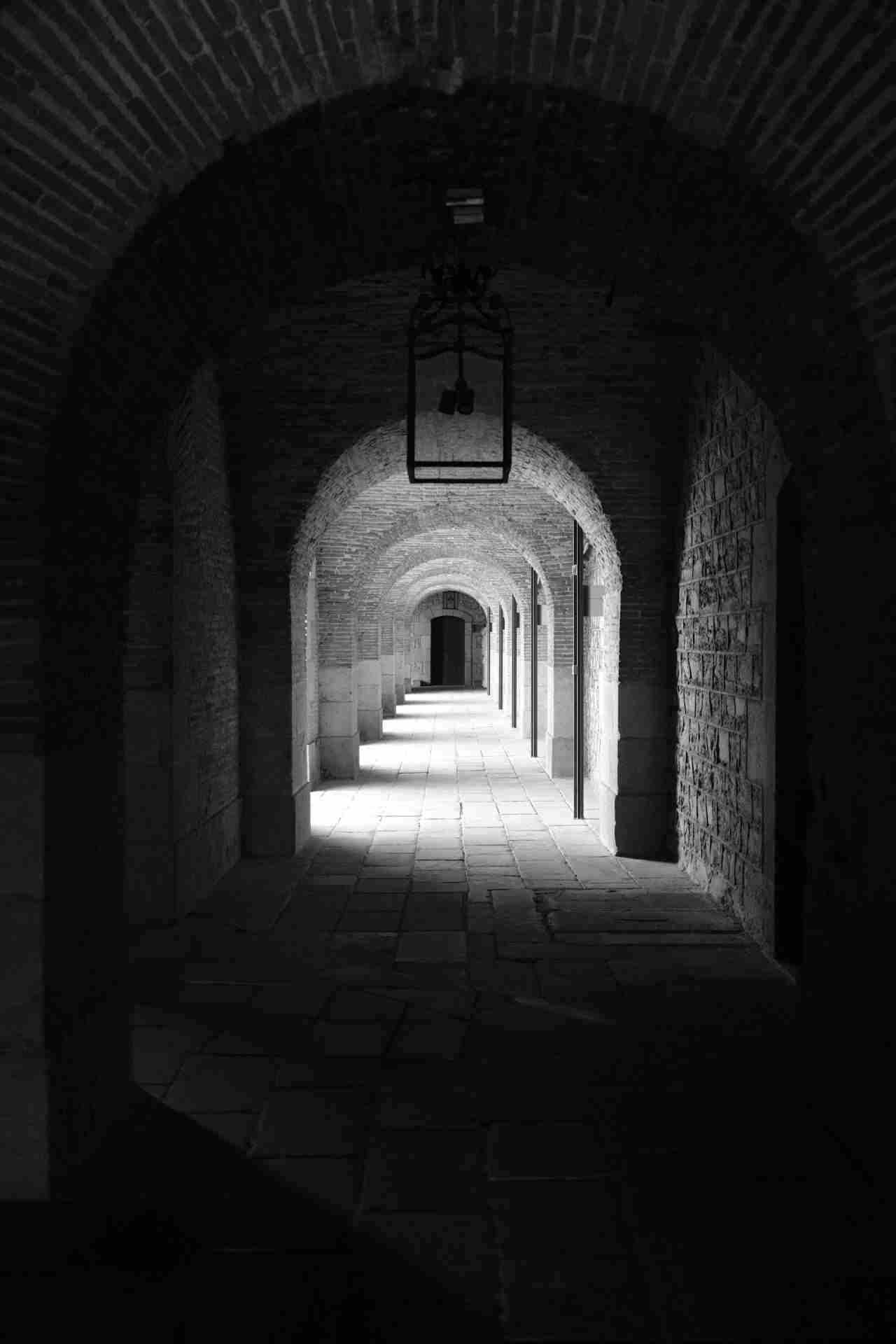
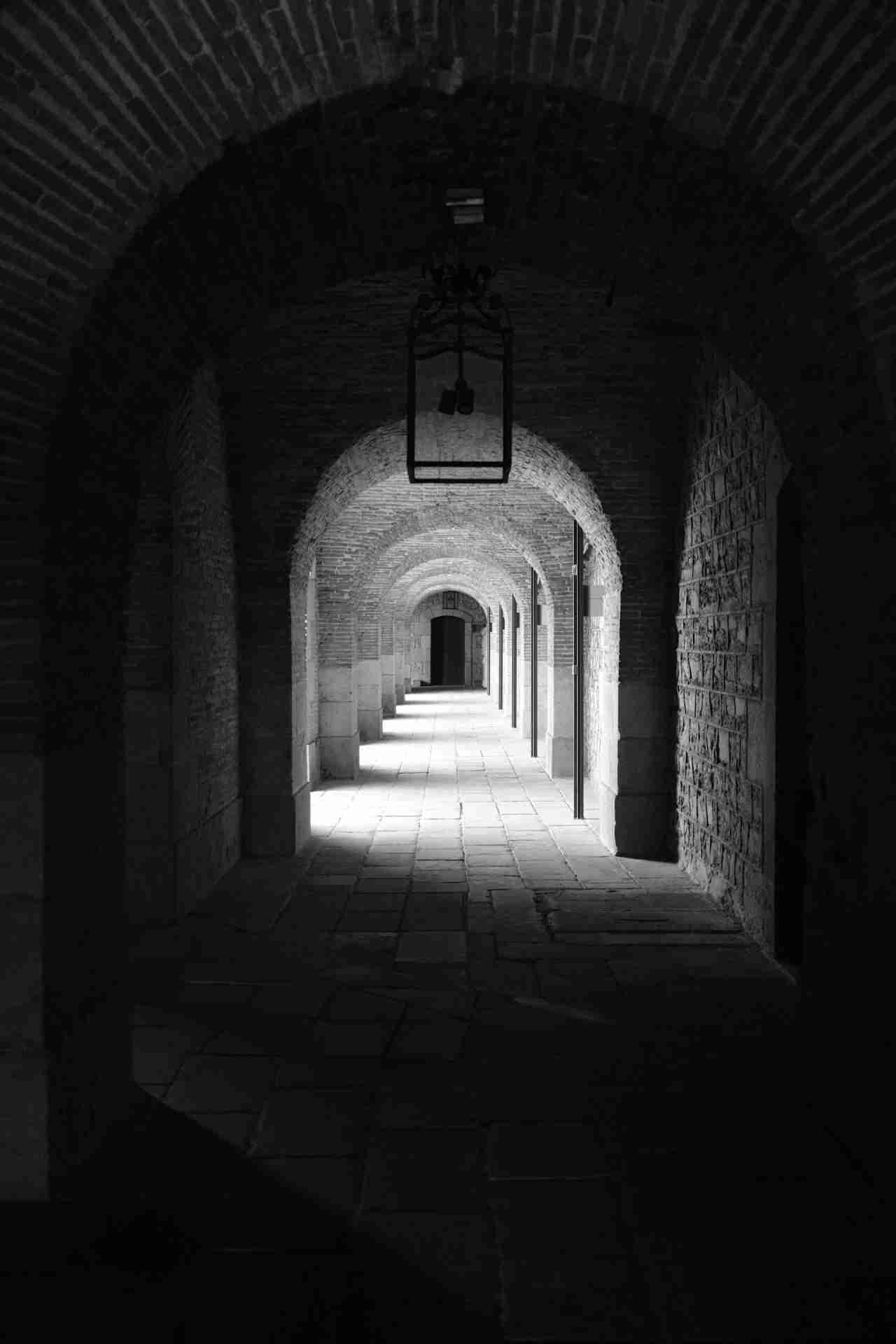
• Shadow and Light in Arched Corridors
: Throughout the castle, arched corridors and passageways provide excellent opportunities to explore the contrast between light and shadow. These spaces often receive partial sun, which creates strong patches of brightness that break up the cool stone with high contrast. The repeating shapes of the arches create natural frames within the frame, which are ideal for compositions that rely on structure and rhythm. Including a person walking through adds life and scale while giving the image a sense of narrative. Shooting here is best in the morning or late afternoon, when the sun cuts across the arches at an angle and casts more dynamic light.
Best Time to Visit
Montjuïc Castle is open all year and offers good conditions for photography in every season. For the best light and quiet surroundings, plan to arrive early in the day. Sunrise is especially productive, with soft skies, directional light, and a clear view over the harbor as the city begins to wake. From March through October, the sun rises in the northeast and gradually shifts to a more southerly position by winter, changing how the light interacts with the rooftop terrace and city views.
Golden hour in the late afternoon is another excellent time to shoot, especially for west-facing scenes and side light across the textured stone. Shadows lengthen through the courtyards and along the bastions, adding depth and definition. In the summer, mid-day light can be harsh and the heat intense, but it is manageable if you are shooting in shaded interior areas or working with high-contrast compositions. Spring and autumn offer more even light and less haze in the distance, which is ideal for shooting toward the skyline or sea.
Winter brings softer light throughout the day and fewer crowds, but conditions can be colder and the wind stronger at the top of the hill. Overcast days are very useful for shooting detail and controlling exposure, especially in the courtyard or corridors. Regardless of season, weekdays are less busy than weekends, and visiting before noon or after four in the afternoon provides the best balance of good light and quiet surroundings.
How to Get There
Montjuïc Castle is located at the summit of Montjuïc Hill in Barcelona, overlooking the city and the sea. The most popular and convenient route is by taking the Montjuïc Cable Car, which connects with the funicular that runs from the Paral·lel Metro station. The cable car offers scenic views during the ascent and drops you just a short walk from the castle's main entrance.
If you prefer to arrive on foot, there are several walking paths that lead up from Montjuïc Park, near the Olympic Stadium and Miramar Gardens. The walk takes about 20 to 30 minutes and includes a moderate climb, with occasional viewpoints along the way. Bus 150 also serves the area and stops near the castle, making it a good option if you are carrying gear or planning to arrive for sunrise or stay until sunset.
There is an entrance fee to access the rooftop terrace and interior exhibits, but some exterior areas and nearby viewpoints are free to visit. Tripods are permitted on the rooftop and open grounds, though they may not be allowed inside certain galleries or during busy hours. The castle is open daily, with longer hours in summer and shorter hours in winter, so check ahead if you are planning your visit around changing light. Facilities on site are limited, with a small café and public restrooms, so it is a good idea to bring water, snacks, and anything else you may need for a longer shoot.
Recommended Photography Gear
To make the most of Montjuïc Castle, bring a kit that can handle wide architectural views, tight detail shots, and shifting light. A full-frame camera with strong dynamic range will help preserve detail in both shadowed corridors and bright sky highlights, especially when shooting cityscapes or backlit subjects. A wide-angle lens in the 16 to 35 millimeter range is useful for capturing the rooftop terrace, courtyard symmetry, and interior arches in a single frame.
A 24 to 70 millimeter zoom adds flexibility for mid-range shots and general walk-around compositions, particularly when photographing the defensive walls or city below. For distant scenes such as the port, skyline, or mountain ranges, a 70 to 200 millimeter telephoto lens helps compress layers and isolate key features. Bringing a tripod is recommended for early morning, late evening, or long exposure work. A remote shutter release or two-second timer will help you avoid camera shake.
A polarizing filter is helpful when shooting in bright conditions, as it reduces glare and deepens sky contrast. Neutral density filters allow for long exposures over the sea or sky when light is still strong. A microfiber cloth and lens hood are essential for dealing with dust, sea mist, or light flare, which can be common on windy days. Good walking shoes and a weather-resistant bag will make your session more comfortable, especially if you plan to explore the area over several hours.
Nearby Photography Locations
: Located just downhill from the castle, this viewpoint offers a wide, clear view over the harbor and coastline. It is especially good at sunrise, with soft light coming in from the east and long views across the Mediterranean.
: A short walk from the castle, this area includes the Olympic Stadium, Palau Sant Jordi, and the Montjuïc Communications Tower. The clean lines and open space are ideal for minimalist compositions, especially in the afternoon light.
: On the southern slope of the hill, this location provides an elevated view of the commercial port and coastline. It is less crowded and has a more dramatic atmosphere, especially on cloudy or misty days.
: At the base of the hill, this local neighborhood features narrow streets, balconies, and lively urban character. It is a strong contrast to the open spaces of the castle and is well suited for handheld street photography in softer light.
Located further down the hill, the steps and plaza surrounding the Museu Nacional d'Art de Catalunya are great for symmetrical framing and golden hour shots. The Magic Fountain adds color and movement to the scene when in operation.
Montjuïc Castle offers one of the most complete photographic experiences in Barcelona. With its height, structure, and changing light, it gives you a range of visual opportunities from the first light of day to the final glow of sunset. Whether you're shooting wide landscapes, architectural forms, or small moments of light and shadow, this hilltop site encourages a slower, more thoughtful approach that always leads to strong images.
Comments
Loading comments…