
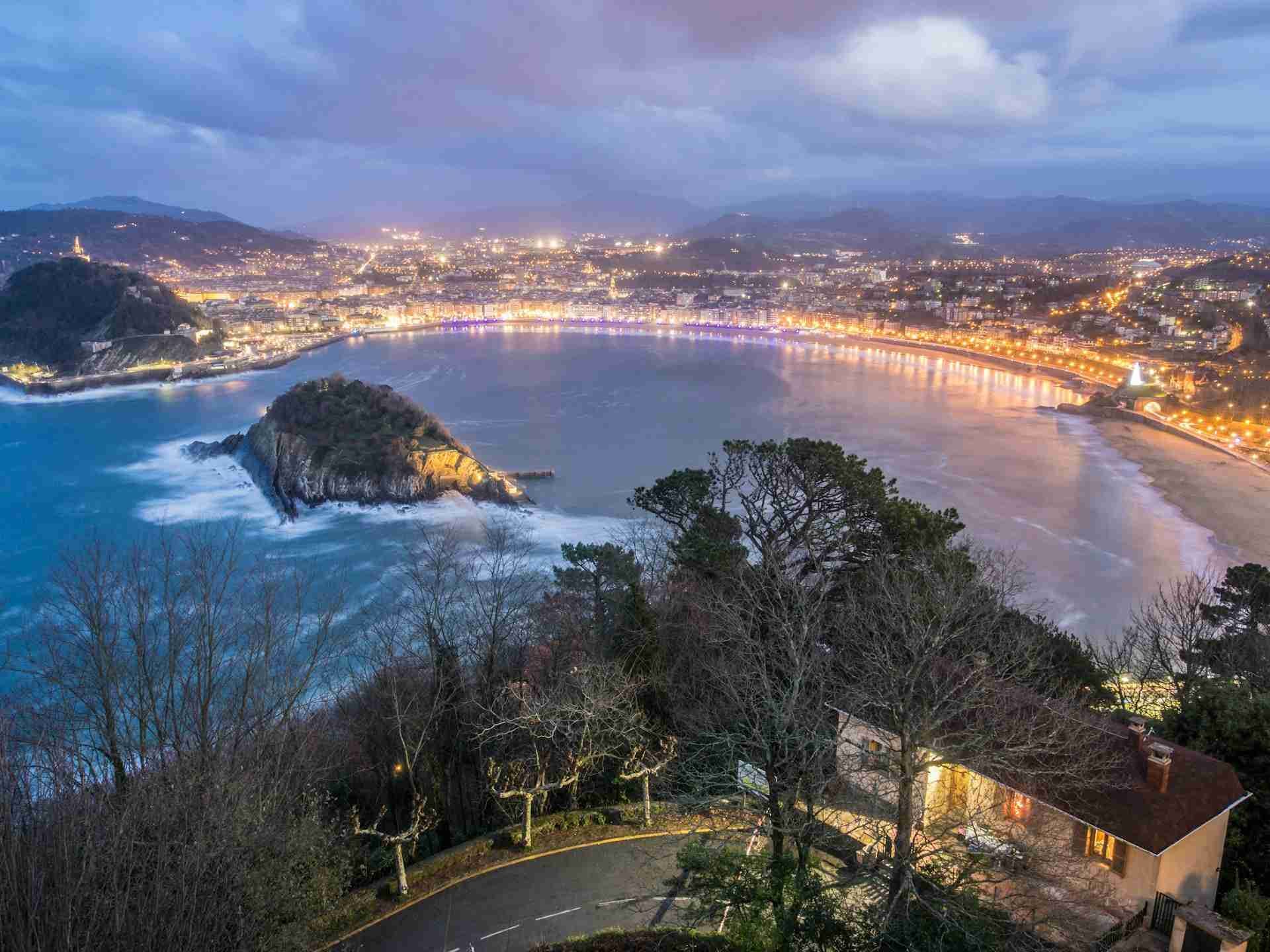
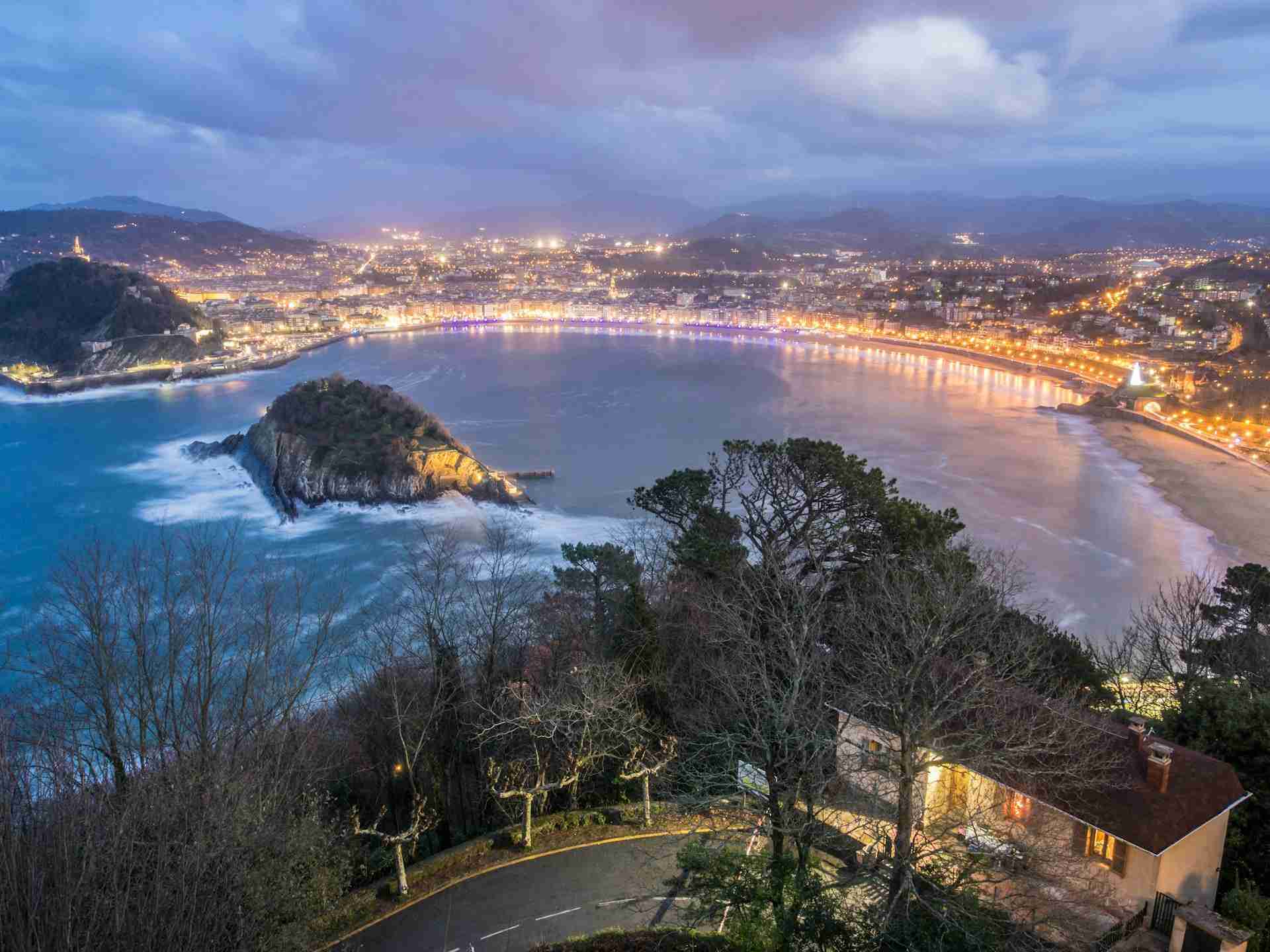
Rising above the western edge of San Sebastián, Mount Igueldo offers one of the most rewarding panoramic viewpoints in northern Spain. From its summit, the entire sweep of La Concha Bay unfolds below, framed by the golden arc of the beach, the city's elegant architecture, and the jagged outline of Monte Urgull. It is a location defined by contrast—the soft movement of ocean currents against urban symmetry, the serenity of the horizon balanced by the hum of a living city. For photographers, the Mount Igueldo Viewpoint delivers a layered, dynamic subject that shifts dramatically with light, tide, and weather, offering endless opportunities for composition across seasons and times of day.
Best Photography Opportunities
• Panoramic View of La Concha Bay
The most iconic composition from Mount Igueldo is the wide view over La Concha Bay, with its elegant crescent beach, the city stretched along its edge, and Santa Clara Island nestled in the water. A wide-angle lens between 16 and 35 millimeters allows you to capture this full sweep, especially effective during golden hour when the buildings reflect warm light and the water takes on deep blue or gold tones. From the railing of the viewpoint, you can compose from slightly above the island, using it as a central anchor while the city unfolds in both directions. Late afternoon light from the west adds shadow depth across the buildings, enhancing texture without losing detail.
• Telephoto Layers of the City and Mountains
Using a 70 to 200 millimeter telephoto lens, you can compress layers of the city, hills, and distant peaks into graphic, almost abstract compositions. This approach reveals the rhythm of rooftops, church spires, and street lines, particularly when low light creates alternating bands of shadow and warmth. Early morning light from the east catches the faces of buildings closest to the beach, while haze from the sea often adds a subtle gradient to the background. This technique is ideal for creating a series of framed vignettes within the broader landscape, drawing attention to architectural and natural patterns across the scene.
• Sunset Over the Bay
Mount Igueldo's position makes it one of the best places in the Basque Country to photograph the sun dipping into the Bay of Biscay. Sunset brings color not only to the sky, but to the water, the facades of buildings, and the clouds that often roll in from the ocean. Use a tripod to shoot a sequence as the light changes, adjusting white balance and exposure to preserve the full range of tones. Including foreground elements such as the stone balustrade or old amusement park structures adds visual interest and scale to wide shots. On clear evenings, the sun sets directly into the horizon line behind Santa Clara Island, creating an ideal central axis for symmetrical compositions.
• Night Photography with City Lights
As night falls, San Sebastián lights up below, offering a blend of warm urban glow and soft reflections in the bay. A long exposure from the viewpoint captures the street grid as glowing threads and reveals the curve of the shoreline in full. The water remains calm in most conditions, enhancing the smoothness of reflections. Use exposures between ten and thirty seconds depending on ambient light, and bracket for highlight control in the brighter city center. This is a strong location for skyline studies or contextual cityscapes that balance natural and built environments.
• Moody Weather and Sea Movement
Fog, clouds, and rain are not obstacles at Mount Igueldo—they are assets. On overcast days, the city softens into the mist and colors become muted, creating an entirely different mood from the sunlit postcard view. Use a neutral density filter to shoot long exposures of the water, capturing the soft motion of waves along the beach or the swirling currents around Santa Clara Island. When weather is dynamic, you can frame dramatic cloud layers rolling in over Monte Urgull or breaking open above the city. These conditions often produce the most dramatic and textured skies, and they photograph beautifully in both color and black and white.
Best Time to Visit
The viewpoint at Mount Igueldo offers good light at almost any time of day, but golden hour and blue hour provide the richest visual potential. In the morning, the sun rises behind Monte Urgull, casting even light across La Concha Bay and illuminating the facades of the city. This is the best time for soft, low-contrast compositions, particularly for those working with telephoto detail.
Late afternoon and evening bring golden light from the west that sweeps across the beach and buildings, enhancing the curvature of the bay and adding depth to foreground textures. Sunset is the most popular time among photographers, so arriving early to secure a clear vantage point is essential. After sunset, blue hour offers a delicate balance of artificial light from the city and lingering color in the sky, which reflects subtly off the water.
Seasonally, spring and autumn offer the most balanced weather and moderate haze, making them ideal for long-range views. Summer can be crowded but offers dramatic late sunsets and extended twilight. Winter brings fewer visitors and the clearest skies, with strong contrast in both morning and evening light. Wind conditions are typically mild at the viewpoint, but higher humidity can introduce haze, so planning for visibility on clear days is helpful.
How to Get There
Mount Igueldo is located at the western end of San Sebastián and is easily accessible by car, foot, or funicular. The Mount Igueldo Funicular runs regularly from the Ondarreta district and offers a scenic ride up the hill with final arrival near the viewpoint terrace. If driving, there is a parking area near the summit, especially convenient for early morning or night photography when public transport is limited.
There is a small entrance fee to access the main viewpoint terrace, which includes the amusement park area and railing access overlooking the bay. Tripods are allowed, though space along the terrace can become limited during sunset or holiday periods. Arrive early to set up and move freely. The viewpoint is paved and flat, with wide railings that provide a steady base for gear. There are no restrictions on still photography, and the site remains open during most daylight and evening hours, though the amusement park closes earlier in winter.
Recommended Photography Gear
A wide-angle lens in the 14 to 35 millimeter range is essential for capturing the full curve of La Concha Bay and its surroundings. A standard zoom lens, such as a 24 to 70 millimeter, offers flexibility for mid-range compositions that include architectural details and sky texture. A 70 to 200 millimeter telephoto is ideal for isolating city elements or compressing layered perspectives of the urban core and mountains beyond.
A tripod is highly recommended for twilight, night, and long exposure sessions, especially when working with water reflections or moving clouds. A circular polarizer can reduce glare on the bay and enhance contrast in skies during daytime sessions. Neutral density filters are useful for long exposures in bright light, particularly to blur sea movement or slow down passing clouds.
Spare batteries and memory cards are essential, especially if you plan to shoot through golden hour into blue hour. A remote shutter or timer helps reduce camera shake during longer exposures. Since the site is open-air and partially exposed, a lens hood can help with flare during sunset and provide protection from light mist or sea breeze.
Footwear should be comfortable, as you may need to shift along the terrace or move between multiple vantage points. A lightweight backpack with weather protection is recommended if staying past sunset or arriving in variable conditions.
Nearby Photography Locations
From the shoreline below, you can shoot upward toward Mount Igueldo for a reversed perspective. The beach also provides strong leading lines and reflections at low tide, especially during sunrise or early morning light.
On the opposite side of the bay, this forested hill offers its own viewpoint over the city and out toward the sea. It is ideal for tighter, mid-range compositions with more natural foregrounds and winding paths.
Located at the base of Mount Igueldo, this sculptural installation by Eduardo Chillida frames dramatic waves and basalt rocks. Use long exposures here to capture wave motion and emphasize the scale of the ocean.
Midway between Mount Igueldo and the city center, this elevated garden space offers filtered views of the bay through trees and landscaped terraces. It is a good location for shooting during midday with more diffused light.
• Ondarreta Promenade
This seaside walkway provides low-angle views of Santa Clara Island and the open ocean, ideal for symmetrical framing and twilight color. It is also a strong location for street-style imagery with coastal context.
Photographing from Mount Igueldo Viewpoint offers a masterclass in scale, perspective, and light. Whether you are drawn to cityscapes, coastal atmosphere, or shifting weather across a layered landscape, this hilltop location provides the kind of visual variety that rewards patience and return visits. For anyone looking to understand the soul of San Sebastián through a lens, this is where the city and the sea meet with perfect balance.
Comments
Loading comments…