
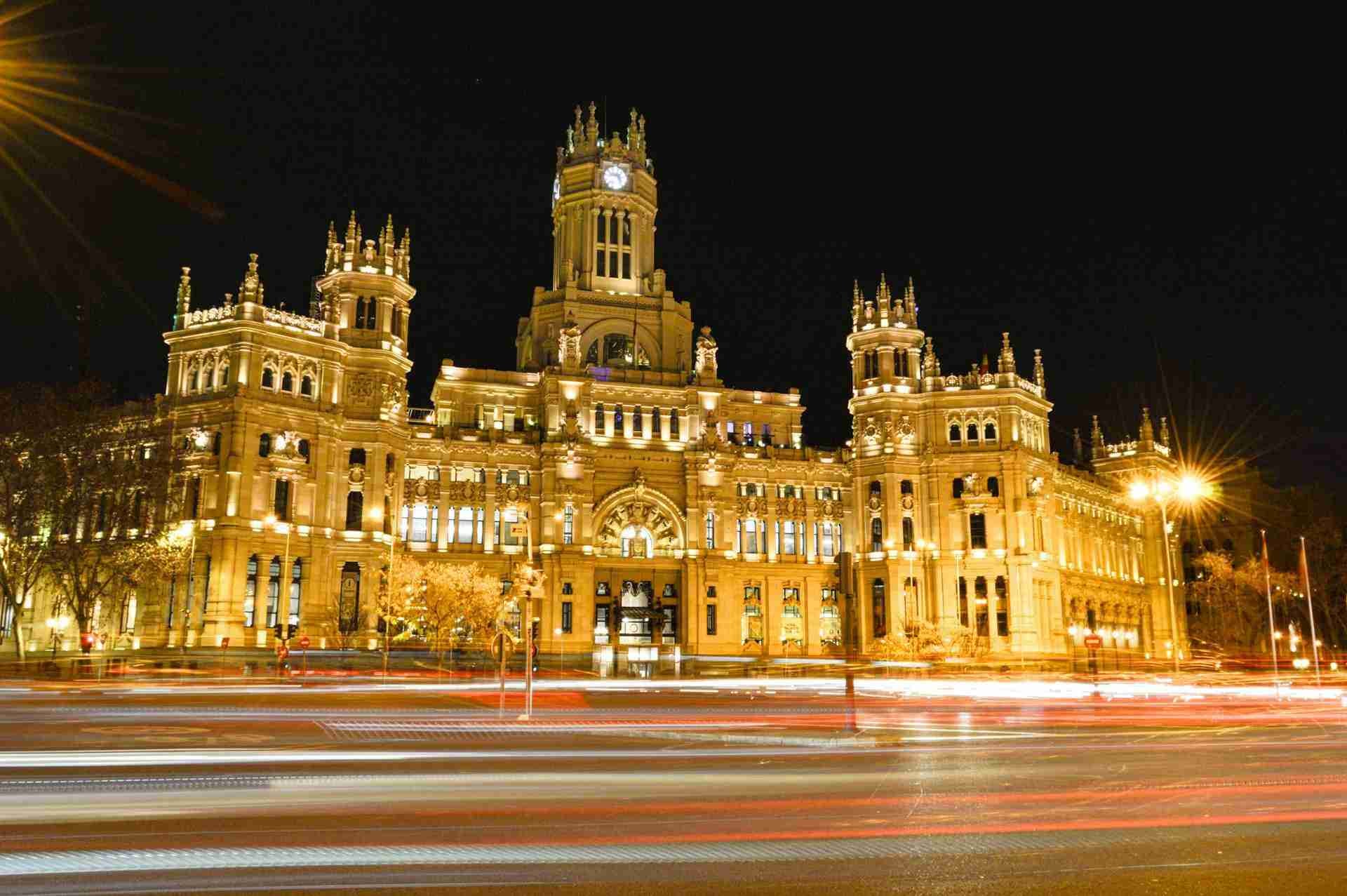
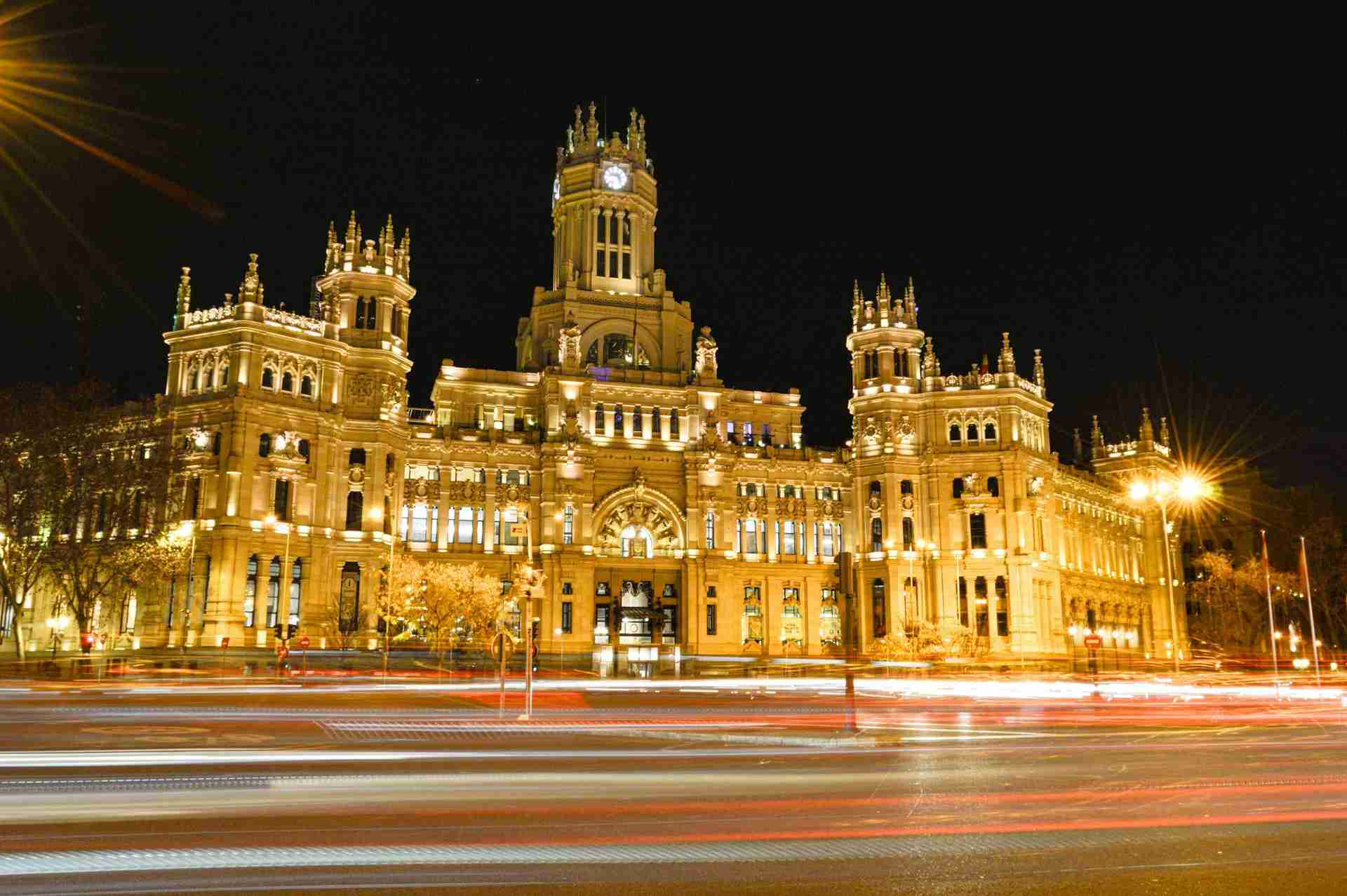
Palacio de Cibeles stands in the heart of Madrid as one of the city's most recognizable and visually commanding buildings. Originally built as the central post office and telegraph headquarters, it now serves as Madrid's city hall and cultural center. Its elaborate white stone façade, spired towers, and intricate detailing make it a standout subject for photographers looking to work with light, shadow, and rhythm in architecture. Positioned at the intersection of major city avenues and facing Cibeles Fountain, the building offers strong compositions from multiple angles. Whether framed tightly to capture ornamentation or photographed at dusk with the full structure lit against a deepening sky, Palacio de Cibeles gives photographers access to a wide range of urban scenes that shift with time and weather.
Best Photography Opportunities
• Cibeles Fountain and Plaza de Cibeles
The most straightforward and visually complete composition comes from across the plaza, where the Cibeles Fountain sits in direct alignment with the palace's central tower. From this angle, you can frame the fountain in the foreground and the building rising behind, using either a wide or midrange lens depending on how much space you want around the subject. Early morning light catches the front of the building cleanly, while evening blue hour is ideal for balancing the warm lights of the palace against a cooler sky. This composition also works well in vertical format, with the fountain base anchoring the frame and drawing the viewer upward. Use a tripod for long exposures during twilight to soften traffic movement and keep architectural detail sharp.
• Calle de Alcalá Views
Standing slightly east of the building along Calle de Alcalá gives you a more dimensional composition with strong diagonal lines. This is an effective way to show the structure's depth and its interaction with surrounding buildings and city lights. The side towers and carved stone detailing take on a sculptural quality in late afternoon light, especially on clear days when shadows fall across the façade. A midrange zoom works well here to isolate corners of the building or shoot wider urban scenes with leading lines. Street elements like crosswalks, lampposts, or passing figures can also be included for added scale and visual interest.
• Detail Work of the Main Entrance and Arches
The main entrance of the building features elaborate stone columns, sculpted figures, and ironwork that respond well to soft light. These areas are ideal for tighter compositions and detail studies that focus on materials and pattern. Overcast days are perfect for this kind of shooting, as the even light brings out texture without harsh contrast. Use a short telephoto or midrange lens to isolate window frames, arches, or staircases. Black and white processing can enhance these images, especially when you want to emphasize form over color.
• Rooftop Observation Deck
The Palacio de Cibeles includes a rooftop terrace that offers panoramic views over Madrid, including sightlines toward Gran Vía, Retiro Park, and the Sierra de Guadarrama mountains in the distance. From here, you can shoot cityscapes during sunset and into blue hour as lights come on across the skyline. A wide angle lens is essential to capture the broad sweep of the city, while a longer lens can isolate domes, rooftops, and monuments in the distance. The observation deck is enclosed by glass, so be prepared to work carefully with reflections. A lens hood or black cloth can help minimize glare when shooting through panels.
• Night Photography with Light Trails
Because of its location at a busy intersection, Palacio de Cibeles becomes a strong subject for light trail photography in the evening. Position yourself across the roundabout with a tripod and use a longer exposure to capture car lights weaving through the frame. This effect works well in both vertical and horizontal compositions, adding movement to the otherwise solid presence of the building. Shoot just after sunset to retain detail in the architecture while still allowing vehicle lights to stand out. Be mindful of traffic patterns and pedestrian flow so you can adjust framing quickly as conditions change.
Best Time to Visit
Palacio de Cibeles can be photographed year round, but the most rewarding sessions tend to happen during spring and autumn when the light is more directional and the air is clear. Sunrise brings soft light to the front of the building when facing from the plaza, while late afternoon creates strong side lighting that adds depth and structure. Blue hour is especially productive, as the building's detailed façade is fully illuminated and contrasts well with the cooler tones of the sky.
In summer, the midday light is often too harsh, flattening the detail in the stone and making highlights difficult to control. Early morning and late evening are essential during these months for softer results and more pleasant shooting conditions. In winter, Madrid's skies often become more dynamic, with low clouds and golden light adding mood and variation to the scene. Holiday decorations and lighting displays during December and January also add visual elements that can be used to frame the building in festive context.
The rooftop terrace has limited hours and ticketed access, so plan ahead if you want to include that perspective in your shoot. Weekday mornings are typically the quietest times to photograph around the building, as weekend foot traffic increases throughout the day. A good rule of thumb is to arrive early, scout your angles, and be ready to adapt to changing light or crowds.
How to Get There
Palacio de Cibeles is located at the junction of Calle de Alcalá and Paseo del Prado, in the center of Madrid. It is easily accessible by metro, with the Banco de España station (Line 2) just steps away. Several bus lines also stop at Plaza de Cibeles, and taxis are readily available throughout the area. If you are walking from Gran Vía or Retiro Park, it is a ten to fifteen minute stroll with views of some of Madrid's other major landmarks along the way.
The building is open to the public, and you can photograph freely from all exterior viewpoints without any restrictions. The rooftop terrace, known as the Mirador Madrid, requires a timed ticket, which can be booked in advance through the official website. Tripods are generally not allowed inside the observation deck, but you can use one outside the building in most public areas. The plaza and surrounding sidewalks offer multiple spots to set up for long exposures, architectural studies, or people-focused scenes.
Recommended Photography Gear
Photographing Palacio de Cibeles benefits from a three lens kit that covers wide, standard, and telephoto focal lengths. A wide angle lens in the 16 to 35 millimeter range is ideal for capturing the full building from across the plaza, especially during blue hour or when working with reflections and leading lines. Use this lens to place the fountain or street elements in the foreground while keeping the full structure in frame.
A 24 to 70 millimeter lens provides the most flexibility for moving between wider environmental compositions and tighter crops that show architectural elements. This range works especially well from the side streets or when shooting during changing weather. For detail work and compression, a 70 to 200 millimeter lens allows you to pick out specific windows, sculptural elements, or repeating shapes in the façade. This longer lens is also useful from the rooftop if you want to isolate distant domes or landmarks.
A sturdy tripod is essential for twilight and night shooting, particularly when working with light trails or long exposures in low light. A circular polarizer can help reduce glare on windows or increase contrast in cloud-filled skies. A remote shutter or timer helps maintain sharpness in longer exposures. If you plan to photograph from the rooftop, consider bringing a rubber lens hood or dark cloth to minimize internal reflections from the glass panels. A microfiber cloth is also helpful, especially after rain or early morning condensation.
Nearby Photography Locations
, directly in front of the palace, offers strong symmetrical compositions and night reflections that add to the drama of the building. Use a wide angle lens during blue hour or sunrise when water movement and artificial light create dynamic contrasts.
, located just west along Calle de Alcalá, features a striking dome and sculptural details that are especially photogenic in warm sunset light. The corner perspective works well with both wide shots and long exposures of passing traffic.
, a short walk east near Retiro Park, provides clean compositions and strong shadow play in the late afternoon. The arch's shape and scale make it an excellent subject for architectural studies or layered street scenes.
• Gran Vía
, Madrid's main shopping and theatre avenue, is full of visual energy with neon lights, classic architecture, and constant movement. The upper sections of the street give good sightlines back toward Palacio de Cibeles and nearby rooftops.
, directly behind the palace, provides calm natural scenes that contrast with the urban geometry of the plaza. The formal gardens, wide tree-lined paths, and small architectural features like the Crystal Palace are best captured in early morning or soft evening light.
Palacio de Cibeles is a location that rewards planning, patience, and close attention to light. With its detailed surfaces, strong structure, and central location, it serves as both a primary subject and a backdrop for broader city scenes. Whether you are working with color, shape, or movement, this building continues to offer new possibilities each time you return.
Comments
Loading comments…