
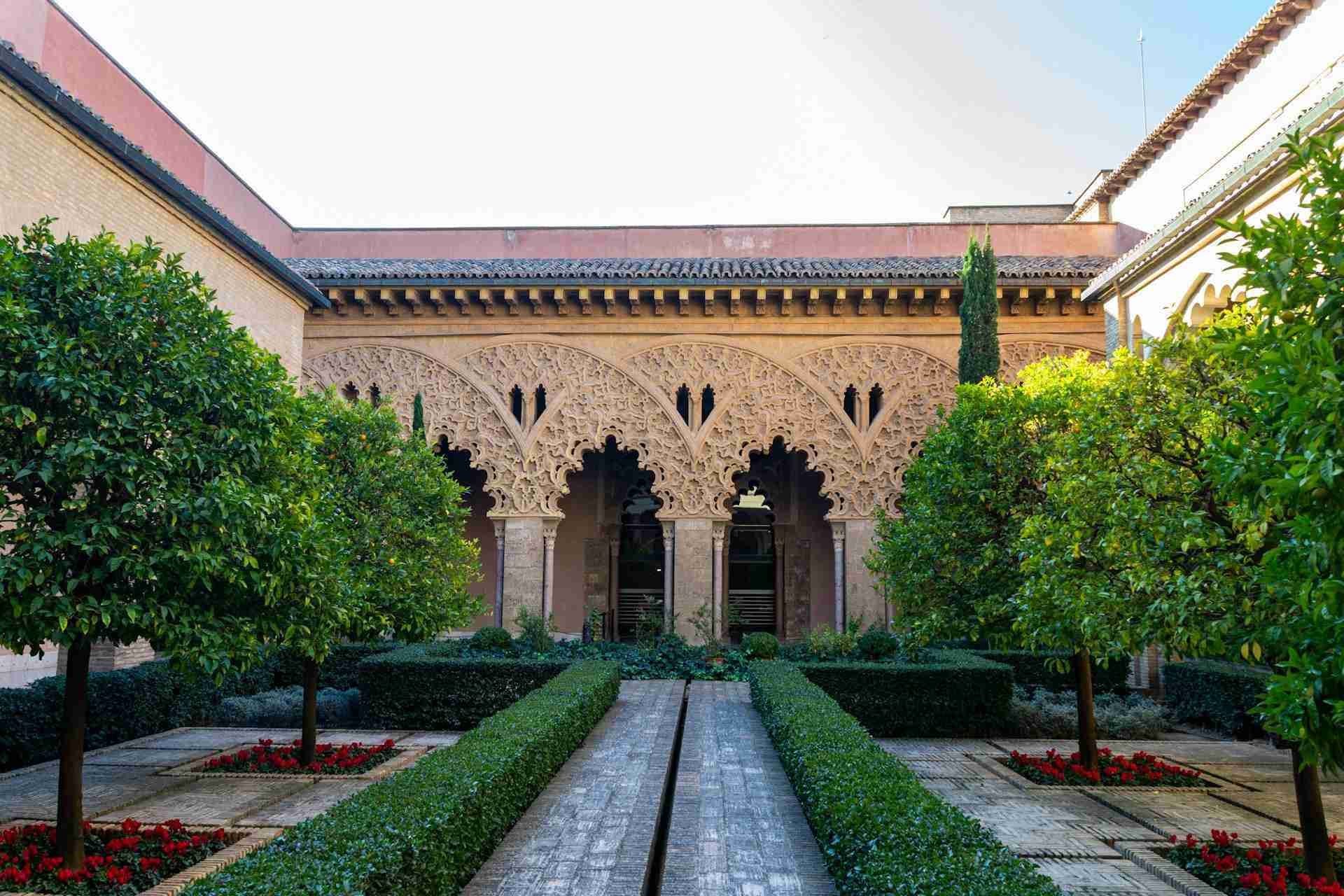
Palacio de la Aljafería is one of Spain's most compelling architectural subjects, offering photographers a rare convergence of Islamic, Gothic, and Renaissance styles layered across a single fortress. Located just west of Zaragoza's city center, this 11th-century palace was originally built as a taifa-era Islamic stronghold before evolving through centuries of Christian reconquest and royal use. Its massive exterior towers contrast sharply with the interior's intricate archways, carved ceilings, and shadowed courtyards. For photographers, Aljafería is a study in contrasts (light vs shade, stone vs stucco, symmetry vs texture). Its blend of military solidity and interior delicacy rewards careful attention to detail, timing, and composition.
Best Photography Opportunities
• The Exterior Walls and Defensive Towers
The palace's outer walls are fortified with rounded towers and stonework that catch angled light beautifully during early morning and late afternoon. From across the surrounding lawn, you can frame the entire fortress with space to spare, especially using a wide-angle lens. As the sun shifts, shadows stretch across the facade and create deep contrast around the arched windows and upper battlements. Low sun works especially well to bring out the varied tones in the aged stone, while cloudy skies lend themselves to a moodier, documentary-style interpretation of the palace's defensive purpose.
• The Main Courtyard (Patio de Santa Isabel)
This central space is perhaps the most photogenic part of Aljafería, with rows of palm trees, low fountains, and multifoil arches that produce repeating shapes and soft reflections. The natural light here changes constantly throughout the day, filtered by the arches and vegetation. Mid-morning and late afternoon light bounce off the stucco walls and cast patterns across the tiled ground. A wide lens captures the layered view through the arches, while a longer focal length lets you isolate architectural details framed by greenery or symmetry. Waiting for the right moment when visitors move out of frame is key to preserving clean lines and balance.
• The Islamic Arches and Horseshoe Doorways
Inside the lower palace, the Islamic architectural influence is strongest—scalloped arches, geometric reliefs, and intricately carved columns define the space. These interior compositions benefit from soft, ambient light, especially on overcast days or late afternoon when harsh shadows are minimal. Composing from a low angle helps emphasize the height and depth of each room, while side light skimming the carvings creates dimensionality. A mid-range zoom or fast prime lens is ideal for navigating tight interior corridors and capturing isolated elements like calligraphic carvings or carved plaster medallions.
• The Staircases and Upper Hallways
The transition between levels provides a more abstract photographic opportunity. Stone staircases curve around shafts of window light, offering strong lines and high-contrast scenes ideal for black-and-white interpretation. Shooting upward through banisters or framing stairwells from above can produce dynamic, layered images. Late afternoon tends to bring the best window light, casting shadows through wooden shutters and ironwork. Keep an eye out for quiet intersections between Gothic and Mudejar features, such as wooden ceilings juxtaposed with Islamic brickwork.
• The Throne Room and Ceilings
The grand hall, once used by Aragonese monarchs, is notable for its high ceilings and patterned woodwork. Compositions here benefit from shooting upward or incorporating symmetrical ceiling details within a vertical frame. A tripod may not be allowed inside, so using a fast lens and steady hand is essential for maintaining sharpness in lower light. The subdued colors and complex geometry of the ceilings make them an ideal subject for centered compositions, with opportunities to explore different exposure lengths depending on crowd levels and ambient light.
Best Time to Visit
Photographing Aljafería is most rewarding during spring and autumn when the light is warm and soft, and visitor traffic is moderate. During spring mornings, light enters the courtyards gently and casts narrow shadows through the arches, enhancing contrast without overpowering detail. In autumn, the golden afternoon light warms the tones of the stone and highlights the textures in the carved ceilings and tiled walkways. These seasons also offer cooler temperatures, making it easier to focus on compositions without the distractions of heat or overexposure.
Summer brings long days and high contrast, which can work well for dramatic shadow play but also requires more careful metering. Early morning visits are recommended to avoid the crowds and the harshest overhead light. During winter, the palace sees fewer visitors and the light stays angled for longer periods, especially beneficial for photographing the exterior without people. Overcast days are especially useful for interior work, as they create soft, even illumination across carved surfaces and reduce glare from polished tiles and stone floors.
While interior photography is possible year-round, light quality changes dramatically throughout the day. Mid-morning offers the best balance of natural light in the main courtyard, while the indoor rooms benefit most from afternoon side lighting. As tripods are generally not allowed inside, shooting during well-lit hours will allow you to maintain image sharpness without needing to increase ISO too far.
How to Get There
Palacio de la Aljafería is located west of Zaragoza's historic center and is easily reached on foot, by tram, or by local bus. From Plaza del Pilar, the walk takes approximately 20 minutes, passing through modern and historic districts along the way. Tram line 1 stops just a few blocks away, and multiple bus routes serve the area. The palace sits along Calle de los Diputados, with clear signage and a large entrance courtyard.
Entry to the palace requires a ticket, though it is reasonably priced and includes access to the entire complex, including the towers, courtyard, and upper halls. There is no additional fee for photography, but flash and tripods are prohibited inside the interior rooms. The grounds are open during daylight hours, and visiting earlier in the day is recommended to avoid crowds and take advantage of better light. There are restrooms and a small information desk on-site, and bags may be subject to inspection upon entry.
Recommended Photography Gear
Aljafería is a location where lens selection and low-light handling matter more than distance reach. A wide-angle zoom in the 16–35mm range is especially useful for courtyard compositions and for emphasizing symmetry in the arches and colonnades. A standard zoom such as a 24–70mm allows for framing tighter scenes of carved details, staircases, and patterned ceilings while still giving you enough flexibility in the more constrained interior rooms.
A fast prime lens (like a 35mm or 50mm f/1.8) is invaluable for interior work, particularly where natural light is low and tripods are not permitted. It will help keep ISO levels manageable and maintain crispness without relying on image stabilization alone. If you're shooting with a mirrorless body, using a lens with a wide maximum aperture will give you the edge in sharpness, color accuracy, and control over shallow depth of field when isolating architectural elements.
While a tripod can be helpful for exterior shots and courtyard work, keep in mind that interior use is restricted. A small, low-profile tripod may be allowed in some areas, but it's best to be prepared to shoot handheld throughout most of your session. A polarizing filter isn't strictly necessary but can help reduce glare from the tiled fountains or reflections on the courtyard water features if you're shooting under bright sun.
Carry a lightweight, discreet backpack, as the palace sees frequent foot traffic, and bulky bags can be cumbersome in narrow passageways. Make sure you bring extra batteries, as longer exposures and continuous shooting in low light will drain them faster than expected. A soft cloth for lens cleaning is recommended, especially if you're shooting outdoors and then moving into interior spaces where humidity may fog the front element. With the right setup, you'll be able to work smoothly through transitions between wide, open courtyards and darker, enclosed interiors without needing to change gear constantly.
Nearby Photography Locations
About a 25-minute walk from the palace, this historic bridge spans the Ebro River and offers sweeping views of the city skyline and the Basilica of Our Lady of the Pillar. It's especially photogenic at sunrise or sunset, when the stone arches and skyline reflect in the river. Blue hour here is particularly effective for long exposures with rich color contrast between warm city lights and cool twilight skies.
This large public square is home to several key architectural subjects including the basilica, La Seo Cathedral, and a striking modern water feature. The plaza's wide-open space allows for a range of compositions, and its surfaces reflect light beautifully during twilight and after rain. It's ideal for both wide-angle cityscapes and more intimate street photography.
An open-air Roman theater site tucked into the city center, this location offers strong lines, stone textures, and historical context. It is best photographed in soft morning light or under cloud cover to avoid harsh contrast. The interplay between ancient ruins and the surrounding city buildings makes for compelling compositions.
A dense network of alleyways, bars, and colorful facades, El Tubo is the heart of Zaragoza's street life. It's perfect for candid urban shots, tight architectural details, and abstract compositions of signage, graffiti, or hanging lights. Early morning offers empty streets and long shadows, while evenings fill the area with energy and layered lighting.
Zaragoza's largest park, located southwest of Aljafería, features sculpted gardens, fountains, and wide promenades. It's a useful location for photographing structured greenery and distant skyline views. The park also contains several monuments and staircases that lend themselves to architectural compositions under golden hour light.
Photographing Aljafería is a deep dive into architectural rhythm, where each space offers its own relationship with light and form. Whether you're chasing the geometry of an archway or the quiet drama of a staircase, this palace rewards patience and careful observation. With centuries of design layered into every corner, it's a place where each photo becomes a study in time, culture, and composition.
Comments
Loading comments…