
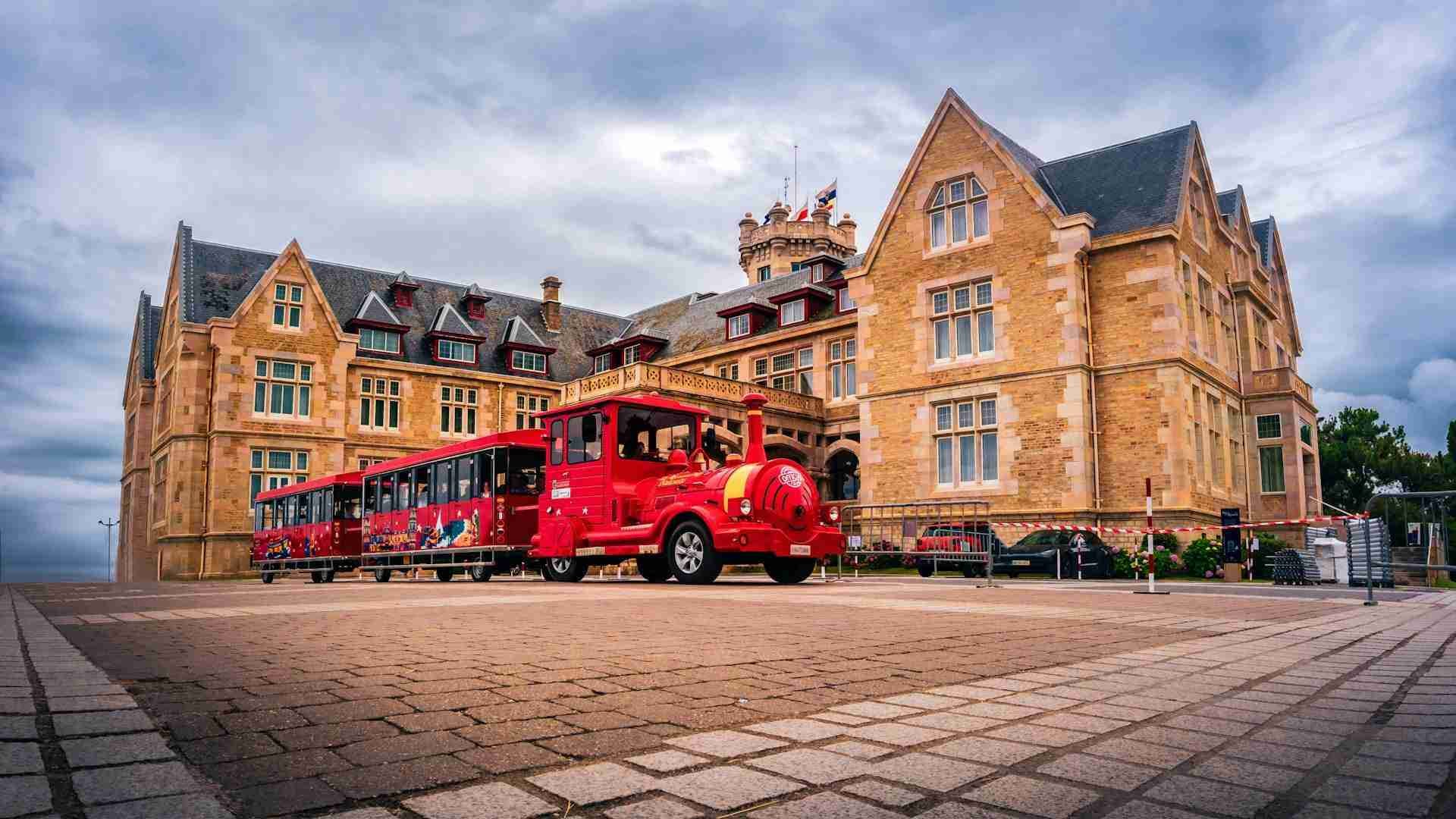
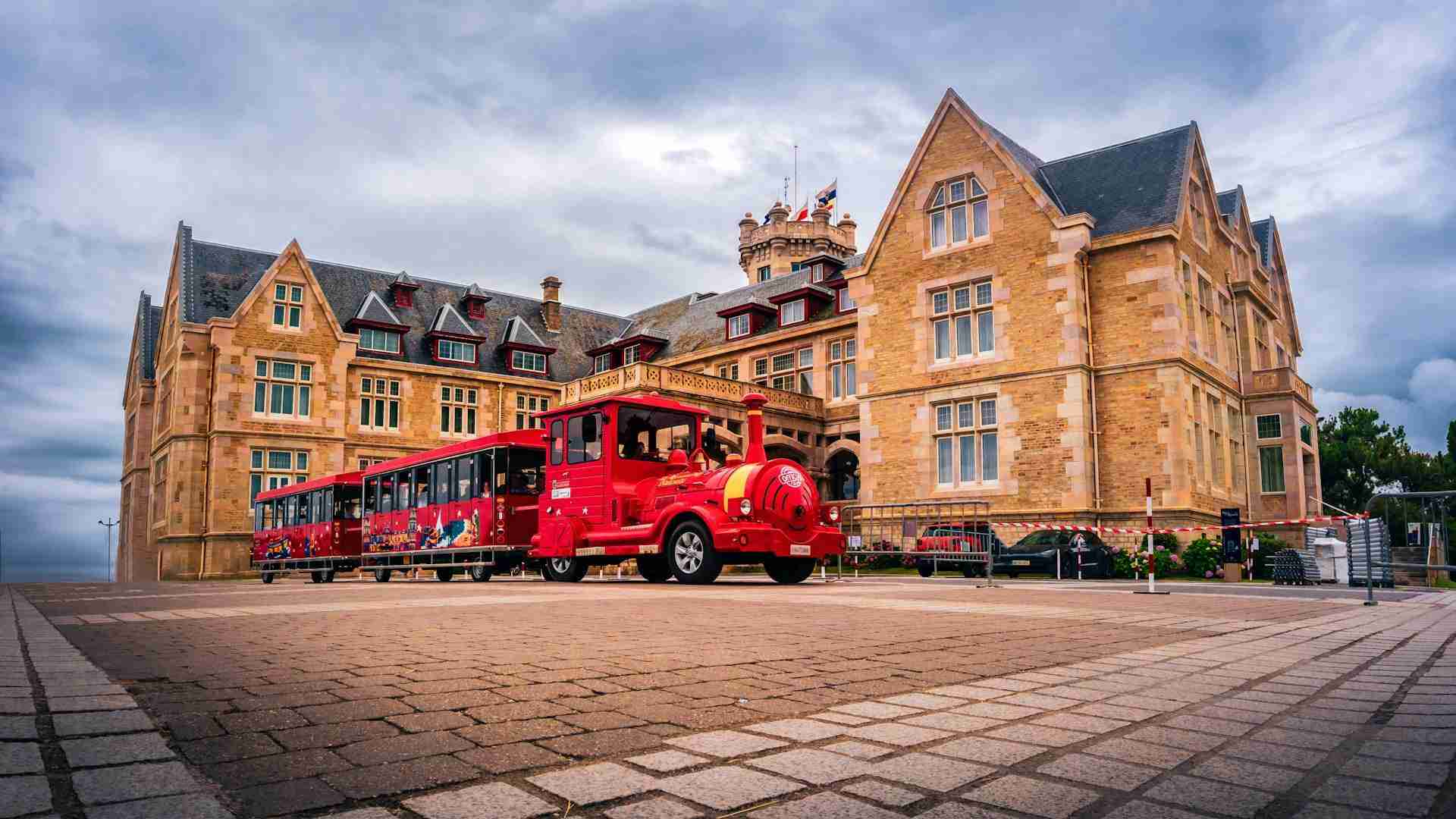
Perched on a green peninsula that stretches into the Bay of Santander, Palacio de la Magdalena offers photographers a balanced mix of refined architecture, natural landscape, and ocean views in all directions. The early twentieth century palace is framed by manicured lawns, curving roads, and tall coastal pines, all surrounded by the blue of the Cantabrian Sea. Its stone construction, steep roofs, and elegant windows lend it a quiet dignity that holds up under soft morning light or shifting coastal weather. Because the palace sits at the top of a headland, it can be photographed cleanly from several angles, each offering a slightly different relationship between structure, sea, and sky. Whether you are working with classic compositions or looking for something more abstract in detail and light, this site gives you room to experiment without having to chase dramatic conditions.
Best Photography Opportunities
• Main Lawn at Sunrise
The wide lawn in front of Palacio de la Magdalena is the best location for a clean, symmetrical view of the building's main façade. At sunrise, soft golden light washes across the palace from behind the camera position, gently illuminating the stone and casting long shadows across the grass. A wide angle lens allows you to include curved paths, trimmed hedges, or dew covered grass in the foreground to create depth. Cloudy mornings are equally effective here, as the façade retains contrast and texture under diffused light. This angle also works well for balanced compositions with sky interest, especially when shooting with lower vantage points that emphasize the open lawn and draw the eye upward to the structure.
• Ocean Views
From the trails along the eastern edge of the peninsula, you can photograph the palace rising above the sea, framed by waves and sky. This composition benefits from a slightly elevated position, where you can see the building set back against the cliffs with the water beyond. Use a longer lens to compress the distance between the palace and the ocean, especially at sunrise when pastel tones fill the sky behind the structure. In spring and autumn, mist or low cloud layers sometimes hang over the water, helping the building stand out in soft contrast. This location gives you a clear sense of the palace's relationship to the coastline and offers a peaceful, open composition that works in both color and black and white.
• Backlit Silhouette
The southern edge of the peninsula features paved walking paths and low stone walls that curve around the hilltop. In the late afternoon or at sunset, the sun drops behind the palace, creating the opportunity for clean silhouette work or low contrast backlighting that softens the surrounding trees and railings. This is an excellent place to shoot with a tripod and compose longer exposures that balance foreground structure with the changing sky. Flares and sunbursts can also be used creatively through the gaps in the trees or along the rooflines of the building. These scenes often feel more moody and reflective, offering a contrast to the bright, formal angles from earlier in the day.
• Architectural Detail Work
The palace's decorative stonework, iron lanterns, and wooden balconies offer excellent subjects for tighter, more abstract compositions. Early morning side light reveals the textures in the masonry and gives shape to small design elements that might be lost in broader views. A mid range zoom or short telephoto lens works best here, letting you isolate carvings, surface patterns, or reflective details in windows. Overcast conditions are perfect for this kind of shooting, as the soft light enhances material detail without deep shadows. These frames are ideal for photographers looking to complement wide environmental shots with intimate studies of the building's craftsmanship.
• Lower Coastal Trails
Trails below the palace wind along the cliffs and rocky shoreline, giving you a chance to place the building within its natural surroundings. From these lower angles, the palace appears perched above the sea, often with grass, rocks, or pine trees providing rich foreground texture. This is a strong location for storytelling frames that combine human construction with natural forms. In early or late light, shadows stretch across the trail and highlight the shape of the terrain. Shooting from here can also give you better access to changing sea conditions, especially when waves or weather systems interact with the cliffs in the background.
Best Time to Visit
Palacio de la Magdalena can be photographed in any season, but the most productive times are during the shoulder months of spring and autumn. During these periods, the light is soft, the air is clear, and the landscape holds strong color and contrast without the harshness of summer sun. Sunrise is particularly effective when shooting from the main lawn or the eastern slope, as the building catches warm light and long shadows stretch across the grass. Late afternoon is also rewarding, especially from the back of the peninsula where you can shoot into the sun and use trees or railings to shape the light in your frame.
Summer brings more visitors and brighter, harsher light. However, morning remains quiet and can still offer productive sessions, especially if there is light cloud cover. In winter, the peninsula often sees fog or low clouds in the early hours, which can add atmosphere and help separate the structure from the background. Light snow or frost is rare but not impossible, and when it happens, the soft surfaces and stone details of the palace stand out beautifully. Wind can pick up near the cliffs, so if you plan to shoot long exposures in the evening, bring proper support and prepare for changing skies.
How to Get There
Palacio de la Magdalena is located on the Magdalena Peninsula at the eastern edge of Santander. It is a short drive or a pleasant walk from the city center, with clear signage leading to the site. Public buses and taxis also serve the area, stopping near the main entrance at Avenida de la Magdalena. If arriving by car, there is a public parking area just outside the park gates. From there, it is a short walk to the palace itself along well maintained paths through the grounds. There are no entrance fees to access the peninsula or photograph the exterior of the palace.
The grounds are open throughout the day and into the evening, allowing full flexibility for sunrise and sunset photography. Tripods are generally accepted in the park, though it is best to avoid obstructing pathways during busier midday hours. The walking trails are paved and gently sloped, making it easy to carry a full photography kit or move between locations without much effort. Plan to arrive early in the morning or later in the evening for the best light and quiet conditions.
Recommended Photography Gear
Photographing Palacio de la Magdalena benefits from a kit that can shift between wide environmental scenes and detailed architectural frames. A wide angle lens between 14 and 30 millimeters will allow you to include foreground elements such as lawns, paths, or coastal rock in the same frame as the palace. This lens is especially useful in sunrise sessions from the lawn or from lower viewpoints along the southern trails.
A mid range zoom such as a 24 to 70 millimeter lens will cover most of the walk around shooting on the peninsula. It allows you to adjust framing quickly and works well for compositions where you want to balance building details with surrounding elements like trees, sky, or water. For detail studies, a short telephoto lens in the 70 to 200 millimeter range can help isolate design elements, compress background elements, and create stronger subject separation, particularly in soft or overcast light.
A tripod is recommended for low light work at sunrise, sunset, or during foggy conditions when longer exposures may be needed. A circular polarizer can help manage reflections on the palace windows or reduce glare from wet stone and grass. Graduated neutral density filters are helpful when balancing sky brightness with the shaded grounds below, particularly in the early morning. A microfiber cloth is essential for keeping lenses clean when working near the sea, and weather protection for both gear and clothing is smart if rain or mist moves in unexpectedly. The terrain is not demanding, so feel free to bring your full setup and explore with flexibility.
Nearby Photography Locations
, just below the peninsula, offers a clean stretch of sand with the palace visible above. This location is ideal for capturing environmental compositions that place the structure within its coastal setting. Early morning light reflects off the wet sand and adds texture to the lower half of your frame.
• Península de la Magdalena walking trails
offer a variety of quieter forest scenes, coastal overlooks, and curved pathways. These elements can be used to create leading lines or add a sense of narrative and exploration to your images. The filtered light through the trees is ideal for mid-morning shooting.
, located north along the coast, presents a more rugged and dramatic contrast to the refined lines of the palace. Its location on the edge of a high cliff offers strong directional light, especially at sunset, and the lighthouse serves as a bold focal point in ocean-facing compositions.
, in central Santander, provides a contemporary subject with clean architectural forms and reflections off the bay. The contrast between this structure and the traditional palace makes it an excellent companion location for a full day of shooting.
• Santander Bay viewpoints
, especially from Paseo de Pereda or the ferry docks, offer expansive views back toward the peninsula and the city skyline. These locations are best at blue hour, when the lights come on and reflections appear in the water. A long lens works well for isolating the palace or layering the surrounding coast.
Palacio de la Magdalena is not just a landmark, but a flexible space where architecture, landscape, and light come together naturally. With wide open views, walkable trails, and strong compositional anchors in every direction, it invites a slower pace and a deeper look. Whether you are capturing golden light on the stone walls or mist drifting through the pines, this coastal setting offers something enduring that stays with you long after the shoot.
Comments
Loading comments…