
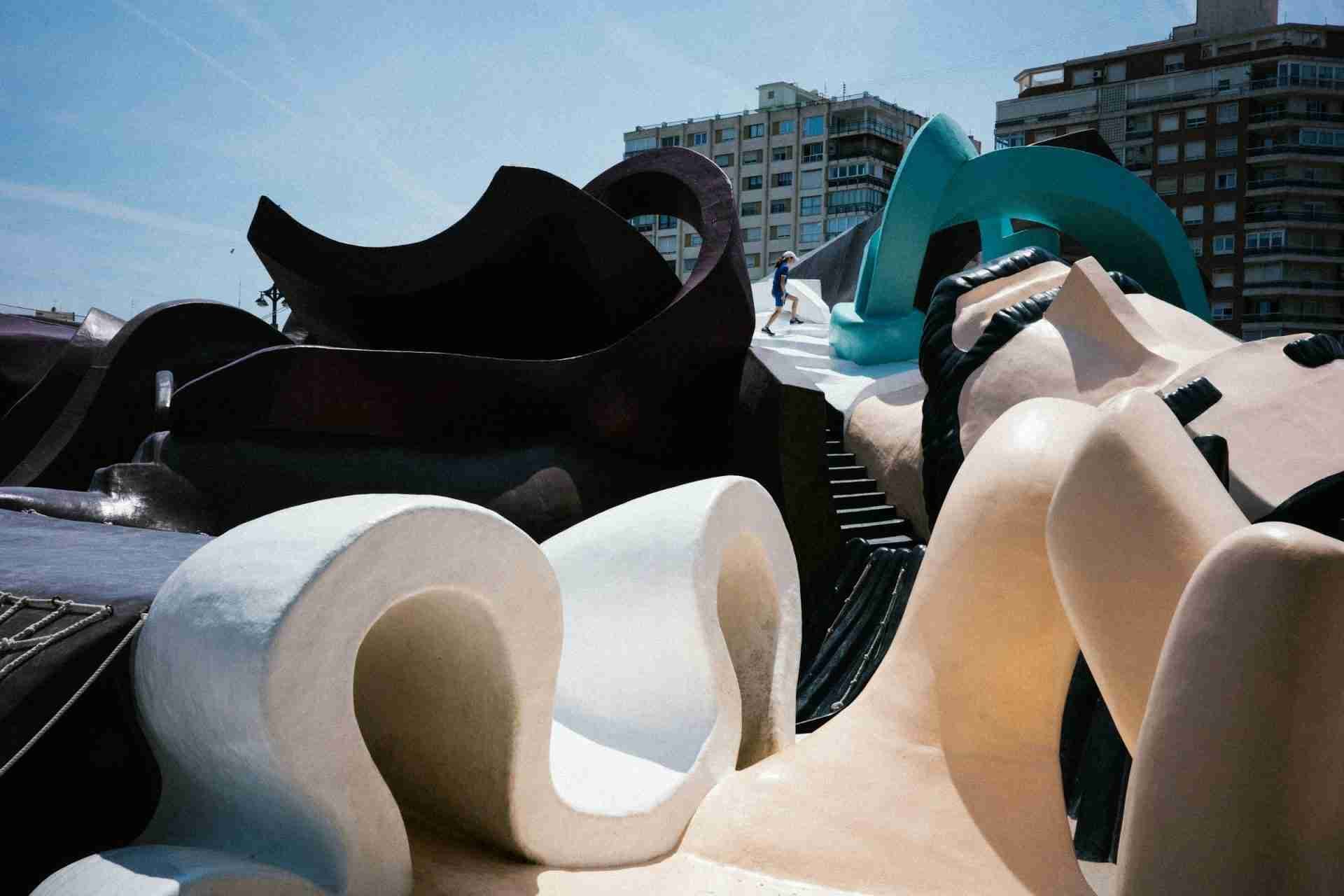
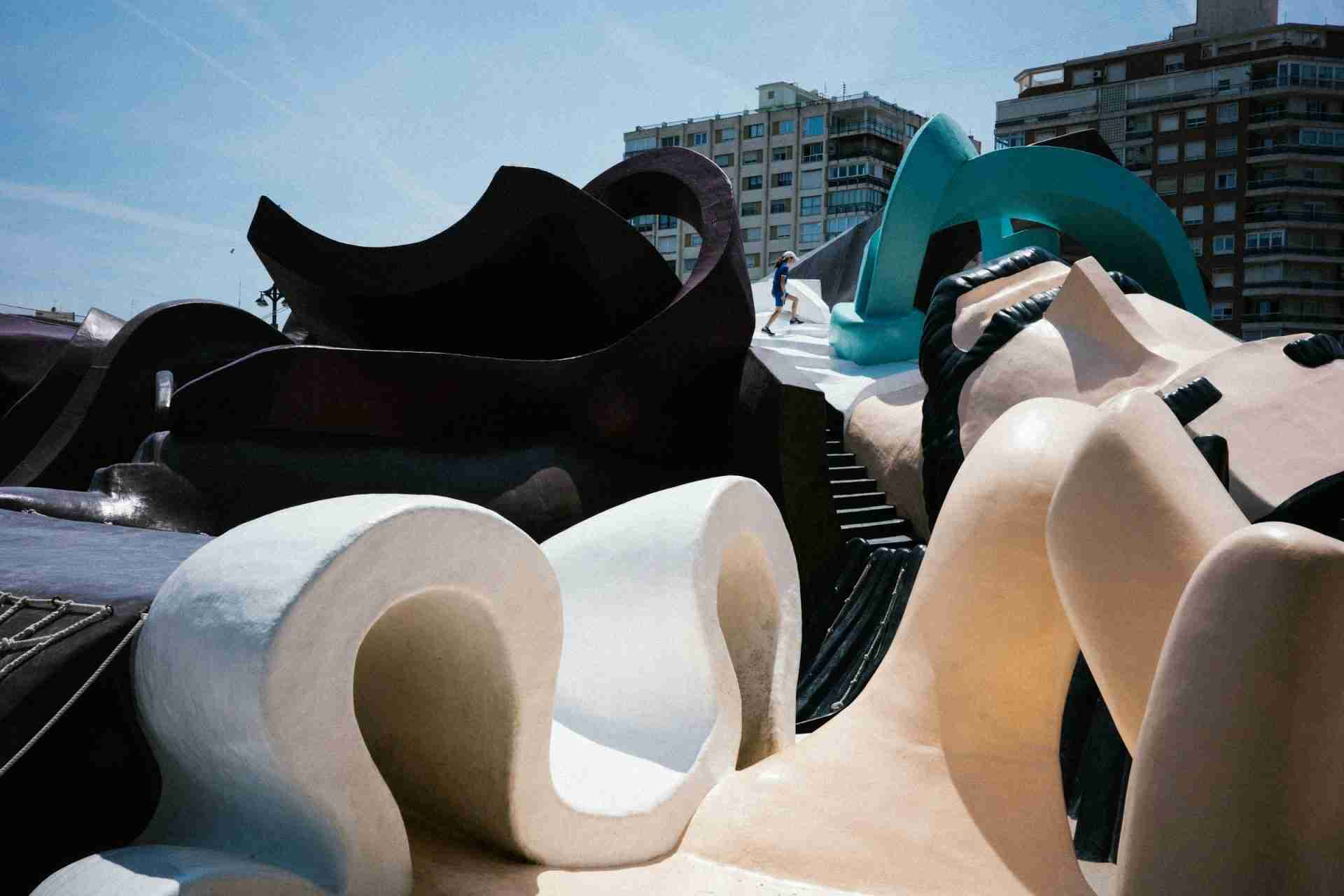
Set within the winding green corridor of Jardín del Turia, Gulliver Park offers photographers a whimsical break from classical architecture and formal gardens. This playground is unlike anything else in Spain. At its center is an enormous sculptural figure of Gulliver, based on Jonathan Swift's literary character, sprawled across the earth as if just landed in Lilliput. From above or ground level, the figure transforms into a maze of ramps, stairs, and slides that twist around limbs and hair. Photographically, it offers opportunities for creative geometry, color abstraction, and human scale, all wrapped in a structure that's equal parts fantasy and function.
Best Photography Opportunities
• Aerial Perspective Over Gulliver
Gulliver's full scale and surreal layout are best appreciated from an elevated viewpoint. While drone photography is the most comprehensive option, even modest elevation from nearby steps or park infrastructure can help convey the sculptural sprawl. Framing the entire figure works well with wide lenses, especially in early morning or late afternoon when long shadows carve through the ridges of the form. Drone users should pay close attention to public regulations here, as Jardín del Turia is a public space with family traffic. Timing and awareness are essential to avoid interrupting play or breaching local flight restrictions.
• Abstract Geometry and Close Details
Zooming into the figure's surface reveals curved lines, textured paint, and exaggerated anatomical features that become compelling subjects in their own right. Hair strands turn into repetitive patterns, fingers become ridges of playground terrain, and folds in fabric take on architectural curves. Shooting at a shallow depth of field allows for visual isolation of textures and details. Early in the day or during overcast conditions, color saturation appears richer, and contrast can be controlled more easily without harsh reflections from the concrete.
• Twilight and Artificial Lighting
Although the park officially closes in the evening, the surrounding area remains softly lit into the night. Just after sunset, ambient light and occasional park lamps create subtle highlights across the sculpture's surfaces. Long exposures taken from the perimeter or using a nearby ledge can produce surreal, almost dreamlike renderings of the playground once it's empty. This is also a time when the color temperature shifts into warm and cool zones, adding complexity to the tones of the sculpture.
• Seasonal Context in Jardín del Turia
Because Gulliver Park sits within one of Valencia's most expansive urban parks, seasonal changes in the surrounding landscape can influence your compositions. In spring, flowering trees and fresh grass offer a vibrant backdrop. In autumn, the muted tones of the trees allow Gulliver's color palette to stand out more dramatically. Integrating nearby trees or structures into the frame gives the scene a sense of environment, grounding the sculpture within its larger park setting.
Best Time to Visit
The best times to photograph Gulliver Park are early in the morning just after the gates open or later in the evening before closing. Morning visits offer soft, directional light that highlights textures and reduces glare on the painted surfaces. These hours also bring fewer visitors, making it easier to shoot architectural compositions without distraction. Overcast days can be especially rewarding for detail shots, as they eliminate harsh shadows and balance the sculpture's dynamic surfaces. While midday offers the most foot traffic and lively human moments, the overhead sun tends to flatten details and introduce harsh contrast, so it is less ideal for carefully composed shots. Valencia's mild winters also make this a year round location, though summer can be very bright and crowded.
How to Get There
Gulliver Park is located in the Jardín del Turia, a long, sunken park built into the old riverbed that winds through Valencia. The nearest major road access is via Paseo de la Alameda, and the closest Metro stop is Alameda on Line 3 or Line 5. From the station, it is about a 10-minute walk through the gardens. The park has a gated entrance and follows regular public park hours, which may vary seasonally. There is no admission fee to enter the playground. Photographers should plan accordingly, as tripods and drones may draw attention from staff, particularly during busy hours. Portable gear and discreet setups work best. Limited parking is available nearby, but the park is best accessed on foot or by bike through the garden paths.
Recommended Photography Gear
For shooting at Gulliver Park, bring a lens kit that covers both wide and telephoto ranges. A wide lens in the 16 to 35mm range helps capture the full scale of the sculpture and its interaction with the park. A 70 to 200mm or similar zoom allows for abstract details and tighter frames that isolate shapes, colors, and expressions. A drone can be useful for high level compositions, but check local ordinances before flying. A small tripod or monopod is helpful for perimeter long exposures, but avoid using them inside the play area to ensure safety and compliance. A polarizer may reduce glare on the painted concrete, especially midday. Light gear and a flexible shooting style are ideal here, as you will need to move often to adapt to subjects and compositions.
Nearby Photography Locations
Just a short walk through the Turia Gardens brings you to one of Europe's most visually striking modern architectural complexes. Its white, futuristic structures reflect beautifully in water features and offer a wealth of geometry, symmetry, and minimalism. Early morning or twilight shoots here can yield magazine worthy images with sharp lines and saturated light.
This section of the Turia Park includes manicured gardens, reflective pools, and angular glass architecture. It is an excellent spot for capturing symmetry and shadow play, especially in the late afternoon. The mix of natural and modern design provides contrast rich compositions.
Known for its constant display of thousands of fresh flowers, this bridge offers a vibrant blast of color year round. It is best photographed in soft light to avoid blown highlights, and wide lenses work well for framing the floral rows against the city backdrop. It also makes for a natural foreground when photographing city scenes from the riverbed.
This pair of medieval towers sits at the northern entrance to the old city and offers elevated views over the historic center and Turia Gardens. The towers themselves are strong subjects, but climbing to the top adds another vantage point for landscape and skyline photography. They are especially appealing in golden hour light when the warm stone glows.
• Plaza del Ayuntamiento
Valencia's main civic square pulses with movement, reflections, and light. The symmetrical layout, ornate buildings, and seasonal fountains offer multiple photo opportunities. Arrive early to catch the plaza waking up or stay late for illuminated architecture and long exposure work.
With its blend of storytelling sculpture and playground architecture, Gulliver Park is a one of a kind location where creativity can shift from the formal to the playful in a single frame. It is an ideal stop for photographers looking to add variety, color, and character to their Valencia portfolio, especially when paired with the architectural precision of nearby sites. The scene may be whimsical, but the photographic potential is anything but childish.
Comments
Loading comments…