
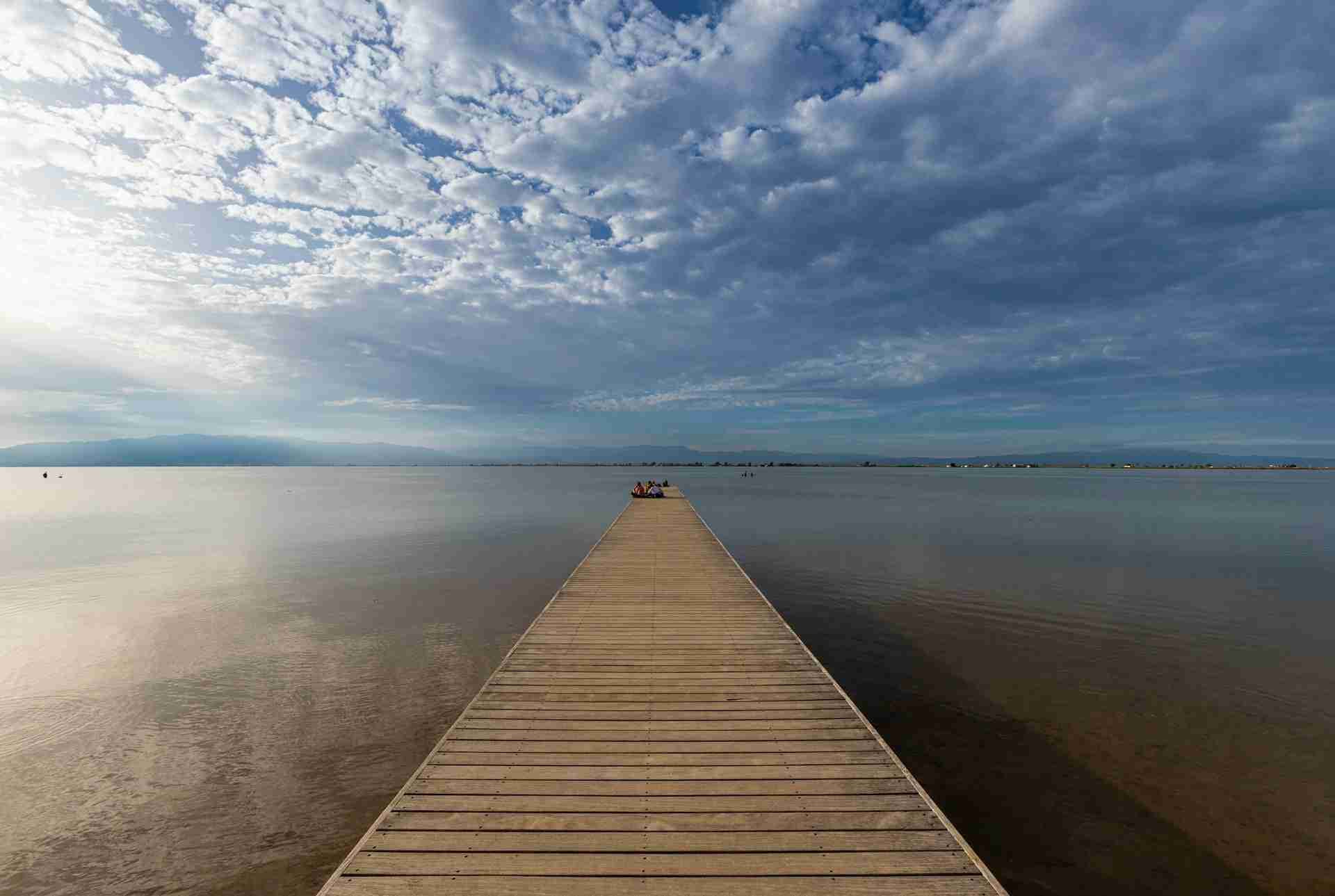
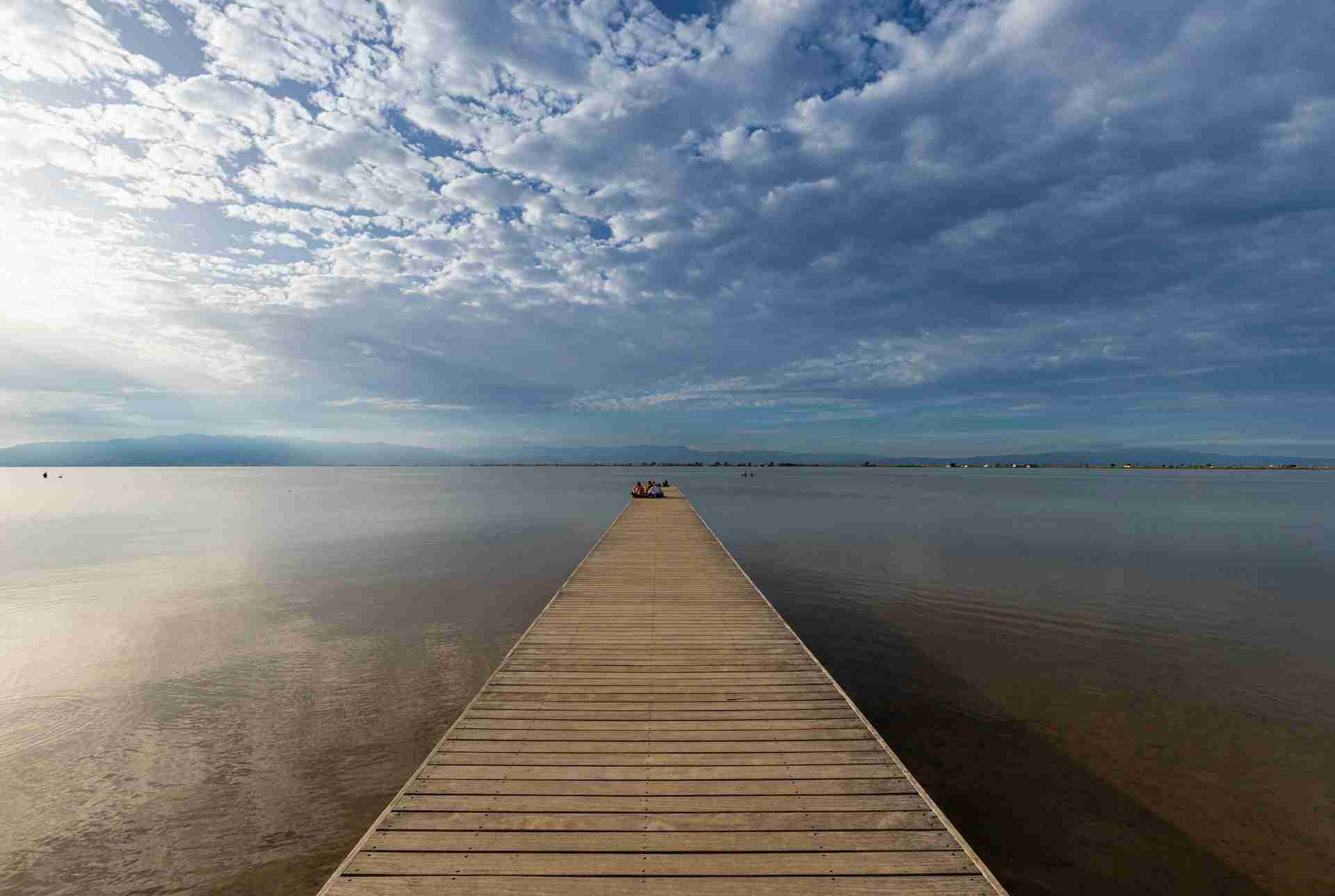
In the southern reaches of Catalonia, where the Ebro River meets the Mediterranean, Platja del Trabucador and the narrow Moll del Trabucador stretch out into the sea like a brushstroke across still water. Located in the heart of the Ebro Delta Natural Park, this otherworldly location is defined by symmetry, open space, and soft gradations of light that seem to melt the horizon. The beach is long, flat, and minimal, flanked by calm, shallow water on both sides. The narrow pier, often submerged or surrounded by reflective pools, offers striking opportunities for surreal compositions, especially during blue hour or in early morning mist. Photographers drawn to minimalism, seascapes, and natural abstractions will find this spot unusually rich in quiet visual drama.
Best Photography Opportunities
• Reflections on the Salt Flats
One of the most distinct features of Platja del Trabucador is the sheer stillness of the water on calm days. When the wind drops and the sky is clear, the surface of the sea becomes a perfect mirror, blurring the line between land, air, and water. This is the moment to work with a wide-angle lens and low perspective to emphasize the sense of infinite space. Including a person or small subject on the horizon can add scale to the surreal environment. These mirror-like conditions are most reliable early in the morning or just after sunset when light levels are low and the sea is undisturbed.
• Leading Lines on the Moll del Trabucador
The wooden pier known as Moll del Trabucador cuts a strong linear path out toward the open sea. This structure is ideal for symmetrical compositions, especially when photographed head-on with a centered vanishing point. Use a tripod and a narrow aperture to retain sharpness throughout the frame, and time your visit for golden hour to capture warm tones on the planks. On overcast days, the pier can also work beautifully in black and white, with high contrast between wood and sky. During wetter months, parts of the pier may be partially submerged, adding a dramatic layer of visual complexity.
• Bird Photography in the Shallow Lagoons
The surrounding saltwater lagoons and mudflats are rich in wildlife, especially migratory birds. Flamingos, egrets, and terns are common, often found feeding in the shallows near the edge of the beach. A 300mm or longer lens is essential for capturing detail without disturbing the scene. Early morning provides the best light for bird photography, with low angles that help isolate subjects against softly lit backgrounds. Because this is part of a protected park, remain mindful of boundaries and avoid disturbing nesting areas.
• Minimalist Long Exposures
This location is perfect for long exposure work, particularly when the sea is calm and the sky contains soft, streaky clouds. With a strong ND filter, you can reduce the scene to its essential elements: water, sky, and a single horizon line. The absence of large waves allows for unusually clean results, with long shutter speeds creating painterly transitions between tones. Compositions with a lone figure, submerged pier, or a distant boat can create compelling focal points in what otherwise feels like a limitless space.
• Twilight Color Transitions
After the sun dips below the horizon, the flatness of the terrain and the open sky allow color to stretch across the entire scene. During the last twenty minutes of twilight, soft blues, pinks, and purples blend over the still water, producing subtle but vivid color fields that work well for both wide shots and tight abstracts. Bring a fast prime lens for low-light handheld work, or extend your tripod session into the blue hour to experiment with long exposures in changing light. Reflections often intensify during this time, giving you more control over framing and balance.
Best Time to Visit
The best time to visit Platja del Trabucador and the Moll depends on the type of images you are chasing. For photographers focused on mirror-like reflections and soft light, spring and autumn provide the most reliable calm conditions and the least amount of haze. During these seasons, the weather is stable and the light remains low and golden for longer periods in the morning and late afternoon. Sunrises can be particularly beautiful when paired with slight morning mist and cooler air temperatures that keep the water still.
Summer is the busiest time, and while it offers longer shooting hours and clearer skies, it also brings more visitors, more heat shimmer, and stronger midday light that can flatten the scene. If you shoot during summer, plan your sessions early in the morning or during twilight to avoid high contrast and crowds. The flat beach and low elevation make summer sunsets feel endless, especially when clouds reflect the last light across the lagoon.
Winter offers peaceful conditions and minimal tourist traffic, but it can also be unpredictable. The light is colder, the colors more muted, and the weather can shift rapidly. However, for those interested in moodier palettes and soft tonal transitions, winter is a strong choice. Stormy skies and fog occasionally roll in from the sea, giving opportunities for dramatic minimalist compositions.
Wind is a key consideration year-round. The entire Ebro Delta is exposed, and strong gusts will destroy reflections and stir up dust from the salt flats. Always check the local forecast for wind speed and direction. Days with little or no wind are the most productive for both landscape and bird photography.
How to Get There
Platja del Trabucador is located within the Parc Natural del Delta de l'Ebre in southern Catalonia. The closest towns with services are Sant Carles de la Ràpita and Deltebre. From either, follow signage toward the delta and the Trabucador Peninsula. The road to the beach is a narrow, unpaved causeway that runs between shallow saltwater lagoons. It is passable by most vehicles but can become difficult after heavy rain or in high tides, so check local conditions before setting out.
Once you reach the beach area, there is a designated parking area near the beginning of the pier. Access to the beach, pier, and surrounding parkland is free, and no permit is required for recreational photography. However, because the region is protected and part of an active wetland ecosystem, flying drones may be restricted in some zones. If you plan to use a drone, check with the park's official guidelines before flying.
The beach and pier are both walkable, though conditions vary depending on water levels and recent weather. Waterproof footwear is a smart choice, especially if you plan to get close to the waterline or walk out during high tide. There are no facilities directly at the beach, so bring water, snacks, and any gear you need for a longer session.
Recommended Photography Gear
This location demands a setup that balances minimalism with flexibility. A full-frame camera with good low-light performance is essential for capturing the subtle color gradients and reflective surfaces that define the beach. A 16 to 35mm wide-angle lens will help you compose open scenes that emphasize negative space and leading lines. A 50mm prime can also be useful for clean, symmetrical frames on the pier, where distortion can become distracting.
For bird photography, a 300mm or longer telephoto lens is critical, especially in the early hours when flamingos and shorebirds are actively feeding. If you are planning to work in golden or blue hour, a fast lens with a wide aperture will allow you to keep shutter speeds high enough to avoid blur without bumping ISO too far.
A stable tripod is a must for long exposure and twilight work. Choose one with spiked feet or wide rubber grips, as the sand and shallow water can make cheap tripods unstable. Bring a full set of ND filters, including 6-stop and 10-stop options, and consider a graduated filter for balancing exposure across sky and water. A circular polarizer can help reduce glare on the water during daytime, but use it carefully to avoid creating unnatural gradients in reflection-heavy scenes.
Because the terrain is flat, open, and exposed to wind, you should pack some weather protection. A lens cloth or microfiber towel is essential for managing condensation and mist from the sea. If you plan to shoot close to the water or explore the flooded edges of the pier, waterproof boots or sandals are helpful. A headlamp or flashlight is important for pre-dawn setups, and extra batteries are a good idea as shooting long exposures or using live view frequently will drain them faster.
There are no facilities nearby, so bring everything you need to stay out for several hours. A backpack with back support and a rain cover is recommended. Neutral colors are best, especially if you are photographing birds and do not want to attract attention. Finally, pack a trash bag and be respectful of the park's fragile landscape. The minimal beauty of this place depends on everyone leaving it untouched.
Nearby Photography Locations
This narrow sandbar lies just beyond the Trabucador Peninsula and offers a true sense of isolation. With wide skies and a thin stretch of sand surrounded by shallow water, it is perfect for minimalist compositions and drone photography. Access is restricted in parts during nesting season, but the approach offers excellent bird photography and unobstructed views at sunrise.
One of the region's key wetland areas, La Tancada is a top destination for bird photography and long-lens work. Elevated observation points allow for clear views of flamingos and other waterfowl, and the wide-open space is ideal for layering background elements like clouds and low hills. Mornings offer the best light with little atmospheric haze.
This large lagoon provides broad, open vistas and a network of raised boardwalks that are perfect for shooting reflections and low-angle scenes. Sunset is particularly strong here when wind conditions are low, turning the water surface into a painterly mirror. The muted tones and stillness are ideal for minimalist landscape work.
Located at the tip of the Fangar Peninsula, this stark red-and-white lighthouse rises out of an otherwise blank stretch of sand. It makes an ideal subject for long-lens isolation or wide-angle framing with dramatic skies. The walk to the lighthouse is long and exposed, but the reward is a solitary subject in a truly elemental setting.
Managed by SEO/BirdLife, this area includes rice fields and wetland habitats that change dramatically with the seasons. It is excellent for both landscape and wildlife photography, especially during migration periods. Elevated hides and platforms give photographers stable vantage points over shallow pools and dense reed beds.
The combination of visual simplicity and shifting natural light makes Platja del Trabucador a destination that invites slow, careful photography. It is a place where light, water, and land blur into one another, rewarding those who are willing to wait and work with the quiet. Few places offer such a seamless mix of landscape, wildlife, and abstract possibility within a single frame.
Comments
Loading comments…