
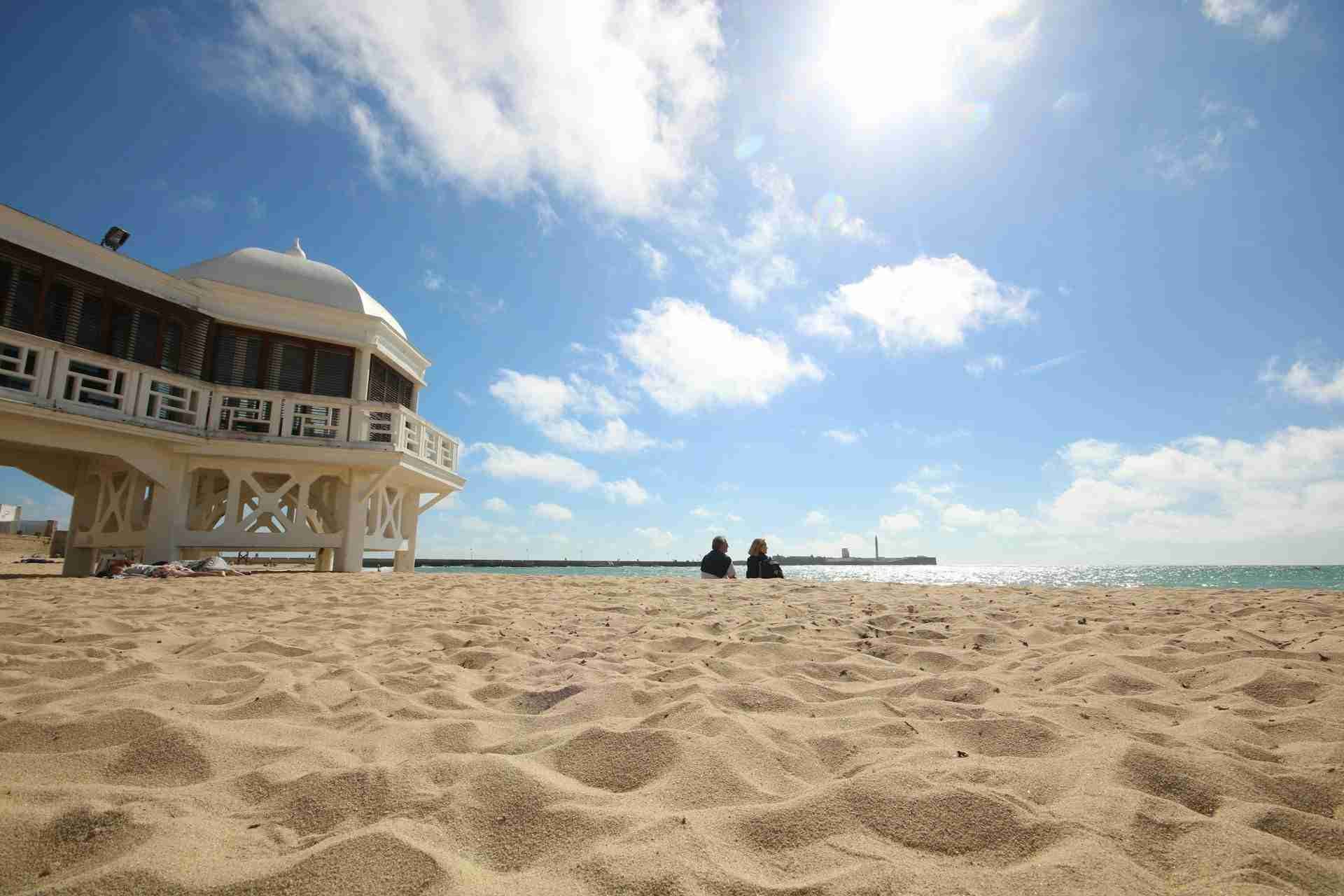
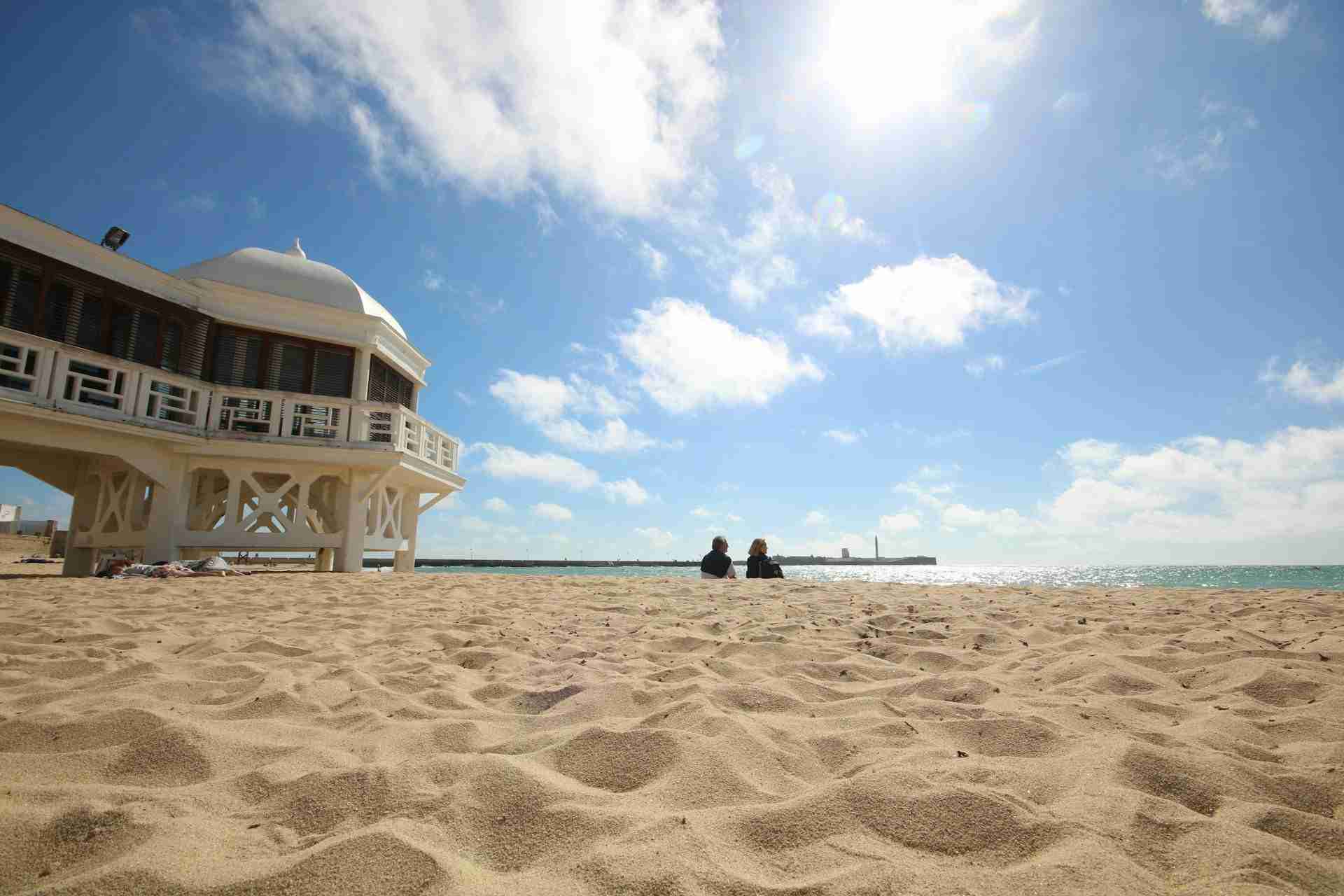
Framed by the fortress walls and baroque silhouettes of Cádiz's old town, Playa de la Caleta is more than just a beach—it's a richly layered photographic setting where history meets horizon. This small but iconic stretch of coastline is tucked between two fortified castles—San Sebastián and Santa Catalina—and offers unparalleled sunset views, dramatic tidal textures, and centuries-old architectural backdrops. Once a natural harbor used by Phoenicians and Romans, La Caleta today remains a cultural heart of Cádiz, where fishermen cast lines near colonial walls and locals gather to watch the sun melt into the Atlantic. For photographers, it's a rare place where seascape, urban detail, and golden Andalusian light intersect.
Best Photography Opportunities
• Sunset Silhouettes and the San Sebastián Causeway
: The long stone causeway leading out to the Castillo de San Sebastián is one of La Caleta's most recognizable features. At sunset, the walkway becomes a glowing path that pulls the eye into the horizon. Position yourself low on the sand or up near Santa Catalina for layered compositions that include water, fortress walls, and silhouetted figures. Long exposures can be used here to smooth water or enhance the drama of the waves around the rocks.
• Boats at Low Tide and Reflective Sands
: Dozens of small wooden fishing boats rest on the sand during low tide, offering a classic foreground subject beneath expansive skies. These boats, often painted in faded blues and whites, make for timeless, almost painterly images—especially when captured with shallow depth of field or under pastel twilight. Wet sand during receding tide reflects color beautifully; use this mirror effect creatively in both wide-angle and detail-focused compositions.
• Santa Catalina Fortress and Defensive Architecture
: The northern edge of La Caleta is defined by the walls and angular geometry of the Santa Catalina fortress. The sandstone blocks and whitewashed buildings offer a rich tonal range in early morning or golden hour light. From within the fortress grounds or along its edges, you can shoot abstract shadow play, architectural frames, and contrast-rich textures that blend seamlessly into the beachscape.
• Cádiz Skyline from the Water's Edge
: Standing at the southern tip of the beach, you can frame the baroque domes of the Cádiz Cathedral rising above the rooftops in the distance. This urban profile contrasts beautifully with the natural elements of sand and surf. Telephoto compression works well here, drawing the skyline closer and layering domes against palm trees and the horizon. Blue hour after sunset gives the domes a golden glow, perfect for moody cityscapes.
• Cultural Moments and Everyday Life
: La Caleta is not just a beach but a living stage for local life. Elderly residents swim year-round, musicians play on the seawall, and families gather under the fortress shadows. These moments, while subtle, provide excellent opportunities for environmental portraiture or street-style candid shots. Be respectful and discreet, using a prime lens to maintain natural intimacy without intrusion.
Best Time to Visit
Playa de la Caleta offers different photographic moods across the day, though golden hour and sunset are its most iconic windows. In the evening, the beach faces directly west, and the low sun floods the bay with amber light that sets the stone and sand aglow. This is the time to shoot wide seascapes, tight architectural frames, or soft long exposures that draw on the beach's tonal warmth.
Morning visits provide a more tranquil setting. The beach is often quiet except for a few swimmers or early risers, and the low sun from the east backlights the fishing boats and adds gentle dimension to the fortress walls. This is also a great time for detailed texture work or slower, meditative compositions.
Low tide exposes a striking expanse of wet sand, rocks, and moored boats—ideal for symmetry, reflection, and layered depth. Tidal charts should be consulted in advance if you're hoping to shoot the boats at rest or walk out toward the causeway before it narrows. Overcast days can flatten contrast, but the soft, moody light is excellent for texture studies, color accuracy, and long exposures.
Summer brings crowds, especially in the late afternoon, so if you're looking for clean compositions and minimal interference, aim for weekday mornings or shoulder seasons like early spring and late autumn. Winter, though cooler, often offers dramatic skies and clearer air, especially after Atlantic weather systems roll through.
How to Get There
Playa de la Caleta is located at the western edge of Cádiz's old town, nestled between the Santa Catalina and San Sebastián fortresses. It's accessible on foot from anywhere within the historic center, with the beach just a short walk from popular landmarks like the Cádiz Cathedral or the Gran Teatro Falla. The closest access points are from Calle Campo del Sur or Calle Honduras, both of which descend directly toward the promenade above the beach.
If arriving by car, parking is limited in the old town, but several public lots and street spaces exist just east of the beach within walking distance. Cádiz is well connected by train and bus from Seville and other Andalusian cities, and once in town, the beach is best explored on foot or by bicycle.
Facilities around the beach are excellent, with nearby cafés, public restrooms, and shaded promenades. The fortress grounds often host cultural events or small exhibitions, and their open access points allow for elevated shooting angles over the bay.
Recommended Gear and Shooting Tips
A full-frame camera with a wide dynamic range will help you manage the intense tonal variation between bright skies and shaded fortress walls. A wide-angle lens (16–35mm) is ideal for beachscapes and fortress compositions, especially when shooting into the sun or from within architectural elements. A 70–200mm telephoto zoom is perfect for compressing city skylines, isolating fishing boats, or shooting candid moments from a distance.
Neutral density filters are useful for long exposure water smoothing, especially when capturing the incoming tide around the boats or rocks. A circular polarizer helps cut glare from wet sand and enhances saturation in both sea and sky. A travel tripod is recommended for twilight sessions or extended blue hour work, especially when shooting from the causeway or low along the shore.
Sand, sea spray, and wind can be frequent companions, so pack a lens cloth, microfiber towel, and protective pouch for quick access. Comfortable footwear is essential for moving across rocks or wet sand. Most importantly, let the scene unfold—La Caleta is a location best approached with patience, openness, and a willingness to adapt to its ever-changing light.
Nearby Photography Locations
: Located at the end of the causeway, this seaside fortress offers panoramic views of the Atlantic, especially during sunset. The stone path leading to it is one of Cádiz's most iconic photo subjects and also an excellent platform for long exposures of waves and clouds.
: Sitting just above the beach, this fortress provides elevated perspectives of La Caleta and a variety of geometric frames, shadows, and textured stone. It's also a quiet spot for shooting back toward the city skyline or capturing wide-angle seascapes.
: A beautifully manicured park with sculptural trees, fountains, and coastal overlooks located just a few blocks from the beach. In spring and early summer, the flowering gardens provide a vivid counterpoint to the beach's earthy palette.
: Towering above the city, the cathedral's golden dome and baroque towers are visible from many vantage points and are especially striking at sunrise from the eastern waterfront. Telephoto lenses bring out its detail against layered rooftops.
• Mercado Central de Abastos
: For street and market photography, Cádiz's central market offers colorful scenes of daily life, produce, and seafood in a dynamic, well-lit environment. Visit early in the morning for the most authentic atmosphere.
Playa de la Caleta is more than a scenic beach—it's a place where light, architecture, and culture move in rhythm with the tides. Whether you're capturing fishermen at dawn, fortress shadows at noon, or silhouettes at sunset, this coastal jewel offers a deep well of visual poetry for photographers ready to slow down and soak it all in.
Comments
Loading comments…