
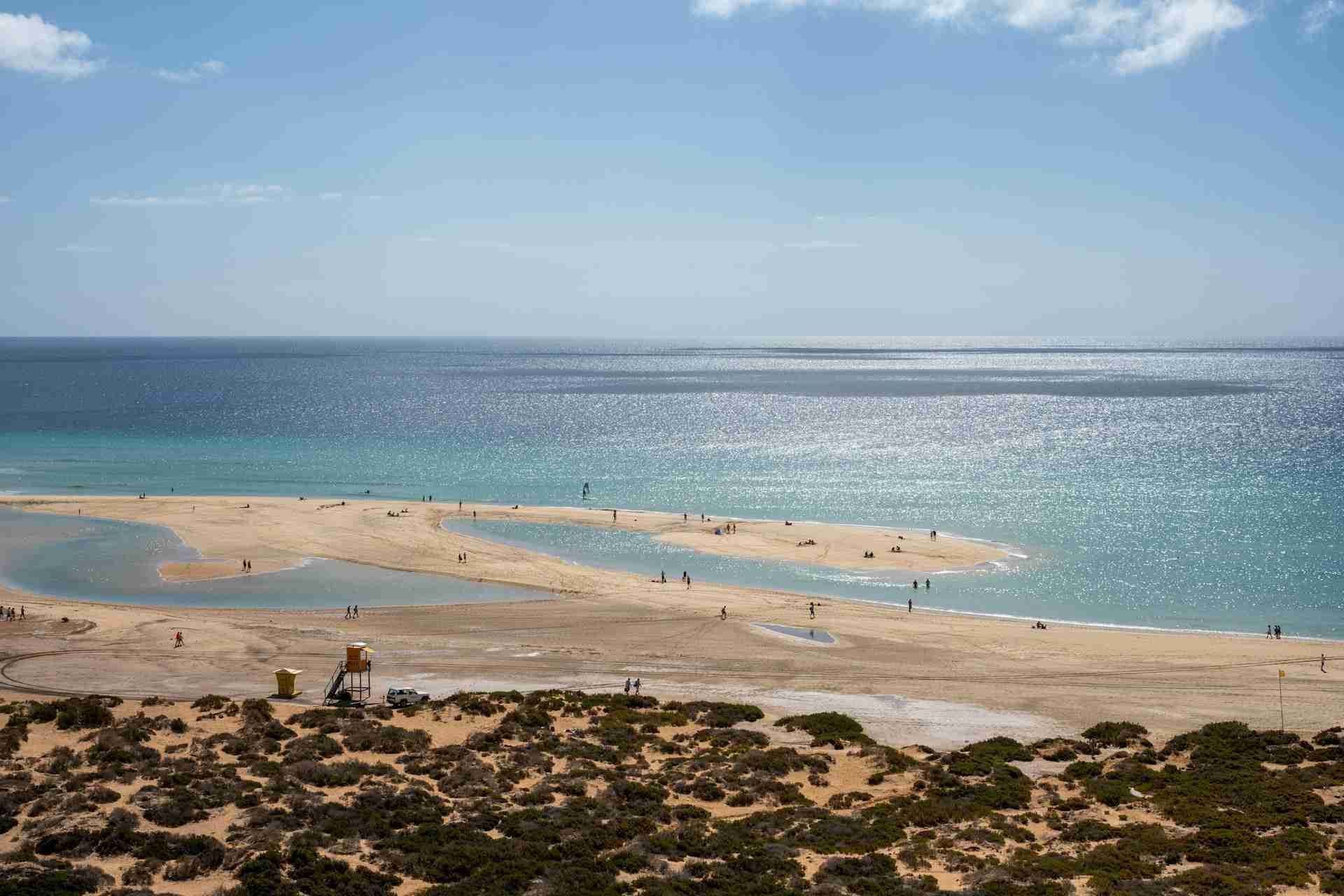
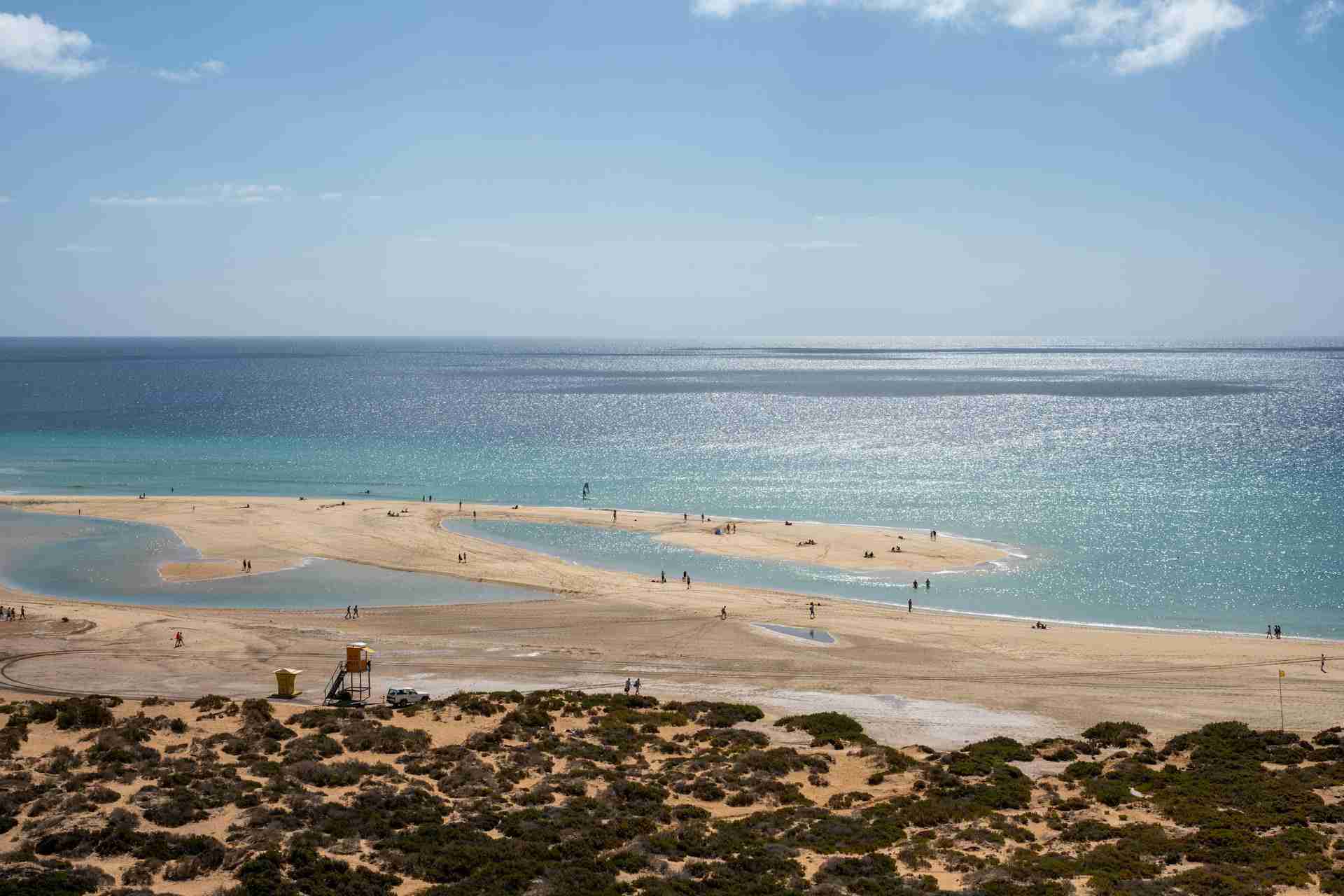
On the southeastern coast of Fuerteventura, Playa de Sotavento de Jandía stretches for miles along the island's dry, wind-shaped landscape. Famous for its shifting tidal lagoons, golden sands, and constant breezes, this beach offers one of the most varied and dramatic seascapes in the Canary Islands. At low tide, sandbars emerge to create geometric patterns that seem almost abstract when viewed from above. At high tide, shallow turquoise lagoons spread inland, reflecting the sky and producing mirror-like compositions. The vastness of Sotavento allows for both minimalist approaches and wide panoramas, while the presence of kitesurfers and windsurfers introduces color and motion. Photographers who come here will find not only striking landscapes but also an ever-changing interplay between wind, sand, and water.
Best Photography Opportunities
• Patterns of the tidal lagoons
: One of the defining features of Sotavento is its lagoon system, which forms and disappears with the tides. From elevated viewpoints along the surrounding cliffs, you can capture the lagoon's sweeping curves and sandbars that cut across the beach in dynamic shapes. A wide-angle lens emphasizes the scale, while a drone or telephoto lens from a distance can reveal the graphic quality of the water's edge. Early morning light creates pastel reflections on the lagoon surface, while sunset enhances the warm tones of the sand and the cool blue of the water. Shooting at different tide levels ensures a variety of images, from minimalist expanses of water to intricate sand-and-sea patterns.
• Minimalist seascapes on the open beach
: The sheer size of Sotavento makes it ideal for minimalist compositions. With its vast stretches of sand and shallow water, you can create images that rely on negative space and subtle tonal variations. Overcast days are perfect for this approach, as they remove harsh contrast and let the shapes of water and sand dominate the frame. A single figure walking across the expanse or a distant sail on the horizon adds scale without clutter. Long exposures during calm periods smooth the surface of the lagoon, creating a painting-like effect. These compositions are particularly strong when processed in black and white.
• Kitesurfing and windsurfing action
: Sotavento is a world-renowned spot for kitesurfing, and the bright sails of the surfers add vibrant bursts of color against the subdued palette of sand and sea. A telephoto lens is best here to freeze action or compress multiple surfers into a layered frame. Shooting with a fast shutter speed will capture the energy of jumps and tricks, while panning with a slower speed can introduce motion blur that conveys dynamism. The contrast between human activity and the natural vastness of the beach provides a compelling documentary element to your portfolio. Sunrise and late afternoon offer the most flattering light, balancing action with atmosphere.
• Abstract textures of wind-shaped sand
: Away from the water, the dry dunes and exposed sandbars are sculpted by constant winds into delicate ripples and patterns. These textures are excellent for close-up and abstract work, especially when photographed at low angles to emphasize shadow and relief. Golden hour light highlights the contours with rich contrast, while high midday sun flattens the patterns into graphic shapes. Macro lenses or a mid-range zoom allow you to isolate sections of texture for more intimate studies. Combining these sand details with wide shots of the beach provides a full visual narrative of the location.
• Sunset over the lagoons
: Sotavento's western-facing position ensures that sunsets are among the most rewarding times to photograph. As the sun dips, the shallow lagoons act like mirrors, reflecting the sky's colors across their smooth surfaces. A tripod is essential for long exposures, which allow you to capture both the saturated sky and the glowing sandbanks in balance. Wide compositions benefit from including foreground ripples in the sand, while tighter frames can focus on the gradient of color between water and sky. Waiting for silhouettes of surfers or walkers to pass into frame can add a finishing touch.
Best Time to Visit
Playa de Sotavento can be photographed in every season, as Fuerteventura's mild, dry climate ensures year-round accessibility. Spring and early summer are particularly rewarding, with steady trade winds filling the lagoon for kitesurfing action and clear skies offering long, luminous evenings. July and August bring the peak of activity, when international windsurfing and kitesurfing competitions take place, adding energy and human subjects to the landscape. Photographers who prefer a quieter experience may find September and October more appealing, when the beach is less crowded and the light is warmer and softer throughout the day.
Winter brings more variable conditions, with occasional storms and dramatic skies that enhance the beach's wild character. This season is excellent for moody seascapes and long-exposure work, though strong winds can make stability a challenge. Regardless of the time of year, tides are the most important factor in planning a shoot at Sotavento. High tides create reflective lagoons, while low tides reveal patterns in the sand that are ideal for abstract work. Sunrise offers soft, pastel light and tranquility, while sunset delivers intense color and dynamic silhouettes. Midday light is harsh, but it can be used effectively for abstract textures in sand and water when shadows are strong.
How to Get There
Playa de Sotavento is located on the southeastern coast of Fuerteventura, approximately 70 kilometers south of the island's capital, Puerto del Rosario. By car, the beach is easily reached via the FV-2 road, which runs along the east coast of the island toward the Jandía Peninsula. Several access points lead down to the beach, with parking available near the René Egli windsurfing center and along marked turnoffs. The walk from parking areas to the shoreline is short but can vary in distance depending on tide level, so plan footwear accordingly. The beach is open and free to access at all times, with no entry fee. Be aware that the area is exposed, with little shade, so carrying water, sun protection, and lightweight gear is advisable.
Recommended Photography Gear
A wide-angle lens in the 16 to 35 millimeter range is indispensable for capturing the scale of the lagoons and the expanse of the beach. A mid-range zoom such as a 24 to 70 millimeter provides flexibility for framing surfers, details in sand patterns, and layered seascapes. A telephoto lens up to 200 millimeters is particularly useful for action shots of kitesurfers or for compressing sandbanks and water channels into abstract compositions. For aerial photographers, a drone reveals the full geometry of the lagoons and sandbars, but caution is needed due to winds, which are often strong and unpredictable.
A sturdy tripod is essential for long exposures at sunset and for working with neutral density filters to smooth water and clouds. A polarizing filter helps cut glare on shallow water and deepen the blues of the sky. A set of graduated ND filters can balance the bright skies against reflective sand during golden hour. Protective covers for gear are strongly recommended, as fine sand carried by the wind can quickly accumulate on lenses and camera bodies. Waterproof footwear or sandals are practical for wading into the lagoons, which often provide the best foregrounds. Lightweight, breathable clothing is also essential in the strong Canary Islands sun.
Nearby Photography Locations
: Located at the southern tip of Fuerteventura, this fishing town has a picturesque harbor, rocky coves, and a lighthouse that photographs beautifully at sunset. The surrounding beaches are narrower but more sheltered, offering contrast with the openness of Sotavento.
: On the island's wild western coast, Cofete offers one of the most dramatic landscapes in the Canaries. Backed by the towering Jandía mountains, this remote beach stretches endlessly into the distance and is best captured in moody, stormy light for maximum impact.
: A smaller but equally photogenic beach on the west coast, La Pared is known for its rugged cliffs and powerful surf. The sunsets here are spectacular, and the interplay between jagged rock formations and crashing waves provides dynamic compositions.
: North of Jandía, the Ajuy Caves are accessible via a short walk along volcanic cliffs. The caves and nearby black sand beach provide striking geological textures, particularly when photographed with strong contrasts of light and shadow.
: Just north of Sotavento, Costa Calma offers calmer beaches with clear turquoise water. This area is excellent for capturing quieter, more intimate seascapes, as well as reflections along shallow, sheltered coves.
Playa de Sotavento de Jandía is a place where the Atlantic and the desert-like landscape of Fuerteventura meet in a constantly changing dance of sand, water, and wind. For photographers, it is both a challenge and a gift, offering endless opportunities to experiment with scale, light, and motion. Every visit delivers something new, ensuring that no two photographs of this remarkable beach are ever the same.
Comments
Loading comments…