
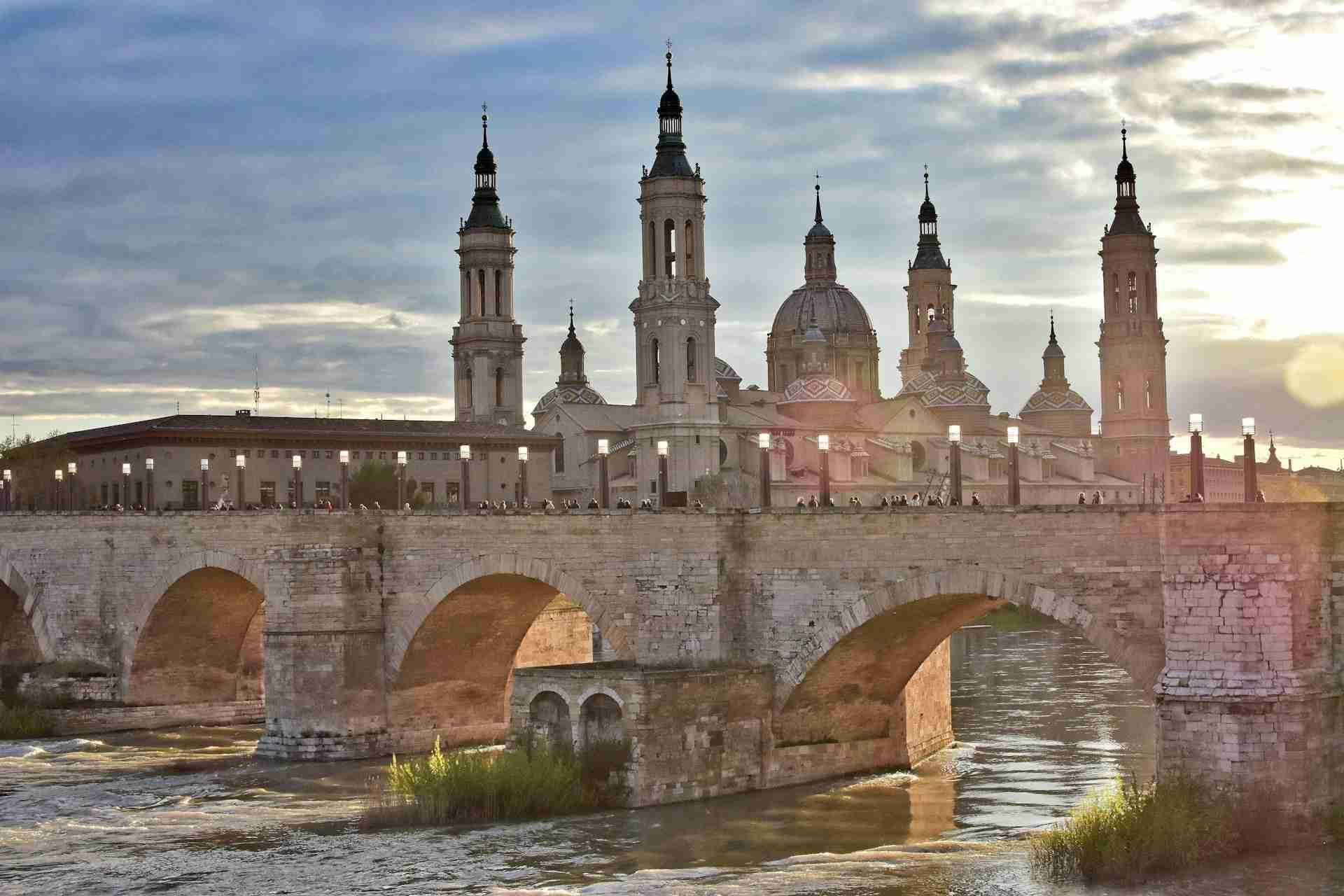
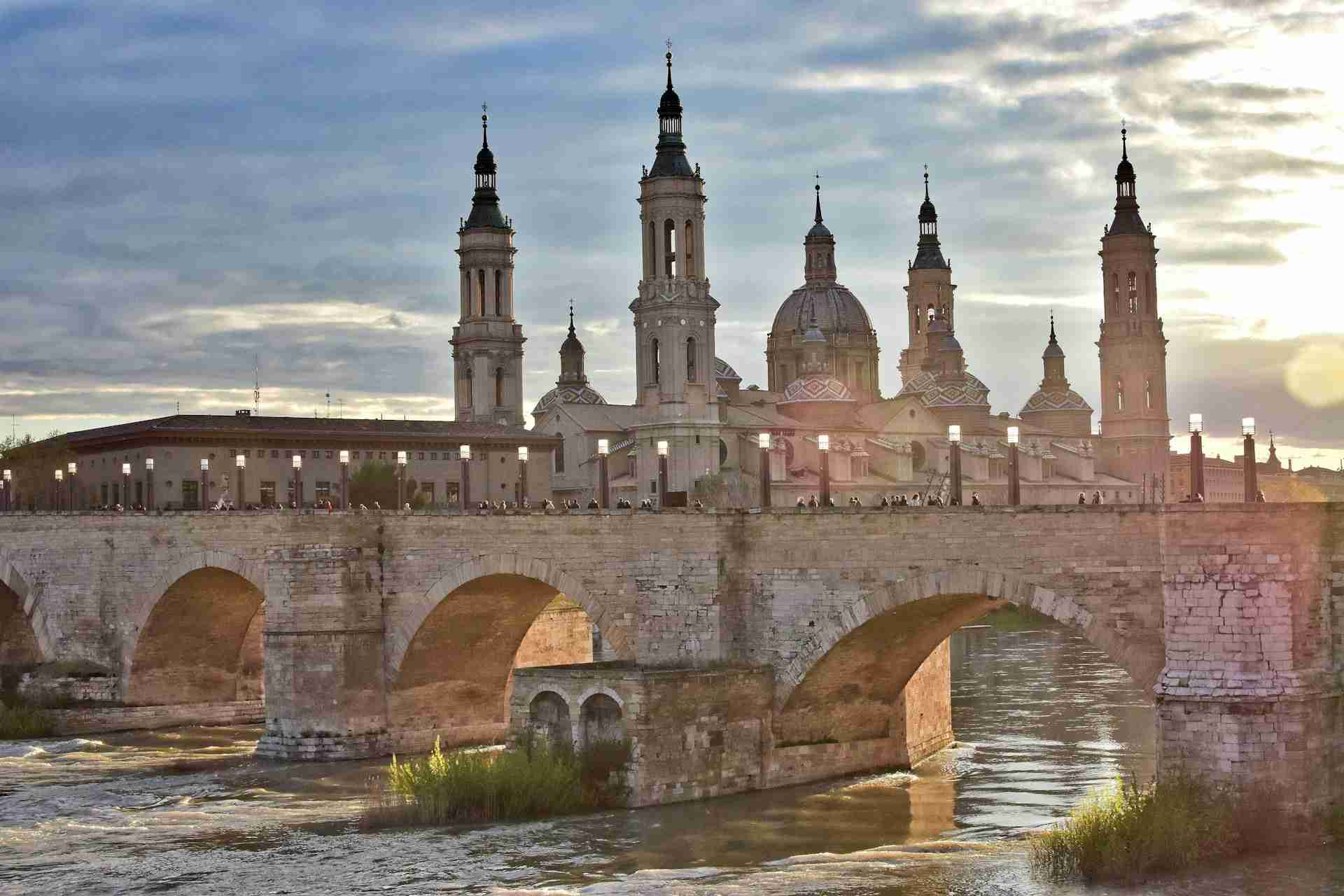
Spanning the Ebro River in Zaragoza, Spain, Puente de Piedra is one of the most visually striking urban bridges in the country, combining medieval architecture with modern cityscape views. Also known as the "Stone Bridge," this 15th-century structure draws photographers with its symmetry, weathered masonry, and strong reflections in the water below. The bridge faces directly toward the Basilica of Our Lady of the Pillar, creating a powerful composition that blends history, architecture, and natural light. At sunrise and sunset, the bridge and basilica light up in warm tones while the Ebro carries smooth color reflections and motion trails. Whether you're capturing sweeping cityscapes, tight architectural details, or experimenting with long exposures, Puente de Piedra offers an inspiring balance of geometry and light in the heart of Zaragoza.
Best Photography Opportunities
• Classic Bridge and Basilica Composition
The defining image of Puente de Piedra is the view facing west toward the Basilica of Our Lady of the Pillar, where the bridge's arches lead the eye directly to the domes and towers of the cathedral. This scene is best photographed during golden hour or blue hour when warm or cool tones illuminate the skyline and reflect in the river. A wide-angle lens allows you to frame the entire bridge with the basilica in the distance, while a mid-telephoto lens lets you compress the arches with the domes. Long exposures with neutral density filters help smooth the river's surface, turning it into a mirror that reflects both structures clearly, especially on calm evenings.
• Reflections and Symmetry in the Ebro River
On days with still water and soft light, the Ebro becomes a canvas of symmetry. The bridge's arches and shadows repeat perfectly across the surface, forming near-mirrored images that work beautifully in vertical frames. During twilight or early morning, reflections become more pronounced, and low contrast allows for balanced exposures across sky, stone, and water. For the strongest compositions, shoot from the north bank just east of the bridge, where you can align foreground vegetation or cobbled pathways into your frame for added depth. The quiet ambiance at these hours also lets you take your time setting up carefully composed shots without interruption.
• Architectural Details and Carvings
Puente de Piedra contains intricate carvings and historical elements that reward close inspection. Statues of lions stand guard at both ends of the bridge and offer dynamic foreground elements against the urban backdrop. Using a medium or long lens, you can isolate textures in the stone, capture the interplay of light on aged surfaces, or frame smaller architectural features with out-of-focus background movement. These detailed compositions work particularly well in soft, overcast light or during early morning when shadows define texture without overwhelming contrast. Shooting in monochrome can also highlight the structure's weathered materials and rhythmic shapes.
• City Life and Movement
As an active pedestrian and traffic bridge, Puente de Piedra provides a blend of static structure and human movement. Timed exposures can capture blurred figures crossing the span, adding a sense of scale and life to the otherwise fixed lines of the bridge. Shooting from the side of the river with a longer exposure, you can incorporate both motion and architecture by tracking the flow of cyclists, walkers, or passing birds along the skyline. Evening and early morning are best for this kind of work when foot traffic is steady but not overwhelming. These moments give your urban images a dynamic, lived-in quality that complements the historical setting.
• Night Photography and Light Trails
Zaragoza's skyline lights up in the evening, and the bridge becomes a dramatic foreground for city lights. Lamps along the bridge and on nearby streets create elegant glows that line the span, while traffic from surrounding roads can be used to create light trails across or near the bridge. Positioning your tripod along the southern bank near Parque Macanaz offers one of the best views for twilight and nighttime photography. Here, you can shoot long exposures that include reflections of city lights on the Ebro and the illuminated domes of the basilica behind. Adjust white balance to either enhance or neutralize the warm tones depending on the mood you want to create.
Best Time to Visit
The most rewarding times to photograph Puente de Piedra are during spring and autumn, when Zaragoza's weather is both stable and visually interesting. From March through early June, mornings often bring calm winds that smooth the Ebro River and allow for near-perfect reflections. Skies during these months tend to be clear or lightly clouded, giving you the potential for vibrant sunrise and sunset colors, especially when shooting toward the basilica. In autumn, typically from late September through November, the sunlight comes in at a lower angle throughout the day, warming the stone of the bridge and emphasizing its texture without producing overly harsh contrast. Afternoon golden hour is especially good for capturing the full length of the bridge in glowing light from the north side of the river.
Summer offers extended shooting hours, particularly during twilight, but the overhead sun from mid-morning to late afternoon can flatten details and wash out the lighter tones of the bridge. It's best to plan early or late sessions during this season to avoid high contrast and strong glare. Winter brings quieter conditions and lower sun throughout the day, making it ideal for extended sessions of soft, angled light. On occasion, the river may carry a low mist during cold, still mornings, adding a gentle atmosphere to wide compositions. While snow is rare, light rain can leave the cobblestones glistening and provide a different kind of reflective texture along the walkways. Regardless of the season, blue hour is one of the most productive windows at Puente de Piedra, offering balanced exposures between city lights, the basilica, and the river surface.
How to Get There
Puente de Piedra is located in the heart of Zaragoza and is easily accessible by foot, public transport, or bicycle. The bridge connects the central historic district near Plaza del Pilar with neighborhoods across the river to the north. Photographers arriving by train can walk from Zaragoza-Delicias station in about 30 minutes or take a tram or local bus toward the city center. There is no fee to access or photograph the bridge, and several paths along both sides of the river offer excellent shooting angles. The best riverbank access for photography is from Parque Macanaz on the north side and the promenade along Paseo Echegaray y Caballero on the south side. Both offer stable footing and wide-open views for tripods and longer exposures. Public restrooms and cafes are located nearby, making it an easy spot for extended sessions.
Recommended Photography Gear
To make the most of Puente de Piedra's range of compositions and changing light, bring a camera setup that supports both versatility and precision. A wide-angle lens in the 16–35mm range is crucial for capturing the entire span of the bridge along with the basilica, especially when working from river-level walkways or the grassy slopes near Parque Macanaz. A standard 24–70mm zoom is excellent for cityscape framing and capturing the flow of pedestrians or cyclists with balanced geometry. A 70–200mm telephoto lens will allow you to isolate the lion statues, architectural carvings, or compress the layers between the bridge, the basilica, and the background skyline.
A tripod is essential for sunrise, sunset, and blue hour work, especially when shooting long exposures to smooth the water or capture light trails. Use a remote shutter release or built-in timer to avoid vibration on exposures longer than one second. A circular polarizer can help deepen skies, cut glare from the water, and enhance reflections, particularly during daytime sessions. For creative long exposures in daylight, a 6- or 10-stop neutral density filter is highly useful. In lower light, keep a fast lens in your bag, such as a 35mm or 50mm prime, to shoot architectural details or low-contrast scenes handheld without boosting ISO too far.
Zaragoza is a walkable city, and Puente de Piedra's best vantage points are spread across public spaces, parks, and elevated walkways. Bring a comfortable, weather-resistant backpack to carry gear safely as you move along both banks. Extra batteries and memory cards are important for long sessions, especially if you plan to bracket exposures or shoot timelapses during changing light. A small microfiber cloth or lens brush is helpful for keeping your glass clear on breezy days near the river. With the right preparation, your gear will give you the flexibility to switch between big city scenes and intimate detail work without missing a moment.
Nearby Photography Locations
Just west of the bridge, this massive baroque cathedral dominates the skyline and offers countless photo angles from both the inside and outside. Inside, low ambient light and ornate details make it a rewarding challenge for those who enjoy interior architectural photography. Outside, the basilica glows in soft golden light at sunrise and sunset, and reflections from the Ebro add an extra layer when shooting from across the river.
Located about 20 minutes west of the bridge on foot, Aljafería is a fortified medieval Islamic palace with courtyards, arches, and beautifully preserved details. The contrast between geometric patterns and natural light filtering through arches provides great material for architectural and pattern-focused photography. Early morning offers clean light for exteriors, while mid-day brings strong shadows in the inner courtyards.
Set along the Ebro River further northwest, this expansive park offers natural scenes, modern footbridges, and wide views back toward the city. The area is great for photographing open landscapes within an urban context, especially around sunset when the sky lights up behind the city skyline. The canals and water features within the park allow for creative long exposures and motion shots.
This narrow, colorful maze of streets south of the bridge offers a completely different kind of subject matter. Ideal for street photography, the area is full of textured walls, alleyways, hanging laundry, and glimpses of daily life. The lighting can be tricky due to shadows and tight angles, but the depth of character makes it worth exploring with a fast lens and a patient approach.
Remnants of the ancient Roman walls can be found near Plaza del Pilar, just a short walk from the bridge. These ruins offer a unique blend of old stonework set against modern buildings, creating strong contrasts in both form and time. Shooting during blue hour or under artificial light adds mood and depth to compositions that combine Zaragoza's historical layers.
Puente de Piedra is more than a beautiful bridge—it is a visual thread that connects centuries of architecture with the rhythms of contemporary urban life. For photographers, it offers a variety of challenges and rewards, from fast-changing light to finely detailed compositions that emerge only with careful observation. With the right timing, preparation, and creative approach, this bridge and its surroundings will give you images that carry both structure and story.
Comments
Loading comments…