
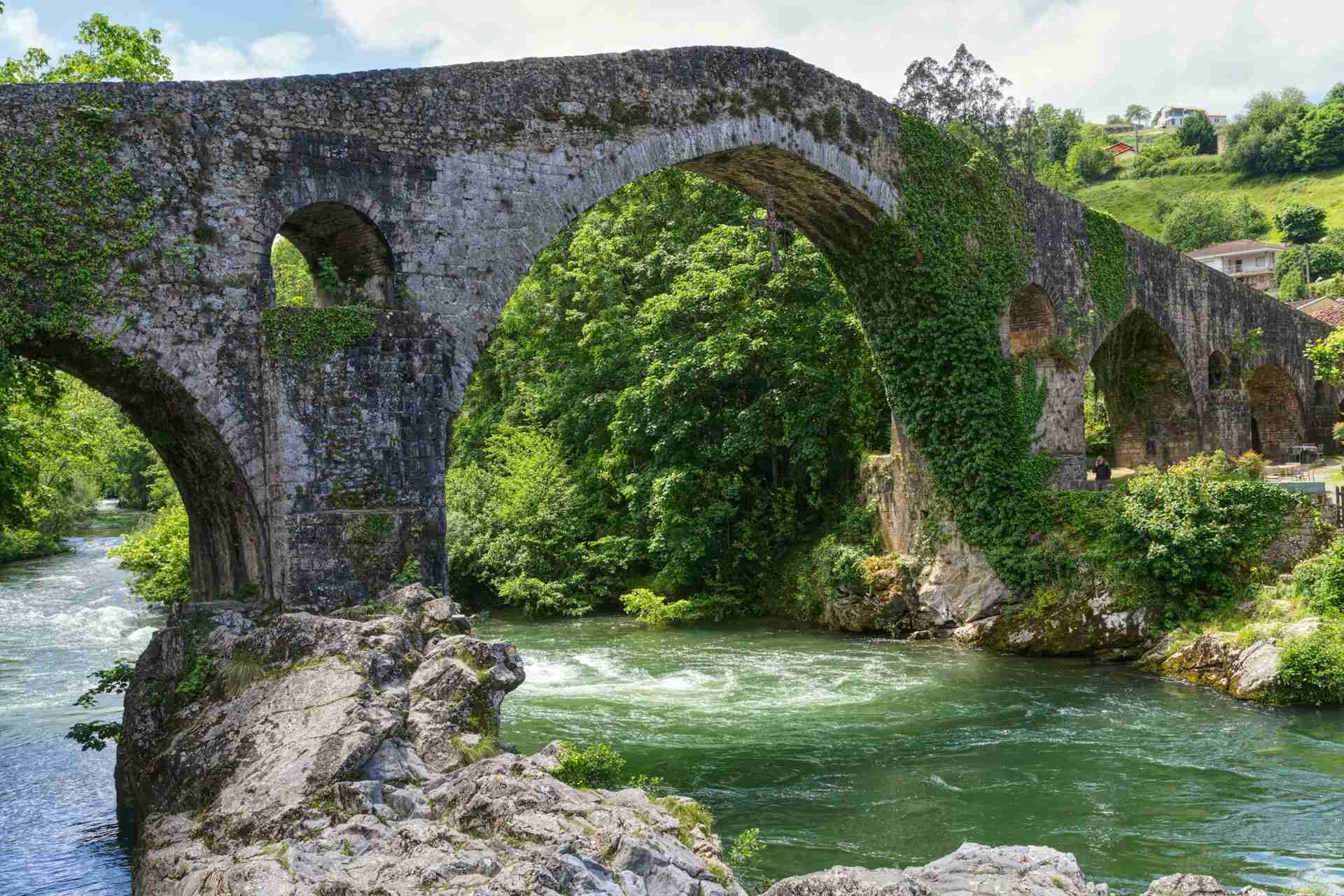
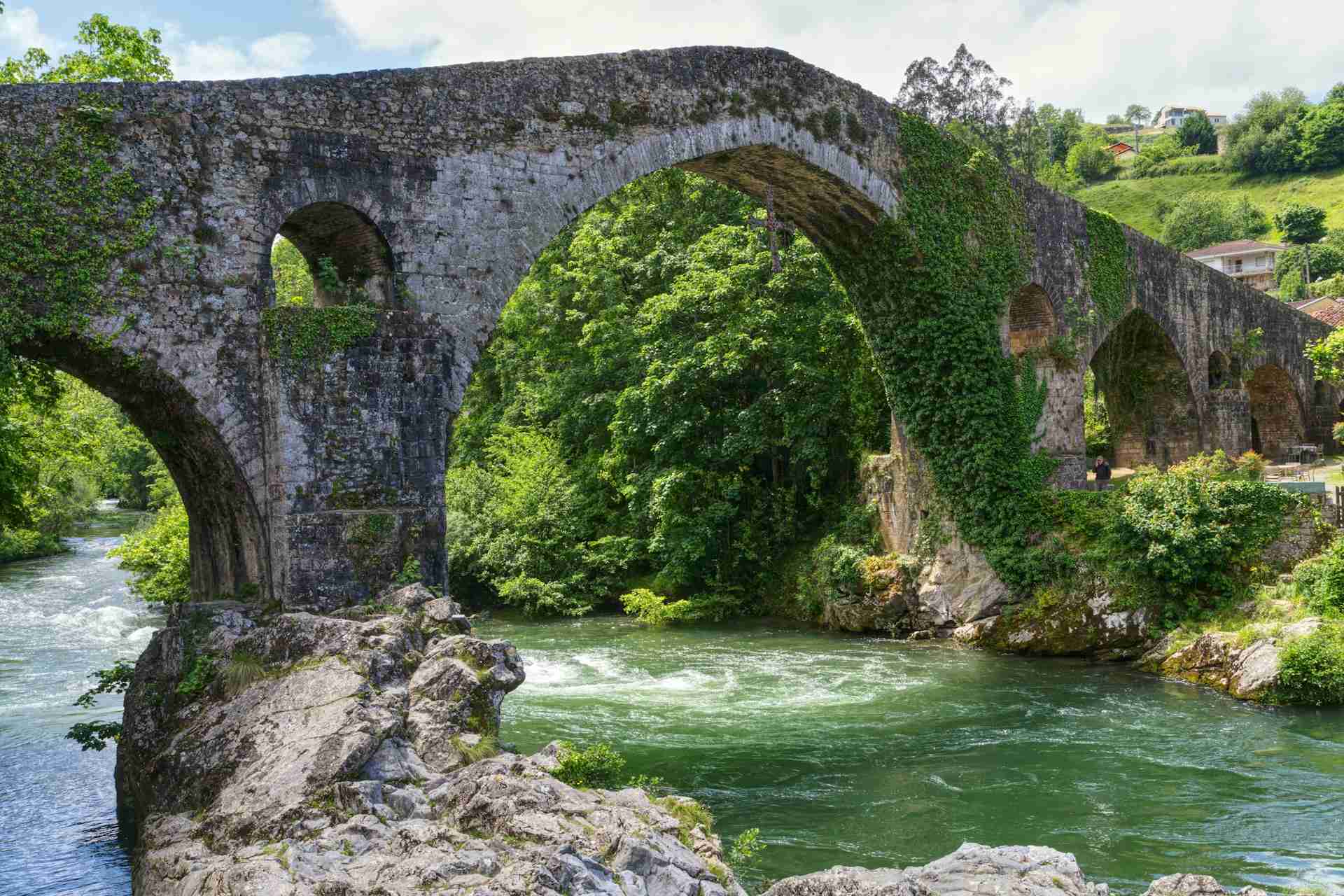
The Puente Medieval de Cangas de Onís, often called the "Roman Bridge" despite its later origins, stretches gracefully over the Sella River in northern Spain's Asturias region. Its bold central arch, framed by two smaller side spans, rises sharply above the water, creating a dramatic reflection when the river is calm. Set against a backdrop of forested hills and traditional architecture, this bridge offers a rich blend of history, texture, and natural beauty that invites a variety of photographic approaches. Whether you're drawn to classic symmetry, moody details, or sweeping context, the site delivers timeless subject matter in a compact, walkable setting.
Best Photography Opportunities
• Symmetrical Reflections from the Riverside Path
When the water of the Sella River is still, the central arch creates a perfect circle with its reflection. This classic view is best captured from the footpath near the western bank, slightly downstream from the bridge. A lens between 24 and 70mm allows you to frame the entire structure with room to include the reflection and the hanging cross. Early morning is ideal, especially when the light is soft and the river undisturbed. Mist rising from the water adds mood and depth if you're fortunate with weather.
• Detail Studies of Stonework
The age of the bridge reveals itself in the texture of its stones and the weathering of the arch. Use a standard lens or short telephoto to isolate sections of the structure, particularly the keystone of the main arch or the chains suspending the Cruz de la Victoria. These images work well in flat light or shade, where the texture of the masonry is brought forward without harsh contrast. Shooting during midday can be useful for this if the sky is overcast or the bridge is in shadow.
• Wide Contextual Shots with Background Hills
From the pedestrian areas on either bank, you can pull back and incorporate the bridge, river, and surrounding buildings or wooded hills. A wide angle lens allows you to include the whole setting, especially in horizontal compositions. Try positioning the bridge off center to lead the eye into the scene using river flow or shoreline curves. These compositions benefit from sidelight during golden hour, which highlights the structure and softens the surrounding environment.
• Silhouettes and Color at Dusk
As the sun sets, the bridge can be photographed in silhouette with color filling the sky behind it. Position yourself on the eastern bank to shoot westward, exposing for the sky and letting the bridge go dark in the frame. The hanging cross and arch take on a graphic quality at this hour. A tripod and longer exposure can help capture trailing light or the last warm tones in the sky. These images often work best with minimal processing to preserve mood.
• Seasonal Variations Along the Riverbanks
The surrounding landscape changes notably across the seasons. In spring, fresh greens fill the trees along the Sella, while autumn adds reds and yellows that reflect beautifully in the water. These changes offer natural framing for the bridge and bring variety to repeated compositions. Look for foliage or seasonal elements in the foreground to add depth and tie the structure to its environment. A moderate telephoto can compress the scene and create strong vertical layers.
Best Time to Visit
Early morning is the best time to photograph the bridge, especially if you're after calm water and clean reflections. The light is soft, and crowds are minimal. Fog is common in the cooler months and adds an atmospheric layer that enhances both landscape and architectural images. Sunset can also be rewarding, though the area tends to be busier and requires more careful composition to avoid tourists. Autumn is particularly photogenic due to changing foliage, while winter offers stark textures and low sun angles. Overcast days work well for detail shots and moody studies of the stone.
How to Get There
Cangas de Onís is located in the eastern part of Asturias, easily reached by car from Oviedo or Llanes. The bridge sits just outside the historic center of the town and is accessible on foot from all nearby accommodations and parking areas. There is no entrance fee, and the area around the bridge is pedestrian friendly, with paths along both sides of the river offering clear views. While the bridge itself is no longer used for vehicles, it is open to foot traffic and provides close access to shoot from the structure as well as from below. The riverbanks can be uneven, so wear sturdy shoes if you plan to explore lower angles or walk close to the water.
Recommended Photography Gear
A wide to standard zoom lens will cover most compositions, from river reflections to environmental shots. A short telephoto is helpful for compressing background elements or isolating texture and detail in the bridge's stonework. A tripod is useful for long exposure or low light shooting, particularly during golden hour or in the early morning. A polarizing filter can help reduce glare on the water and deepen sky tones, especially on clear days. If you're planning to work at water level or near mist, a microfiber cloth and lens hood are essential to keep your gear clean and dry.
Nearby Photography Locations
Just a short drive into the Picos de Europa foothills, this sanctuary is built into a mountainside cave above a waterfall. It's ideal for architectural shots framed by rock and forest, and the early morning light adds depth to its dramatic setting.
• Puente Romano de Infiesto
Smaller and quieter than the bridge in Cangas de Onís, this medieval structure spans a narrow river with dense green forest on either side. It's ideal for detail studies and compositions that mix human construction with nature.
Accessible from Cangas de Onís, this mountainous park offers expansive vistas, winding roads, and high altitude lakes. Photographers can find dramatic light, weather shifts, and alpine compositions throughout the year.
This panoramic viewpoint offers sweeping views from the mountains to the sea, especially at sunrise. It's excellent for layered landscapes and wide compositions that contrast natural forms and distant coastline.
A bit farther into the mountains, these glacial lakes provide alpine reflections, rugged peaks, and seasonal wildflowers. Best visited in the early morning when the light is low and the water still.
Comments
Loading comments…