
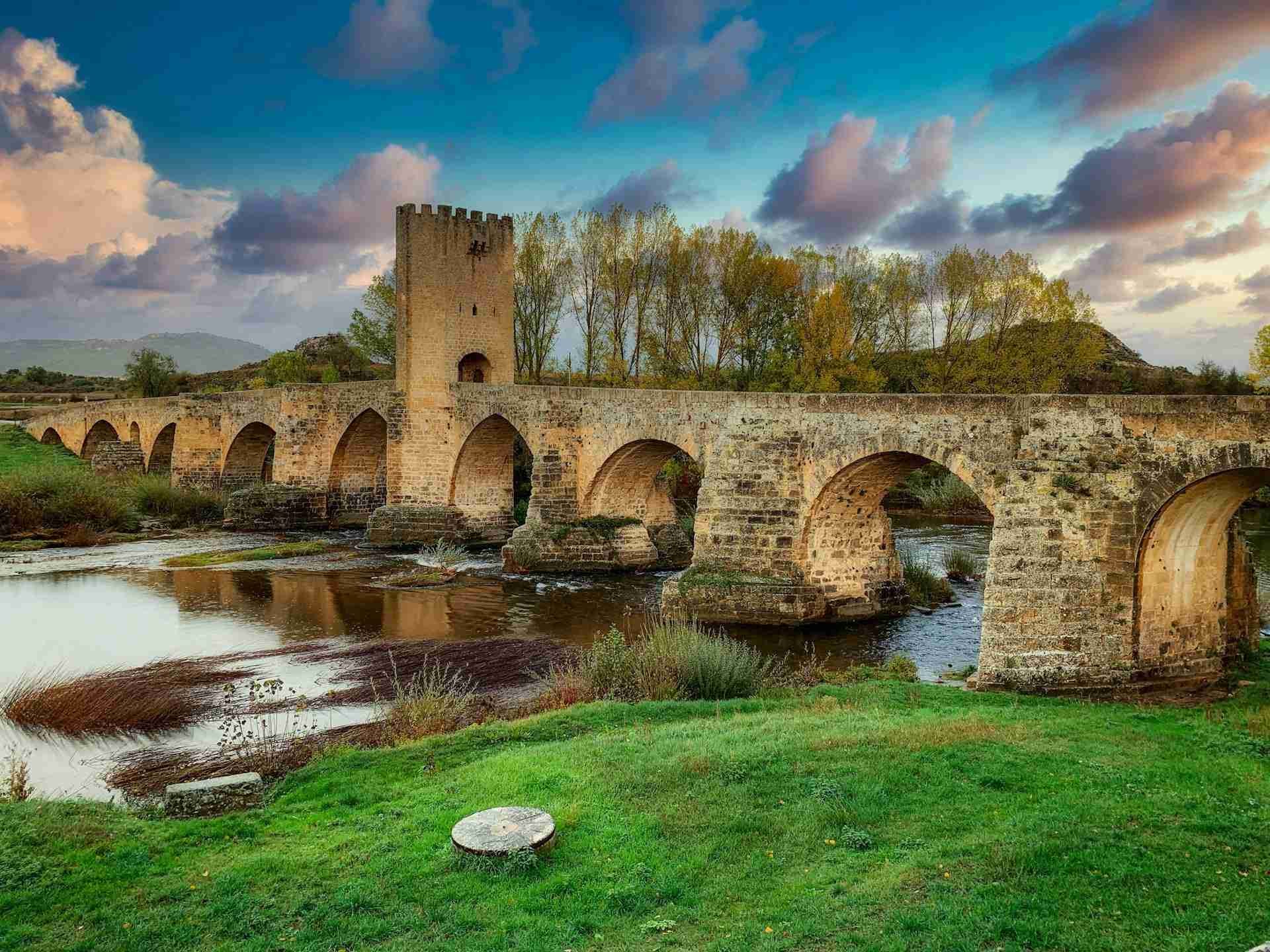
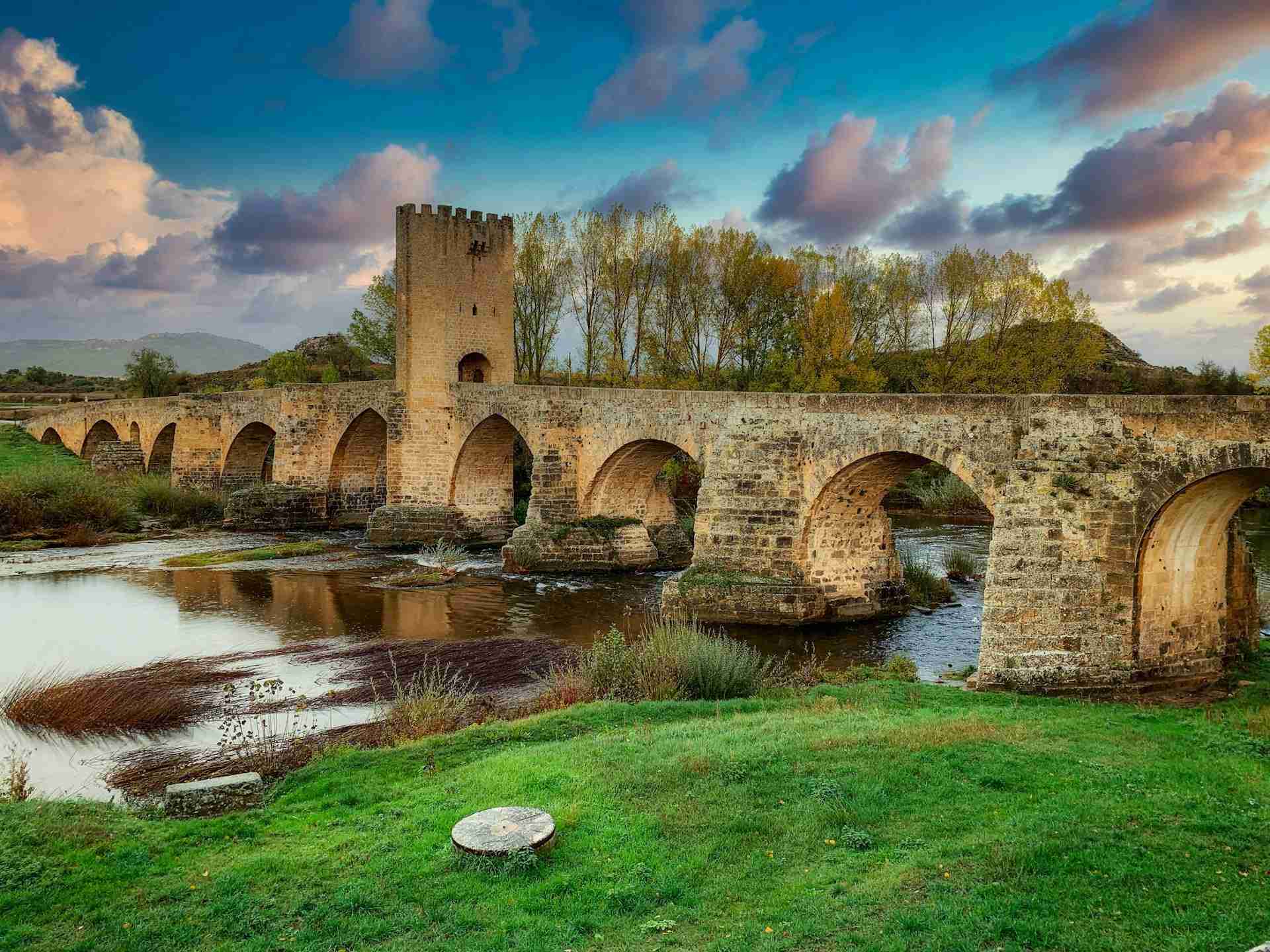
Crossing the slow-moving waters of the Ebro River below the fortified village of Frías, the medieval bridge of Frías is one of the most striking examples of Romanesque civil engineering in northern Spain. Its rounded arches, tall central tower, and gentle curve across the water create a simple but commanding visual presence. Photographers are drawn to its symmetry, stone textures, and the subtle movement of light and reflection across the river surface. The bridge is surrounded by open rural terrain, giving it a clean backdrop with minimal visual noise, especially when viewed from the riverbanks. Whether captured in golden light, dense fog, or under soft afternoon cloud cover, the bridge offers consistent opportunities for strong composition and historical storytelling.
Best Photography Opportunities
• East Bank Reflections at Sunrise
: Standing on the east bank of the Ebro just before sunrise offers some of the most photogenic light at the bridge. The rounded arches reflect clearly in the river, creating a symmetrical composition that becomes even more powerful in calm water. Using a wide-angle lens and a long exposure smooths out ripples, emphasizing the repetitive geometry of the arches. Foreground elements like reeds, stones, or branches can be carefully placed to guide the viewer's eye through the frame. This perspective is ideal for both color and black-and-white processing, depending on the tone and texture of the morning light.
• River-Level Views with Foreground Texture
: Dropping to river level allows photographers to build compositions with strong foreground interest. Moss-covered stones, gravel banks, and small pools add texture that contrasts well with the solid geometry of the bridge. Shooting low with a wide-angle lens brings out the scale of the structure and makes the central tower feel even more imposing. Overcast skies work particularly well for this kind of shot, preserving detail in both the stone and surrounding landscape. A circular polarizer is useful here to cut through glare on wet rocks and shallow water.
• Backlit Silhouettes and Arches at Dusk
: At sunset, the bridge becomes an excellent subject for silhouette work. From the west bank, you can shoot directly into the light as the sun lowers behind the hills, turning the arches and tower into sharp outlines. The rounded shapes of the Romanesque design are ideal for clean silhouette work, and you can expose for the sky to create dramatic contrast. Silhouettes work especially well on days with light haze or broken clouds, where the sky holds visual interest without overpowering the subject. This is also a good time for experimenting with lens flare or more abstract, high-contrast compositions.
• Architectural Detail Studies of the Tower
: The fortified tower that rises from the midpoint of the bridge is unique among medieval Spanish bridges and offers strong opportunities for tighter framing. Shooting from the southern approach to the bridge, you can isolate the tower with minimal background interference. Use a mid-range zoom to bring out the arrow slits, stone joints, and subtle wear from centuries of exposure. Depending on the hour, shadows cast from the crenellations offer rhythmic patterns that add to the architectural detail. This approach is useful for photographers building a visual study or narrative series on historical features.
• Drone Flyovers and Symmetry from Above
: Aerial photography reveals the full geometry of the bridge and its placement within the river valley. Flying from the south and facing north, you can frame the gentle arc of the structure with the surrounding agricultural fields and water. The rounded arches form a repeating pattern that works well in top-down or oblique compositions. Early morning flights are ideal for stable air and directional light, which helps define shape and shadow along the bridge's surface. Be mindful of wind gusts through the valley and avoid flying too low over foot traffic.
Best Time to Visit
Spring and autumn offer the most dynamic light and balanced conditions for photographing the bridge. In spring, river levels are typically higher, and the banks are greener and more textured. Mist is common on cooler mornings, adding softness to reflections and creating separation between the bridge and background hills. The angle of morning light in this season works well for east-bank compositions and side lighting along the arches.
Autumn brings warmer tones and more dramatic skies. The low angle of the sun in September and October casts long shadows across the piers and highlights surface textures on the bridge. Dry grasses and subdued foliage create pleasing contrast against the stone. This is also the quietest season for visitor traffic, offering more control over compositions and cleaner frames.
Summer offers clear skies and long daylight hours but can be challenging due to harsh midday light. Early mornings and late evenings are the most productive shooting windows during these months. The river level may drop slightly in very dry years, exposing more of the foundations and surrounding riverbed.
Winter is less predictable but provides a muted palette well suited to black-and-white or detail-driven work. Overcast conditions are common and helpful for photographing stonework without distracting highlights. Sudden changes in weather can create interesting light, especially during the golden hour on partially cloudy days. While snow is rare, frost can appear on riverbank vegetation and nearby rocks.
How to Get There
The Puente Medieval de Frías is located just outside the village of Frías in the province of Burgos. It crosses the Ebro River below the hill on which the town is built. The most reliable way to reach the bridge is by car, via the BU-504 road from either Trespaderne or Quintana-Martín Galíndez. Travel time from Miranda de Ebro is about forty minutes, and from Burgos just under ninety minutes.
There is a small roadside parking area near the northern approach to the bridge. From here, it is a short and flat walk to access the full length of the bridge and both riverbanks. The site is open to pedestrians at all times, with no entrance fee or barriers. This makes it ideal for early morning or twilight photography without time restrictions. The bridge itself is paved with stone and can be crossed easily with tripod setups or rolling camera bags.
Public transportation to Frías is limited and not well suited to sunrise or sunset visits. Buses run occasionally from nearby towns, but schedules vary by season. Photographers planning a dedicated shoot should arrange a rental car for flexibility and access to nearby locations. The road network around Frías is simple, and signage for the historic area is clear and well maintained.
Recommended Photography Gear
A flexible but lightweight kit works best for this location. A wide-angle lens in the 16 to 35 millimeter range is essential for full bridge compositions from river level and for working with foreground elements. A mid-range zoom such as a 24 to 70 millimeter lens provides versatility for isolating the tower and capturing medium-range landscapes from the banks.
A telephoto lens is not strictly necessary but can be useful for detail studies of the tower or compressing scenes that include background ridgelines. If you plan to include architectural studies in your series, consider bringing a tilt-shift lens to control perspective on the tower and arches.
A sturdy tripod is important for long exposures near the river, especially if you want smooth water or layered reflections. Adjustable legs help with uneven terrain along the banks. A circular polarizer is helpful for managing glare and improving sky contrast on sunny days. Bring both a six-stop and ten-stop neutral density filter for long exposures in daylight or during bright twilight transitions.
Drone photographers should pack a model with strong wind resistance and GPS stability. Early morning is usually calmest for flight, and visibility is best just after sunrise. Be sure to follow Spain's drone laws and avoid flying directly over the bridge when it is in use by pedestrians. Extra propellers and batteries are a smart addition, especially if you plan to fly at multiple times of day.
Nearby Photography Locations
: Although it does not offer a direct view of the bridge, the castle at the top of town is worth photographing in its own right. Its towers, crenellations, and hilltop setting provide a classic medieval profile that pairs well with detail shots of the bridge to complete a visual story of the area. The castle is especially striking when side-lit at sunset.
• Tobera
: A small village less than five minutes away by car, Tobera offers a charming stone bridge, a narrow gorge, and a small church built into the cliff. This location is well suited for vertical compositions and has a more intimate scale than Frías. It is best photographed in the morning when soft light enters the gorge from the east.
Just upstream from the village bridge, these waterfalls can be reached by foot and are ideal for long exposure photography. The water cascades over rock ledges framed by moss and stone walls. A tripod and neutral density filters are recommended for capturing smooth motion and clean highlights in the surrounding textures.
• Valle de Tobalina
: The rural surroundings of Frías include open meadows, old stone farms, and wooded hills that change character throughout the seasons. These landscapes are especially rewarding for drone photographers or those shooting wide-format rural scenes with shifting light and cloud cover.
The medieval bridge at Frías stands apart not just because of its design, but because of the silence and stillness that surrounds it. Its Romanesque arches and central tower carry the weight of centuries without distraction from modern structures or noise. For photographers looking to work with shape, light, and the quiet rhythm of water, this is a location that delivers images built to last.
Comments
Loading comments…