
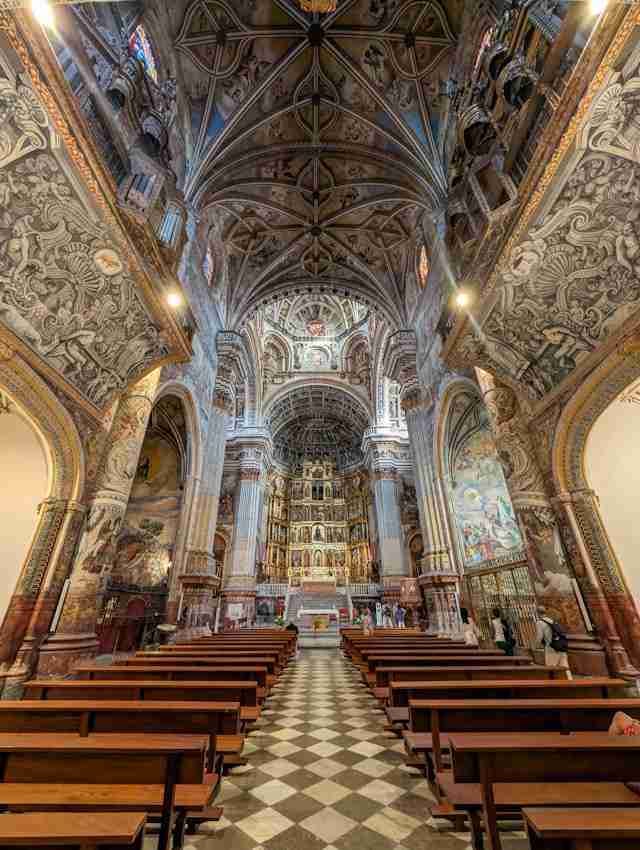
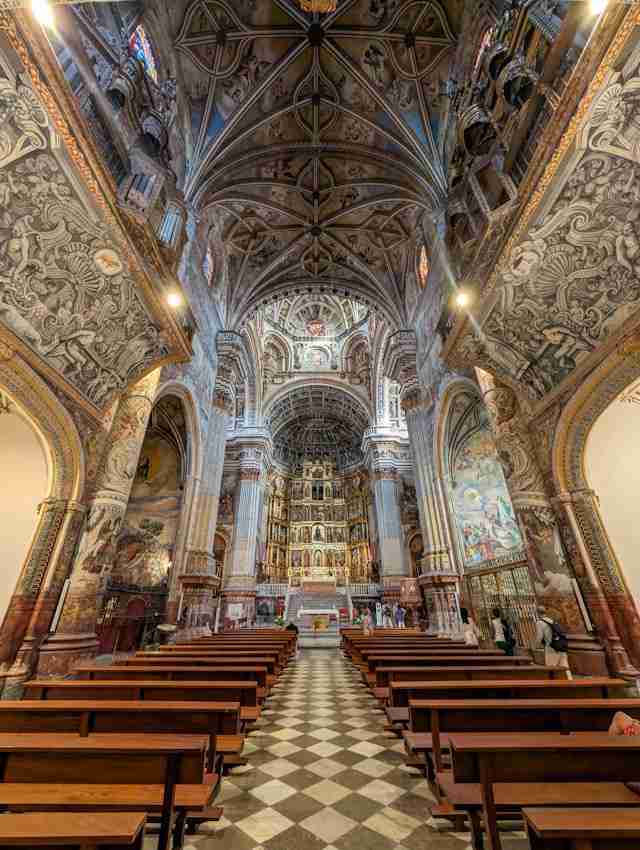
Just beyond the main tourist routes of Granada lies a space of refined stillness and intricate craftsmanship. The Real Monasterio de San Jerónimo, a Renaissance-era monastery founded in the early 1500s, is one of the city's most underappreciated photographic gems. While the Alhambra draws the crowds, this monastery offers solitude and architectural richness for photographers who prefer detail over spectacle. The building's design is grounded in classical symmetry, filled with layered arcades, shadowed corridors, and a soaring nave filled with soft natural light. Every space within the monastery interacts differently with the sun throughout the day, giving shape to stone, texture to columns, and atmosphere to even the smallest chapel. It is a space that rewards slow pacing, deliberate framing, and a sensitivity to how light settles on weathered surfaces.
Best Photography Opportunities
• Cloister Walkways Framed by Carved Stone Columns
The covered arcades surrounding the central courtyard are ideal for architectural and symmetry-driven compositions. Morning and late afternoon are best for capturing angled light filtering through the arches, which creates contrast-rich shadows across the stone floor. A standard lens around 50mm helps retain proportion while isolating repetitive columns and carved detail. Shooting from low to the ground or slightly off-center enhances depth and draws the viewer into the corridor. The enclosed nature of this space allows for quiet, controlled compositions without distractions from wider surroundings.
• Interior Nave with Coffered Ceiling and Painted Dome
Inside the church, the nave offers dramatic vertical scale and surface richness. The dome, lined with painted panels and gold accents, sits above a soaring altar and draws the eye upward. Light from clerestory windows mid-morning and early afternoon provides natural illumination that defines shape and texture without blowing highlights. A wide-angle lens captures the full volume of the nave, but tighter shots of the ceiling or altar benefit from a mid-range zoom. The atmosphere inside is quiet and dim, which means handheld shooting requires either a fast lens or a body with strong high ISO performance.
• Main Entrance and Exterior Façade Details
The main portal, though modest compared to other churches in Granada, is covered in Renaissance ornament and soft-weathered stone. Afternoon light warms the façade, especially as it moves through the trees that line the narrow entrance plaza. A mid-telephoto lens allows you to isolate carved reliefs above the doorway, while wider compositions benefit from human scale to convey the structure's height and detail. Framing with foreground leaves or shadows from nearby walls adds natural texture to your compositions. Since the area is rarely crowded, you can work patiently with both environmental and detail shots.
• Ironwork, Inscriptions, and Textural Close-Ups
The monastery is filled with smaller visual elements that reward focused shooting. Wrought iron gates, Latin inscriptions, and carved wooden doors create visual counterpoints to the grander architectural elements. These details are best approached with a fast prime lens in the 50mm to 85mm range, especially when working in soft window light or shaded walkways. Look for repeating shapes and patterns, particularly in the iron and tilework, to build small narrative series. These shots are ideal for contrast studies or black-and-white conversion that emphasizes form over color.
• Upper Cloister Views Over the Courtyard
If accessible, the upper level of the cloisters offers elevated perspectives over the courtyard and into the geometry of the structure. The repeating arches and tiled rooflines can be arranged into balanced, almost abstract compositions. Light from the western side in late afternoon helps define the depth between columns while avoiding harsh exposure across the courtyard. A 24–70mm lens works best here for flexibility as you move between tight details and wider structural views. Composing through archways with selective focus adds both dimension and atmosphere to this otherwise overlooked vantage point.
Best Time to Visit
Spring and autumn are the most rewarding seasons for photographing the monastery, offering clear skies, angled sunlight, and moderate temperatures that encourage longer sessions. In spring, the central courtyard comes alive with greenery that frames the architecture and adds life to your compositions without dominating them. The light is crisp and slightly cool, making it easier to preserve detail across both stone and foliage. Autumn brings richer color in the surrounding plants and golden hour tones that work particularly well on the stone surfaces of the nave and exterior walls. During either season, early morning and late afternoon provide the best natural light and the fewest visitors.
Summer can be more difficult due to intense sunlight and deep midday contrast, but it also offers strong shadow play and reliable weather for consistent lighting conditions. Interiors remain relatively cool and provide useful shade for more controlled exposures. Winter visits are quieter and more subdued, often with softer light that benefits photographers seeking a minimalist or tonal study of the space. Cloudy days work especially well inside the cloisters, as the even light reduces harsh shadow transitions and allows the repetition of columns and arches to stand out clearly. Regardless of season, arriving early in the day will give you access to the monastery's quietest and most photogenic hours.
How to Get There
The Real Monasterio de San Jerónimo is located in central Granada, about fifteen minutes on foot from the cathedral. The walk passes through less trafficked parts of the old town, giving you a chance to scout other locations along the way. Public buses stop nearby, and taxis are easily available from anywhere in the city center. If arriving by car, parking is limited, and it is generally easier to explore on foot. Entry to the monastery requires a ticket, which can be purchased on-site, and photography is allowed throughout most areas unless otherwise posted.
Tripods are not permitted inside the church or cloisters, but handheld shooting is manageable thanks to the natural light in most rooms. Outdoor use of monopods or compact tripods is generally tolerated if you are not obstructing walkways. The monastery is level and easy to navigate with lightweight gear, though some staircases to upper levels may be narrow. Visitors should bring quiet, compact equipment, especially when shooting in or near active chapel spaces. Respect for the site and its current religious function is essential when planning extended photo sessions.
Recommended Photography Gear
A flexible, lightweight kit is ideal for photographing the monastery. A 24–70mm zoom lens covers most situations and allows quick changes between wide room shots and tighter architectural frames. A wide-angle lens between 16–35mm is necessary for interior spaces, particularly in the nave and cloisters, where you may need to capture full scenes in tight quarters. For detail work, a fast 50mm or 85mm prime lens will give you sharpness and separation while maintaining a quiet footprint in subdued light.
A camera with strong high ISO performance will help in the dimly lit chapel and cloister areas where tripods are not allowed. A circular polarizer can improve contrast on stone and reduce glare on surfaces such as tile and metal, especially when shooting near windows or in the courtyard. If working outdoors, a compact tripod or monopod can be useful for long exposures in soft evening light, particularly around the exterior façade. A microfiber cloth is essential to keep your lenses clear from dust or smudges, and extra batteries are helpful if you plan to shoot interiors for extended periods. A simple, quiet shoulder bag will help you move through the space efficiently without disrupting the peaceful atmosphere.
Nearby Photography Locations
Just a short walk away, the cathedral offers a bold shift in scale and style with its Renaissance architecture and Baroque interior. The tall nave and stained-glass windows provide ample opportunity for dynamic light and shadow, especially during midday when the sun passes directly overhead.
Attached to the cathedral, this richly decorated Gothic space is known for its sculpted tombs, ribbed ceilings, and dimly lit chapels. Photography is more limited here, but when allowed, the mood and historic detail are ideal for low-key, texture-driven images.
A maze of narrow alleyways, whitewashed buildings, and layered city views, the Albaicín offers some of the best street and architectural photography in Granada. Late afternoon light creates soft highlights on the walls and deep shadows in the corners, ideal for contrast-focused compositions.
Perched above the Albaicín, this viewpoint offers wide-angle views of the Alhambra with the Sierra Nevada behind it. It is best photographed at sunset, when the warm light hits the palace complex and the mountains turn soft blue in the background.
Located a short drive from San Jerónimo, this Carthusian monastery is filled with baroque excess, gilded chapels, and surreal detail. Interior light here is limited, but selective highlights on marble and wood carvings allow for dramatic, composition-heavy frames with minimal color distraction.
The Real Monasterio de San Jerónimo is a place that invites slow photography. Its forms are classical and measured, its light changes throughout the day, and its textures reveal themselves best with quiet observation. For those willing to look beyond the more familiar landmarks of Granada, it offers a depth of subject and calm that is hard to match.
Comments
Loading comments…