
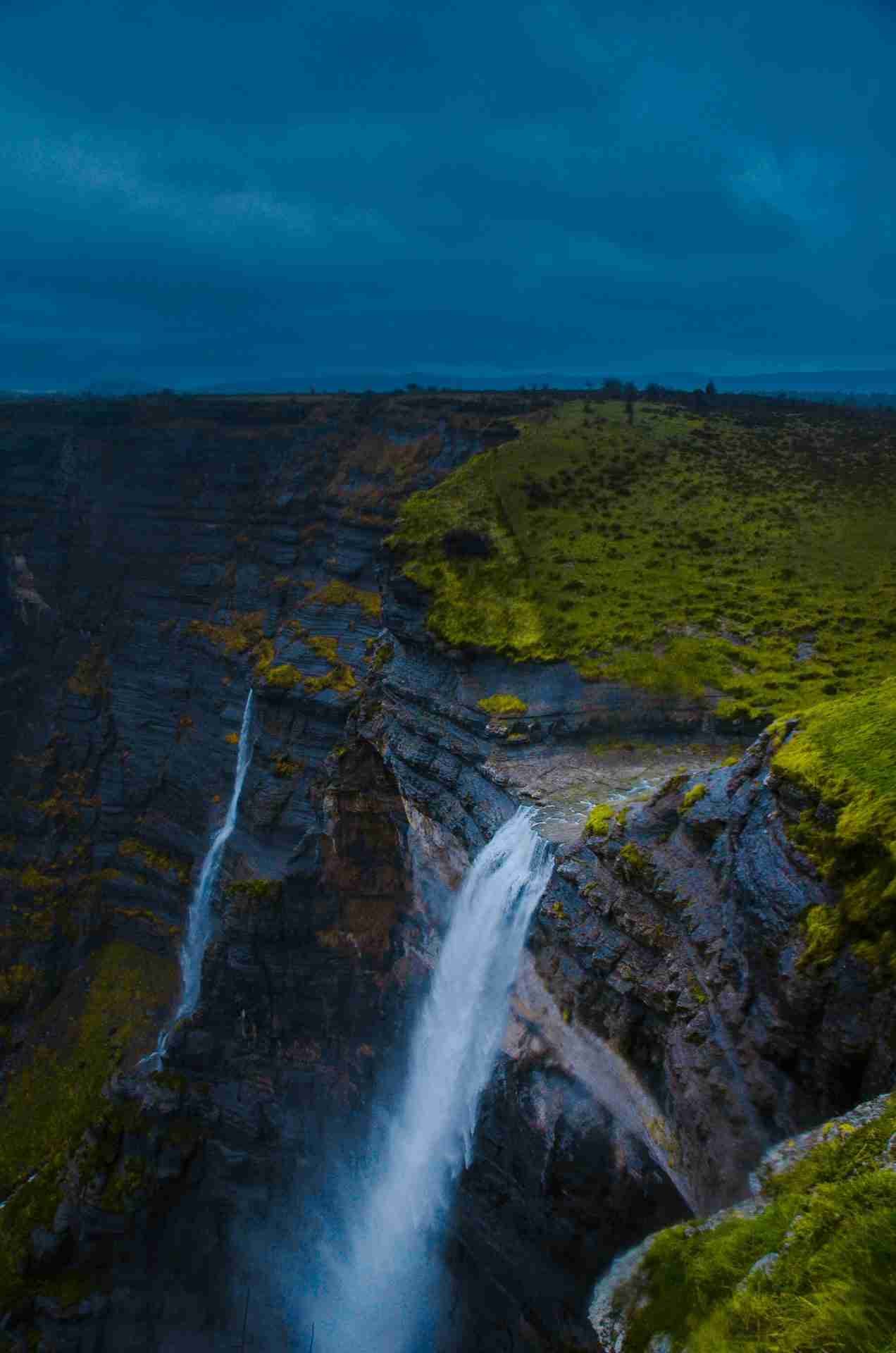
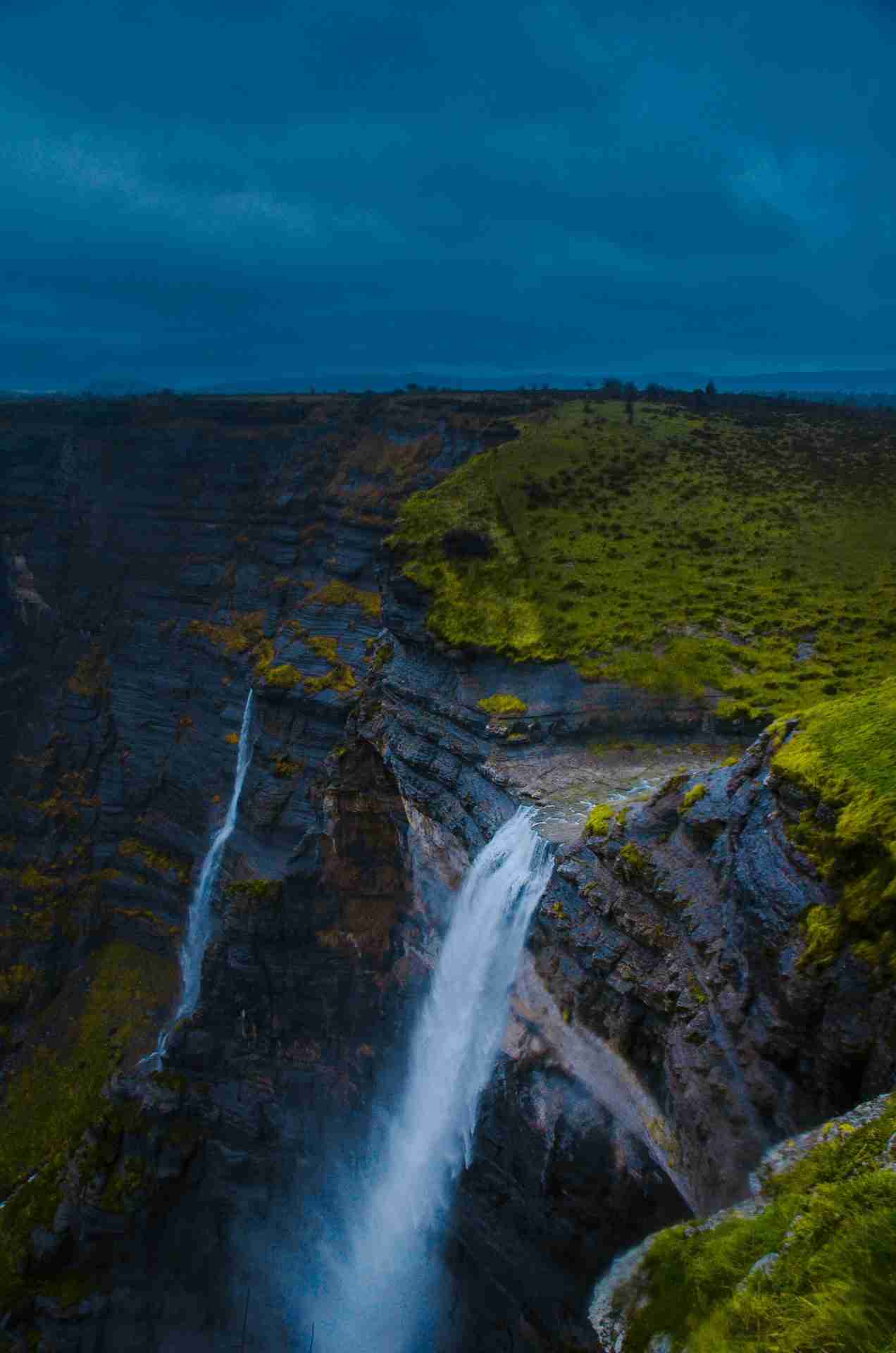
Salto del Nervión sits near the village of Delika, where a huge limestone plateau suddenly breaks into a sheer drop more than 200 meters high. From the edge, you're looking straight out over a deep valley with the waterfall plunging clean off the cliff in a single uninterrupted fall. The scale is immediate and easy to understand as soon as you step up to the viewpoint, with nothing blocking the view and nothing softening the drop. It's one of the few places where you can stand right at the top of a waterfall of this size and see the entire scene open up in front of you. The setting is wide, exposed, and simple, which makes it easy to move around and focus on composition without distractions. It's a location that delivers a clear, dramatic subject and gives you the space to work it properly.
Best Photography Opportunities
• Full Waterfall From the Cliff Edge
This is the main shot and the reason to be here. From the edge, you can capture the entire height of the waterfall in one frame, dropping straight into the valley below. You can shift left or right to control how centered the fall is and how much of the surrounding cliff you include. Keeping some of the plateau edge in the frame helps show scale and makes the drop feel more dramatic. The open view makes composition straightforward, but small adjustments still make a big difference. This is the shot you want to lock in first before trying anything else.
• Cliff Edge Leading Into the Waterfall
Using the edge of the plateau as a foreground element helps give the image more depth. You can position the rock so it leads directly toward the waterfall, guiding the viewer's eye through the frame. This works especially well when the rock has texture or cracks that catch the light. Lowering your angle slightly can make the foreground feel stronger without losing the main subject. It's a simple setup, but it adds structure to an otherwise very open scene. This is a reliable way to improve your composition without over complicating it.
• Angled Views Along the Cliff Line
Walking along the edge gives you different perspectives of the waterfall and the cliff. From an angle, the fall starts to separate visually from the background and can feel more dynamic. You also get more of the cliff face in the frame, which helps show how the water is interacting with the rock. These angles are often more interesting than the straight on view once you've captured the main shot. It only takes a few steps to completely change the composition. This is where you can start to move beyond the obvious image.
• Wind Shaping the Falling Water
The wind at the cliff edge has a big impact on how the waterfall looks. On some days, the water falls straight down, while on others it gets pushed sideways or breaks into mist. Watching the flow for a few minutes helps you understand how it's behaving and when to shoot. Faster shutter speeds will freeze the movement, while slightly slower ones can soften it. This is one of the elements that makes this location feel more active and less predictable. Paying attention here can give you more unique results.
• Tighter Compositions of the Waterfall
Switching to a longer lens lets you focus on smaller sections of the waterfall instead of the full scene. You can isolate parts where the water breaks apart or interacts with the cliff. This helps create more abstract images that still clearly show the subject. It's also useful when the wide shot feels too empty or simple. Small framing changes can completely change the look of these tighter shots. This is a good way to add variety without changing location.
Best Time to Visit
The most reliable time to visit is after periods of rain, when the waterfall has strong flow and the drop feels full and continuous. Late winter and early spring tend to offer the best conditions, as the ground stays saturated and feeds the waterfall more consistently. Checking recent rainfall before heading out helps make sure you're arriving when the waterfall is at its best.
Late afternoon into evening usually gives the most consistent light across the valley, with shadows adding depth to the landscape. Sunrise is a good option if you want a quieter experience, though the light can feel softer and less directional. Overcast conditions often work well, keeping contrast under control and allowing the waterfall to stand out clearly against the cliff. Wind is also worth paying attention to, since it directly affects how the water falls and can change the look of the scene from one moment to the next.
How to Get There
Salto del Nervión is most commonly accessed from the Monte Santiago area, where there is a parking area near the trailhead. From there, it is a relatively flat walk across open plateau terrain to reach the main viewpoint. The distance is manageable and does not require much effort, making it easy to carry camera gear without issue. There are no entrance fees for accessing the viewpoint, though some access roads may be restricted depending on the time of year.
The path is straightforward and easy to follow, leading directly toward the cliff edge. Once you arrive, the area opens up and gives you space to move along the edge and find your composition. There are limited barriers in some sections, so staying aware of your position is important when working close to the drop. The exposed setting also means conditions can change quickly, especially with wind.
Recommended Photography Gear
A wide angle lens is essential here, since you'll want to capture the full height of the waterfall along with the surrounding cliff and valley. It allows you to include foreground elements like the cliff edge while still fitting the entire drop into the frame. A telephoto lens is just as important, giving you the option to isolate sections of the waterfall or compress parts of the landscape for tighter compositions. Switching between the two will give you a much more complete set of images.
A tripod is useful for stabilizing your setup, especially when working in lower light or refining compositions near the edge. It also helps if you want to experiment with different shutter speeds to control how the water looks. Neutral density filters can be used to slow things down slightly and smooth the motion of the fall. A polarizing filter can help manage contrast in the sky and reduce haze across the valley. Because the location is exposed, having a stable setup becomes important when wind picks up.
Nearby Photography Locations
Located within the same natural area but separate from the cliff edge, this forest offers a completely different environment. Tall trees, soft light, and layered depth make it ideal for woodland photography. It's especially strong in autumn when the colors change. This is a good option if conditions at the waterfall are less active.
• Ermita de Santiago (Monte Santiago)
This small hermitage sits within the forest and provides a simple architectural subject in a quiet setting. It works well for more minimal compositions compared to the dramatic cliff. The surrounding trees help frame the structure naturally. It's an easy stop within the same area that adds variety to your shoot.
• Cañón de Delika
From the base of the waterfall, this canyon gives you a completely different perspective looking up at the cliff. The scale feels very different from below and adds variety to your shoot. It requires more effort to reach but is worth it.
This viewpoint overlooks a wide valley with strong depth and layered terrain. It works well for sunrise or sunset and gives you a different type of landscape nearby. It pairs well with a visit to the waterfall.
This mountain pass offers elevated views and winding roads that work well for landscape and road based compositions. It provides a different angle on the region and adds variety to your trip.
Comments
Loading comments…