
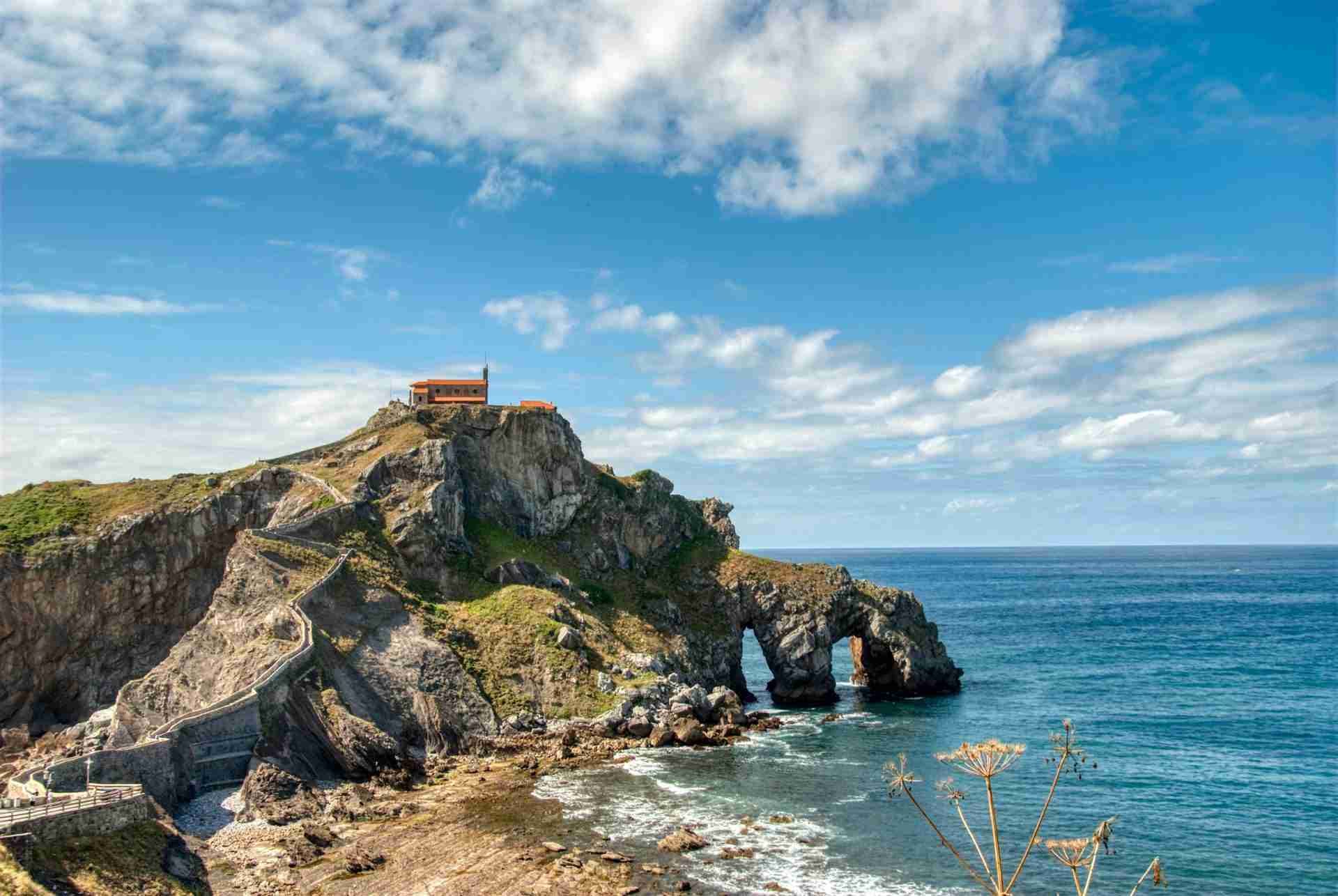
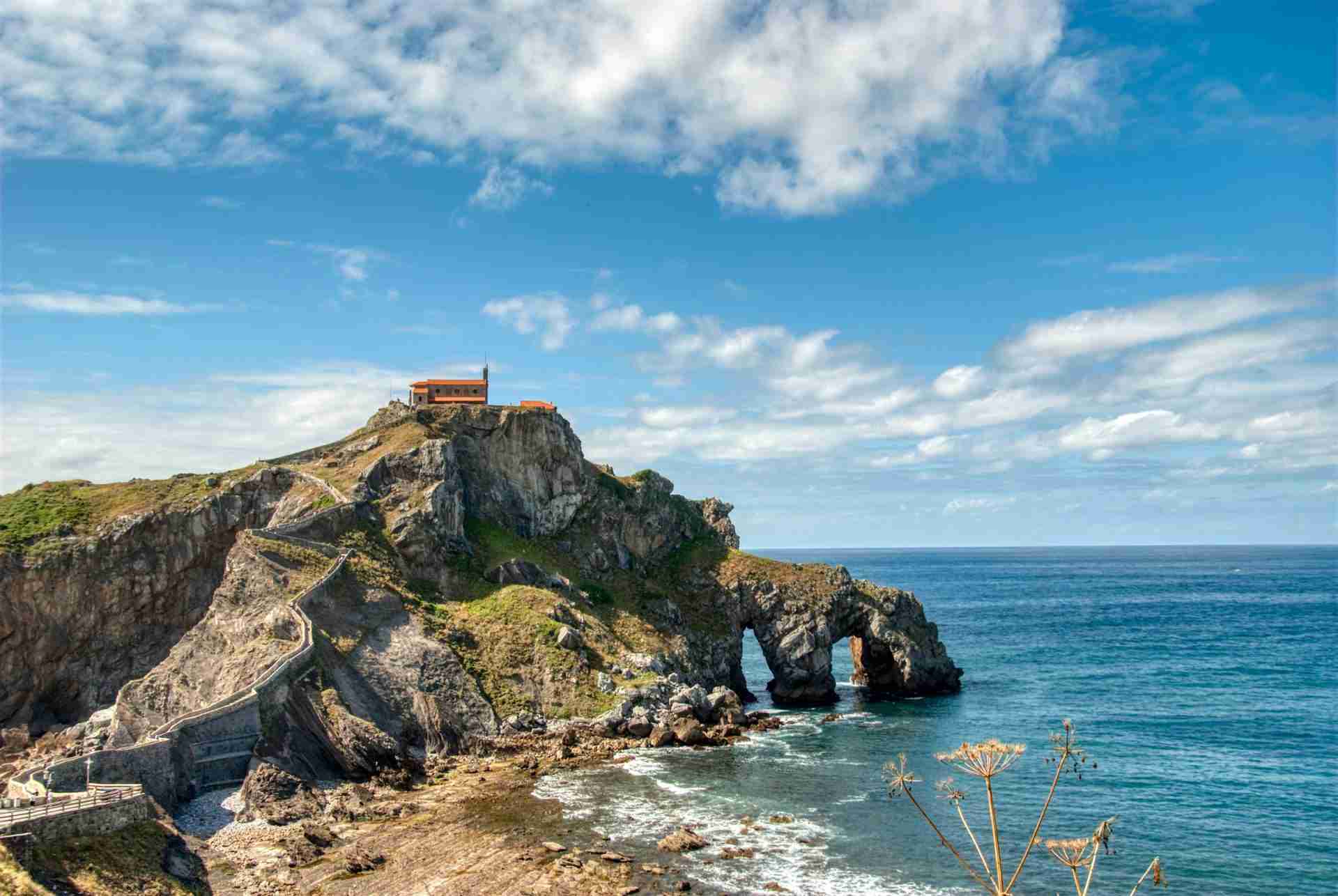
San Juan de Gaztelugatxe is a rocky island connected to the Basque coast of northern Spain by a narrow man made causeway and an unforgettable zigzagging staircase carved into the cliff. At its peak sits a small hermitage dedicated to John the Baptist, a humble stone structure surrounded by dramatic drop offs and pounding Atlantic waves. Photographers are drawn here for the sheer drama of the landscape with harsh verticals, layered rock, crashing surf, and winding lines that guide the eye from sea to sky. The approach alone is worth the trip, with strong foreground options at every elevation and shifting weather adding a cinematic quality to nearly every frame.
Best Photography Opportunities
• Wide Shot from the Coastal Trail Viewpoints
From the lookout points above the main path, you can shoot wide to capture the entire winding causeway, the hermitage at the summit, and the layered cliffs in one frame. This is the most classic view, often seen in promotional imagery, but it's worth spending time refining. Soft early light or angled evening sun adds shape to the rock and reveals texture in the path. A wide angle lens helps fit everything, but keep the horizon level and allow room for sky when the clouds cooperate.
• Detail Work of the Staircase Curves
The serpentine steps leading up to the chapel make for excellent mid-range compositions, especially when shot from the side near the base. These frames benefit from soft light or overcast skies to control contrast and bring out the lines in the stone. Including a person on the stairs adds scale and draws attention to the vertical journey. Shoot from just off the path if you want depth without crowding the steps, using a moderate zoom to shape the curve clearly against the darker cliffside.
• Low Angles from the Rocky Shoreline
At low tide, the rocky beach below the causeway becomes accessible, opening up strong compositions that frame the entire island from below. Use boulders or tide pools as foreground elements, and watch for reflection opportunities if the water is still. This angle also works well for long exposures to soften the water and isolate the island structure. A tripod is essential here, as you'll likely be working in lower light or uneven footing.
• Up Close with the Hermitage
Once you've climbed the 240 plus steps to the top, the hermitage itself makes a clean, quiet subject. Framed against the open sky or backed by sea mist, it gives a strong shape to work with, especially if you focus on the worn stone walls, the bell arch, or the surrounding low walls that act as natural framing. Cloudy weather helps manage highlights and softens harsh shadows, while early or late light adds tone to the stone surface.
• Evening Light with Fog or Cloud Movement
Weather changes fast along this part of the Basque coast, and one of the best opportunities comes when cloud layers or sea fog move across the cliffs at golden hour. From the mid level switchbacks, you can catch strong directional light slicing through mist, lighting parts of the staircase or island while leaving other areas in shadow. These shots are fleeting but worth waiting for. Long lenses help compress the layers, while a tripod allows for more control during low light transitions.
Best Time to Visit
San Juan de Gaztelugatxe photographs well year round, but the most manageable conditions for photography are in spring and autumn. During these months, the coast is still green, and crowds are lighter, making it easier to work around people in the frame. Early morning is best for light coming across the sea and illuminating the causeway, while late afternoon and sunset favor side light and soft color behind the island. Fog is common and useful for depth, especially in the warmer months. Summer brings more foot traffic, so early or late visits are ideal. The location is open year round, though access to the hermitage may close due to storm damage or restoration.
How to Get There
Gaztelugatxe is located between Bakio and Bermeo along the coast of the Basque Country in northern Spain. A main parking area near the access trail provides space for visitors, with a moderate descent on foot required to reach the staircase. From the lot, follow the paved trail and switchbacks until you reach the base of the steps. The climb to the top is steep but not long, with railings and rest spots along the way. No entrance fee is required to visit the site, but timed entry tickets may be necessary during busy seasons or holidays. Photography is permitted throughout, but drones are restricted due to the protected status of the landscape.
Recommended Photography Gear
A wide angle lens is essential for capturing the full scope of the island, causeway, and cliffs from the upper trail. A standard zoom works well for midrange shots of the stairs or hermitage, and a longer lens can isolate patterns or compress elements of the landscape during low light. A tripod is strongly recommended for long exposures and twilight work. A circular polarizer can help manage glare off wet rock and sea, and a neutral density filter is useful for softening wave movement. Weather protection is advised, as conditions can shift fast with wind and ocean spray.
Nearby Photography Locations
Just a short drive away, this headland offers two lighthouses (an older stone structure and a modern operational tower) set above the Bay of Biscay. Best for dramatic weather, moody skies, and clean sea cliffs.
A sweeping beach with soft sand, rock formations, and layered wave patterns that photograph well in both color and black and white. Ideal for low tide work, long exposures, and sunset silhouettes.
A colorful fishing port with tightly packed buildings, docked boats, and narrow alleys that lend themselves to street and documentary photography. Best visited in early morning or after dark when the light plays off the harbor.
A protected natural area with wetlands, forested hills, and wide river views. Birdlife is strong here, and the area offers quiet compositions of nature, reflection, and layered light, especially at sunrise.
• Mundaka Lookout Points
This small surf town features long coastal views and elevated overlooks that catch strong light and horizon lines. Good for minimal seascapes and shots that use negative space or emphasize mood.
Comments
Loading comments…