
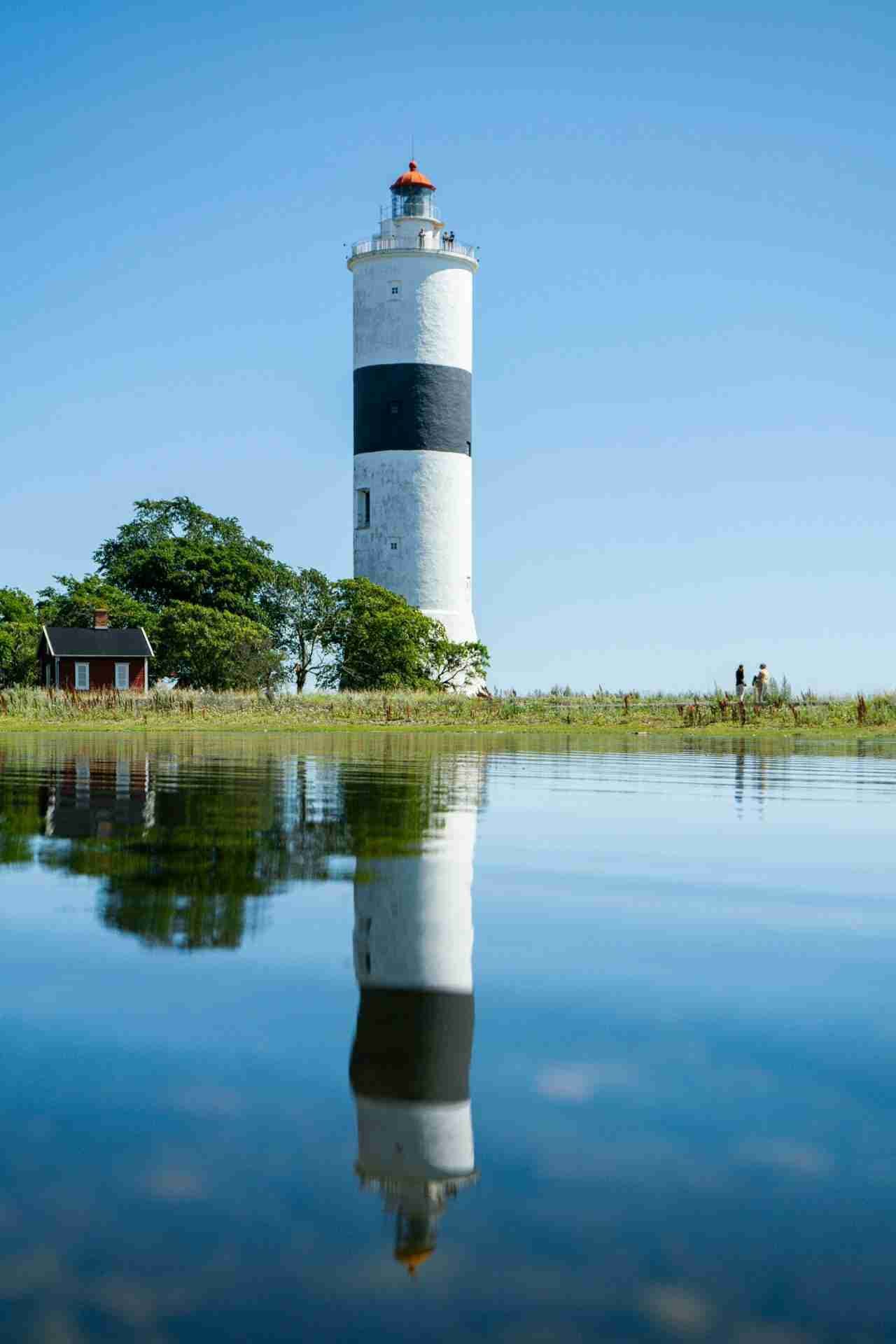
Långe Jan stands at the southernmost point of Öland, Sweden's second-largest island, and is the tallest lighthouse in the country. Surrounded by open coastline, wetlands, and wide skies, the lighthouse offers clean lines and consistent light that support both classic compositions and more minimal, abstract frames. The area around the lighthouse is part of the Ottenby Nature Reserve, where birds, low scrub, and shallow pools create layered elements for context or detail work. For photographers, Långe Jan offers simplicity in form but variety in mood. Whether you're working with direct sun, heavy coastal clouds, or slow evening light, the site's flat horizon and isolated structures give you control over space and balance in the frame.
Best Photography Opportunities
• Full Lighthouse Composition from the Northern Approach
The most effective place to start is just north of the tower, where the road curves and opens into a long view of Långe Jan framed by sky and low vegetation. This angle gives you room to build the structure into the frame using a wide or mid-range lens, with grass and rock providing subtle texture in the foreground. Shoot during late afternoon or golden hour when the sun falls low and casts warm light on the tower's surface. Overcast days also work well here, flattening the tones and emphasizing the lighthouse's shape and height without distraction.
• Minimalist Sea and Sky Frames from the Eastern Shore
Walk past the lighthouse toward the eastern shoreline, where you'll find flat rock shelves leading out to the Baltic Sea. This area is excellent for minimalist compositions that use negative space and long exposures to soften the water and sky. Place the lighthouse to one side of the frame, or exclude it entirely and work with water, cloud, and rock. Use a tripod and a 6- or 10-stop ND filter to stretch exposures during soft light. Early morning or late evening gives the cleanest results with the least foot traffic.
• Compressed Views with Birds and Tower
Ottenby is a known birdwatching location, and the area around the lighthouse often fills with seabirds, especially during migration seasons. Use a long lens to compress the foreground activity with the tower in the background, combining wildlife and structure in a balanced way. Side light helps separate the birds from the ground and gives the tower shape through shadow. These shots work well in both clear and cloudy conditions, depending on your exposure goals and depth of field.
• Silhouettes at Dusk from the Western Grasslands
Move west of the lighthouse during sunset to set up strong silhouette shots with the tower and open sky. The flat horizon and low vegetation make it easy to isolate the lighthouse cleanly. Use a standard lens and expose for the sky, letting the lighthouse go to black for a simple and bold composition. Include subtle ground texture or keep the frame tight for a stronger graphic result. Stay past sunset for blue hour, when the last light fades and cooler tones settle into the landscape.
• Detail Studies of Stone, Paint, and Decay
Långe Jan's surface shows years of weather and repair, with peeling paint, rusted fixtures, and worn stone that make for strong close-up frames. Bring a short telephoto or fast prime lens to isolate these details in soft light. The best time for this is midday under light cloud cover, which diffuses the light evenly across the surface and reduces contrast. Shoot perpendicular to the surface to keep lines straight and textures sharp, and look for subtle color shifts in the aging paint and fixtures.
Best Time to Visit
Långe Jan is photographable year-round, but conditions and subject matter change with the season. Spring and autumn are especially productive due to bird migration, shifting weather, and long light at sunrise and sunset. In spring, the grassland is greener and the sky more active, while autumn often brings golden tones and subtle fog or mist off the sea.
Summer provides consistent access and stable weather, but midday light can be flat and harsh. Plan for early morning or late evening sessions to get the best results. In winter, the lighthouse sits under cold skies and frost often clings to the grass and shoreline, offering a clean, high-contrast setting for minimalist work. Access to the surrounding trails is usually maintained year-round, though coastal winds can be strong and conditions change quickly.
Golden hour and blue hour are the most productive times, with both eastern and western exposures providing full sky transitions. Wind can ripple the pools and disrupt reflections, so plan to shoot wide or wait for calmer patches during long exposures.
How to Get There
Långe Jan is located on the southern tip of Öland, about 60 kilometers south of the bridge from Kalmar. Drive south on Route 136 to Ottenby, then follow signs into the nature reserve. A small parking area is located near the lighthouse and visitor center. From there, it's a short walk to the tower and surrounding coastline.
There is no fee to access the nature reserve or photograph the exterior of the lighthouse. The surrounding trails and paths are well-marked and flat, allowing easy movement between shooting locations. A small road loops around the site, making it simple to scout the area or reposition based on light. The lighthouse itself is open to visitors during warmer months, but hours vary by season. Check locally if you want to photograph the view from the top or need access to facilities.
Recommended Photography Gear
A 24–70mm zoom lens will handle most scenes here, from lighthouse portraits to wide context shots. Add a 70–200mm lens for compressed views, bird interaction, and framing the tower against distant sea or sky. A 16–35mm wide-angle lens is useful for long exposure seascapes, especially when working with foreground texture or negative space compositions.
Bring a tripod for shooting in low light, especially during golden hour and for long exposure work. A 6-stop ND filter is useful for smoothing water and capturing movement in the clouds. A circular polarizer helps manage glare on wet stone and enhances contrast in the sky. Because of the open coastline and consistent wind, pack a lens cloth, weather-resistant cover, and dress for variable conditions, especially if staying into the evening.
Nearby Photography Locations
Just north of the lighthouse, this station is active during migration seasons and offers access to blinds, platforms, and low shorelines. It's a strong choice for photographing seabirds, waders, and the open rhythm of the landscape with a long lens.
• Alby Limestone Coastline
North of Ottenby, the coastline near Alby features wave-cut rock shelves and tide-sculpted stone. It's excellent for black and white work, minimal compositions, and studying how light moves across patterned surfaces in morning and evening sessions.
About 30 minutes north, this restored Iron Age ring fort gives you strong circular forms, layered stone, and open surroundings. It's a good contrast to the coastal light, especially during golden hour when the walls catch warm side light.
A long stone burial field with standing stones that align through the grassland. Best shot in soft or diffused light, it offers clean, quiet composition opportunities that balance open sky with human scale.
This UNESCO-listed limestone plain stretches across much of southern Öland. It's a wide, open space for photographers interested in pattern, negative space, and minimal color palettes. Use a longer lens to flatten the landscape or go wide to emphasize distance and repetition.
Långe Jan rewards photographers who are willing to wait and work the edge between land, sky, and sea. It's not just a single tower to shoot once. It's a place where light moves constantly, where weather reshapes the scene every hour, and where careful planning leads to clean, honest images that hold their structure long after the wind picks up again.
Comments
Loading comments…