
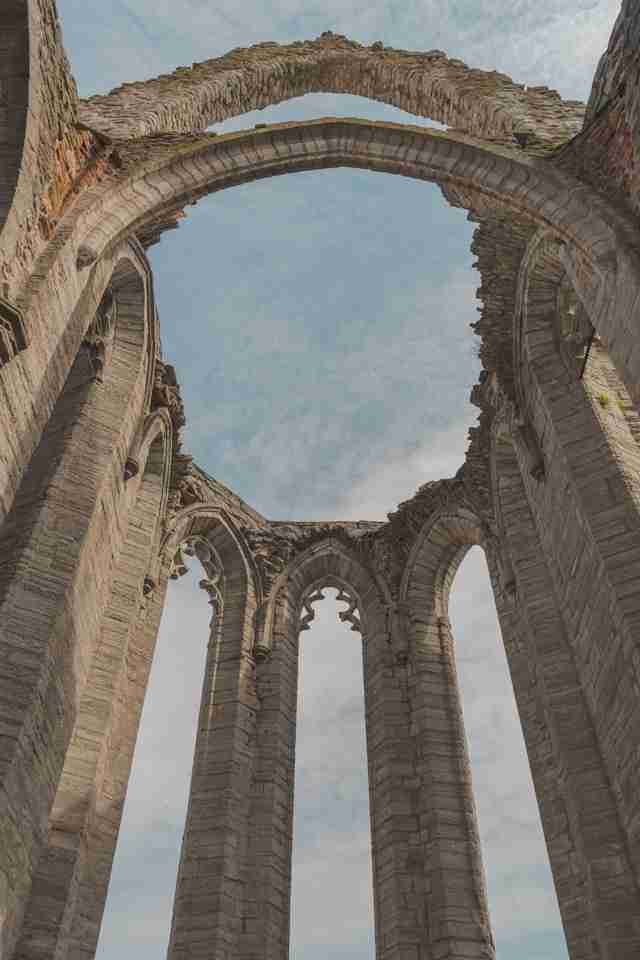
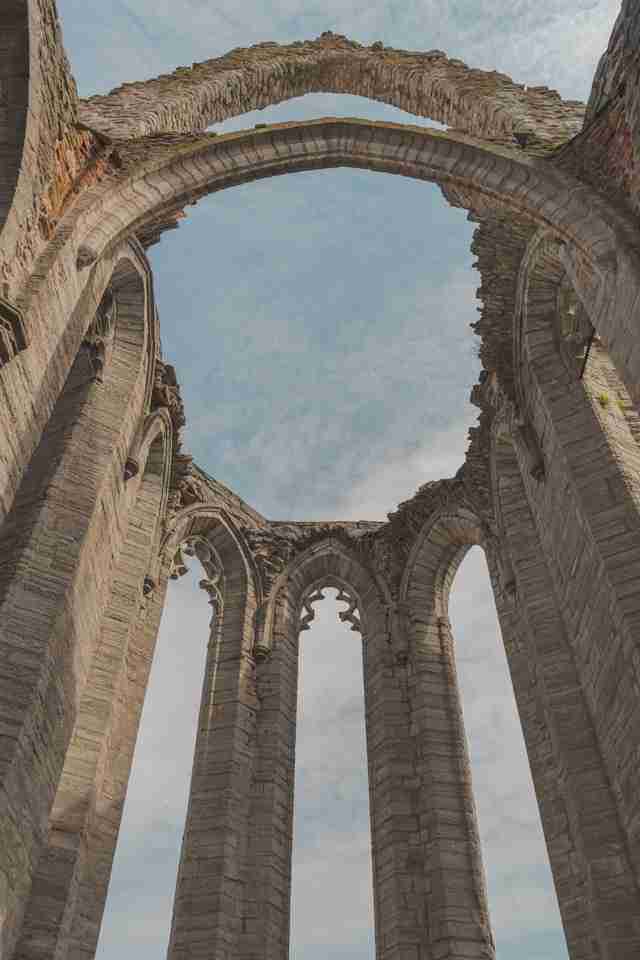
In the heart of Visby's medieval quarter, the St. Nicolai Ruin rises like a cathedral without a ceiling. Once a Dominican church, its skeletal stone structure now stands open to the sky, its vaults and arches framing passing clouds instead of stained glass. The ruin is a powerful subject for photographers who enjoy working with line, rhythm, and architectural light. Unlike many well-preserved churches in Scandinavia, St. Nicolai offers something more elemental. It is a place defined by shape and absence, where the balance between built form and open space becomes the focal point. Every angle reveals a different way to interpret structure, time, and the way light falls through what remains.
Best Photography Opportunities
Symmetry and Vertical Composition from the Nave
Standing in the center of the nave, photographers can look upward to see the skeletal ribs of the vaulted ceiling reaching toward the sky. This view offers strong vertical symmetry, ideal for wide-angle compositions that emphasize both scale and space. Use a lens in the 14 to 24 millimeter range to exaggerate perspective, especially when shooting low and looking up. Early morning light filters through side arches and helps define the layered textures in the stone. A tripod allows for careful alignment and longer exposures when shooting under the soft, directional light of the golden hour.
Isolated Arches Framing the Sky
Individual arches around the perimeter can be used to frame clouds, moonlight, or abstract compositions of open air against solid form. These frames change with the light and time of day, giving the ruin a dynamic character despite its static shape. Shooting on days with fast-moving weather enhances this interaction between stone and sky. A standard or short telephoto lens lets you isolate portions of the ruin and create minimalist compositions that highlight rhythm and contrast. Cloud cover softens light and helps avoid harsh shadow edges across the arches.
Black and White Architectural Studies
St. Nicolai's worn surfaces and repeating patterns are particularly effective in monochrome. Stone blocks, partial windows, and the outlines of missing vaults offer graphic strength that holds up well in black and white. On overcast days, contrast between form and void becomes more pronounced. Emphasize tonal range and use side light when available to deepen shadows within the structure. High-contrast processing works well here, especially in vertical compositions that include both structure and sky. Experiment with low-key exposures for a moodier result or high-key treatments when working with white sky and fine texture.
Twilight and Artificial Light Interplay
As night falls, the ruin takes on a new quality as artificial lighting within and around the structure begins to glow. These warm tones contrast beautifully with the deepening blue of the evening sky. A tripod is essential for capturing long exposures and maintaining sharpness. Compose from an angle that includes light spilling through the arches or onto the stone floor. Use slow shutter speeds to pull out detail in both shadow and highlight. Blue hour is particularly effective for capturing the ruin's atmosphere as color balance shifts between ambient and artificial sources.
Seasonal Light and Foreground Interest
Throughout the year, changing vegetation and light angles offer new opportunities. In spring and summer, small flowers or grasses may grow in the cracks between stones, offering foreground texture. In winter, snow or frost emphasizes form and outlines, transforming the ruin into a graphic study of shape against pale sky. Use a low angle and a wide lens to build compositions that draw the viewer from detail to structure to sky. A polarizing filter can help manage glare on wet stone, particularly in early spring when surfaces are damp.
Best Time to Visit
St. Nicolai is open to photographers year-round, and each season brings its own visual palette. Summer offers long days and clear light, ideal for early morning or late evening photography when shadows help define depth. Spring brings soft growth and new greens that contrast against the neutral tones of the stone. Autumn is more subdued, with cooler light and more texture in the sky. Winter reduces the scene to its essential forms, especially under snow or overcast skies.
The best light is typically found just after sunrise or before sunset when soft, low-angled light moves through the arches and adds texture to the floor and walls. Overcast days are also highly effective for black and white work or for capturing detail without harsh contrast. Twilight visits offer a different atmosphere as artificial lights accent the ruin's depth and create rich color contrast. The location is central and accessible at nearly all times, allowing flexibility in light and timing.
How to Get There
The St. Nicolai Ruin is located in the center of Visby on the island of Gotland, Sweden. It is easily reached on foot from anywhere within the old town. From Visby ferry terminal, the walk to the site takes approximately fifteen minutes through the medieval streets. If arriving by air, Visby Airport is a short taxi or bus ride from the city center.
The ruin itself is part of an open public area with no entry fee. It is surrounded by pedestrian streets and small gardens, with benches and walking paths available for rest or recomposition. There are no gates blocking access during daylight hours, and while portions of the interior may occasionally be restricted for safety or event setup, the structure remains photographable from multiple angles throughout the day. Nearby cafés and shops make it easy to pause and wait for changing light without leaving the area.
Recommended Photography Gear
A wide-angle lens is essential for capturing the full scope of the interior space and height of the ruin. A focal length between 14 and 35 millimeters will allow you to work both with full architectural compositions and more abstract perspectives. A mid-range zoom such as a 24 to 70 millimeter lens adds flexibility for detail work and framing arches or textures. A short telephoto can be useful for isolating elements such as stone reliefs, broken windows, or geometric patterns in the vaults.
A tripod is necessary for low-light shooting, especially at blue hour or under soft ambient light during cloudy days. A circular polarizer helps manage glare on stone surfaces, particularly after rain. A remote shutter release or timer minimizes vibration during long exposures. For photographers working in black and white, consider using filters or custom profiles that enhance texture and separation. Weather protection is rarely needed inside the ruin, but some surfaces can be slippery in winter or after rain, so good footwear is recommended.
Nearby Photography Locations
The medieval ring wall encircling the old town offers a wide variety of angles and textures, with towers, gates, and elevated walking paths. It is best photographed at sunrise or sunset when shadows create definition across the stonework and along the streets it encloses.
Just west of the old town, this open park and shoreline area provides clean views of the sea, city silhouette, and soft evening light. Use a long lens for layered compositions across rooftops or shoot wide during golden hour for glowing reflections on water.
Still in active use, the cathedral offers a contrast to the ruins with its intact structure and detailed interior. Early morning is best for soft light through stained glass. Exterior compositions work well in moody or overcast conditions when shadows are soft.
Fornhamn Coastal Area
A short drive from Visby, this rocky coastline features ancient graves, ruins, and windswept terrain. It is ideal for more expansive landscape photography with weathered stone and dramatic sea views. Low tide and evening light provide the best contrast.
Galgberget Cliffs and Forest Path
Just north of the city wall, Galgberget offers elevated views over Visby and the Baltic Sea. The forested walking paths are atmospheric in early morning fog or snow, and the cliffs provide a quiet spot for shooting moody seascapes or minimalist skies.
The St. Nicolai Ruin is not about grandeur but about what remains. Light moves differently here, carving across absence and tracing what once held glass, altar, or choir. For photographers, this ruin is a study in restraint, where composition comes from the interplay of history, weather, and geometry. It is a place where patience leads to clarity and where structure continues to frame the passing of time.
Comments
Loading comments…