
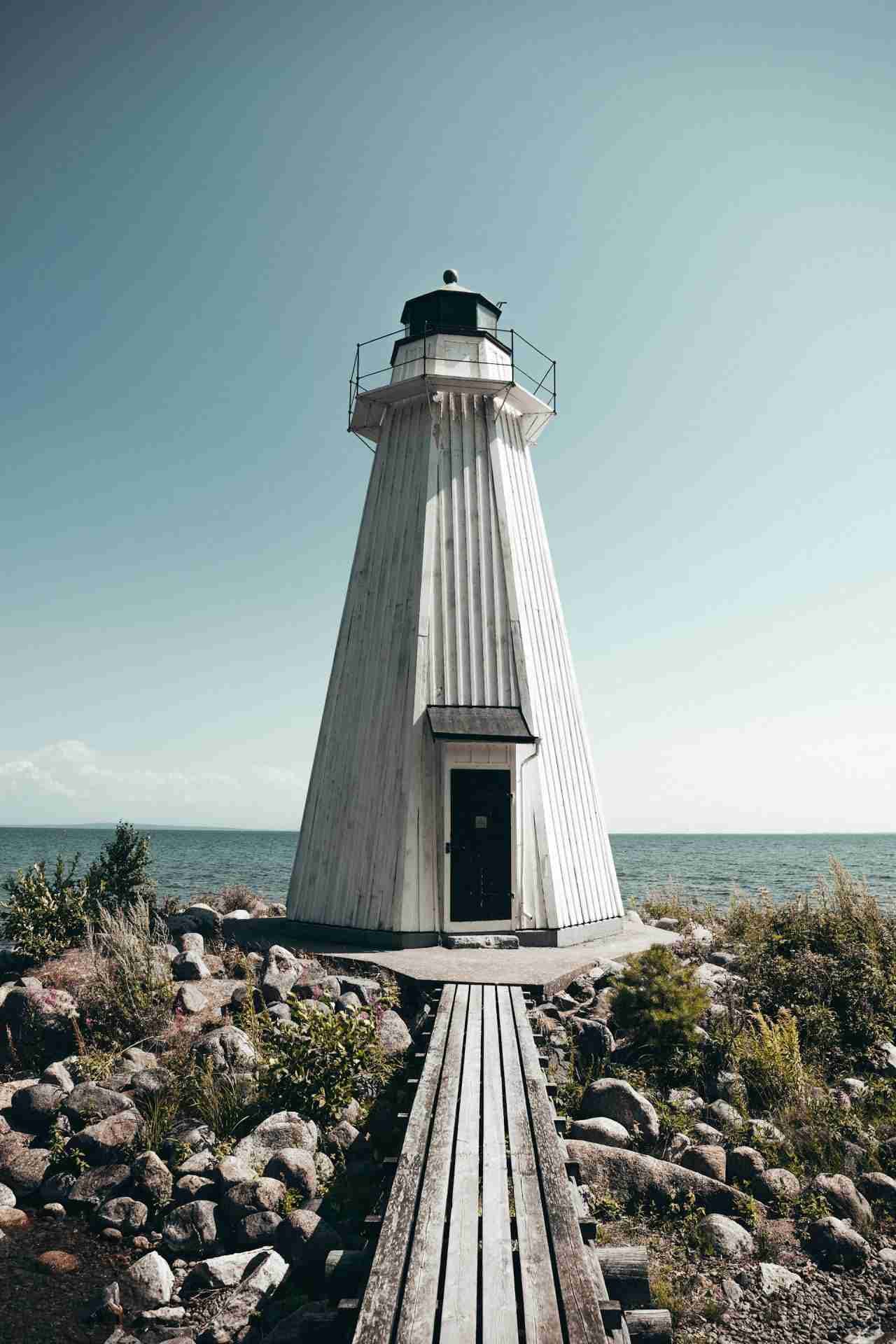
Vanäs Lighthouse stands at the tip of a narrow, rocky point in Karlsborg, Sweden, marking the western shore of Lake Vättern with quiet simplicity. This white, wooden lighthouse tapers gently upward from a wide base to a compact lantern, which is capped in black and framed with a narrow metal railing. The structure sits at the end of a low spit of land, bordered by scattered boulders and calm water on all sides. Rather than towering above the landscape, Vanäs Lighthouse blends into its surroundings with understated balance, making it an ideal subject for minimalist compositions. With the horizon stretching wide across the lake and a low causeway leading to the tower, this location rewards photographers who favor clean lines, soft light, and careful framing.
Best Photography Opportunities
• Views from the causeway
The most balanced composition is found by standing just inland, where the walkway begins. From here, the structure appears centered between water and sky, with the path forming a natural leading line into the frame. This position works well in both calm and dramatic weather. In clear conditions, reflections in the shallow water add texture to the foreground. On overcast days, soft tones dominate the scene, allowing the white structure to stand out cleanly against gray skies and muted lake tones.
• Side compositions with layered rocks and shoreline
Moving to either side of the lighthouse reveals scattered rocks that break up the water surface and provide additional texture. These side views emphasize the lighthouse's angular profile and its placement within a gently curving shoreline. Framing with lake and horizon in the background gives the image a sense of openness, while foreground rocks help anchor the scene. Early morning and late afternoon bring side light that adds depth to the lighthouse's form and shadow to the ground. These angles are most effective with a moderate focal length and careful attention to horizon placement.
• Low angle perspectives from the waterline
For a more dramatic look, try shooting from a crouched or low tripod position at the edge of the shallow inlet near the lighthouse base. This approach exaggerates the size of foreground rocks and allows the lighthouse to rise modestly but clearly above the frame. Including part of the water surface in the lower third of the image can add reflections and movement. This technique works well during overcast or lightly clouded conditions when the contrast between sky and tower remains gentle. A polarizer is useful to control reflections and reduce glare from wet surfaces.
• Minimalist compositions under heavy cloud
On days when the sky is covered in low, even cloud, the entire landscape shifts to a narrow tonal range. These conditions allow the lighthouse to act as a clean anchor in an otherwise flat scene. Shooting wide, with a large portion of sky and water, can enhance the quiet nature of the setting. Composing with the lighthouse pushed off center creates balance without symmetry, and leaving negative space in the frame emphasizes the isolation of the location. These compositions are often best executed with a wide angle lens and benefit from subtle editing to maintain the soft mood.
• Long exposures for smoothing lake surface and sky movement
Because the lighthouse is surrounded by open water and low horizon, it is ideal for long exposure work. A neutral density filter allows shutter speeds of several seconds or more, which transforms the lake surface into a smooth plane and pulls motion from drifting clouds. With the tower remaining sharp in the center of the image, this contrast between still and soft elements creates a striking final result. A tripod is essential, and a remote release helps maintain clarity. These conditions work best in the early evening when natural light drops and exposure times increase without overexposing the sky.
Best Time to Visit
Vanäs Lighthouse is accessible and photogenic year round, but seasonal light and weather have a major impact on results. The best time to visit is during spring or autumn, when the air is cool and the sky often carries low cloud cover or shifting light. Early morning brings calm water and soft lake haze, while late afternoon produces warmer tones that wrap around the white surfaces of the tower. Summer offers the longest daylight hours and the greatest consistency for extended sessions, though mid afternoon can bring harsh contrast.
Overcast days are particularly effective at this location, softening shadows and allowing the structure to separate cleanly from the horizon. Winter offers a completely different atmosphere, with snow sometimes collecting around the base and muted tones dominating the landscape. Access may be more limited during icy conditions, but clear winter skies provide a unique backdrop if conditions allow. Regardless of season, weekdays are quiet and allow for uninterrupted work without crowds or foot traffic near the lighthouse.
How to Get There
Vanäs Lighthouse is located at the far end of Vanäsudde, a peninsula extending from the town of Karlsborg in southern Sweden. The site is easily reached by car via local roads through the town. From the center of Karlsborg, follow signs toward Vanäsudde and continue toward the lake shore until the road ends near a walking path. Informal parking is available nearby, and a short walk leads through a lightly wooded area to the narrow land bridge that connects to the lighthouse.
The final approach is on foot across a low foot bridge with exposed rocks and water on both sides. The surface is mostly level, but some parts are uneven or wet depending on recent weather. There are no entry fees, fences, or restricted hours, and the location is accessible year round. Tripods and photography gear can be carried easily, but there are no facilities on site, so plan accordingly for light, gear storage, and personal needs.
Recommended Photography Gear
A wide angle lens is the most important tool at this location. It allows full frame compositions that include both the lighthouse and its surrounding environment, particularly when shooting from the path or the shoreline. A standard zoom lens is also useful when working with side perspectives, letting you shift between wider context and more focused framing without changing position. A short telephoto lens is valuable for isolating structural details like the lantern room, entry door, or texture on the wooden siding.
A tripod is essential for long exposure work and for early morning or evening conditions when slower shutter speeds help balance exposure. A neutral density filter is recommended for smoothing the lake surface or capturing cloud movement during the day. A circular polarizer can help cut glare from the water, especially on bright days. Bring a lens cloth or rain cover if the weather is damp, as wind can carry moisture from the lake. Footwear with grip is useful when stepping onto rocks or moving close to the shoreline.
Because the setting is quiet and remote, traveling light is ideal. A backpack with a body, two lenses, and a tripod is sufficient for most shooting scenarios here. There are no benches or sheltered areas, so consider bringing a small ground mat or portable seat if you plan to spend extended time framing from one position.
Nearby Photography Locations
Just minutes from the lighthouse, this 19th-century military site offers a wide range of textures, historic buildings, and tree-lined walking paths. It is especially productive in morning or late afternoon light when shadows add dimension to the stone walls.
This stretch of coast offers open access to the water with scattered rocks, reeds, and trees. It is excellent for minimalist shoreline studies and works well in soft light with long exposures. Early morning is usually calmest.
A short drive inland, this historic canal village includes old locks, stone bridges, and preserved buildings. The textures and layers of the scene are ideal for tighter compositions and architectural detail work.
Located to the east of Lake Vättern, this park offers rugged forest terrain, quiet lakes, and large boulders perfect for dramatic wide shots. It's a very different environment from the lighthouse and makes for a strong natural contrast in a day's shooting.
Farther up the eastern shore of the lake, the small town of Gränna offers charming buildings, cobbled streets, and access to the island of Visingsö. This area is best explored over a full day, with changing light and multiple vantage points from land and boat.
Vanäs Lighthouse may not be tall or ornate, but it offers a rare opportunity to work with stillness, clarity, and restraint. Surrounded by open water and accessible from land, it provides clean compositions and a quiet setting where careful light and thoughtful framing produce strong images without distraction.
Comments
Loading comments…