
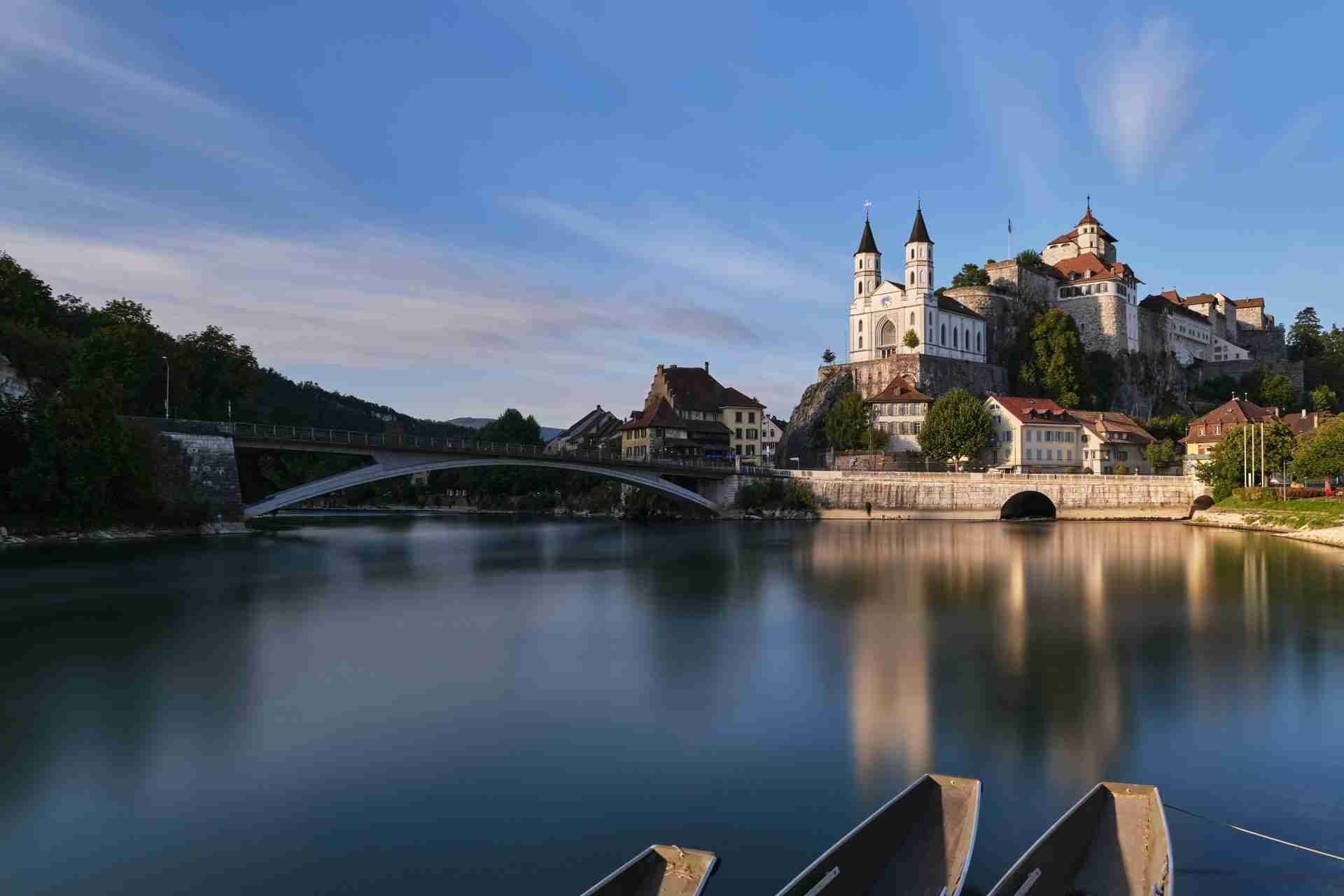
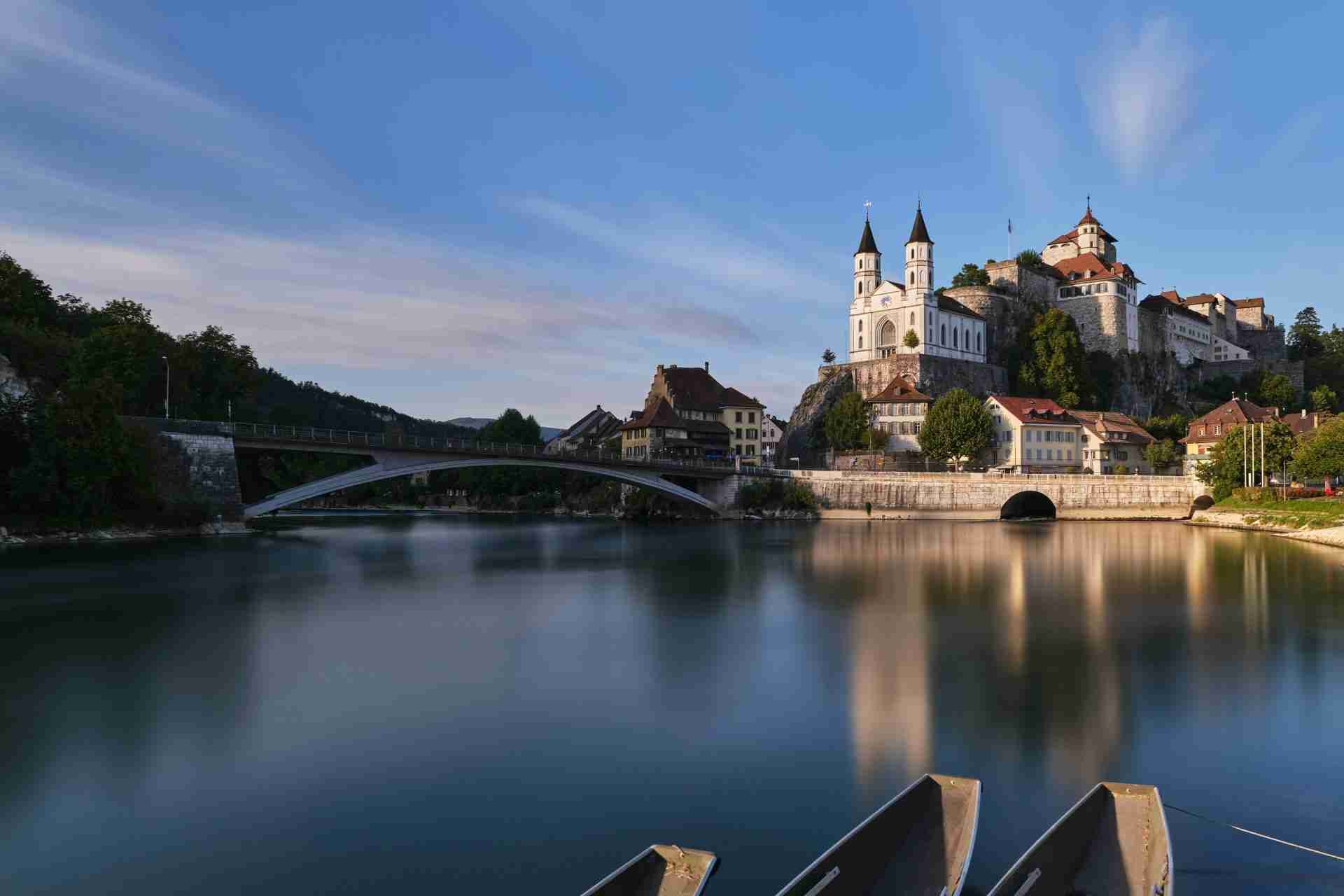
Aarburg sits tightly along a bend in the Aare River, with its old town pressed between water and a steep rock ridge. Rising directly above the clustered rooftops is Aarburg Castle, stretched along a narrow, elongated outcrop that gives the entire setting a dramatic vertical structure. The contrast here is immediate and easy to read. The river curves steadily below, the town gathers in compact layers at its base, and the fortified castle dominates the ridge above. Originally built in the early 12th century and later expanded under Bernese control, the castle remains the defining feature of the skyline. For photographers, Aarburg offers a strong combination of water, architecture, and elevation within a relatively small and walkable area.
Best Photography Opportunities
• Classic Riverbank View With Castle Above Town
From the banks of the Aare, the most recognizable composition places the river in the foreground, the red and pale rooftops in the middle, and the castle rising above. This layered arrangement creates a clear visual hierarchy that works well in both wide and mid range compositions. Slight shifts along the riverbank change how the ridge aligns with the town and how much of the castle façade is visible. Calm water strengthens reflections and adds depth to the lower part of the frame. These views are particularly effective when the light grazes the rock face and adds subtle shadow to the fortifications.
• Views From the Bridge Crossing the Aare
The bridge in Aarburg provides a balanced vantage point that places the river directly below and the town and castle straight ahead. From this angle, the curve of the Aare becomes more pronounced, guiding the eye naturally toward the hilltop structure. Careful framing helps manage traffic and modern elements on the bridge itself. A slightly longer focal length can compress the scene and tighten the relationship between rooftops and fortress walls. This position works especially well in softer light when contrast is easier to control.
• Elevated Pathways Looking Down Toward the River
Climbing partway up toward the castle opens up views looking down over the town and river. From here, the rooftops become a textured foreground, with the Aare forming a smooth band of color beyond. This perspective emphasizes the compact nature of Aarburg and how closely the town is tied to the water. Longer focal lengths help isolate sections of the river bend and simplify the scene. These compositions feel strongest when the river surface is calm and evenly lit.
• Castle Details Against Open Sky
Closer studies of the castle walls, towers, and ramparts provide opportunities for tighter architectural images. From certain angles, sections of the fortress can be isolated against the sky or the ridge behind it. Side light enhances the texture of stone and highlights variations in surface. Even on overcast days, the castle's mass and structure remain visually strong. These detail focused compositions add variety to a broader landscape series.
• Evening Reflections and Blue Hour
As daylight fades, the river begins to mirror subtle color from the sky and the illuminated town. During blue hour, the contrast between cool sky tones and warmer lights from buildings creates balanced evening scenes. A tripod allows for precise framing and longer exposures. Reflections become more pronounced when wind drops and the water settles. This time of day often produces the most visually cohesive images of the town and castle together.
Best Time to Visit
Early morning and late afternoon are the most reliable times to photograph Aarburg. Morning light can illuminate the ridge and castle while keeping the town softly lit below, creating gentle separation between layers. Late afternoon often introduces warmer tones that enhance rooftops and stone surfaces. Midday light may flatten the scene, especially under clear skies, though overcast conditions can help even out contrast. Blue hour is particularly rewarding along the river, when reflections strengthen and artificial lights begin to glow. Seasonal changes influence foliage on the surrounding slopes, with spring and autumn often adding subtle color without obscuring the architecture. Planning around calm river conditions improves reflection quality significantly.
How to Get There
Aarburg is located in the canton of Aargau and is easily accessible by train, with a station within walking distance of the old town. The town center and riverbanks are compact and pedestrian friendly. There is no fee to photograph the exterior of Aarburg Castle from public areas, though access to interior spaces may vary depending on current use. Riverside paths and the main bridge provide multiple vantage points without restricted access. Limited parking is available near the town, but walking is often the simplest way to explore viewpoints. Allow time to move between river level and elevated paths for varied compositions.
Recommended Photography Gear
A standard zoom lens is ideal for covering both wide river scenes and tighter architectural details. A short telephoto lens is useful for compressing the town and castle into layered compositions from across the river. A tripod is recommended for early morning and evening sessions, especially when working with reflections and longer exposures. A polarizer can help manage glare on the water and enhance sky tones when conditions allow. Keeping the camera level is important when photographing architecture from below. Since the town is compact, a manageable kit makes it easy to move between riverbanks and hillside paths.
Nearby Photography Locations
• Olten
Just a short distance away, Olten offers additional river views and historic bridges. It provides complementary urban river scenes.
• Zofingen
This nearby town features a well preserved old center with arcaded streets and historic façades. It pairs well with Aarburg for architectural photography.
Further afield, this narrow river gorge offers dramatic rock formations and flowing water. It provides a natural contrast to Aarburg's built environment.
Set within a lake landscape, this moated castle introduces a different defensive structure within the region. It works well for expanding a castle focused shoot.
• Jura Mountains
The nearby Jura range offers elevated viewpoints and broader landscapes. It provides a wider regional context beyond the river valley.
Comments
Loading comments…