
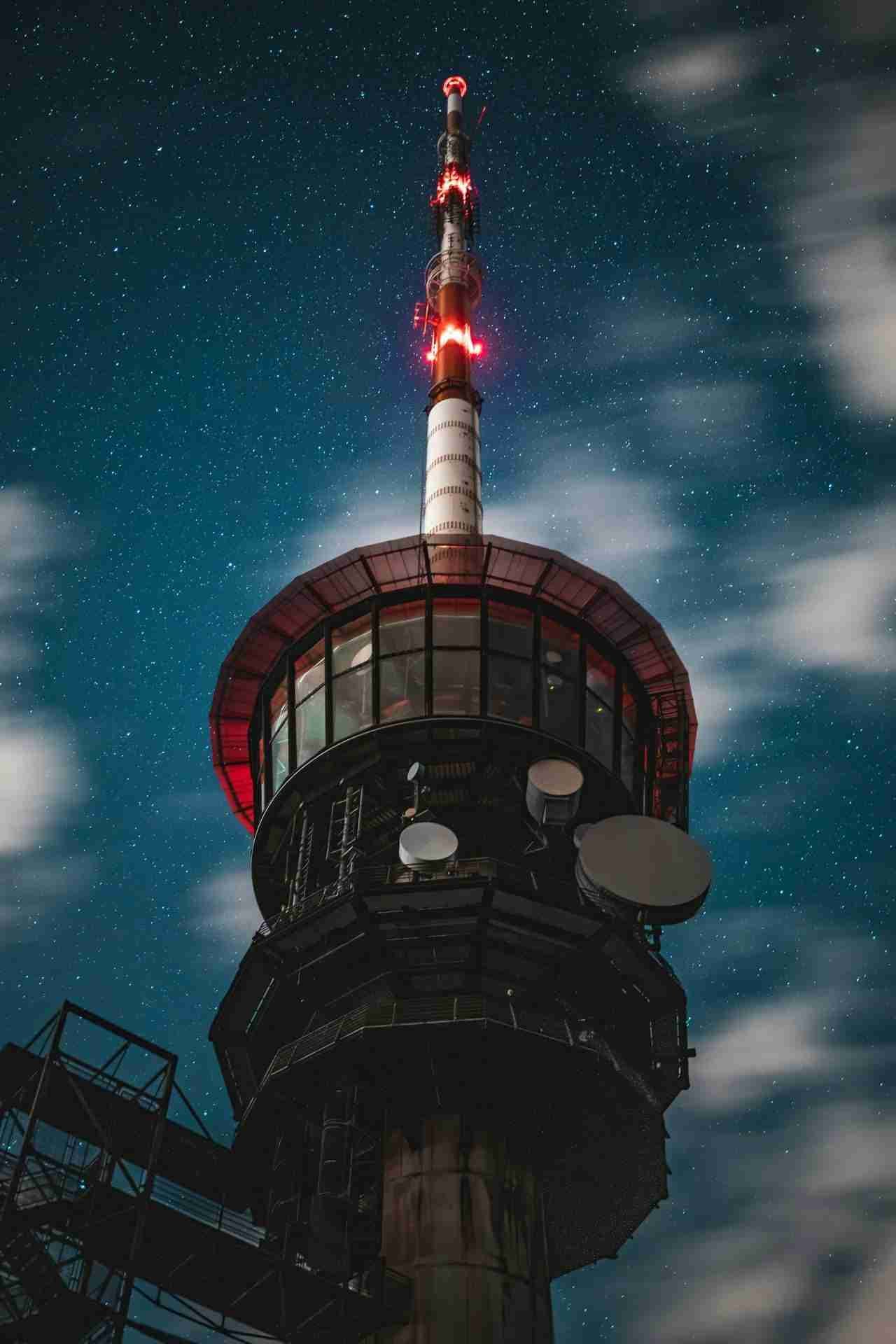
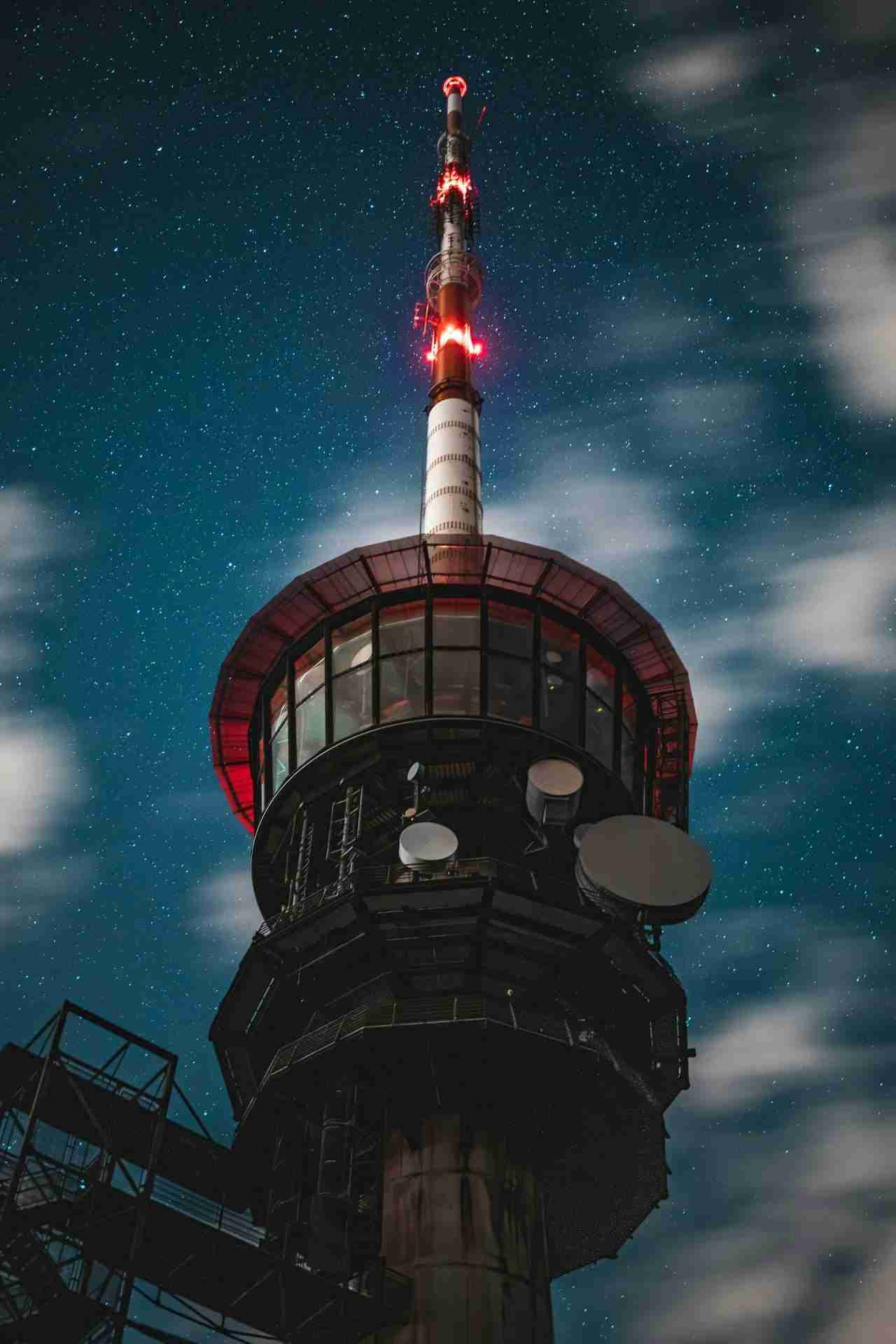
Rising above the rolling hills northeast of Bern, the Bantiger TV Tower stands at the summit of a modest but commanding peak. While the structure itself is purely functional, the surrounding platform offers panoramic views that stretch across the Bernese countryside to the distant Alps. For photographers, this site is not about architectural drama, but about elevation, perspective, and how light moves across layers of land. From its high vantage point, Bantiger provides expansive opportunities to compose sweeping scenes of farmland, forests, and, on clear days, the snow-capped skyline of the Eiger, Mönch, and Jungfrau. Whether shooting sunrise over the Emmental or watching evening light fade into the Alpine horizon, this location is all about patience, subtlety, and line-of-sight precision.
Best Photography Opportunities
• Alpine Panorama from the Observation Platform
The platform below the TV tower offers an unobstructed view south toward the Bernese Alps. On clear days, this panorama reveals dramatic layers from the forested hills of the Emmental to the jagged alpine skyline. Use a telephoto lens to compress these layers and highlight the tonal separation between foreground and distant peaks. Early morning is the best time to catch mist in the valleys and directional light hitting the mountains. For wide shots, a 24 to 70mm lens captures the relationship between the countryside and skyline. These scenes benefit from clear air and cool temperatures, so plan around weather and visibility forecasts.
• Sunrise Over the Emmental Hills
Facing east, the Bantiger platform also provides excellent views toward the Emmental region. At sunrise, light spills across the patchwork of hills, meadows, and small farmhouses, creating gentle contrast and long shadows. A moderate telephoto lens allows you to isolate individual farms or ridge lines as the light moves. This is a perfect opportunity to experiment with exposure bracketing, as the tonal range between the sky and shaded valleys can be quite broad. Fog is common in lower areas, adding mood and depth to the layered landscape.
• Framing the Tower Against the Sky
While the tower is not a traditional photographic subject, it offers interesting lines when silhouetted against the sky, particularly at dusk or during stormy weather. From nearby trails, you can frame the tower against a colorful sky or use it as a vertical element in a minimalist landscape. Try a wide-angle lens and compose from a lower elevation on the southern path to emphasize its height and structure. This works well when clouds are dynamic or when birds pass through the frame.
• Details in the Foreground Countryside
From the upper trail near the platform, you can shoot north and west across the farmland and small villages that fill the lower valleys. Use a longer lens to isolate barns, roads, or stands of trees that form patterns in the landscape. The best light for this work comes in late afternoon, when warm side lighting brings out the textures in the terrain. These compositions often benefit from a slightly elevated tripod height to see over any brush or fencing near the viewpoint.
• Night Photography and Star Trails
The summit area remains quiet after dark and offers enough open sky for basic astrophotography, especially toward the southeast. If conditions are clear, you can capture star trails or Milky Way arcs above the hills. Frame the tower as a fixed anchor in the foreground or use the landscape itself for silhouette compositions. A fast wide-angle lens and long exposure setup are essential. This location works best on new moon nights or during transitional seasons when air clarity is highest.
Best Time to Visit
Bantiger's accessibility and open viewpoints make it a flexible year-round location, but visibility plays a critical role in successful landscape photography here. Spring and autumn typically provide the clearest air and most interesting light. During spring, the farmland below begins to green, while snow still clings to the Alps in the distance. This contrast between seasons makes for compelling compositions. Fog in the lower valleys during early morning also adds strong visual separation between foreground and background.
Summer offers the longest golden hours, especially in June when sunrise and sunset stretch across broad intervals. However, haze and humidity can obscure the distant mountains, making it more suitable for shooting the immediate hills and farms. Morning is preferable to evening for visibility during this season.
Autumn brings deeper contrast and cleaner skies. The surrounding trees begin to turn, and light becomes more directional throughout the day. This is an ideal time for wide panoramas with rich color and more predictable atmospheric conditions.
Winter provides the most dramatic Alpine views, especially after snowstorms that clear the air. On days with strong visibility, the Alps appear crisp and sharp. Snow also collects around the tower platform, adding foreground texture and mood. Bundle up and check local road and trail conditions before heading up during snow season. The summit path remains open year-round but can be icy or muddy depending on conditions.
How to Get There
The Bantiger TV Tower is located just northeast of Bern and can be reached by both public transport and private vehicle. From Bern, take a train to Worb or Deisswil, then connect via local bus to Bantigen or Ferenberg. From these villages, several marked hiking trails lead up the hill to the tower. The most direct approach is from Ferenberg, following the trail through forest and meadows to the summit. The walk takes around 45 to 60 minutes and includes steady uphill sections on a well-maintained path.
For those arriving by car, parking is available in Ferenberg and Bantigen. There are no parking fees at the trailheads. The final section of the route is not accessible by vehicle, so be prepared for a short hike regardless of how you arrive. There is no entrance fee to access the summit or viewing platform, and photography is allowed without restriction.
The platform area is open to the public year-round. There are no facilities or shelter at the top, so bring water, weather-appropriate clothing, and any necessary gear. The tower itself is closed to the public, but the platform just below it is designed for viewing and offers clear 360-degree perspectives.
Recommended Photography Gear
The key to photographing from Bantiger is flexibility. The landscape stretches in all directions, and light can change quickly with elevation and time of day. A full-frame body with strong resolution and low-light capability will help you take advantage of subtle detail across distant ranges. A 24 to 70mm zoom lens is the most versatile tool here, providing enough width for panoramas and enough reach for mid-range landscapes.
A 70 to 200mm or longer telephoto is essential if you plan to shoot the Alps, isolate farm details, or compress layers of terrain. For night photography or sunrise sessions, a fast wide-angle prime such as a 20mm f/1.8 is valuable for capturing stars or ambient twilight without excessive noise.
Tripods are strongly recommended, especially for early morning, sunset, or long exposure work. Choose a model that is lightweight enough for the hike but sturdy on exposed, uneven ground. If you shoot during windy conditions, add weight to stabilize your setup. A polarizer can help cut glare when shooting into the sun or improve sky contrast, but avoid overuse when aiming at distant peaks.
Graduated neutral density filters are helpful for balancing sky and land during high-contrast scenes. Bring a remote shutter or intervalometer if you plan to work with star trails or time-lapse sequences. Lens cloths, a headlamp, and extra batteries are important if you are starting before dawn or staying past sunset. Layered clothing and water are essential since there are no services at the top.
Nearby Photography Locations
Southwest of Bern, this popular viewpoint offers excellent views back toward the city and the Alps. It is well suited for sunrise and blue hour sessions with urban and mountain layers. Accessible by funicular, it requires minimal hiking.
To the east, a network of ridgelines runs through the Emmental hills, providing endless options for shooting traditional Swiss farmhouses, rolling pastures, and mist-filled valleys. These trails are best explored during spring and autumn when morning fog enhances separation.
Just minutes from the city center, this elevated garden overlooks Bern's rooftops and the curve of the Aare River. It is a strong location for sunrise, blue hour, and winter compositions when the rooftops gather snow.
• Lake Moossee
North of Bantiger, this quiet lake reflects trees and open sky. It is ideal for long exposures, foggy mornings, and minimalist landscapes. Visit at sunrise for the most still water and layered reflection work.
Located east of Bantiger, this lesser-known summit offers panoramic views across the Emmental with fewer visitors and excellent late afternoon light. It is a great option if you want similar elevation but a quieter scene.
From its modest summit, the Bantiger TV Tower rewards photographers with wide horizons, dynamic skies, and a deep sense of scale. It is not the tallest peak in Switzerland, but its location and perspective make it one of the best spots near Bern to capture the relationship between farmland and the high mountains beyond. Patience, clear air, and flexible gear are the keys to making the most of what this quiet hilltop has to offer.
Comments
Loading comments…