
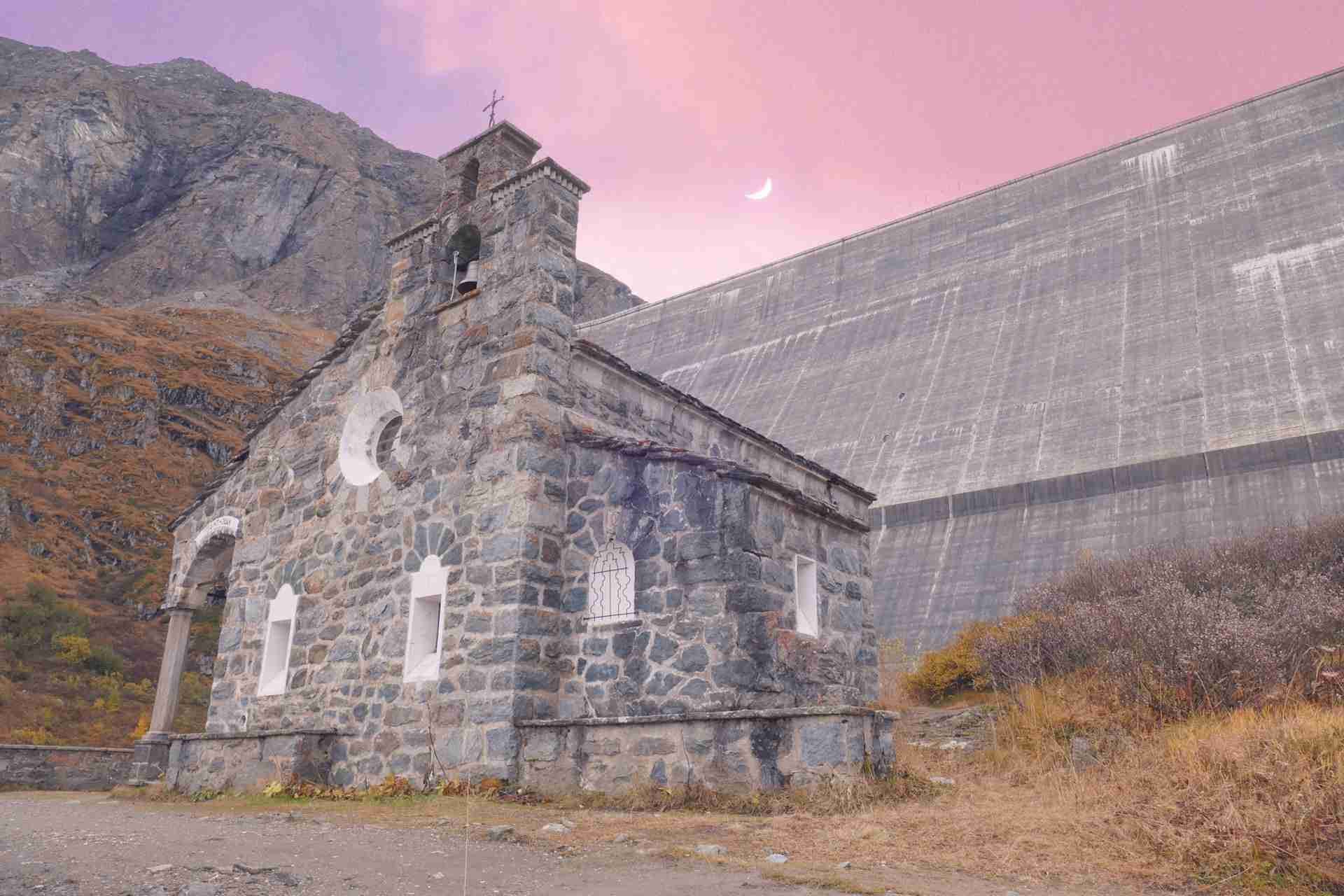
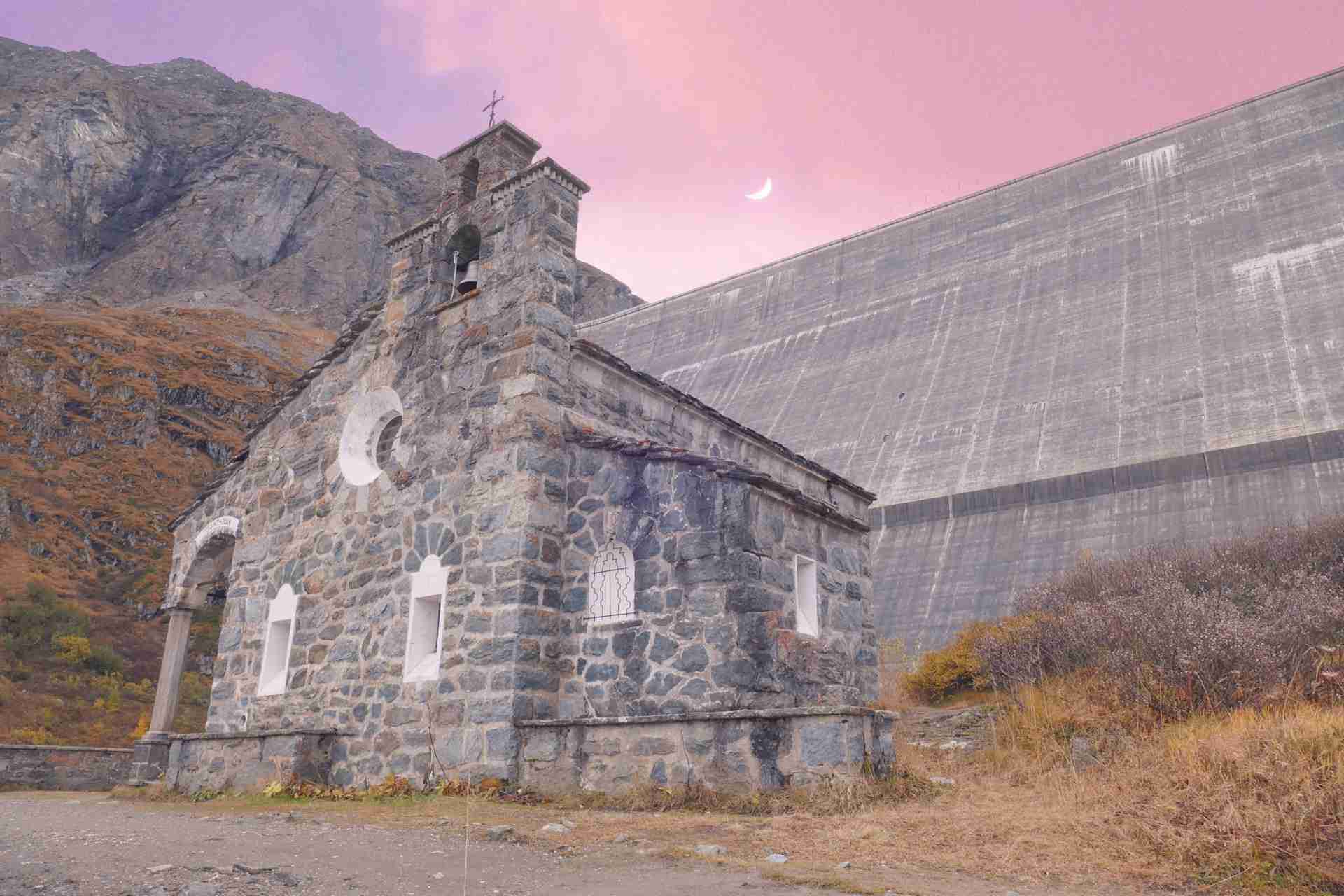
The Barrage de la Grande Dixence is one of the tallest gravity dams in the world, rising an impressive 285 meters. Built from millions of tons of concrete, it holds back the waters of the Lac des Dix, creating a striking juxtaposition between engineered precision and the surrounding alpine peaks. The dam's sheer vertical face, combined with the vivid turquoise of the lake and the rugged textures of the mountains, offers a dramatic subject for photographers. Changing light and weather transform the scene from moment to moment, with mist curling over the water on cool mornings and crisp shadows tracing the dam's contours on bright afternoons. Whether you prefer grand, sweeping landscapes or close-up industrial detail, this is a location that rewards exploration from multiple angles.
Best Photography Opportunities
• Full Dam Face from Below
: Standing at the base of the dam gives a powerful sense of scale and verticality. A wide-angle lens captures the towering wall in its entirety, while including small elements such as people or vehicles emphasizes just how massive it is. Early morning often produces softer light on the dam face, while mid-afternoon light creates dramatic shadows across its surface. Low, angled light in the evening can warm the tones of the concrete and bring out its texture. Framing the shot to include parts of the surrounding cliffs adds natural contrast to the engineered lines of the dam.
• Lac des Dix from the Crest
: From the top of the dam, you can look out over the expanse of the Lac des Dix, whose turquoise color comes from glacial meltwater. A mid-range zoom lens works well here, allowing you to include the arc of the dam wall in the foreground or focus more closely on the distant peaks and valleys. This view is especially photogenic in calm conditions when the lake surface reflects the mountains. Late afternoon light often creates a warm glow on the peaks while leaving the lake in rich blue tones. Early in the day, mist rising from the water can add a mysterious atmosphere to wide shots.
• Detail Study of Engineering Elements
: The Barrage de la Grande Dixence is full of smaller visual elements that work well for detail photography, from the grid-like patterns of the concrete blocks to the heavy steel gates and staircases. A telephoto lens lets you isolate these features, highlighting their geometric forms. Overcast days are ideal for detail work, as the even lighting brings out surface textures without harsh shadows. Close-ups of weathering, rust stains, and bolts can form a strong industrial photography series. Including parts of the mountains in the frame can create a compelling contrast between natural and man-made design.
• Mountain Panorama from Hiking Trails
: The hiking paths that wind around the lake and nearby slopes provide elevated perspectives on the dam and its surroundings. Shooting from these points allows you to show the dam within the wider alpine landscape, giving context to its size and placement. A telephoto lens can compress the scene, making the peaks appear closer to the dam. In summer, wildflowers in the foreground add color, while in autumn the alpine grasses turn golden. Early morning and late afternoon are best for catching warm light on both the dam and the surrounding peaks.
• Night Photography from the Base or Crest
: The dam is lit at night, and combined with the clear mountain skies, it makes an excellent location for night photography. A tripod and long exposures can capture both the illuminated structure and the stars above. In certain conditions, the Milky Way can be framed above the dam, creating a dramatic juxtaposition. Cooler months often offer clearer skies, and the absence of light pollution enhances astrophotography opportunities. Including the dam's reflection in nearby water sources can add depth and interest to night shots.
Best Time to Visit
The Barrage de la Grande Dixence can be photographed from late spring through autumn when the access roads are open. Summer offers the most accessible conditions, with clear trails and vibrant colors in the surrounding alpine meadows. The long daylight hours allow for multiple shooting sessions in a single day, from sunrise at the lake to sunset from the crest. Early morning light is soft and cool-toned, ideal for misty scenes and reflections, while late afternoon and evening bring warmth and long shadows that add texture to the dam face.
Autumn is a quieter time to visit, with fewer tourists and a golden hue to the surrounding landscape. This season's lower sun angles provide excellent side lighting on both the dam and the mountains. Overcast days are perfect for detail and texture work, while clear days are ideal for sweeping landscapes. Winter access is generally restricted due to snow, but the dam can still be photographed from a distance, with the stark contrast of white snow against the dark concrete making for striking images.
How to Get There
The Barrage de la Grande Dixence is located in the Hérémence Valley in Valais. From Sion, follow the road toward Hérémence and continue up the valley to the parking area near the base of the dam. In summer, a cable car runs from the parking area to the crest, saving the uphill walk and providing aerial views during the ride. For those who prefer to hike, the trail from the base to the top offers several good vantage points along the way.
There is no fee to walk on the crest or explore the public areas, but certain guided tours of the interior machinery and galleries require a ticket. Tripods are allowed throughout the accessible areas, and the wide, stable surfaces make them easy to use. Be prepared for cooler temperatures and wind at the crest, even on sunny days.
Recommended Photography Gear
A wide-angle lens in the 16 to 35 millimeter range is essential for capturing the entire dam from close range and for dramatic perspectives from the base. A 24 to 70 millimeter zoom offers flexibility for both lake and mountain views from the crest. A telephoto lens in the 70 to 200 millimeter range is excellent for isolating details and compressing the dam within the surrounding landscape.
A sturdy tripod is important for night photography, long exposures of the lake, and shooting in low light on overcast days. A polarizing filter helps cut glare from the lake surface and deepens sky tones, especially in summer. A neutral density filter can be useful for smoothing the surface of the lake or capturing cloud movement above the dam. Bring extra batteries, as cooler alpine temperatures can drain them quickly. Sturdy hiking shoes and layered clothing are essential for working comfortably around the site.
Nearby Photography Locations
: Walking around the lake opens up a variety of angles on the water, with reflections of the surrounding peaks on calm days. The turquoise water contrasts beautifully with the rocky shore and alpine vegetation.
: A traditional mountain village with wooden chalets and narrow streets. The village offers a strong cultural counterpoint to the industrial scale of the dam and works well for documentary-style photography.
: A mountain pass accessible via hiking trails from the lake area, offering panoramic views over glaciers and high peaks. The climb provides opportunities for dramatic landscape shots with the dam in the distance.
: The ride to the crest offers changing perspectives on the dam and valley, ideal for capturing the structure in its broader context. Shooting through the windows works well with a polarizing filter to cut reflections.
: The surrounding valley features pastoral scenes with grazing cattle, alpine meadows, and dramatic cliffs. This area offers a softer, more pastoral contrast to the engineered lines of the dam.
The Barrage de la Grande Dixence is more than a feat of engineering; it is a dramatic meeting point between human design and the alpine environment. By exploring it from multiple vantage points and in different light, you can create a portfolio that captures both its immense power and its place in the mountain landscape.
Comments
Loading comments…