
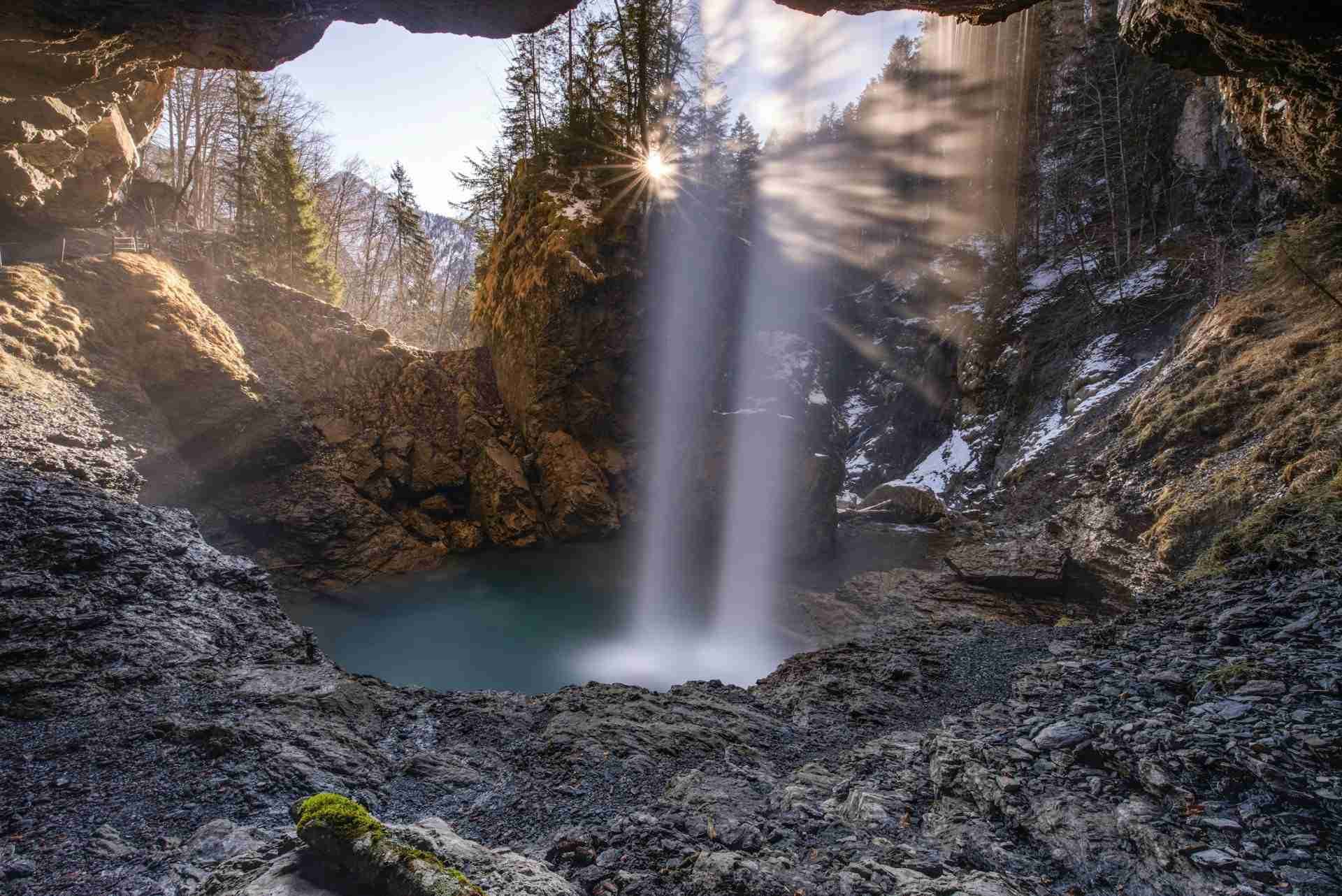
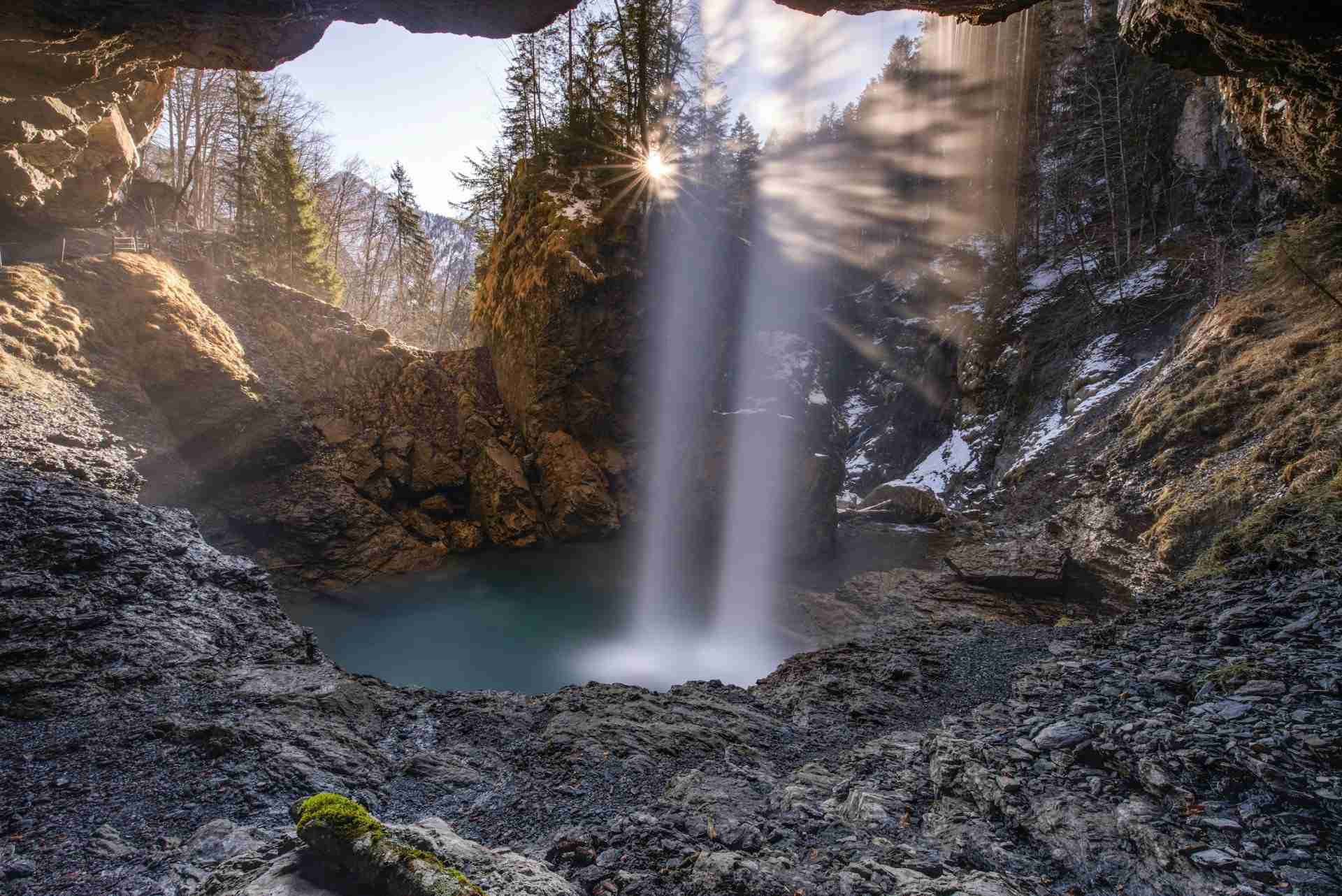
Tucked into the dramatic landscapes of the canton of Glarus, Berglistüber Waterfall is one of Switzerland's most magical natural photography locations. Here, the Fätschbach River plunges about 46 meters over a sheer cliff into a mossy gorge, creating a powerful, ethereal curtain of water. What makes Berglistüber truly special is the ability to walk behind the waterfall itself, offering rare perspectives where cascading water frames rugged rock walls and verdant surroundings. Set against a backdrop of alpine cliffs and dense forest, the falls offer photographers endless opportunities for dynamic compositions, whether focusing on the thunderous movement of water, the hidden grottos behind the curtain, or the interplay of light and mist through the narrow gorge.
Best Photography Opportunities
• Wide frontal view from the approach trail
: Before reaching the falls, a footpath offers a dramatic full-frontal view of Berglistüber as it roars over the edge and crashes into the pool below. Use a wide-angle lens to capture the entirety of the waterfall along with the surrounding mossy cliffs and dense green forest. Overcast days enhance the richness of the foliage and soften the highlights in the rushing water. Incorporating foreground elements like ferns or wet rocks can add depth and lead the viewer's eye into the frame, emphasizing the power and isolation of the falls.
• Behind-the-waterfall perspective
: One of the most unique aspects of Berglistüber is the trail that leads directly behind the falling sheet of water. Standing here, you can frame the outside world through the shimmering veil of water, creating mystical, backlit compositions. Wide lenses allow you to capture the rock overhang, the waterfall's full drop, and the rugged path beneath. Morning or late afternoon light can beam through the mist, producing magical rays and backlit textures across the water curtain. Be sure to protect your camera gear from heavy spray, as conditions behind the waterfall can get very wet.
• Long-exposure silky water shots
: The force and volume of Berglistüber make it a prime candidate for long-exposure photography. Set up a tripod either in front or behind the falls to smooth the rushing water into silky streams that contrast beautifully with the jagged rocks and dark canyon walls. Neutral density filters are essential here, especially during brighter daylight hours. Look for small pools, eddies, or rivulets at the base of the waterfall to include as foreground interest, adding layered dynamism to your compositions.
• Up-close detail studies of textures
: The mossy rocks, dripping walls, and fine mist created by the waterfall offer rich opportunities for intimate detail photography. Use a mid-range zoom or macro lens to focus on patches of vibrant moss illuminated by stray beams of light or to capture the complex textures of water splashing against stone. Shooting tight on these elements creates abstract, painterly images that evoke the energy and richness of the place without showing the entire scene.
• Seasonal shifts and atmospheric changes
: Each season transforms Berglistüber's character dramatically. In spring and early summer, snowmelt swells the falls into a powerful torrent, while autumn drapes the gorge in golden foliage that contrasts beautifully with the cool, misty water. After rain, the volume increases and mist rises from the gorge floor, offering dramatic atmosphere for wide, cinematic shots. Even in winter, if accessible, delicate icicles form along the cliff walls, turning the scene into a crystalline wonderland.
Best Time to Visit
Berglistüber Waterfall is most photogenic from late spring through early autumn, when water flow is strongest, trails are safest, and lush greenery fills the gorge. Late spring, in particular, offers the combination of full waterfall volume and fresh foliage, creating vibrant, energetic images.
Summer provides accessible conditions, although the falls may run slightly lighter later in the season. Early morning is the best time to shoot, as the falls receive soft light filtering through the gorge, minimizing harsh shadows and crowds. Morning sessions often feature rising mist, especially after a cool night, which adds an enchanting, dreamy quality to your images.
Autumn brings a unique warmth to the surrounding forest, with gold and amber leaves framing the cool blue-gray water. After periods of rainfall, the volume increases significantly, making for even more dramatic compositions. Winter access can be limited and treacherous, but if conditions allow, the combination of ice, snow, and the still-thundering falls creates a magical and otherworldly scene.
Be prepared for slick, muddy trails, especially after rain, and always check weather and trail conditions before setting out, as the path behind the waterfall can become slippery.
How to Get There
Berglistüber Waterfall is located near the village of Linthal in the canton of Glarus, Switzerland. From Linthal, head toward the small hamlet of Tierfehd, then continue following signs toward the Klausen Pass (Klausenpassstrasse). There is a small parking area close to the falls, known as "Bergli Parking," located directly off the main road.
From the parking lot, it's a short, well-marked walk along a footpath to the waterfall—only about five to ten minutes. The trail is relatively easy but can be muddy and slick, particularly in wet conditions. Good hiking shoes with grip are highly recommended.
There are no entrance fees, and access is open to the public, but take care behind the waterfall, where the trail becomes narrow, rocky, and often slippery. Early morning or late evening visits are best to avoid crowds and to enjoy softer, more diffuse lighting.
Recommended Gear and Shooting Tips
A wide-angle lens (16–35mm) is essential for capturing the full scale of the waterfall and its gorge environment, especially when working close-up behind or in front of the falls. A mid-range zoom (24–70mm) is versatile for tighter compositions, framing the waterfall with surrounding foliage or capturing interesting angles through the mist. A sturdy tripod is crucial for long-exposure work, and a remote shutter release helps minimize camera shake.
Bring a strong neutral density (ND) filter (6- or 10-stop) to allow for long exposures even in bright daylight, creating dreamy, silky water effects. A circular polarizer is invaluable for reducing glare on wet rocks and deepening the natural greens of the forest.
Lens protection is a must—bring microfiber cloths to constantly wipe down your front element if you are shooting near or behind the waterfall. Using a rain cover for your camera body is highly recommended. Waterproof hiking boots, a lightweight rain jacket, and a dry bag for gear will help keep you comfortable and your equipment safe.
Move slowly, explore different vantage points, and take time to let light conditions shift—the interplay between mist, water, and forest creates compositions that change dramatically with even small shifts in weather or angle.
Nearby Photography Locations
: Continuing along the Klausenpassstrasse brings you into the breathtaking high alpine landscapes of Klausen Pass. The winding roads, dramatic cliffs, and sweeping meadows are perfect for expansive landscape photography, especially at sunrise and sunset when the mountains catch golden light.
: The charming village of Linthal, framed by steep alpine walls and green pastures, offers beautiful rustic scenes ideal for pastoral and architectural photography. Its quiet streets and historic buildings capture the essence of rural Switzerland.
A short drive to Näfels brings you to Obersee, a stunning alpine lake known for its clear reflections of the surrounding mountains. It's particularly photogenic in calm morning conditions when the surface is mirror-like and the rising sun adds a warm glow.
: For adventurous hikers, a trail from Tierfehd leads to the Muttsee Dam, one of Europe's longest dams. The hike rewards you with panoramic views of rugged peaks and the brilliant blue waters of the Muttsee reservoir.
: Accessible via a funicular from Linthal, the car-free village of Braunwald offers sweeping alpine vistas, flower-strewn meadows, and endless mountain photography opportunities. Summer wildflowers and winter snow scenes both provide breathtaking photographic subjects.
Berglistüber Waterfall is more than just a hidden gem—it's a living, breathing piece of Switzerland's wild heart, where water, rock, and forest converge into one of the most enchanting and dynamic photography settings in the country. Whether standing behind the falls or watching mist drift through the gorge, each moment spent here reveals a new way to see and capture the powerful beauty of nature.
Comments
Loading comments…