
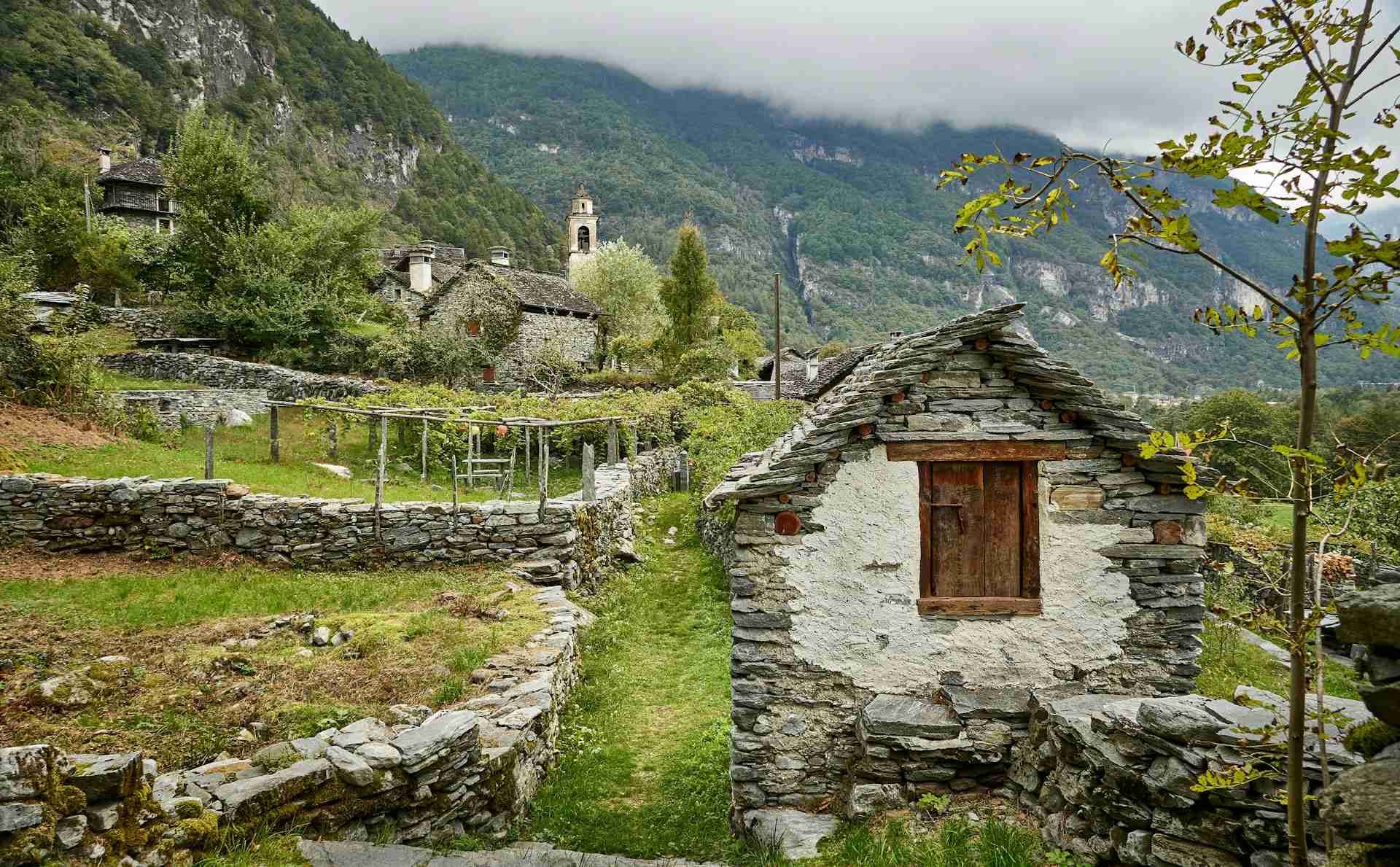
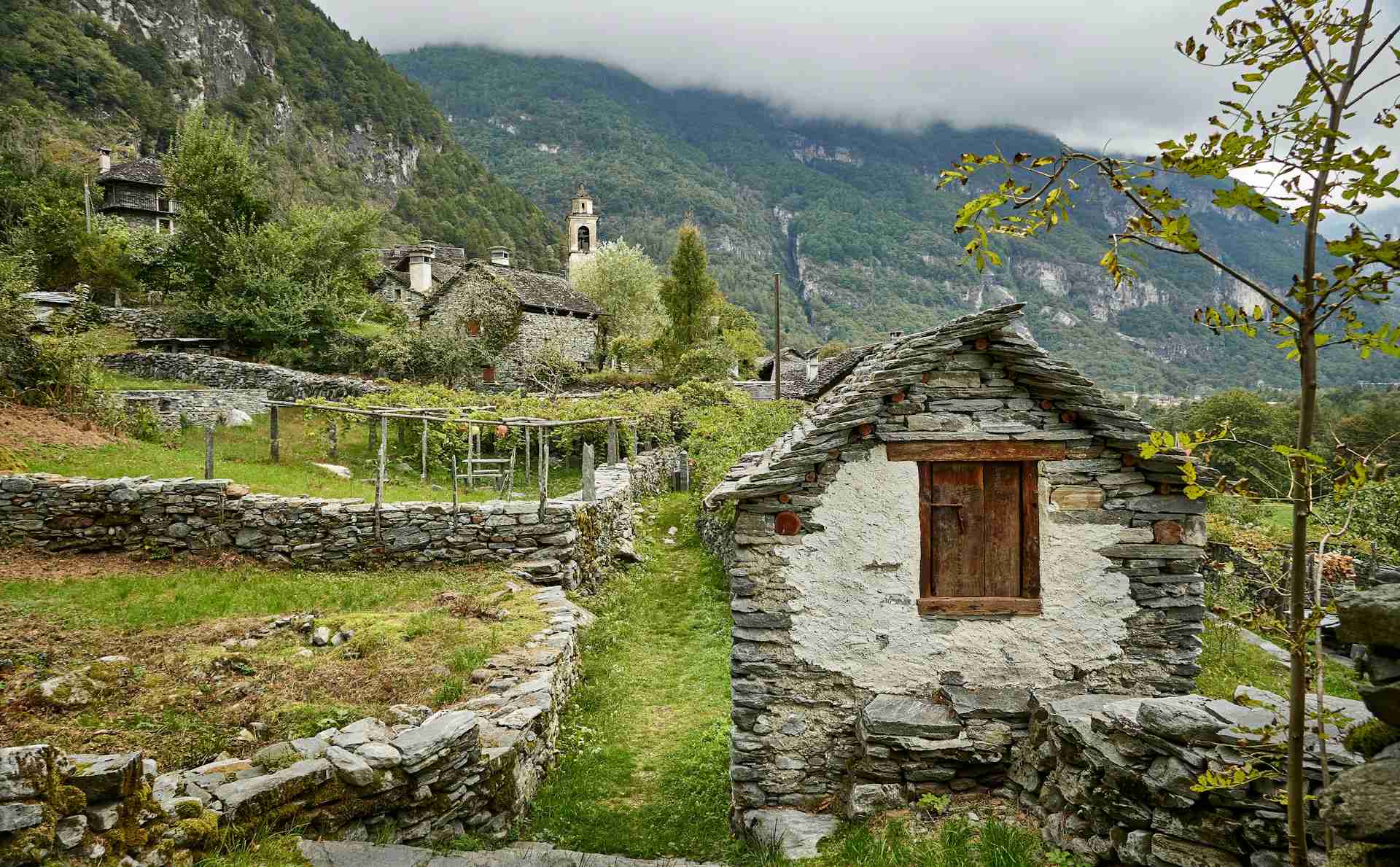
Boschetto is a small hamlet above Cevio in the Val Bavona region of Ticino, Switzerland. It is one of those rare alpine settlements that feels preserved rather than restored. Thick stone houses with heavy slate roofs cluster together on a slope beneath steep mountains, surrounded by terraces, woodland, and rugged terrain. There are no modern visual distractions dominating the scene, which makes it especially appealing for photographers who appreciate texture, structure, and atmosphere. The buildings are compact, weathered, and deeply rooted in the landscape. Light moves beautifully across the stone walls, especially when it hits at an angle and brings out surface detail. Boschetto is not about dramatic peaks alone. It is about the relationship between architecture, mountain scale, and quiet alpine life.
Best Photography Opportunities
• Village View from the Paths –
As you walk toward Boschetto, the village gradually reveals itself against the mountain backdrop. This slightly elevated approach provides one of the strongest compositions, allowing you to show the cluster of stone houses with forest and rock rising behind them. A mid range focal length works well here to keep proportions natural while still compressing the scene slightly. Early morning light often grazes the buildings from the side, bringing out texture in the stone and depth in the roof lines. Including a section of terraced ground or pathway in the foreground helps anchor the composition. Take time to refine your position, as small shifts can improve how the rooftops stack against one another.
• Tight Architectural Details –
Boschetto's stone houses are full of character. Weathered wood doors, small windows, stacked stone walls, and heavy slate roofs offer excellent detail subjects. A longer focal length helps isolate these features and remove distractions. Side lighting is particularly important here because it emphasizes depth in the stonework. Even during midday, you can often find shaded sections that create contrast without harsh highlights. Building a series of detail images adds richness to your overall portfolio from the village.
• Layered Rooftops and Mountain Backdrop –
From slightly higher ground within or just above the hamlet, you can photograph overlapping rooftops with the steep valley walls rising beyond. This layered approach creates strong depth and shows how tightly the village fits into the landscape. A moderate zoom lens allows you to fine tune the balance between architecture and mountain. Morning or late afternoon light works best, as flat midday sun reduces texture. Watch how the roof lines align with the background slopes to avoid awkward intersections.
• Seasonal Changes –
In autumn, surrounding trees can add subtle color contrast to the gray stone structures. In winter, snow collects on rooftops and along pathways, creating strong tonal separation between dark stone and bright surfaces. These seasonal changes significantly alter the mood of the village. Snow especially simplifies the scene and emphasizes form and structure. The lower winter sun angle provides longer periods of directional light that enhance texture. Visiting in different seasons can yield completely different interpretations of the same composition.
• Evening Light –
Late afternoon and early evening often bring softer light and fewer visitors. Warm tones begin to touch upper stone surfaces while lower sections fall into gentle shadow. A tripod can help if you want to extend into blue hour and capture subtle shifts in color temperature. Because Boschetto is small and peaceful, long exposures feel natural here rather than dramatic. The goal is restraint and balance rather than bold contrast.
Best Time to Visit
Late spring through early autumn offers the easiest access and comfortable hiking conditions. Summer mornings are particularly strong for angled light before the sun climbs too high. Because the hamlet sits in a valley setting, direct light can be limited depending on season and time of day, so planning around sun position is important.
Autumn adds muted color in surrounding vegetation and often brings clearer air, which improves contrast in mountain backdrops. Winter introduces snow and a simplified palette, though access may be more challenging depending on conditions. The lower sun angle in colder months creates longer windows of directional light. Regardless of season, early morning and late afternoon provide the best balance of light and shadow for architectural texture.
How to Get There
Boschetto is located above Cevio in Val Bavona in the canton of Ticino, Switzerland. Most visitors reach Cevio by car via regional roads connecting through the Maggia Valley. From Cevio, local roads lead into Val Bavona, where small parking areas are available near access points.
Reaching Boschetto typically involves a short walk along marked paths. Terrain can be uneven, so sturdy footwear is recommended. There is no formal entrance fee to access the hamlet, but it is important to respect private property and the quiet nature of the settlement. Weather conditions can change quickly in alpine valleys, so checking forecasts before visiting is advisable.
Recommended Photography Gear
A wide lens is useful for capturing the full cluster of stone houses with mountain backdrop. A mid range zoom offers flexibility for adjusting framing as you move through narrow paths. A longer focal length is ideal for isolating architectural details and compressing rooftop layers.
A lightweight tripod is helpful for early morning or evening shooting, especially if you plan to extend into lower light conditions. A polarizer can deepen sky tones and reduce glare on stone surfaces, particularly after rain. Because you will likely be walking on uneven terrain, keeping your gear compact and manageable makes the experience smoother. Extra batteries are recommended in colder months when temperatures can drop in the valley.
Nearby Photography Locations
is a dramatic alpine valley with waterfalls, steep rock faces, and traditional stone settlements. It offers wide landscape compositions that complement the tighter architectural scenes in Boschetto. Early morning light can create strong contrast along the valley walls.
• Cevio
provides a slightly larger village setting with historic buildings and mountain views. It is useful for blending village life with alpine surroundings. Street level compositions here feel more open compared to the compact nature of Boschetto.
• Foroglio
is another stone village in Val Bavona, positioned near a tall waterfall. The combination of cascading water and traditional architecture offers dynamic composition options. It is particularly strong after rainfall when water volume increases.
• Maggia River
features clear water, smooth rock formations, and mountain backdrops. Long exposures work well here to soften water movement while retaining detail in surrounding stone. It provides a natural landscape contrast to the built environment of Boschetto.
• Lago del Sambuco
is a high alpine reservoir surrounded by rugged peaks. It offers expansive mountain views and reflective water compositions. Pairing this location with Boschetto gives you both intimate architectural scenes and broad alpine landscapes in one trip.
Comments
Loading comments…