
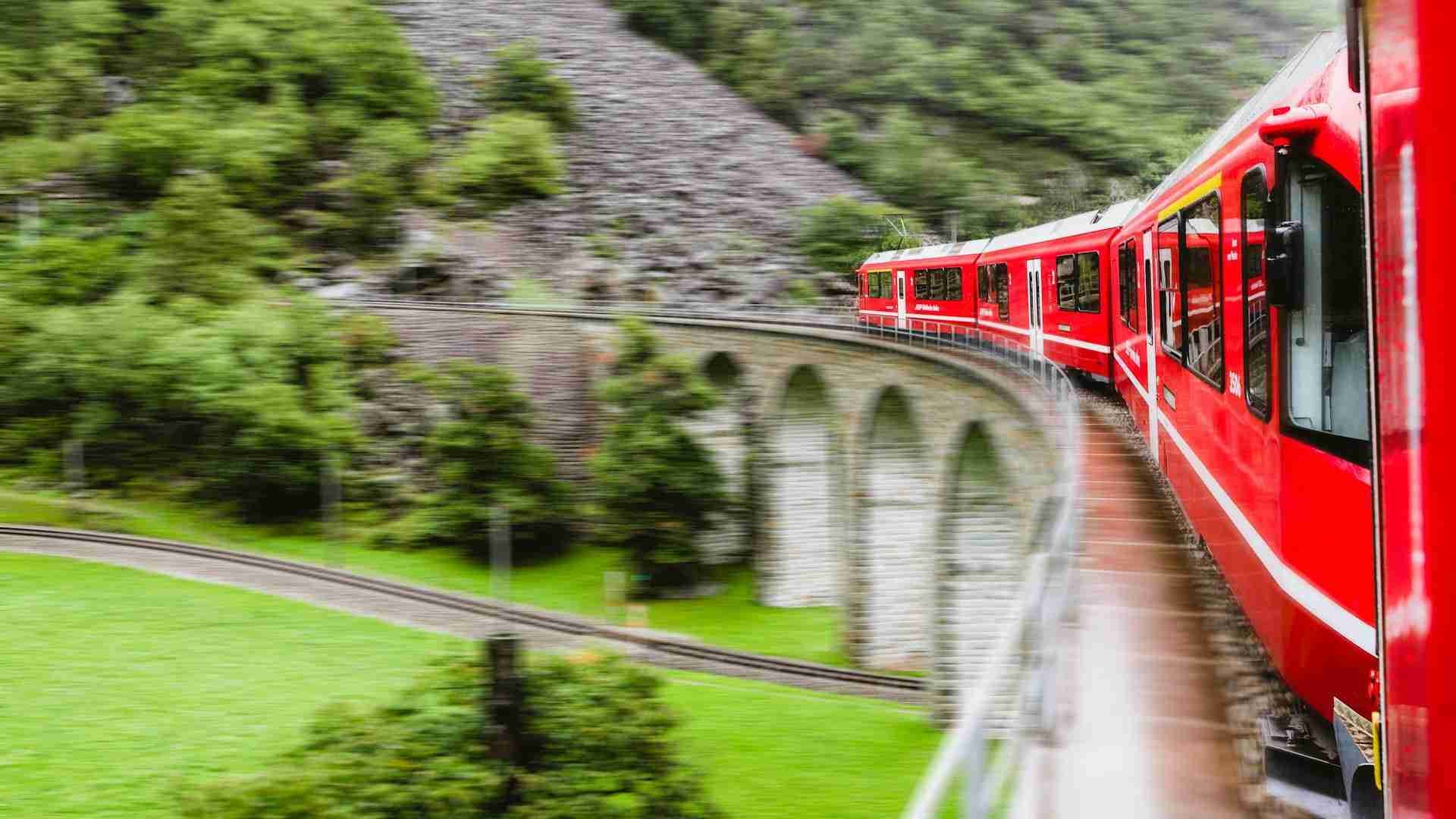
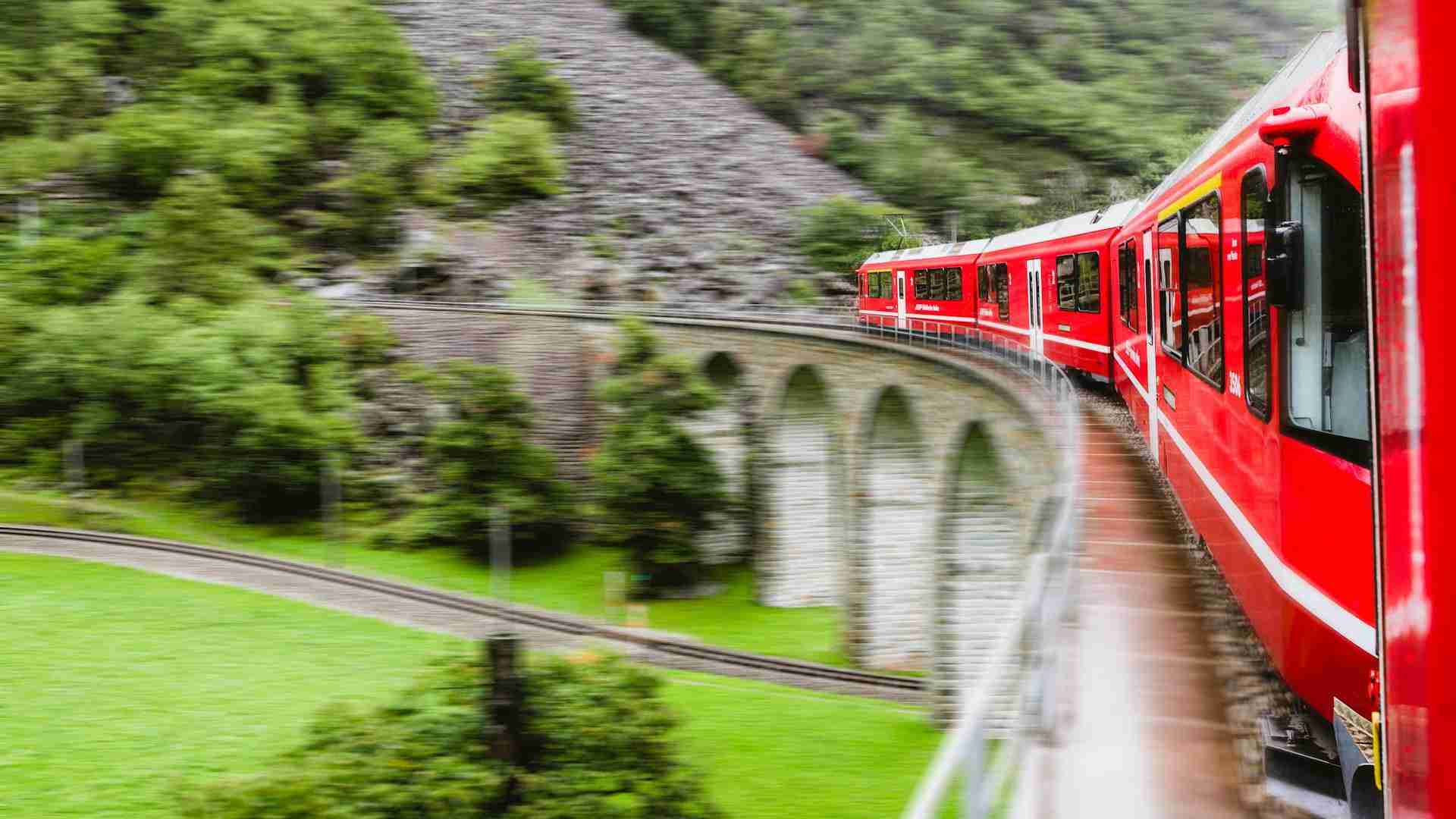
The Brusio Spiral Viaduct is one of the most distinctive engineering works in the Swiss Alps. Located near Brusio in the canton of Graubünden, this single-track, nine-arched stone viaduct is a celebrated part of the Bernina railway, which is recognized as a UNESCO World Heritage Site. Built in the early 20th century, the viaduct was designed to reduce the steep gradient of the railway to within its maximum of seven percent, allowing trains to climb and descend the valley safely. From a photographer's perspective, its sweeping circular curve and stone arches are as much a subject as the trains that travel across it. Surrounded by green hillsides, vineyards, and alpine scenery, the Brusio Spiral Viaduct combines precision engineering with natural beauty, making it one of the most rewarding railway photography locations in Europe.
Best Photography Opportunities
• Wide Aerial Perspectives of the Spiral
The defining feature of the Brusio Viaduct is its circular form, best appreciated from elevated positions around the valley. From higher ground, you can capture the full curve of the railway as it loops around itself, with the stone arches forming a pattern that is instantly recognizable. Wide-angle lenses emphasize the geometry, while including surrounding hillsides helps contextualize the viaduct within the alpine landscape. Morning light often illuminates the eastern side of the structure, while evenings add warm tones to the stone. These perspectives highlight the brilliance of the design in both form and function.
• Trains Crossing the Arches
The most dynamic images come when trains are captured mid-curve, snaking across the arches in full view. The red Bernina Express trains provide striking color contrast against the muted tones of stone and greenery. Shooting at mid-range focal lengths allows you to follow the train's curve while still including the viaduct's full structure. Timing is key, as photographing the train at different points along the curve alters the balance of the image. Cloudy days often produce the best results, preventing glare on the carriages and keeping exposure even across the scene.
• Detail Studies of Stonework and Arches
Up close, the Brusio Viaduct reveals its craftsmanship in nine carefully constructed stone arches. Telephoto lenses allow photographers to isolate individual arches, highlighting their form and texture. Shooting with side lighting brings out the detail of the masonry, while overcast conditions are best for even exposure. Close studies of arches with the train passing overhead emphasize the relationship between design and use. These images work well in both color and black and white, emphasizing the viaduct's timeless quality.
• Human Scale and Context
Including hikers, cyclists, or nearby farmhouses in compositions emphasizes the scale of the viaduct and its integration with the surrounding valley. From certain vantage points, you can photograph the viaduct with vineyards or pastures in the foreground, adding depth and cultural context. This combination highlights how the railway serves not only as an engineering achievement but also as part of the everyday landscape of Brusio. Using longer focal lengths compresses these layers into cohesive frames that balance human presence with monumental design.
• Seasonal and Weather Variations
Each season changes the character of the Brusio Viaduct. Spring brings fresh greenery that softens the stone arches, while summer fills the valley with vibrant colors and active farmland. Autumn is particularly photogenic, as vineyards around the viaduct turn golden, creating a warm frame for both structure and train. Winter transforms the scene with snow, creating stark contrasts between white fields and the gray stone of the arches. Fog and mist often roll through the valley, partially obscuring the viaduct and creating mysterious, layered compositions that emphasize mood over clarity.
Best Time to Visit
The Brusio Spiral Viaduct is active year-round, and each season provides unique opportunities. Spring and summer bring lush green surroundings, perfect for capturing the viaduct in vibrant color. Autumn offers rich golden tones in the vineyards and softer light, making it one of the most rewarding times for photography. Winter provides stark contrast and atmosphere, with snow adding simplicity and elegance to wide compositions.
Daily timing also influences results. Morning light illuminates the eastern arches and casts soft shadows across the curve, while evening brings warmer tones and dramatic skies. Midday can be useful when trains are the primary subject, as bright light ensures sharp captures of moving carriages. Overcast days are excellent for detail studies and even exposures, while twilight allows for long exposures with the train's lights tracing the curve.
How to Get There
The Brusio Spiral Viaduct is located just outside the village of Brusio, near the Swiss-Italian border. The site is part of the Bernina railway operated by the Rhaetian Railway, with trains passing regularly throughout the day. The most direct way to reach the viaduct is by taking a train on the Bernina line to Brusio station and walking a short distance to the viewing areas. For those arriving by car, parking is available near the village, with trails and small roads leading toward elevated viewpoints.
There is no fee to access the viaduct or its surroundings, and multiple public paths provide safe viewing points. The area is accessible year-round, though winter conditions may make higher paths icy or snow-covered. Facilities in Brusio include cafés and accommodations, making it a convenient base for longer visits. Drone photography is permitted under Swiss regulations, though flights must be conducted responsibly to avoid disturbing train operations and nearby residents.
Recommended Photography Gear
A wide-angle lens in the 16 to 35 millimeter range is essential for capturing the entire spiral from elevated viewpoints. A 24 to 70 millimeter zoom is highly versatile for balanced compositions that include both viaduct and landscape. A telephoto lens in the 70 to 200 millimeter range is ideal for isolating trains on the arches or compressing layers of the valley into a tighter frame. For detail studies of masonry, a macro or fast prime lens allows for close-up work with textures and surfaces.
A tripod is valuable for long exposures, particularly during twilight or when photographing moving trains in lower light. A circular polarizer helps reduce glare from train windows and enriches the greens of surrounding vegetation. Neutral density filters extend exposure times, useful for creating smooth, blurred effects of passing trains against the static viaduct. Weather protection is important in winter, while lighter gear is recommended for those climbing to elevated viewpoints. Extra batteries and memory cards are essential, as frequent train passages provide many shooting opportunities in a single session.
Nearby Photography Locations
Continuing along the Bernina line, photographers can capture sweeping alpine views, high mountain passes, and dramatic viaducts. The entire route is a UNESCO World Heritage Site, rewarding both train passengers and trackside photographers.
A short distance north of Brusio, Poschiavo is a charming town with narrow streets, pastel-colored buildings, and mountain backdrops. Its historic center provides excellent opportunities for architectural and cultural photography.
This glacial lake, just beyond the town of Poschiavo, offers reflective compositions of surrounding peaks. In autumn, the shoreline foliage adds vibrant color, while winter provides stark, icy textures.
• Alp Grüm
A station and viewpoint higher along the Bernina line, Alp Grüm provides commanding views over the valley and Lago Palü. The sweeping curves of the railway against glacial landscapes make it a highlight for photographers.
Just across the border, Tirano marks the southern end of the Bernina line. Its mix of Italian architecture, narrow lanes, and the dramatic sight of trains running directly through town streets provides unique photographic opportunities.
The Brusio Spiral Viaduct is a subject that invites creative exploration from every angle. Its looping form and stone arches tell the story of ingenuity, while the surrounding valley provides context and seasonal variety. For photographers, it is a place where landscape and engineering meet in harmony, offering endless opportunities to create images that are both precise and expressive.
Comments
Loading comments…