
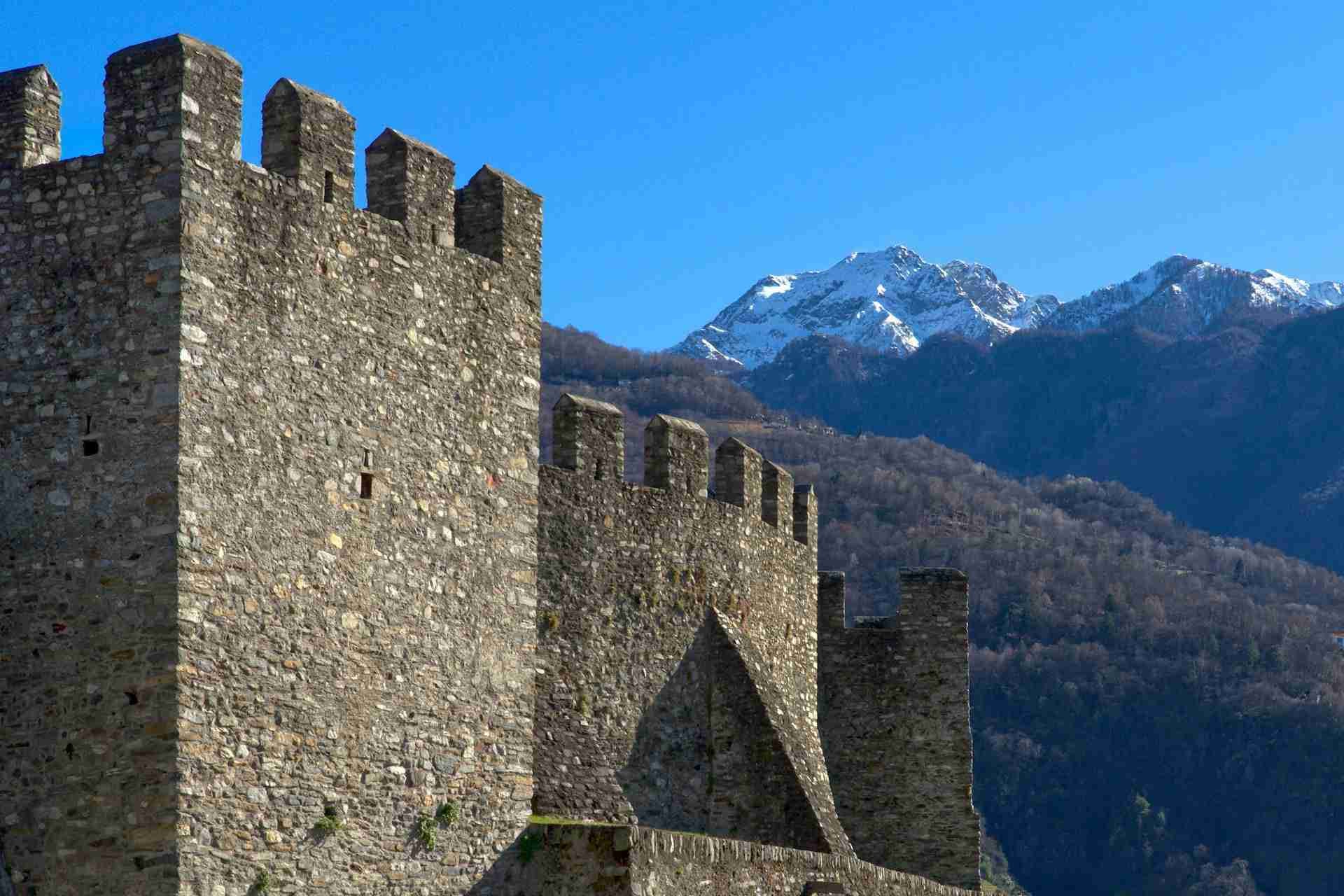
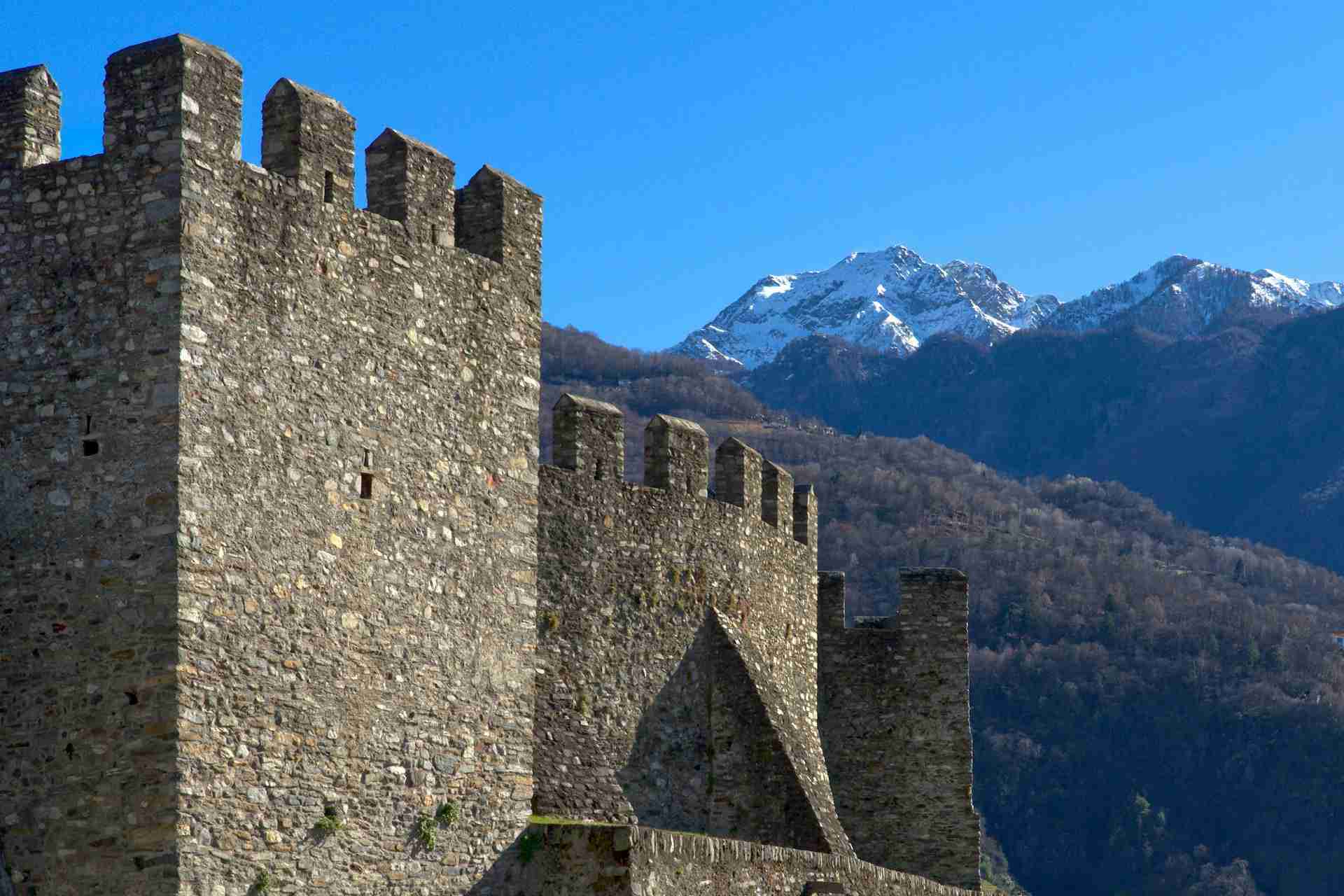
Rising above the heart of Bellinzona, Castelgrande is the largest and most central of the city's three medieval fortresses, and it offers a commanding view over the surrounding Ticino valley. With its thick walls, imposing towers, and vast interior courtyard, Castelgrande provides endless photographic potential, especially when combined with the surrounding alpine backdrop and changing mountain light. Its elevated position on a rocky plateau adds drama to every composition, making it a dream subject for architectural and landscape photographers alike.
Best Photography Opportunities
• Wide shots from the city below
Photographing Castelgrande from Piazza Collegiata or the nearby residential streets offers a full view of the fortress rising above the rooftops. Morning light hits the western walls and towers, while sunset adds warm tones from the opposite side. A 24–70mm lens works well here to frame the castle within the urban setting.
• Castle walls and walkway perspectives
Walking the ramparts inside Castelgrande allows you to capture strong leading lines and geometric shadows. The stone paths, narrow walkways, and view slots all contribute to compositions that emphasize structure and rhythm. A wide-angle lens is useful for interior shots, especially when including foreground elements like archways or steps.
• View from the towers across the Ticino valley
Climbing one of the towers gives you a high vantage point for panoramic views over Bellinzona and the surrounding landscape. On clear days, distant snow-capped peaks add depth, while nearby rooftops and trees bring color and texture. Use a polarizer to deepen the sky and cut haze.
• Textures of stone and battlements
The weathered walls and surfaces of Castelgrande are rich in texture. Isolate details like worn bricks, ivy-covered sections, or arrow slits using a mid-range lens. Side lighting early or late in the day enhances surface relief and shadow depth, especially in black and white.
• Blue hour compositions from the plateau
After sunset, the castle is softly lit with warm exterior lighting. From the grassy areas at the base of the walls, you can shoot upward against a deepening sky. Include walkways or low walls in the foreground to build depth and guide the viewer into the frame. A tripod is essential here for longer exposures.
Best Time to Visit
The best times to photograph Castelgrande are spring and autumn, when the light is gentle, the air is clear, and the surrounding foliage adds color and dimension. In spring, flowering trees around the base of the hill soften the composition, while autumn brings golden leaves that contrast beautifully with the grey stone.
Golden hour is particularly effective, especially in late afternoon when the sun highlights the eastern and southern walls. Morning light is useful from lower viewpoints in town, while blue hour transforms the plateau into a dramatic, softly lit space ideal for long exposures.
Summer sees more tourists, so early visits are best for unobstructed shots. In winter, snow occasionally dusts the rooftops and battlements, adding texture and contrast, though access may be limited in icy conditions. Cloudy or overcast days can work well for moody textures and even exposures, especially when shooting from within the castle walls.
How to Get There
Castelgrande is located in the center of Bellinzona and is easily accessible on foot. From the main train station, it is a 10-minute walk through the old town to the castle entrance via Salita Castelgrande. A short funicular ride also connects the base of the hill to the plateau, offering an easy ascent if carrying gear.
There are no fees to enter the exterior castle grounds, though access to the interior museum spaces may require a ticket. The walkways and towers are open to the public during daylight hours, and most paths are paved or gravel, with some stairways and uneven areas. Tripods are allowed throughout the grounds, and photography is permitted for personal use.
Nearby public parking is available in the lower town, but spaces fill quickly during weekends or festivals. Bellinzona is well connected by train and bus, and day trips from Lugano or Locarno are convenient for visiting photographers.
Recommended Photography Gear
Bring a wide-angle lens (16–35mm) for interior courtyard shots, ramparts, and dramatic upward angles of the walls. A mid-range zoom (24–70mm) is ideal for general compositions, street-level views, and textures. A telephoto lens (70–200mm) is helpful for compressing views across the valley or isolating architectural features from a distance.
A tripod is essential for blue hour and interior low-light photography. A circular polarizer helps reduce glare on the stone surfaces and improves sky contrast. Filters such as a graduated ND can be useful when balancing sky and ground exposure from elevated points.
Pack comfortable walking shoes and a compact camera bag. While the site is relatively easy to navigate, stairs and stone paths can be uneven. Bring water and sun protection during warmer months, as the plateau has limited shade.
Nearby Photography Locations
, located on the opposite hill, gives you a side view of Castelgrande with more open sky and context. Shoot at golden hour to capture both castles in one frame with layered hills behind.
, higher up the slope, offers panoramic views back over Bellinzona and Castelgrande. This is a good location for wide compositions that include the entire town below.
with its cobbled alleys, painted facades, and hidden courtyards, is ideal for street and detail photography. Shoot in early morning or late evening to avoid crowds and take advantage of soft light.
, a short walk from the castle entrance, provides views of the city's towers framed by surrounding buildings. Use a longer lens to isolate architectural elements or wait for golden light to skim across the rooftops.
• Sentiero delle Tre Castelli
, the walking trail that connects all three castles, offers forested paths, viewpoints, and transitions between historical and natural scenes. Carry a lighter kit for this section and plan for shifting light throughout the walk.
Comments
Loading comments…