
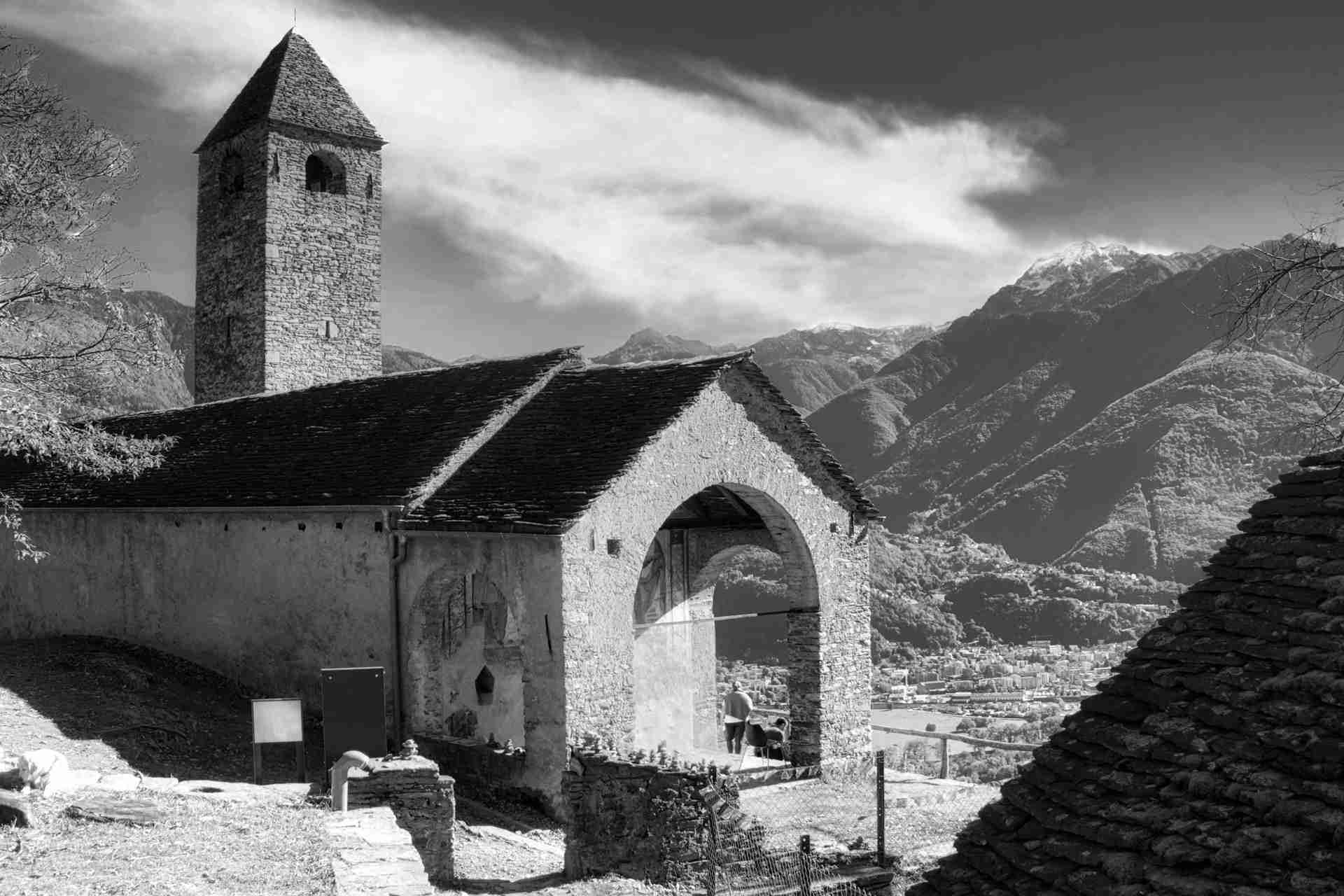
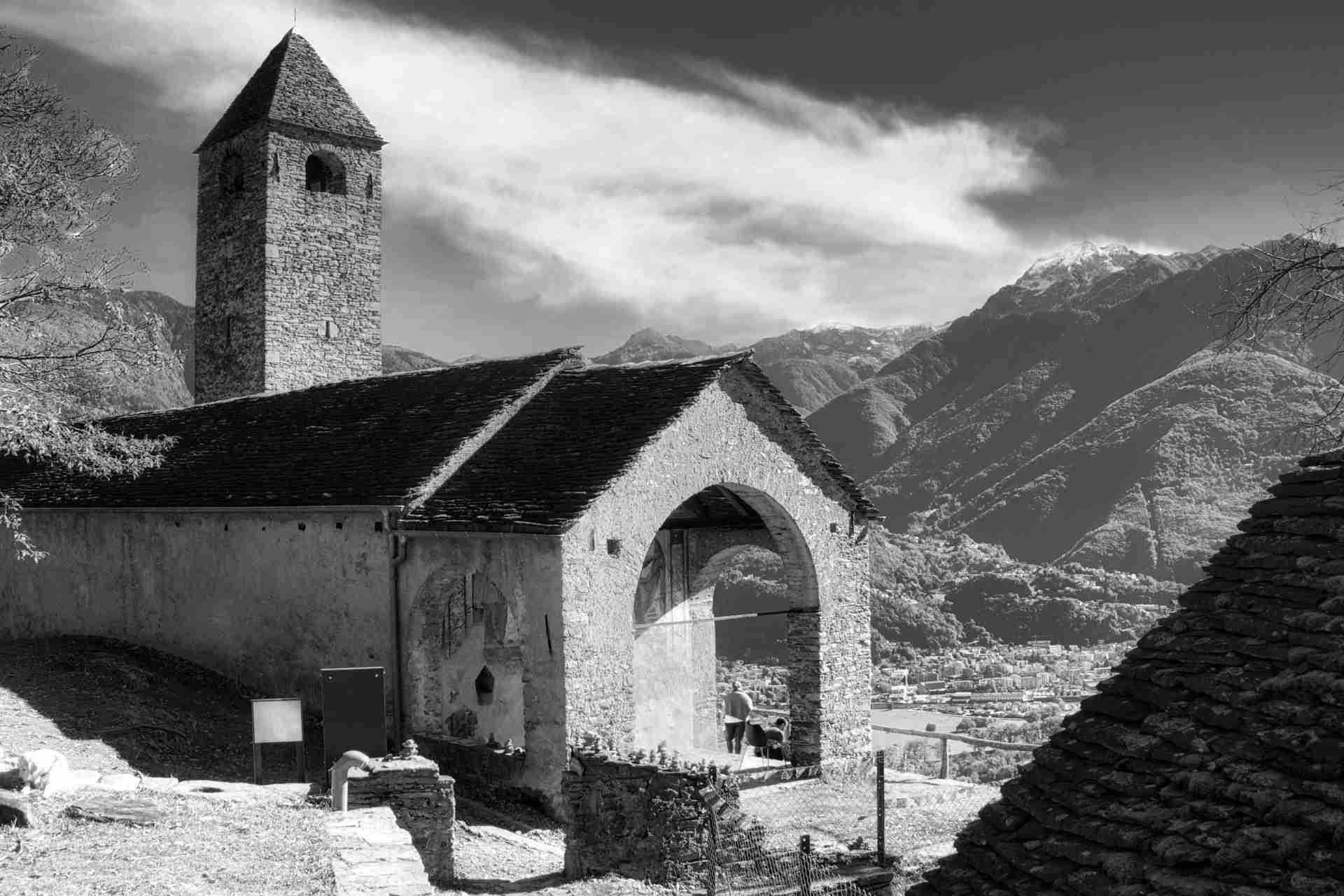
High above the valley floor in southern Switzerland, Chiesa di San Bernardo sits on a hillside terrace overlooking the Ticino landscape. The Romanesque structure, built of stone and timber with a low sloped roof and faded frescoes, offers photographers a quiet place to work with form, texture, and light. Reached by foot or cable car, the church is surrounded by chestnut groves and stone trails, with open views to the mountains beyond. Its weathered exterior, hillside setting, and modest size allow for clean, controlled compositions in a space that feels far from modern noise. Whether you are framing early light across the valley or isolating architectural details in soft shade, this is a location where pace slows and photographs become more deliberate.
Best Photography Opportunities
Front Façade and Bell Tower in Morning Light
The front of the church opens to the southeast, catching the first light of the day across its whitewashed wall and central arch. From the path below, you can compose upward toward the modest bell tower, using the slope and stone fence as foreground structure. Early sunlight adds warmth to the plaster and shadow depth to the door and window recesses. A wide to mid-range lens works well here for capturing the church and surrounding path without distortion. Because this angle holds open sky behind the tower, it is ideal when clouds move slowly and bring layered color to the background.
Fresco Fragments and Wall Texture
The faded frescoes on the exterior south wall present one of the church's most distinctive photographic subjects. Though weathered and partial, these painted surfaces create contrast with the rough stone around them. Work with a short telephoto lens to isolate small sections of the wall, balancing painted color with surface texture and edge detail. Side light during mid-morning or late afternoon brings out depth in the wall and gives the frescoes added tone. These compositions benefit from soft conditions or broken light when full sun would overpower the subtle hues.
Overlook Toward the Valley from Behind the Church
From behind the church, the landscape opens out across the valley and into the mountain ridges beyond. This is a productive location during late afternoon and into golden hour, when warm light falls across the stone roof and lights the trees at mid-slope. With a tripod and a moderate focal length, you can build a balanced composition that includes part of the church in the lower frame and leads into distance and sky. When light clouds drift across the ridgeline, the scene holds both structure and softness, making it suitable for wide color frames or layered black and white studies.
Side Path and Framing Trees in Soft Light
The chestnut trees and stone trail that curve along the southern side of the church provide a natural framing element for environmental shots. These compositions are strongest in soft light, especially during overcast days in spring or fall. The path gives depth and movement to the frame, while the trees create shade patterns across the building's side wall. A wide-angle lens from a low position allows you to follow the curve of the trail toward the church, using the trunks and leaves to break up the sky and lead attention to the structure.
Cable Car and Aerial Approach
If arriving by cable car, the approach gives you an elevated angle above the church and path system, especially useful for documenting the setting and layout of Curzutt. Shooting just before arrival or immediately after disembarking offers a clean overview without needing a drone. These wide shots work best in early morning or late evening when the light direction defines the contours of the hillside and softens shadows. Use a polarizer carefully to manage sky tone and surface glare from the stone. Be prepared to work quickly, as light and clouds change rapidly at this elevation.
Best Time to Visit
Spring and fall are the most rewarding seasons for photography at Chiesa di San Bernardo. In spring, fresh leaves filter light through the chestnut trees and the grass around the church takes on rich green tones. Soft morning light reaches the front façade early, and the days remain cool and clear. Fall offers golden tree color and lower sun angles that stretch light across the slope and deepen contrast on the stone.
Early morning is the best time to photograph the front of the church, as the rising sun creates soft side light across the face and bell tower. Late afternoon light works well from the rear and side, especially when clouds build behind the valley for texture in the sky. Overcast conditions are valuable for shooting fresco details and wall textures without glare or harsh contrast.
Summer brings heavier visitor traffic and brighter, flatter light during mid-day, though early and late hours remain productive. Winter access is limited, and snow can make the trails slippery, but when the church is reachable, the setting offers quiet compositions with bare trees and clear mountain air. The structure holds its shape well in snow, and the surrounding landscape becomes minimal, especially in soft fog or light snowfall.
How to Get There
Chiesa di San Bernardo is located above Monte Carasso in the canton of Ticino, Switzerland. The easiest access is via the Curzutt cable car, which departs from Monte Carasso and takes visitors up to the stone path network surrounding the church and hamlet. The ride is short, and once at the top, a ten-minute walk brings you to the church.
Alternatively, you can hike up from Monte Carasso using marked trails. The path climbs steadily through forest and stone terraces, offering additional photographic opportunities along the way. The full hike takes about one hour depending on pace and conditions. Good walking shoes are recommended, especially in wet or uneven terrain.
There is no fee to access the church or surrounding grounds. Tripods are allowed, and the area remains open year-round, though weather may affect both trail and cable car access during winter. There are no heavy restrictions on photography, but it is advised to respect the quiet nature of the site, especially during local events or private gatherings.
Recommended Photography Gear
A wide-angle lens between 16 and 35 millimeters is useful for capturing the full church in its landscape setting, especially from the path below or from behind the structure. A 24 to 70 millimeter zoom gives flexibility for environmental portraits and balanced mid-range compositions from the garden or valley side. A 70 to 200 millimeter lens is essential for detail work on the frescoes, bell tower, and stone walls, as well as for compressing the valley view with the church in frame.
A tripod is strongly recommended for early morning and evening work, as well as for long exposures in soft light or low contrast conditions. A circular polarizer is useful when shooting into the sky or managing glare from stone and plaster. Consider packing a three to six stop neutral density filter if you plan to smooth cloud movement or create long exposures of moving fog.
Footwear should be suited to loose stone and inclined terrain. A compact, weather-resistant backpack will help protect gear in changing conditions. Include a lens cloth and blower for managing dust or fog moisture, especially if working near the trees or in light rain. If taking the cable car, have your camera ready before boarding, as light and views from the ascent change quickly and offer useful context shots.
Nearby Photography Locations
The stone buildings and narrow walkways of the restored Curzutt settlement provide excellent opportunities for texture-driven compositions and quiet village scenes. The materials and layout respond well to both overcast and angled light. Early morning is best when the paths are empty.
This long pedestrian suspension bridge spans a deep forested valley and offers strong graphic lines, especially when framed with a wide lens from either approach. Side light brings out the curve and height of the structure. It pairs well with long exposure work in fog or soft sky conditions.
The trails leading up to and around Curzutt pass through chestnut forest, stone walls, and occasional ruins. These provide strong compositional layers during autumn and spring, with good structure for leading lines and shallow depth work.
A short drive or train ride away, the castles of Bellinzona offer a different architectural focus with larger fortified structures and broad views across the region. These work best in golden hour or twilight for dramatic sky contrast and edge definition.
Valle Morobbia Viewpoints
Higher up the slope from the church, the Valle Morobbia opens out with ridgelines and layered hills. On clear days, this area gives long views with strong separation between light and shadow, perfect for black and white studies or compressed distance shots using longer lenses.
Chiesa di San Bernardo does not overwhelm with size or drama. Instead, it offers careful proportion, quiet detail, and a surrounding landscape that shifts throughout the day. For photographers who enjoy building strong frames through light, structure, and setting, it remains a location worth the effort to reach and the time it takes to explore.
Comments
Loading comments…